
Australia Veterinary Market — Growth, Forecast & Strategic Outlook 2026–2034
Pet humanization, advanced animal health services, and supportive policies are driving one of Australia’s fastest-growing healthcare segments.

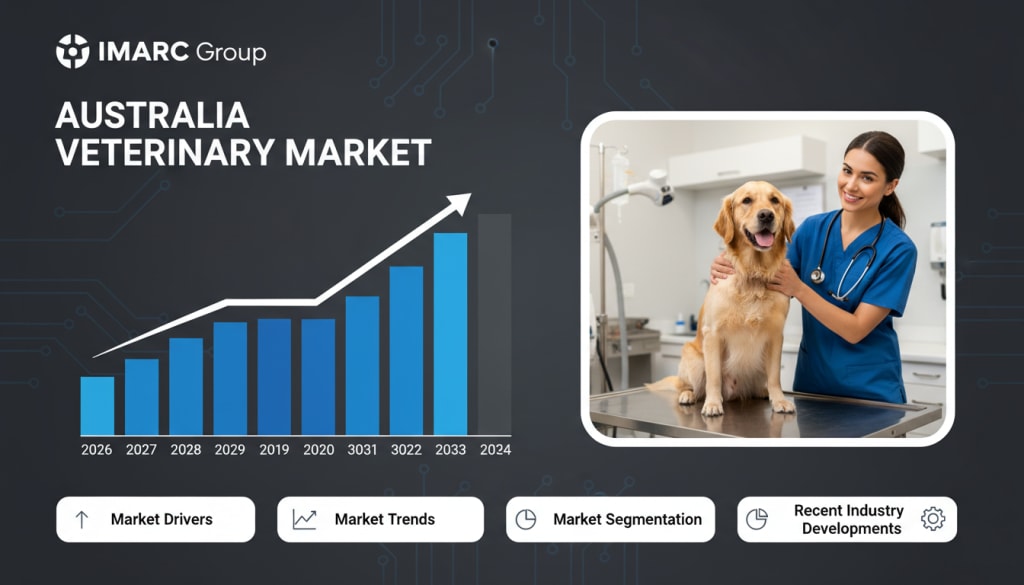
The Australia veterinary market is experiencing strong growth as animal healthcare and services expand across both companion and production animals. According to IMARC Group, the market reached USD 2.1 billion in 2025 and is projected to grow to USD 4.9 billion by 2034, exhibiting a compound annual growth rate (CAGR) of 9.60% during 2026–2034.
This rapid expansion reflects evolving consumer attitudes toward pets, heightened awareness about animal health and welfare, advanced diagnostics and treatment technologies, and expanding veterinary infrastructure. The veterinary sector encompasses services ranging from routine check-ups and preventive care to complex surgical interventions and specialty services, supported by evolving insurance coverage and digital tools that enhance care accessibility.
Why the Market Is Growing So Rapidly
1. Rising Pet Ownership and Humanization
A significant growth driver is the increasing number of pets in Australian households and the humanization of companion animals. As more consumers view pets as family members, spending on regular veterinary care, preventive services, and advanced treatments has increased substantially. Public campaigns and shelter adoption programs have contributed to high adoption rates, particularly for dogs and cats, amplifying demand for clinical services and wellness care.
2. Expanded Pet Insurance Uptake
Growth in pet health insurance has improved access to veterinary care by mitigating financial barriers. As insurers offer comprehensive plans — including coverage for chronic conditions, surgeries, and wellness services — more pet owners seek professional care without hesitation. This financial accessibility supports higher utilization of advanced diagnostics and treatments.
3. Advances in Veterinary Medicine and Technology
Technological advancements — from digital imaging and telemedicine to AI-assisted diagnostics and wearable health monitors — are transforming the veterinary landscape. These tools enable more accurate diagnoses, remote consultations, and enhanced treatment outcomes, making veterinary care more efficient and attractive for pet owners.
4. Specialty and Preventive Services Expansion
Veterinary clinics are broadening their service offerings beyond routine care to include areas such as oncology, cardiology, dentistry, orthopedics, and rehabilitation. This diversification caters to more complex health needs and drives demand for premium care segments that command higher revenue per episode.
5. Supportive Regulatory and Welfare Initiatives
Government and industry efforts focused on animal welfare, disease surveillance, and biosecurity regulation are enhancing standards of care. Educational outreach and compliance requirements encourage proactive health management, reinforcing public trust and driving routine veterinary engagement across urban and rural regions alike.
What the Opportunities Are
1. Telemedicine and Digital Care Platforms
Veterinary telehealth and mobile services allow pet owners to access care remotely, reducing barriers for rural and busy urban populations and expanding care reach.
2. Preventive Care Programs
Demand for preventive services — including vaccinations, dental care, and wellness check-ups — offers opportunities for subscription-based models that promote regular engagement and customer loyalty.
3. Specialty Clinics and Referral Services
Clinics focused on advanced specialties like oncology, orthopedics, and cardiology can attract higher-value cases and position themselves as leaders in comprehensive animal health management.
4. Pet Insurance Partnerships
Collaborations between veterinary practices and insurance providers can improve care affordability and encourage owners to pursue higher-tier services.
5. Data-Driven Personalized Healthcare
Leveraging data from diagnostics and wearable devices enables tailored treatment plans, improving outcomes and increasing client satisfaction.
6. Regional Expansion and Mobile Clinics
Growing veterinary presence in underserved areas through mobile units and regional specialty clinics increases market access and supports broader population health.
7. Sustainable and Eco-Friendly Practice Initiatives
Practices that adopt green technologies, eco-friendly pharmaceuticals, and waste-reduction strategies can build strong ethical brand identities while appealing to environmentally conscious owners.
• August 2025: AI Adoption to Improve Veterinary Efficiency: An AI tool called Heidi Health began reducing administrative burden in veterinary clinics by automatically generating clinical records during consultations. This technology, implemented in more than 140 general practices and 24 specialty hospitals, helps veterinarians save valuable time, potentially increasing patient throughput and improving service access.
• September 2025: AI Platform Expansion in Vet Clinics: Heidi Health further expanded its footprint by integrating its AI-powered documentation platform with Greencross Vet clinics, streamlining thousands of consultations each week and enhancing client interactions. This reflects the broader trend of digital innovation adoption in animal healthcare.
• February 2026: Greencross IPO Campaign: Leading pet care company Greencross launched its IPO campaign targeting a USD 4 billion valuation, highlighting strong investor confidence in the veterinary and pet services sector. The business reported ~USD 2 billion in revenue in FY2025 and operates an extensive network of GP clinics and specialty hospitals across Australia and New Zealand — underscoring robust demand for veterinary services.
Why Should You Know About the Australia Veterinary Market?
The Australia veterinary market is a strategic indicator of broader shifts in consumer behavior, animal welfare priorities, and healthcare innovation. Its strong projected CAGR highlights sustained demand driven by pet humanization, insurance adoption, and technological advancements. For investors, this sector presents compelling opportunities in clinic expansion, specialty services, and digital platforms. For veterinary professionals and service providers, understanding trends like telemedicine, preventive care, and specialized treatment capabilities is essential to staying competitive. For policy makers, insights into animal health infrastructure and welfare compliance help shape effective regulations that protect public and animal health alike.
In an era where pets are increasingly valued as family members and animal care capabilities continue to advance, the veterinary market plays a pivotal role in shaping a healthier, more resilient future for animals and the communities that care for them.
About the Creator
Amélie Belle
Hi, I’m Amélie Belle—27, New York writer, lover of quiet moments and honest words. I share poetry and reflections on love, healing, and life’s small miracles. If my writing makes you feel seen, I’m exactly where I’m meant to be.
Keep reading
More stories from Amélie Belle and writers in Trader and other communities.
Australia Advertising Market — Growth, Forecast & Strategic Insights
The Australia advertising market continues to adapt to rapidly evolving media landscapes and consumer behaviours. According to IMARC Group, the market reached USD 21.7 billion in 2025 and is projected to grow to USD 27.8 billion by 2034, exhibiting a compound annual growth rate (CAGR) of 2.83% during 2026–2034.
By Amélie Belle3 days ago in Trader
A Monk, The Om, A Metronome
David Harlann had spent 14 years as a field medic. The horrors of mangled bodies and shot-off limbs were commonplace to him. Just another Tuesday strewn with blood. Those who started with him had moved on. They wanted to use the experience as an impressive line on their CV, or to run a triage unit. David, though, didn’t know what he wanted. He just… stayed.
By Gabriel Shamesa day ago in Fiction



Comments
There are no comments for this story
Be the first to respond and start the conversation.