
Australia Sanitary Ware Market 2026: Housing Activity, Design Innovation & Bathroom Renovation Trends
How residential construction, lifestyle upgrades and product innovation are shaping Australia’s sanitary ware market

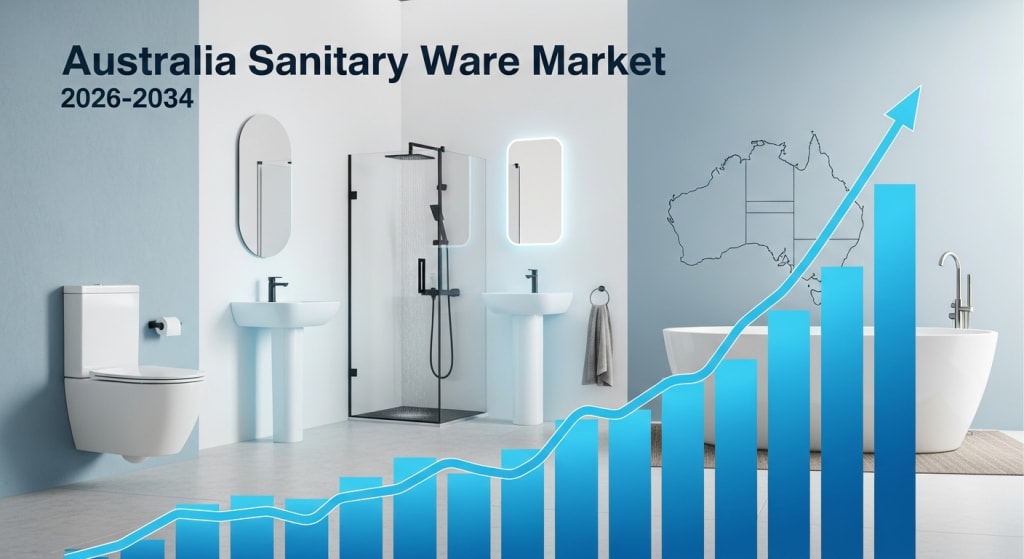
Australia Sanitary Ware Market Overview
The Australia sanitary ware market is an essential component of the country’s building materials and home improvement landscape, supplying products that are integral to both residential and commercial bathrooms and washrooms. Sanitary ware includes toilets, washbasins, urinals, bidets, and related ceramic and composite fixtures designed to support hygiene, comfort and aesthetics. Over the past decade, sanitary ware has evolved from purely functional products into design-focused elements that contribute to interior style, water efficiency and overall home value.
According to IMARC Group, The Australia sanitary ware market size was valued at USD 863.3 Million in 2025. Looking forward, the market is expected to reach USD 1,279.0 Million by 2034, exhibiting a CAGR of 4.47% from 2026-2034. This growth is driven by steady residential construction activity, strong renovation demand and increasing consumer interest in modern bathroom designs.
Demand for sanitary ware in Australia is supported by both new housing developments and the large existing housing stock that undergoes periodic renovation. Bathrooms are among the most frequently upgraded areas in homes, creating consistent replacement demand for fixtures.
Driving Growth in the Australia Sanitary Ware Market
One of the primary drivers of market growth is residential construction and housing turnover. New homes require complete bathroom installations, while resale properties often undergo bathroom upgrades to improve appeal and value.
Another key factor is strong renovation and remodeling activity. Homeowners are increasingly investing in bathroom renovations to improve comfort, functionality and aesthetics. This trend is supported by rising disposable incomes and lifestyle-driven spending.
Design innovation and premiumization also contribute to growth. Consumers are showing greater interest in contemporary styles, wall-hung toilets, rimless designs, matte finishes and minimalist aesthetics.
Water efficiency regulations and sustainability awareness are shaping product choices. Dual-flush toilets, low-flow basins and water-saving technologies are increasingly preferred by environmentally conscious consumers.
Growth in commercial construction, including hotels, offices, retail spaces and healthcare facilities, further supports sanitary ware demand.
Request a Sample Report with the Latest 2026 Data & Forecasts
What the Opportunities Are
The Australia sanitary ware market offers a wide range of opportunities for manufacturers, distributors and retailers as consumer expectations continue to evolve.
1. Smart and Sensor-Based Sanitary Ware
Touchless flush systems, sensor-activated taps and smart toilets with integrated bidet and drying functions are gaining interest in both residential and commercial settings.
2. Premium and Designer Product Lines
High-end collections featuring unique shapes, colors and finishes appeal to consumers seeking personalized bathroom spaces.
3. Water-Saving and Eco-Friendly Solutions
Products designed to minimize water consumption align with sustainability goals and regulatory requirements.
4. Modular and Space-Saving Designs
Compact fixtures and wall-mounted systems suit apartments and smaller homes.
5. Local Manufacturing and Customization
Domestic production enables faster delivery and customized solutions for builders and designers.
6. E-Commerce and Direct-to-Consumer Channels
Online sales platforms allow consumers to explore a wide range of designs and price points.
7. Commercial and Hospitality Projects
Hotels and serviced apartments drive demand for durable and visually appealing sanitary ware.
8. Retrofit and Replacement Market
Older homes require fixture upgrades, supporting long-term replacement demand.
Operational Considerations
Raw material price fluctuations affect production costs. Logistics and transportation influence pricing due to the bulky nature of products.
Competition is intense, with both domestic and imported brands operating across price segments. Maintaining consistent quality and compliance with standards is essential.
Recent News & Developments in the Australia Sanitary Ware Market
• Jan 2025: Several leading bathroom fixture brands announced combined investments of over AUD 180 million in expanding local warehousing and distribution centers to support faster delivery.
• Mar 2025: Australian building approvals for new residential dwellings exceeded 185,000 units, supporting continued demand for sanitary ware products.
• Jun 2025: Manufacturers introduced new water-efficient toilet models capable of reducing water usage by up to 30% compared to older designs.
• Aug 2025: Major retailers expanded premium bathroom collections, increasing shelf space for designer sanitary ware by approximately 20%.
• Oct 2025: Industry estimates showed a 14% year-on-year increase in bathroom renovation spending across Australia.
Why Should You Know About Australia Sanitary Ware Market?
Understanding the Australia sanitary ware market provides insight into how housing trends, design preferences and sustainability considerations influence everyday household products. The market reflects stable, renovation-driven demand rather than short-term cycles.
For businesses, the sector highlights opportunities in smart products, premiumization and water-efficient technologies. For investors, it demonstrates steady growth supported by housing activity and lifestyle spending. Overall, the sanitary ware market illustrates how functional products continue to evolve into design-led home essentials.
About the Creator
Amyra Singh
Market research analyst who loves spotting patterns, digging into data, and turning insights into strategies that help brands grow and stay ahead of the curve.
Keep reading
More stories from Amyra Singh and writers in Trader and other communities.
Australia Supply Chain Management Market 2026: Digital Transformation, Logistics Optimization & Enterprise Adoption
Australia Supply Chain Management Market Overview The Australia supply chain management (SCM) market is undergoing rapid evolution as businesses seek greater efficiency, resilience and visibility across increasingly complex supply networks. Supply chain management solutions enable organizations to plan, execute and monitor the flow of goods, information and finances from suppliers to end customers. In Australia, SCM systems are becoming essential tools for manufacturers, retailers, logistics providers and distributors navigating global trade volatility, labor constraints and rising customer expectations.
By Amyra Singha day ago in Trader
Philippines AI in Fintech Market: Intelligent Finance, Digital Growth & Risk Innovation
Philippines AI in Fintech Market Overview The Philippines AI in fintech market is rapidly gaining momentum as financial institutions, digital payment platforms and emerging fintech startups adopt artificial intelligence (AI) technologies to enhance service delivery, operational efficiency and customer experience. AI in fintech covers a range of intelligent systems including machine learning models, virtual assistants, fraud detection tools, behavioural analytics and credit scoring systems that optimise decision-making and reduce risks. The Philippines AI in fintech market size reached USD 79.38 Million in 2024. The market is projected to reach USD 419.35 Million by 2033, exhibiting a growth rate (CAGR) of 18.11% during 2025-2033 as AI becomes integral to financial innovation and digital transformation across banking, payments and financial services.
By Manisha Dixit7 days ago in Trader
The Devil's Triangle
The sails ruffled in the breeze as we cruised along. The Sea Breeze was a mid-size catamaran that sailed out of Royal Naval Dockyard in Bermuda. We had booked this trip weeks in advance and were now looking at our Captain, Spike and two boat hands. Paddy and Wilson seemed like nice guys, joking around with the passengers and telling us some stories about Bermuda that only locals would know. Their island accents sounded almost British but they were pleasant to listen to.
By Barbara Gode Wiles3 days ago in Fiction




Comments
There are no comments for this story
Be the first to respond and start the conversation.