
Australia Industrial Air Blowers Market: Steady Industrial Growth and Efficiency Drive Demand
Amid construction expansion, wastewater infrastructure upgrades and sustainability priorities, the Australia industrial air blowers market is projected to grow from USD 114.05 million in 2025 to USD 155.88 million by 2034 at a 3.53% CAGR.

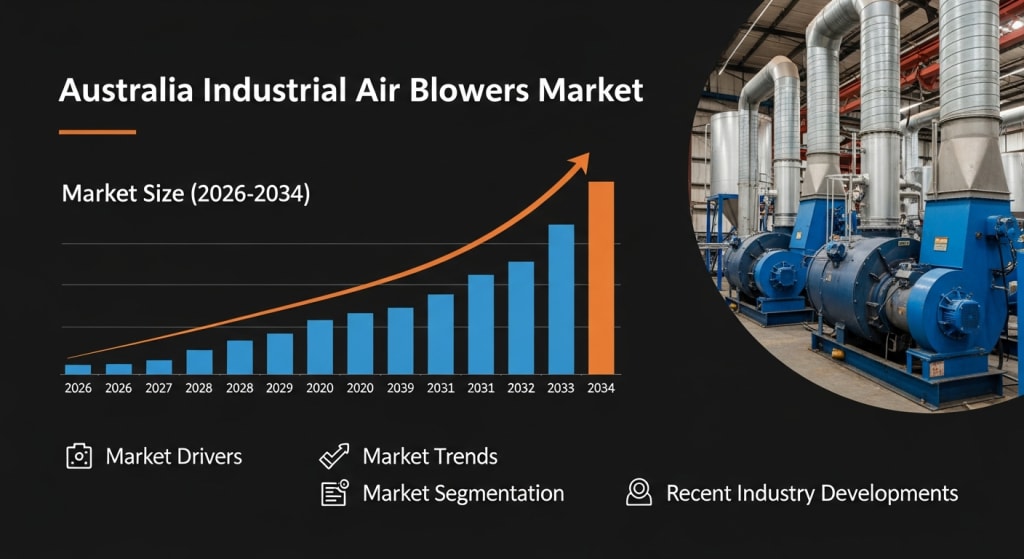
The Australia industrial air blowers market is witnessing consistent growth as key industrial sectors — including wastewater treatment, chemical processing, food and beverage, and mining — adopt more efficient air movement solutions to optimise performance, reduce energy costs and improve environmental compliance. According to the latest IMARC Group analysis, the market was valued at USD 114.05 million in 2025 and is forecast to reach USD 155.88 million by 2034, showing a steady compound annual growth rate (CAGR) of 3.53% between 2026 and 2034.
Industrial air blowers are essential components in many process environments. From ventilation systems and pneumatic conveying to wastewater aeration and material handling, these blowers support critical functions across the industrial landscape. As Australian industries modernise facilities and prioritise operational resilience, the adoption of advanced blower technologies has become increasingly strategic.
Why the Market Is Growing So Rapidly
1. Industrial and Infrastructure Growth
Australia’s ongoing investments in industrial infrastructure — including wastewater treatment plants, manufacturing facilities and processing units — are significant drivers of demand for industrial air blowers. Aeration blowers, in particular, are central to wastewater treatment operations, which involve supplying oxygen to biological treatment processes. Such infrastructure activities continue to gain momentum across key regions, fuelling market expansion.
2. Focus on Energy Efficiency and Sustainability
Environmental and energy efficiency considerations are shaping equipment decisions across industries. Modern industrial air blowers that integrate energy-efficient technologies — such as variable speed drives and electronically commutated (EC) motors — help reduce energy consumption by as much as 30-75% compared to traditional systems, aligning with corporate sustainability goals and tightening emissions standards.
3. Technological Advancements and Smart Features
The integration of digital control systems, IoT monitoring and predictive maintenance capabilities is transforming the air blowers space. Industrial buyers increasingly value systems that offer real-time diagnostics, asset health tracking and remote control — features that reduce unplanned downtime, enhance safety and extend equipment life.
4. Mining Sector Ventilation Needs
Australia’s mining industry, which plays a key economic role, demands robust ventilation and air movement systems, especially for underground operations. Vast mining networks require reliable blower systems to manage airflow, remove contaminants and comply with stringent safety standards. These requirements have accelerated investments in high-capacity, efficient blower solutions.
5. Diverse End-User Demand Profiles
Across end-user sectors such as chemicals, food and beverages, pharmaceuticals, and wastewater treatment, air blowers play diverse roles, from pneumatic conveying and drying to ventilation and aeration. This broad applicability ensures stable, multi-sector demand for industrial air blower equipment in Australia.
What the Opportunities Are
1. Advanced Energy-Optimised Solutions
There’s strong demand for next-generation blowers that deliver superior energy performance while meeting stringent emissions and sustainability targets. Manufacturers that focus on high-efficiency designs can capture market share.
2. IoT and Predictive Maintenance Integration
Blower systems embedded with IoT sensors, predictive analytics and remote monitoring can improve uptime and reduce lifecycle costs — presenting opportunities for suppliers to offer differentiated, value-added solutions.
3. Sector-Specific Customisation
Custom engineered solutions tailored for high-risk industries such as chemicals and mining allow providers to secure long-term contracts and deepen client relationships through specialised offerings.
4. After-Sales Services and Training
Expanding after-sales service networks — including maintenance, operator training and spare parts provisioning — can create additional revenue streams and improve customer satisfaction and retention.
5. Regional Expansion Strategies
Regions with heavy industrial activity — including Queensland, Western Australia, New South Wales and Victoria — present attractive opportunities for targeted business expansion and focused marketing efforts.
6. Certifications and Compliance Support
Developing blower products that achieve third-party sustainability and energy-efficiency certifications can enhance market credibility and appeal to environmentally conscious industrial buyers.
7. Integrated Automation Opportunities
Bundling blower systems with automation and control platforms for smart factories enables manufacturers to deliver cohesive, scalable solutions aligned with Industry 4.0 strategies.
Recent News & Developments in Australia Industrial Air Blowers Market
February 2025: Government Infrastructure Support: The Australian Government announced additional funding for wastewater treatment upgrades via the National Water Grid Fund, directing capital to modernise aeration systems across regional plants. This initiative aligns with national sustainability goals and intensifies demand for advanced industrial air blowers across municipalities and industrial complexes.
May 2025: Service Expansion: CAPS Australia launched CAPS Care, an enhanced predictive maintenance and support programme for industrial blower fleets. The new service combining advanced diagnostics, scheduled servicing and remote analytics reflects growing market emphasis on operational reliability and reduced downtime across industrial sectors.
August 2025: Market Adoption Milestone: Industry reports indicated a significant uptick in installations of IoT-enabled industrial air blowers, with over 25% of new equipment deployments in 2025 featuring advanced monitoring and control capabilities — a strong indicator of rising adoption of smart blower solutions across sectors such as mining, chemical processing and food manufacturing.
Why Should You Know About the Australia Industrial Air Blowers Market?
The Australia industrial air blowers market exemplifies a stable and strategically important industrial segment poised for steady growth. Forecast expansion from USD 114.05 million in 2025 to USD 155.88 million by 2034 at a 3.53% CAGR reflects underlying shifts in infrastructure investment, sustainability priorities and technological adoption — trends that are reshaping industrial equipment demand in Australia.
For equipment manufacturers and suppliers, this market offers durable opportunities to innovate with energy-efficient, smart and sector-specific solutions. Service providers can deepen engagements through strong maintenance and support programmes, while policymakers and industrial planners can leverage these developments to achieve broader environmental and operation resilience goals. As industries modernise and seek optimal performance, industrial air blowers will remain integral to Australia’s evolving industrial landscape.
About the Creator
Rashi Sharma
I am a market researcher.
Keep reading
More stories from Rashi Sharma and writers in Trader and other communities.
Australia Clean Beauty Market Set for Explosive Growth Amid Rising Conscious Consumerism
The Australia clean beauty market is emerging as one of the most dynamic segments within the broader personal care landscape, driven by shifting consumer values and heightened scrutiny of product ingredients. According to the latest IMARC Group research, the market reached USD 269.0 million in 2025 and is forecast to surge to USD 1,067.5 million by 2034, expanding at a robust CAGR of 16.55% from 2026 to 2034.
By Rashi Sharmaabout 13 hours ago in Trader
North America Frozen and Canned Seafood Market Size and Forecast 2025–2033
Introduction: A Market Built on Convenience and Consistency The North America frozen and canned seafood market has steadily positioned itself as a reliable pillar of the region’s food industry. In 2024, the market was valued at around USD 24.26 billion and is projected to reach approximately USD 26.84 billion by 2033, growing at a compound annual growth rate (CAGR) of 1.14% between 2025 and 2033. While this growth rate may appear modest compared to some fast-moving food categories, it reflects the stability and resilience of a market that serves everyday consumer needs.
By shibansh kumar3 days ago in Trader
Bitcoin USD: Market Trends, Investment Insights, and Portfolio Strategy
Introduction Bitcoin USD represents the price of Bitcoin in U.S. dollars and remains one of the most closely watched indicators in the cryptocurrency market. Bitcoin has emerged as a digital store of value, an alternative investment, and a potential hedge against inflation. Its price movements can be highly volatile, attracting both traders and long-term investors seeking growth opportunities.
By Hammad Nawaz3 days ago in Trader




Comments
There are no comments for this story
Be the first to respond and start the conversation.