
Australia Human Resource Technology Market Set to Nearly Double by 2034 on Automation, Cloud Adoption & Employee Experience
Driven by digital transformation, cloud HR platforms, and workforce analytics, Australia’s HR tech market is poised for strong growth over the next decade.

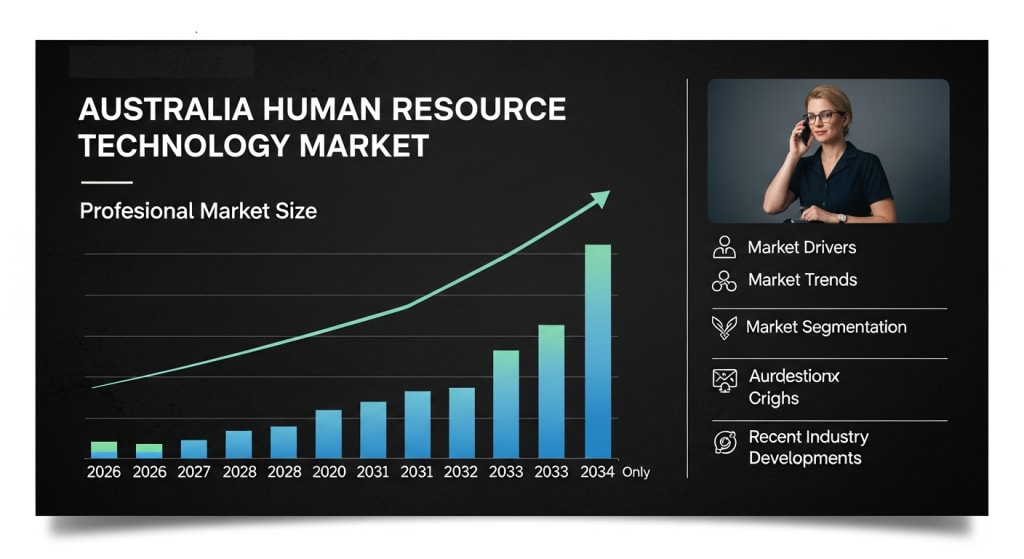
The Australia Human Resource Technology Market is expanding steadily as organisations seek to modernise people management, automate routine HR tasks, improve workforce insights and enhance employee experiences. According to the latest IMARC Group research, the market reached USD 774.7 million in 2025 and is expected to reach USD 1,450.9 million by 2034, exhibiting a compound annual growth rate (CAGR) of 7.22% between 2026 and 2034.
Human resource technology encompasses a broad suite of tools and platforms — including talent management, payroll automation, performance and workforce management, and recruitment technologies — that help organisations digitise HR operations and deliver strategic workforce outcomes. As the nature of work evolves, with distributed teams, skill shortages and rising competition for talent, Australian companies are increasingly turning to HR tech to provide data-driven insights, compliance support and seamless employee experiences.
This market growth aligns with broader global digital transformation trends that prioritise operational efficiency and strategic HR capability. With cloud-based solutions becoming standard and artificial intelligence enhancing HR workflows, the sector is rapidly transitioning from administrative support systems to strategic platforms that shape workforce decisions.
Why the Market Is Growing So Rapidly
1. Digital Transformation Across Industries
One of the key drivers of market growth is the widespread digital transformation across Australian businesses. Organisations in sectors such as healthcare, financial services, IT and public administration are increasing investments in digital HR systems to streamline processes, reduce paperwork and centralise employee data. Cloud-based HR solutions, in particular, enable remote access, scalability and integration across multiple functions — making them essential for modern HR operations.
Cloud HR platforms are particularly valued as they support remote and hybrid work arrangements by giving HR professionals and employees secure access to real-time information from anywhere. This capability has transformed HR from a largely administrative function into a strategic partner that helps drive organisational agility.
2. Automation of HR Processes and Workflow Efficiency
Automation is another driver propelling HR tech adoption. Australian organisations are deploying software that automates routine tasks such as payroll, onboarding, document handling, scheduling and performance tracking. By reducing manual input, automation tools free HR teams to focus on strategic initiatives like talent development and employee engagement, improving overall workforce productivity.
Increasing automation is particularly relevant in industries with high workforce turnover or complex scheduling requirements, such as retail, healthcare and hospitality. Systems that handle routine tasks reduce errors and improve operational efficiency — important benefits in competitive labour markets.
3. Emphasis on Employee Experience and Engagement
Employee expectations around workplace technology have shifted significantly in recent years. Modern workforces look for intuitive, responsive and personalised digital experiences — and HR technology plays a central role in meeting these expectations. Platforms that facilitate continuous feedback, performance milestones, learning pathways and career development help organisations build more engaging work environments that support retention and morale.
With talent shortages intensifying competition for skilled workers, organisations that deploy advanced HR tech solutions can differentiate themselves by offering better engagement tools and career support mechanisms.
4. Regulatory Compliance and Risk Management
Australia’s regulatory environment around workplace laws, data protection and safety standards adds complexity to HR operations. Organisations face pressure to ensure compliance with employment legislation, fair work practices, workplace safety and privacy requirements. HR technology solutions with built-in compliance monitoring and reporting capabilities help companies manage these obligations efficiently while providing audit trails and documentation for internal and external reviews.
This regulatory complexity is especially significant for larger enterprises and those operating across multiple jurisdictions, making HR tech a critical risk-mitigation tool.
5. Scalability and Integration with Other Business Systems
Modern HR platforms are designed to integrate seamlessly with finance, IT, operations and analytics systems. This interoperability allows organisations to harness workforce data alongside other business metrics — enabling more robust planning and decision-making. The ability to scale HR technologies as organisations grow is another key factor driving adoption, particularly among mid-sized and large enterprises seeking to future-proof HR infrastructure.
What the Opportunities Are
1. AI and Machine Learning Integration
Incorporating AI into HR systems presents the opportunity to enhance predictive talent analytics, improve candidate matching, automate resume screening and personalise employee learning paths. These capabilities can shorten hiring cycles and improve retention outcomes.
2. Expansion into SME Segment
Small and medium enterprises (SMEs) represent an under-penetrated market for HR technology vendors. Affordable, scaled-down solutions tailored to the needs of SMEs can unlock substantial growth opportunities as these businesses digitise HR operations.
3. Industry-Specific HR Solutions
There is significant potential in developing industry-specific HR platforms that address unique workforce challenges — such as shift scheduling in healthcare or compliance tracking in construction — offering higher value to niche sectors.
4. Enhanced Data Analytics and Decision Support
Providers that deliver advanced analytics dashboards and workforce insights can help organisations make better strategic decisions — from workforce planning to diversity programs — creating competitive advantages.
5. Mobile-First and Remote Work Tools
As remote and hybrid work become permanent fixtures, HR technologies that prioritise mobile accessibility and collaboration tools can meet evolving employee and organisational needs.
6. Integration with Talent Development Platforms
Solutions that seamlessly integrate HR management with learning and development frameworks can help firms build internal pipelines for skills development, supporting long-term workforce resilience.
7. Partnerships with HR Services Firms
Collaborative models between HR tech vendors and HR consultancy or outsourcing providers can expand market reach and support implementation services across industries.
Recent News & Developments in Australia Human Resource Technology Market
March 2025: March 2025: Australia’s HR tech ecosystem saw major traction with the launch of Workit’s all-in-one Australian-developed HR software platform, aimed at addressing recruitment and HR challenges for growing businesses by offering intuitive tools from onboarding to compliance with local support. This platform helps streamline HR operations and underscores the market’s innovation momentum.
• June 2025: June 2025: Rippling entered the Australian market, bringing the country’s first fully automated, all-in-one HR platform that integrates payroll, compliance, time tracking and IT functions. The launch highlights growing interest in cohesive HR systems that simplify workforce management and boost operational efficiency across enterprises.
• October 2025: October 2025: A series of HR-technology-led workforce analytics case studies reported a significant uplift in organisational performance metrics, with early adopters noting improved talent retention rates and reductions in administrative processing times — reinforcing the value of HR tech as a strategic investment.
Why Should You Know About the Australia Human Resource Technology Market?
For investors, the Australia human resource technology market represents a compelling growth story with a projected CAGR above 7% through 2034. The sector’s transformation from administrative automation to strategic workforce intelligence opens up avenues for recurring software revenue, platform innovation and technology-enabled HR services.
For business leaders, investing in HR technology means unlocking operational efficiencies, enhancing compliance capabilities and delivering superior employee experiences — essential components of contemporary workforce strategy.
For policy makers, understanding how digital tools intersect with employment standards, privacy requirements and labour market trends can help shape supportive frameworks that encourage innovation while protecting workers.
In an age where human capital is a central driver of organisational success, the evolution of HR technology illustrates how digital solutions are reshaping strategic HR practices — making them crucial for competitiveness, efficiency and future readiness.
About the Creator
Rashi Sharma
I am a market researcher.
Keep reading
More stories from Rashi Sharma and writers in Trader and other communities.
Australia Digital Health Market Set to Grow Nearly 4× by 2033 on Telehealth, Wearables & Interoperability
The Australia Digital Health Market is expanding rapidly as digital technologies redefine how healthcare is delivered, accessed, and managed across the nation. According to the latest IMARC Group report, the market was valued at USD 7.7 billion in 2024 and is expected to reach USD 28.6 billion by 2033, representing a CAGR of 15.70% from 2025 to 2033.
By Rashi Sharmaabout 15 hours ago in Trader
Philippines Lithium-Ion Battery Market: Energy Storage Expansion, EV Adoption & Industry Transformation
Philippines Lithium-Ion Battery Market Overview The Philippines lithium-ion battery market is gaining remarkable momentum as consumers, industries and policymakers pivot toward electrification, renewable energy integration and advanced energy storage solutions. Lithium-ion batteries — lightweight, high-energy-density rechargeable cells — are at the heart of electric vehicles (EVs), portable electronics, grid-scale storage systems and industrial energy applications. The Philippines lithium-ion battery market size was valued at USD 1,199.21 Million in 2025 and is projected to reach USD 2,987.77 Million by 2034, growing at a compound annual growth rate of 10.68% from 2026-2034. This robust growth underscores the nation’s transition toward sustainable energy systems, rising adoption of electronic mobility, and increasing use of energy storage across residential, commercial and utility sectors.
By Manisha Dixit7 days ago in Trader
Stanislav Kondrashov on Greenland’s Strategic Role in the Future of Global Trade and Resources
By all appearances, Greenland is on the brink of becoming one of the world’s most closely watched regions—not for its glaciers, but for what lies beneath and beyond them. Stanislav Kondrashov, economic analyst and founder of TELF AG, has recently cast a spotlight on the island’s rising significance in global trade and resource strategy. And his perspective is clear: Greenland is not just a geographical outlier—it is a future linchpin.
By Stanislav Kondrashov4 days ago in Trader


Comments
There are no comments for this story
Be the first to respond and start the conversation.