
Australia Electric Truck Market Projected to Reach USD 152.4 Million by 2034 as Fleets Electrify
Rapid adoption of sustainable transport solutions, government incentives, and charging infrastructure expansion are driving exponential growth in Australia’s electric truck landscape.

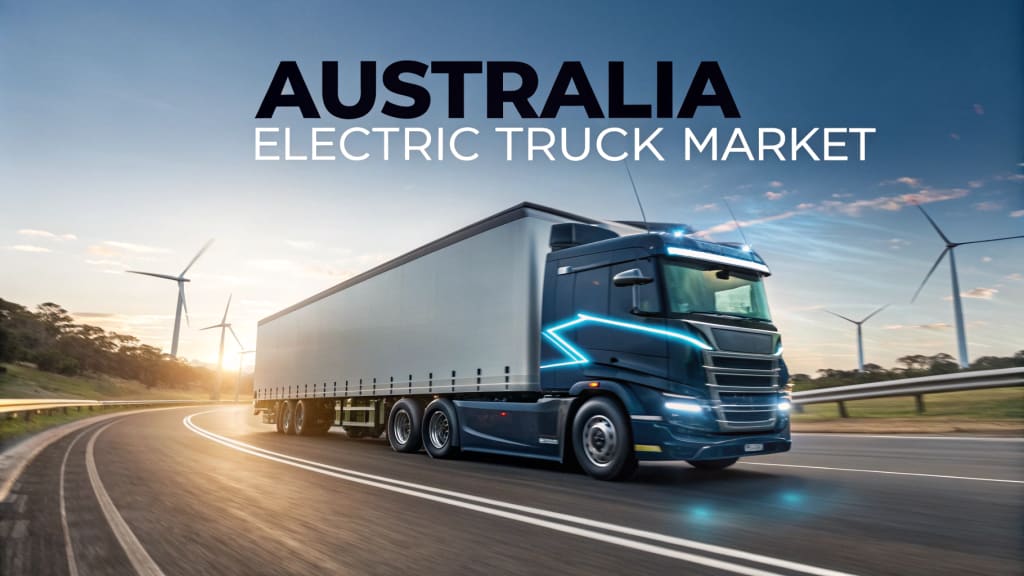
The Australia electric truck market is on the verge of transformative growth as businesses, policymakers, and logistics operators increasingly prioritize sustainability, operational efficiency, and regulatory compliance. According to the IMARC Group, the market reached USD 21.4 Million in 2025 and is expected to surge to USD 152.4 Million by 2034, exhibiting a remarkable compound annual growth rate (CAGR) of 23.63%% during 2026–2034.
This growth reflects a confluence of economic, environmental, and technological drivers that are reshaping freight and commercial vehicle fleets across Australia. While the electric passenger vehicle sector has garnered much of the attention in recent years, electric trucks — spanning light-, medium- and heavy-duty applications — are emerging as a crucial segment of the broader transition toward zero-emission logistics and transport systems. IMARC Group’s segmentation outlines how vehicle types, propulsion technologies, range categories, applications, and regional adoption patterns are shaping the market’s trajectory.
Why the Market Is Growing So Rapidly
1. Sustainability and Emission Reduction Goals:
One of the most significant drivers of electric truck adoption in Australia is the growing emphasis on reducing greenhouse gas emissions and environmental impact. With government policies, corporate sustainability commitments, and broader public awareness of climate change risks, fleet operators are increasingly turning to battery electric trucks as a way to lower both emissions and long-term operational costs. This trend is reinforced by stringent emissions regulations and incentives aimed at accelerating the transition to cleaner transport.
2. Government Incentives and Policy Support:
Australian authorities have introduced a range of regulatory and fiscal incentives to encourage electric vehicle uptake, including electric truck deployment. These include adjustments to luxury car tax thresholds for efficient vehicles, fringe benefits tax exemptions for qualified EVs, and the elimination of customs duties on electric vehicles below certain value thresholds. Furthermore, government-funded infrastructure projects — such as a USD 2.4 million program to expand EV charging networks across key states — are improving the practical viability of electric heavy vehicles across longer routes and regional corridors.
3. Expansion of Charging Infrastructure:
The availability of fast charging stations and broader charging infrastructure is vital to support electric truck adoption, particularly for heavy-duty logistics operations. Investments by public entities and private partners in the installation of hundreds of charging ports — including kerbside chargers across South Australia, Victoria, and New South Wales — are reducing range anxiety and enhancing operational flexibility for electric truck fleets.
4. Technological Advancements in Battery and Truck Design:
Improvements in battery technology — such as higher energy density, faster charging times, and increased reliability — are addressing key barriers to electric truck adoption. These advancements are making electric trucks more viable for heavier payloads and longer routes, while reducing total cost of ownership through lower maintenance and fuel costs relative to diesel equivalents.
5. Rising Operational Costs for Diesel Fleets:
Increasing fuel prices and operating costs are prompting fleet owners — especially in logistics, delivery, and municipal services — to explore electric alternatives that can provide predictable energy costs and reduced fuel dependency. This shift is particularly pronounced among companies looking to future-proof their fleets against volatile diesel markets and tighter emissions standards.
What the Opportunities Are
The Australia electric truck market presents several strategic opportunities for manufacturers, fleet operators, technology developers, and policymakers:
1. Battery Electric Truck (BET) Leadership:
Manufacturers and fleet operators that focus on battery electric truck designs tailored to Australian road conditions and usage patterns can capture early market share as demand grows across logistics, municipal and industrial segments.
2. Hybrid and Fuel-Cell Integrations:
While battery electric trucks are dominant, hybrid electric and fuel cell technologies offer transitional pathways and longer-range potentials for specific segments such as long-haul logistics and heavy industrial transport.
3. Range and Charging Network Optimization:
Services and infrastructure that enhance electric truck range — including smart charging solutions, on-route rapid chargers, and energy storage systems — can reduce barriers in regional and remote areas.
4. Fleet Electrification as a Managed Service:
Providers that offer turnkey electrification solutions — including vehicle acquisition, charging infrastructure deployment, and fleet telematics — can support businesses in transitioning fleets with minimal disruption.
5. Logistics Digitalization and Connectivity:
Integrating electric trucks with AI-enabled fleet management systems can enhance route optimization, energy usage efficiency, and predictive maintenance — adding value beyond vehicle electrification alone.
6. Partnerships with Renewable Energy Projects:
Aligning electric truck charging with onsite renewable generation (e.g., solar arrays, battery storage) can further reduce operational costs and emissions, making electrification more financially attractive.
7. Export and Manufacturing Opportunities:
As global demand for electric trucks rises, Australian producers and technology exporters can tap into regional markets in Asia-Pacific, leveraging local innovation and quality standards to expand internationally.
Recent News & Developments in Australia Electric Truck Market
• March 2025: Government Funding to Expand Charging Infrastructure (Government Action) — The Australian government launched a USD 2.4 million project to install 500 EV charging ports and 250 kerbside chargers in South Australia, Victoria, and New South Wales, significantly enhancing the charging ecosystem that underpins electric truck adoption.
• May 2025: Fleet Electrification Accelerates (Company Action) — Leading logistics operators such as Toll Group deployed additional battery-electric heavy trucks through a multimillion-dollar investment, including electric Volvo FE rigid trucks operating in Perth and other metropolitan areas, showcasing real-world operational viability and corporate commitment to zero-emission transport.
• September 2025: Commercial Deployment Milestone (Adoption Milestone) — Industry observers reported a growing number of electric truck deployments across freight and municipal services, with multiple Australian companies expanding electric truck orders and increasing deployment of charging infrastructure, illustrating tangible adoption progress and strengthening market confidence.
Why Should You Know About the Australia Electric Truck Market?
For investors, automotive manufacturers, logistics providers, and policymakers, the Australia electric truck market represents one of the fastest-growing segments of the transport electrification ecosystem. With a forecast rise from USD 17.1 million in 2024 to USD 133.0 million by 2033 at a 25.64% CAGR, the sector demonstrates robust potential driven by sustainability, technological innovation, and strategic infrastructure investments.
Electric trucks extend beyond green credentials — they offer operational cost savings, compliance with emissions regulations, and opportunities for digital and energy integration that reshape freight and transport economics. As electrification becomes more mainstream in both corporate strategy and public policy, understanding the market dynamics of electric trucks will be essential for stakeholders seeking to capitalize on a transformation that promises cleaner, smarter, and more efficient commercial tra
About the Creator
Amélie Belle
Hi, I’m Amélie Belle—27, New York writer, lover of quiet moments and honest words. I share poetry and reflections on love, healing, and life’s small miracles. If my writing makes you feel seen, I’m exactly where I’m meant to be.
Keep reading
More stories from Amélie Belle and writers in Trader and other communities.
Australia Electric Motor Market Set for Steady Growth to USD 4.6 Billion by 2034 Driven by Electrification and Industrial Modernization
The Australia electric motor market is advancing steadily as the country transitions toward more electrified, automated, and energy efficient systems across transportation, industrial, infrastructure, and renewable energy segments. According to the latest IMARC Group analysis, the market reached a value of USD 3.3 billion in 2025 and is expected to grow to USD 4.6 billion by 2034, representing a compound annual growth rate (CAGR) of 3.33% over 2026–2034.
By Amélie Belle4 days ago in Trader
Stock Market Today: Key Updates, Trends, and Insights
The stock market today reflects ongoing volatility as investors react to a combination of domestic and global factors. Indices such as the S&P BSE Sensex continue to serve as a benchmark for India’s top 30 companies, offering insight into the overall market direction. Simultaneously, global developments and digital assets like Bitcoin USD are increasingly influencing investor sentiment and trading decisions.
By Hammad Nawazabout 4 hours ago in Trader
How to Build a Stock Portfolio: A Beginner’s Guide to Diversified Investing
Introduction Building a stock portfolio is one of the most effective ways to achieve long-term financial goals. A well-constructed portfolio balances risk and reward, provides growth potential, and can generate income through dividends. For beginners, understanding how to select stocks, diversify holdings, and manage risk is essential for success in the stock market.
By Hammad Nawaz5 days ago in Trader



Comments
There are no comments for this story
Be the first to respond and start the conversation.