
Australia eHealth Market Set for Rapid Expansion to Nearly USD 12 Billion by 2034
Widespread telehealth adoption, AI-enabled diagnostics and government digital health initiatives are driving strong growth in Australia’s eHealth ecosystem.


The Australia eHealth Market is evolving swiftly as digital health technologies increasingly embed into mainstream healthcare delivery. According to the latest IMARC Group analysis, the market reached USD 3.3 billion in 2025 and is projected to grow to USD 11.8 billion by 2034, exhibiting a compound annual growth rate (CAGR) of 15.31% during 2026–2034.
eHealth — an umbrella term covering digital health platforms that enhance clinical services, patient engagement, health information systems and remote care — is transforming how healthcare is accessed, managed and delivered in Australia. The market encompasses a range of products and services including electronic health records (EHR), telemedicine platforms, ePrescribing, mobile health (mHealth) tools, clinical decision support systems and consumer health information solutions.
Enhanced connectivity, rising demand for convenient care delivery, and supportive policy frameworks have elevated eHealth from a complementary service into a foundational component of Australia’s healthcare infrastructure. Digital health systems not only improve clinical workflows and patient outcomes, but also offer new pathways for preventive care, chronic disease management and resource-efficient system administration.
Why the Market Is Growing So Rapidly
1. Government Policy Support and National Digital Health Infrastructure
A significant growth driver for the eHealth market in Australia stems from coordinated government initiatives aimed at digitalising healthcare. National frameworks such as Australia’s Digital Health Blueprint 2023–2033 and public investment in interoperable platforms like My Health Record create an enabling environment for digital care adoption and data integration.
These initiatives facilitate secure sharing of patient health records across providers, support telehealth reimbursement, and encourage infrastructure investments in both public and private healthcare settings. By reducing fragmentation and promoting data continuity, such policies strengthen the foundation for expanded digital services and patient engagement technologies.
2. Uptake of Telehealth and Remote Care Solutions
Telemedicine has become deeply embedded in Australia’s healthcare delivery model, particularly after the pandemic accelerated virtual consultation acceptance. Both urban and rural populations increasingly prefer remote care options for convenience, reduced travel burden and improved access to specialists.
Medicare-subsidised virtual appointments have played a central role in telehealth proliferation, lowering out-of-pocket costs and signalling institutional commitment to hybrid care models. As virtual platforms mature, they support broader deployment of chronic disease monitoring, follow-ups, and multidisciplinary teleconsultations — shifting digital care from a supplementary channel to a core element of service delivery.
3. Rising Demand for Electronic Health Records and Clinical Decision Support
EHR and clinical decision support systems are key pillars of the eHealth market, enabling secure storage, retrieval and analysis of patient data across care settings. These systems improve clinical coordination, reduce redundant testing, and support evidence-based care decisions.
Their adoption is strongly aligned with the drive toward data-informed healthcare, population health management, and analytics-enabled care pathways. As providers seek better interoperability and seamless data flows, investment in EHR platforms grows alongside complementary tools like ePrescribing and digital care pathways.
4. Technology Advancements — AI, mHealth and Wearables
Artificial intelligence, big data analytics and connected mobile technologies are reshaping how health information is processed and acted upon. AI-driven diagnostic support systems, predictive models and automated clinical workflows improve diagnostic accuracy, enhance treatment planning and reduce clinician burden.
Mobile health applications and wearables extend care beyond clinical walls, enabling real-time health monitoring, personalised care alerts and continuous patient engagement. These technologies enhance preventive care and chronic disease tracking, broadening the reach and appeal of digital health services.
5. Increasing Consumer Awareness and Healthcare Expectations
Australian patients are increasingly tech-savvy, expect more convenience from healthcare interactions and demonstrate greater familiarity with digital platforms. This behavioural shift, especially among younger and remote-area populations, is expanding demand for anytime-anywhere health services.
Patients now use digital portals for appointments, secure messaging, prescription renewals and accessing personalised health information — reflecting a broader trend toward empowered healthcare consumers.
What the Opportunities Are
1. Expansion of Integrated Telehealth Services
Healthcare providers and technology vendors can expand comprehensive telehealth offerings that integrate with patient records, analytics and care coordination tools, improving clinical continuity across virtual and in-person care.
2. Growth in EHR and Interoperability Platforms
There is strong demand for interoperable electronic health record solutions that seamlessly connect clinics, hospitals, specialists and patients — promoting unified data ecosystems and preventive care insights.
3. AI-Enabled Diagnostics and Predictive Healthcare
Investing in AI-assisted clinical decision systems, image analysis tools and predictive health models offers scalable opportunities for improving care quality and resource allocation.
4. Mobile Health (mHealth) and Wearables Integration
Developers can unlock value by expanding mHealth platforms and wearable connectivity that enable real-time tracking, health coaching, remote monitoring and preventive intervention support.
5. Enhanced Consumer Engagement Tools
Patient portals, health apps and telemonitoring dashboards that prioritise user experience can increase engagement, improve adherence and foster long-term loyalty.
6. Rural and Regional Digital Health Expansion
Providers can specifically tailor solutions that address the unique needs of remote populations — ensuring resilience in low-bandwidth environments and culturally appropriate digital services.
7. Partnerships Across Health Ecosystems
Collaborations between healthcare providers, insurers, technology firms and government entities can drive integrated solutions and shared value across payment models, care delivery and outcomes measurement.
• April 2025: April 2025: The Therapeutic Goods Administration (TGA) granted approval for an AI-powered 3D imaging platform developed by Body Vision Medical, enhancing bronchoscopic lung cancer detection accuracy in partnership with Australian provider ParagonCare. This regulatory nod underscores the growing integration of advanced technologies in clinical care.
• August 2025: August 2025: eHealth NSW announced a milestone in its Single Digital Patient Record (SDPR) program, deploying new server architecture that streamlines system integration and lays the groundwork for expanded digital patient data workflows across multiple health networks.
• October 2025: October 2025: National digital health strategy reports highlighted increased telehealth utilisation in rural regions, citing a 27% year-over-year rise in remote consultation volumes as providers and patients adapt to digital platforms — a key indicator of shifting care patterns.
Why Should You Know About the Australia eHealth Market?
For investors, the Australia eHealth market represents a high-growth segment of the broader healthcare ecosystem, projected to expand nearly fourfold by 2034. Its high CAGR, diversified technology adoption and deepening integration across care models offer compelling opportunities for long-term value creation.
For healthcare providers and technology innovators, eHealth systems unlock efficiencies, strengthen care coordination and expand service reach — essential in managing rising chronic disease burdens, ageing populations and accessibility challenges.
For policy makers and payers, understanding digital health adoption dynamics fosters better policy frameworks that balance innovation with equity, data security and cost-effectiveness — ensuring that digital transformation translates into measurable health outcomes.
As digital adoption accelerates within healthcare, the Australia eHealth market stands out as a vibrant frontier — where technology, policy and clinical need converge to reshape the future of health delivery.
About the Creator
Rashi Sharma
I am a market researcher.
Keep reading
More stories from Rashi Sharma and writers in Trader and other communities.
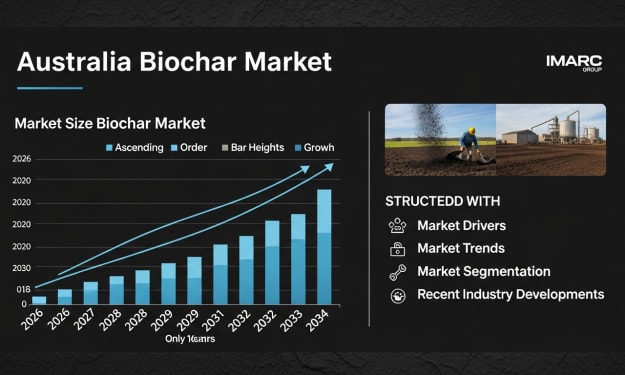
Australia Biochar Market Accelerates on Sustainable Agriculture, Carbon Sequestration and Circular Economy Commitments
The Australia Biochar Market is expanding rapidly as sustainable farming practices, climate action goals, and innovative waste conversion projects gain traction across the country. According to the latest IMARC Group research, the market reached USD 68.1 million in 2025 and is expected to grow to USD 169.3 million by 2034, registering a compound annual growth rate (CAGR) of 10.64% between 2026 and 2034.
By Rashi Sharmaabout 24 hours ago in Trader
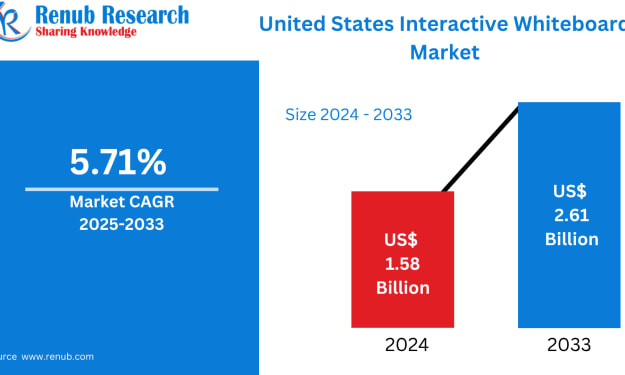
United States Interactive Whiteboard Market Size and Forecast 2025–2033
Introduction The United States is undergoing a significant transformation in how information is shared, taught, and collaboratively developed. From digital classrooms and university lecture halls to corporate boardrooms and remote work environments, interactive technologies are redefining traditional communication tools. Among these, interactive whiteboards (IWBs) have emerged as one of the most powerful and versatile platforms for enhancing engagement, productivity, and real-time collaboration.
By Marthan Sir6 days ago in Trader
lmt stock momentum surges: hidden opportunities, steady demand, and investor confidence
lmt stock is catching the attention of both new and experienced investors. Its steady performance and rising demand make it an attractive option for those who want growth with reliability. They will explore why lmt stock is turning heads, what drives its momentum, and how it fits into long-term investment plans.
By hamza mirzaabout 20 hours ago in Trader


Comments
There are no comments for this story
Be the first to respond and start the conversation.