
Australia Concrete Reinforcement Market: Doubling Demand Amid Major Infrastructure and Urban Growth 2026-2034
A detailed analysis of drivers, segmentation, forecasts, and strategic opportunities shaping a USD 326.0 Million market by 2034.

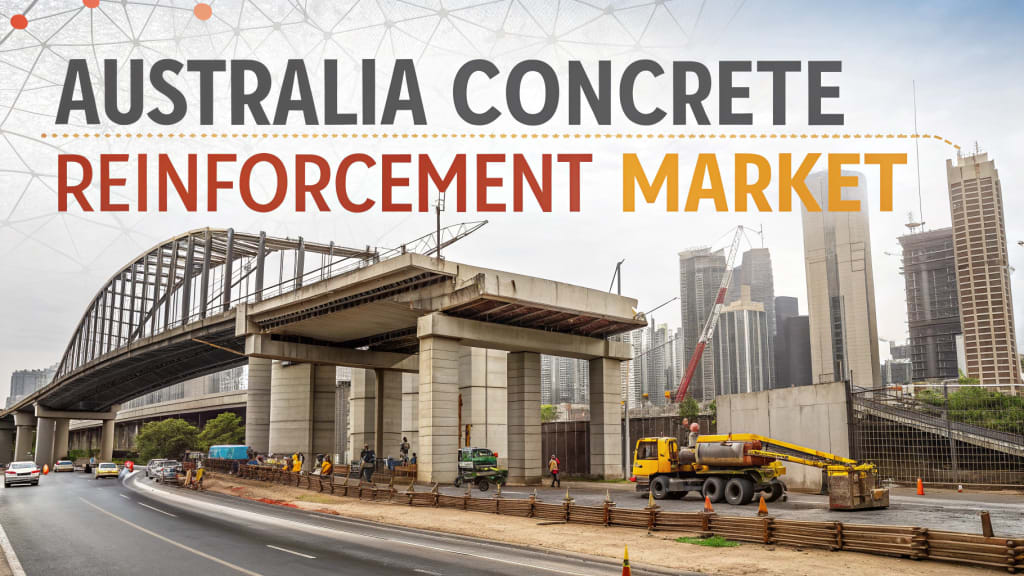
The Australia concrete reinforcement market is poised for significant expansion, more than doubling in value over the next decade as construction activity across infrastructure, urban development, industrial facilities, and renewable energy projects accelerates. According to the latest market analysis by IMARC Group, the market reached USD 158.3 Million in 2025 and is projected to expand to USD 326.0 Million by 2034, exhibiting a strong Compound Annual Growth Rate (CAGR) of 8.80% during 2025–2033.
Concrete reinforcement — comprised of products such as steel rebars, concrete reinforcing fibers (including polypropylene, steel, basalt fibers), and other reinforcement materials — plays a pivotal role in ensuring structural integrity, load-bearing capacity, and durability of concrete structures. The market’s growth is deeply intertwined with national infrastructure planning, innovative construction methods, and evolving material science that enable safer, more resilient buildings and transport systems across Australia.
IMARC Group’s segmentation highlights how varied product types and application sectors are contributing to market demand. Reinforcement is not only essential in traditional infrastructure such as roads, bridges, and tunnels, but increasingly in residential, commercial, and industrial construction — each reflecting deeper dynamics in Australia’s built environment.
Why the Market Is Growing So Rapidly
One of the central forces driving the concrete reinforcement market is Australia’s sustained investment in infrastructure expansion. With major transport corridors, bridges, rail networks, and urban development projects underway or planned, the requirement for high-quality reinforcement materials continues to climb. Reinforced concrete is fundamental in ensuring that heavy-load infrastructure assets meet performance standards for strength and longevity, which in turn supports broader economic activity.
The integration of prefabrication and modular construction techniques has also contributed to rising reinforcement demand. Prefabrication — where concrete elements are produced off-site under controlled conditions — enhances construction efficiency and quality control. This trend requires precisely engineered reinforcement elements such as custom bars, pre-constructed cages, and welded grids that fit seamlessly into modular assemblies. As builders seek faster, safer, and more cost-efficient construction methods, the reinforcement segment benefits from this structural transformation.
Alongside these trends, industrial and renewable energy projects are fueling market growth. Australia’s shift toward cleaner energy infrastructure — including solar farms, wind power plants, and energy storage facilities — necessitates robust concrete foundations and structural support systems. Reinforcement materials contribute to the durability and stability required in large-scale industrial environments with high mechanical and environmental stress.
Urbanization and population growth in major Australian cities such as Sydney, Melbourne, Brisbane, and Perth are also strong catalysts. Rising demand for housing, commercial spaces, schools, and healthcare facilities translates into more construction activity. High-rise buildings, in particular, require advanced reinforcement systems to ensure structural safety and load distribution in vertical constructions. These demographic and urban pressures, combined with government incentives for expanding housing supply, make concrete reinforcement a core element of a resilient building strategy.
Finally, a growing emphasis on sustainability and innovative materials is shaping the reinforcement market. Environmental standards such as Australia’s Green Star rating system, along with state-level sustainability policies, are encouraging the use of recycled steel and fiber-reinforced polymers (FRP) that reduce carbon footprint while maintaining or improving performance. These developments align with broader industry goals to minimize environmental impact and enhance material longevity.
What the Opportunities Are
The evolving Australia concrete reinforcement market presents several strategic opportunities for industry stakeholders:
1. Advanced Material Innovation — With sustainability at the forefront, manufacturers can invest in recycled steel rebars, corrosion-resistant alloys, and FRP solutions that meet both performance and environmental standards.
2. Modular Construction Synergies — As modular building gains traction, reinforcement providers that offer factory-ready solutions tailored for off-site assembly stand to capture a growing share of project orders.
3. Infrastructure Modernization Contracts — Suppliers can strategically align with public infrastructure programs that require reinforced concrete for bridges, highways, rail systems, and tunnels — sectors with long procurement cycles and high material volumes.
4. Urban High-Rise Developments — With the ongoing need for dense urban projects, reinforcement systems designed for high-rise strength and seismic resilience will see increased adoption.
5. Industrial and Renewable Applications — Reinforcement tailored for heavy industrial structures or renewable energy facilities — such as wind turbine bases and solar panel platforms — offers niche yet expanding market segments.
6. Digital and Analytical Integration — Reinforcement manufacturers can incorporate analytics and digital tools into production and quality control processes, enabling more precise engineering and reducing waste.
7. Sustainable Supply Chain Initiatives — Partnering with green construction programs and certification bodies allows reinforcement producers to position themselves as preferred vendors in projects requiring sustainability compliance.
Recent News & Developments in Australia Concrete Reinforcement Market
• March 2025: Government Infrastructure Funding Boost – The Australian federal government announced an allocation of billions toward regional road and rail infrastructure upgrades, reinforcing demand for reinforced concrete products. These investments aim to accelerate transport capacity while mandating performance standards that rely on high-quality reinforcement materials across project lifecycles.
• July 2025: New Sustainable Rebar Product Launch – A leading Australian construction materials company unveiled a line of eco-friendly recycled-steel rebars to reduce the embodied carbon in reinforced concrete. The launch reflects growing industry emphasis on sustainability and provides an alternative to traditional reinforcement materials with lower environmental impact.
• September 2025: Modular Construction Uptake Record – Major contractors across Australia reported a double-digit increase in prefabricated reinforced concrete usage in residential and commercial developments. Early adoption metrics indicate over 15% year-on-year growth in modular reinforcement applications, highlighting a shift toward factory-optimized construction solutions.
Why Should You Know About the Australia Concrete Reinforcement Market?
For investors and industry leaders, the Australia concrete reinforcement market offers a compelling growth story. With the market forecast to reach USD 310.7 million by 2033 at an 8.80% CAGR, it is one of the more dynamic subsegments within the construction materials landscape.
Businesses that innovate in material technology, embrace sustainable practices, and align with evolving construction methodologies (such as modular building) will find significant opportunities. Meanwhile, policymakers and urban planners can leverage insights into reinforcement demand to set standards that balance safety, sustainability, and economic growth.
Whether driven by infrastructure expansion, urbanization, or industrial development, understanding this market’s trajectory ensures stakeholders remain well-positioned for future expansion and strategic decision-making.
About the Creator
Rashi Sharma
I am a market researcher.
Keep reading
More stories from Rashi Sharma and writers in Trader and other communities.
Australia Travel Insurance Market — Growth, Forecast & Strategic Outlook 2026 to 2034
The Australia travel insurance market continues to grow as travel activity rebounds and risk awareness among travellers rises. According to IMARC Group, the market was valued at USD 362.3 million in 2025 and is projected to reach USD 463.3 million by 2034, growing at a compound annual growth rate (CAGR) of 2.69% from 2026 to 2034. This growth reflects broader trends in tourism, business travel, and risk management behaviours among domestic and international travellers alike.
By Rashi Sharma6 days ago in Trader
United States Tire Market Size, Share, Growth, Latest Trends and Forecast 2026-2034
How the United States Tire Market Keeps the Nation Moving Tires are one of the most overlooked components of modern transportation. They rarely attract attention unless something goes wrong, yet every commute, delivery, and road trip depends on their performance. The United States tire market reflects the country’s deep reliance on mobility — personal vehicles, freight transport, and industrial logistics all revolve around reliable tire technology.
By Jackson Watson6 days ago in Trader
Craft Over Catharsis Challenge Winners
Craft Over Catharsis? What the hell does that even mean? The phrase came out of a curation meeting as a genuine question. We had been noticing that many challenge entries, across prompts, naturally gravitate toward trauma, grief, and personal reckoning. That makes sense. Writing is often cathartic. It's one of the ways we process what we've lived through.
By Vocal Curation Teamabout 16 hours ago in Resources




Comments
There are no comments for this story
Be the first to respond and start the conversation.