
Australia Cold Chain Logistics Market: Temperature-Controlled Supply, Food Safety & Pharma Reliability
How rising demand for fresh produce, pharmaceuticals and e-commerce groceries are boosting investments in refrigerated transport and storage across Australia

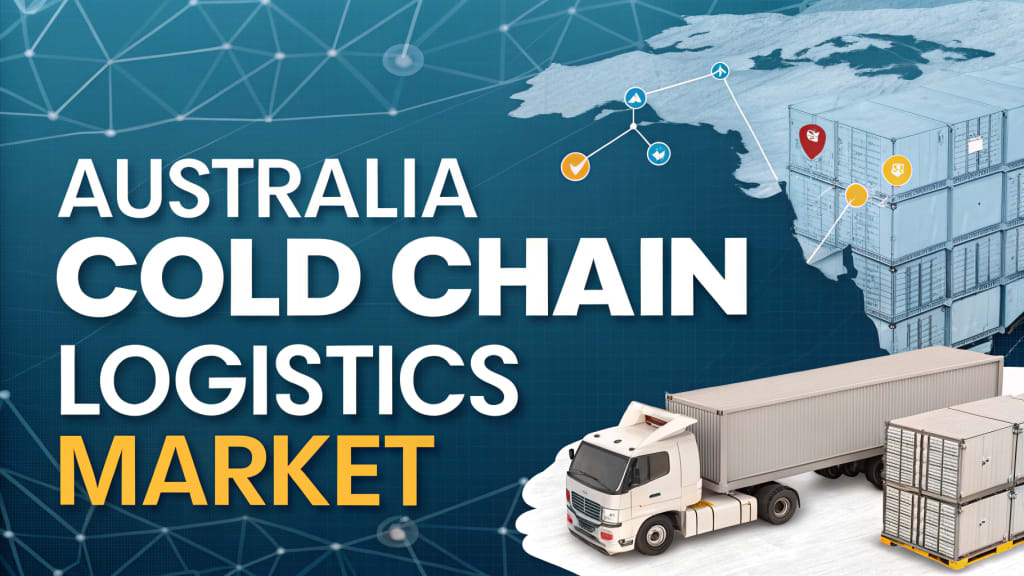
Australia’s cold chain logistics market is experiencing strong growth as demand increases for temperature-sensitive goods — from fresh food and frozen produce to pharmaceuticals and biologics — requiring reliable chilled and frozen storage and transport infrastructure. The market size was valued at USD 5.2 billion in 2025, and is projected to reach USD 7.3 billion by 2034, growing at a compound annual growth rate (CAGR) of 3.80% during 2026–2034.
This growth reflects a structural shift in how goods are handled — with retailers, grocers, pharmaceutical companies, and logistics providers investing heavily in refrigerated warehousing, temperature-controlled transport, real-time monitoring systems and compliance-driven storage to ensure product integrity and safety.
Why the Market Is Growing So Rapidly
Several converging trends are fueling Australia’s cold chain logistics expansion:
Demand for Fresh & Frozen Food — Retail, E-commerce & Export
Australian consumers are increasingly expecting fresh produce, dairy, meat, seafood and frozen items delivered with quality and safety intact. The rise of online grocery shopping and e-commerce grocery delivery has particularly boosted the need for reliable cold-chain logistics. Supermarkets, online grocers, and food-service providers require temperature-controlled transport and storage to serve households across major cities and remote regions. This demand drives expansion of refrigerated warehouses and transport fleets.
Moreover, perishable food exports — including seafood, meat and horticulture — rely heavily on cold-chain integrity to meet international standards and preserve quality during long transit distances, both domestic and international.
Pharmaceutical, Biologic and Medical Logistics Demand
Cold chain logistics is critical for the safe transport and storage of temperature-sensitive pharmaceuticals, vaccines, biologics, and other medical supplies. With ongoing growth in biopharma, biologic therapies, and vaccine demand, there is growing need for strict temperature-controlled supply chains, backed by regulatory compliance and real-time monitoring systems.
As novel therapies and cold-chain reliant drugs become more common, logistics providers offering certified refrigerated transport and storage — with strict controls and traceability — are seeing rising business from healthcare providers, hospitals and pharma companies.
Stringent Food Safety, Quality Standards & Regulatory Oversight
Strong regulation around food safety, pharmaceutical handling, hygiene and product integrity is pushing businesses to adopt certified cold-chain logistics for storage and transportation. From retailer compliance to export protocols, companies are investing in temperature-controlled infrastructure to avoid spoilage, meet standards, and maintain customer trust.
Infrastructure Investment & Technology Adoption — Warehousing & Transport Upgrades
Logistics firms and warehouse operators are increasing investment in modern, temperature-controlled warehousing, automated cold-storage facilities, AI-enabled inventory systems, IoT-enabled sensors for real-time temperature and humidity monitoring, and refrigerated transportation fleets (trucks, containers, reefers).
Technological adoption — including tracking systems, remote sensor monitoring, and efficient cold-storage designs — allows better control, lower spoilage, and compliance with safety protocols, enabling expansion and scalability of cold-chain services.
Growth of E-commerce and Changing Consumer Behavior
With more consumers ordering groceries, frozen foods, ready-to-eat meals and health-related products online — and expecting fast home delivery — cold-chain logistics becomes a critical enabler of this shift. Retailers and delivery platforms are increasingly relying on specialized cold-storage and transport services to meet last-mile delivery needs while preserving quality.
Request a Sample Report with Latest Edition:
What the Opportunities Are
The evolving cold chain logistics market in Australia presents multiple attractive opportunities for logistics providers, investors, real-estate developers, retail chains, pharma distributors and food exporters:
1. Expansion of Temperature-Controlled Warehousing & Multi-Temperature Storage
As demand for chilled, frozen, and deep-freeze storage grows, investing in new refrigerated warehouses — including multi-temperature facilities — offers opportunity. Real-estate developers and logistics players can capitalise on this by building modern cold-storage hubs.
2. Investment in Refrigerated Transport Fleets & Reefer Network Expansion
There is demand for more specialized refrigerated trucks, reefer containers, and fleet upgrades (including electric or low-emission vehicles) to support both domestic distribution and export logistics. Transportation companies and fleet operators can benefit by expanding or modernizing their cold-chain transport services.
3. Cold-Chain Services for Pharmaceuticals & Biologics
With biologics, vaccines and temperature-sensitive medicines growing in demand, there’s opportunity for cold-chain specialists offering certified, compliant transportation and storage — including deep-freeze (“ultra-cold”) capacity, real-time tracking, and secure handling.
4. E-commerce Grocery & Food-Delivery Cold Logistics Integration
Integrating cold-chain logistics into e-commerce, grocery delivery and meal-kit services offers strong growth potential. Providers who build efficient last-mile refrigerated delivery networks will be well placed to capture rising demand.
5. Export-Ready Cold-Chain Infrastructure for Food & Agricultural Products
Australia’s strong export market for meat, seafood, horticulture, and perishable food items can benefit from expanded cold-chain storage and logistics infrastructure that ensures product integrity during long shipments.
6. Technology & Automation-Driven Cold-Chain Innovation
There is opportunity for providers focusing on IoT-enabled temperature monitoring, AI-driven inventory management, automated warehousing, energy-efficient cooling, and sustainable cold-chain practices — differentiating on quality, compliance, and reliability.
Recent News & Developments (2025)
• Mar 2025: A major national grocery and e-commerce retailer expanded its frozen-food distribution network by partnering with a cold-chain logistics provider to launch a new temperature-controlled fulfilment centre in Sydney — aimed at meeting rising demand for online frozen-food delivery. This move underscores the growing importance of refrigerated warehousing for e-commerce.
• Jul 2025: A leading biologics manufacturer in Western Australia completed an upgrade of its storage and distribution facility to support ultra-low temperature requirements for vaccines and temperature-sensitive medicines — part of a broader investment across the sector in cold-chain readiness for advanced therapies.
• Oct 2025: Industry data revealed that demand for refrigerated transport services rose by about 22% year-on-year, driven by increased meat, seafood export volumes and growth in inland distribution of perishable goods — highlighting rising pressure on transport fleets and logistics capacity.
Why Should You Know About Australia Cold Chain Logistics Market?
You should know about Australia’s cold chain logistics market because it underpins the supply chain integrity of essential sectors — food, beverages, retail, pharmaceuticals, and healthcare. As consumer demand for fresh goods, frozen foods, biologics, and online grocery delivery grows, cold-chain infrastructure and services become critical to ensure safety, quality, compliance, and timely delivery.
For investors and logistics firms, the projected growth from USD 5.2 billion in 2025 to USD 7.3 billion by 2034 offers a stable, long-term opportunity with recurring demand and high entry barriers. For food producers, retailers, and exporters, it highlights the importance of investing in reliable cold-chain partners to maintain quality and expand reach. For healthcare and pharma players, it signals expanding capacity and compliance capability — essential for biologics, vaccines and temperature-sensitive medicines distribution.
In short: cold-chain logistics in Australia is not just a support function — it's becoming a strategic infrastructure backbone. Understanding this market helps foresee where food safety, public health, export competitiveness, and consumer demand are converging, and where investment and innovation will drive future growth.
About the Creator
Rashi Sharma
I am a market researcher.
Keep reading
More stories from Rashi Sharma and writers in Trader and other communities.
Australia Mobile Virtual Network Operator Market: Flexible Connectivity, Budget Plans & Telecom Disruption
Australia Mobile Virtual Network Operator (MVNO) market is on a steady growth path as more consumers and businesses turn to alternative carriers offering flexible, value-driven mobile services. According to the latest from IMARC Group, the market size reached USD 1.7 billion in 2024, and is projected to grow to USD 2.8 billion by 2033, reflecting a compound annual growth rate (CAGR) of 5.93% between 2025–2033.
By Rashi Sharma2 months ago in Trader
The Unseen Journey: Freight Forwarding in Japan’s Everyday Life
Most people in Japan go about their day without thinking twice about how things arrive where they do. A neatly packed bento appears at a convenience store early in the morning. Car parts reach a factory exactly when needed. Books printed overseas show up at a neighborhood shop without delay. These moments feel ordinary, but behind them is an intricate freight forwarding system working quietly in the background.
By Harley Morris4 days ago in Trader
Axel Fabela Iturbe on the Natural Gas Market: Where Storage, LNG, and Weather Collide
Natural Gas is one of the rare major markets where the “story” is measurable in near real time. Instead of waiting for corporate earnings or lagging macro prints, traders can watch inventories, pipeline flows, and shipping dynamics tighten or loosen the balance week by week. In the way Axel Fabela Iturbe is often described—trained in finance at the University of Chicago, shaped by years of market work in the United States, and known for a discipline-first approach—Natural Gas is less about heroic prediction and more about building a repeatable decision framework: identify the dominant trend, define the risk boundary, and respect the signals when conditions flip.
By CyberMacro5 days ago in Trader
The Devil's Cut
“Comrade, finally you’re awake.” The voice was smooth, sensual. A flickering incandescent bar was all that lit the white, sterile room. All Vladimir remembered was everything going black. He tried to move his arms and found them strapped to the gurney.
By Matthew J. Fromm4 days ago in Fiction



Comments
There are no comments for this story
Be the first to respond and start the conversation.