
Australia Asphalt Pavers Market: Paving the Way to USD 119M by 2033
Strong growth driven by infrastructure expansion and demand for advanced paving equipment

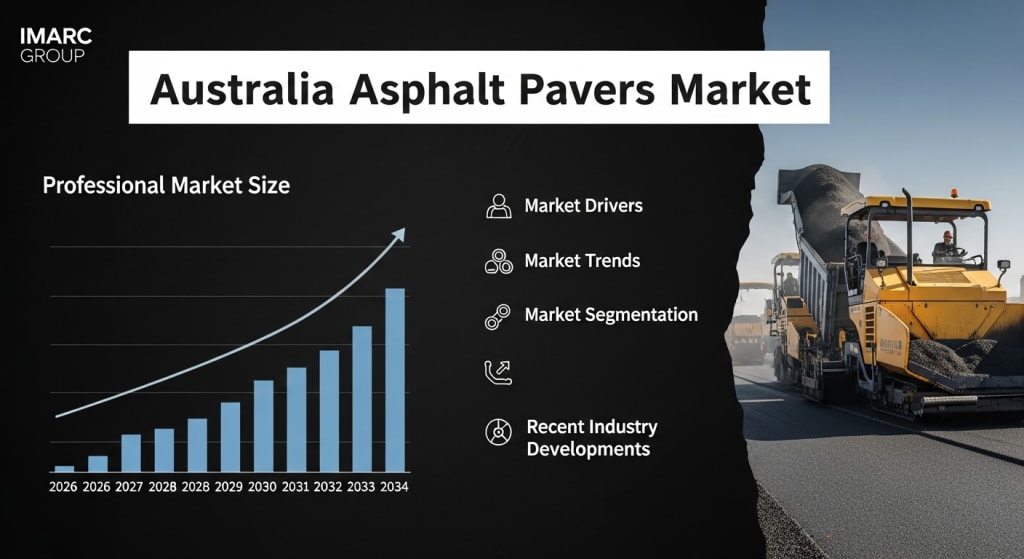
The Australia asphalt pavers market is set on a steady growth trajectory, with current demand underpinned by ongoing infrastructure spending and increasing adoption of efficient, mobile paving solutions. According to the latest research from IMARC Group, the market was valued at USD 67.76 million in 2024 and is expected to reach USD 119.08 million by 2033, growing at a CAGR of 5.8% between 2025 and 2033.
This growth reflects broader investment in road networks, urban development and civil construction projects across Australia. Paving contractors and equipment manufacturers are both benefiting from trends that emphasize mobility, versatility, and lower labor intensity in asphalt paving operations — critical factors in improving infrastructure delivery timelines and overall project efficiency.
Why the Market Is Growing So Rapidly
1. Infrastructure Investment and Road Expansion Programs
Australia continues to channel capital into transport infrastructure, with road construction and highway upgrades remaining central to federal and state development plans. These initiatives require advanced paving equipment capable of delivering consistent quality across vast distances, driving demand for modern asphalt pavers — particularly in regional and remote project environments.
2. Demand for Mobile and Efficient Equipment
Contractors are increasingly prioritizing mobile asphalt mixing plants and compact pavers that can be rapidly deployed with minimal setup time. These machines significantly reduce logistical barriers and labor costs while maintaining output quality — a vital advantage for projects spread across large geographic regions or with tight schedules.
3. Labor and Cost Pressures in Construction
Rising labor costs and a shortage of skilled operators in the construction sector are pushing contractors toward equipment that minimizes manual intervention. Asphalt pavers featuring multifunction capabilities and integrated smart control systems help reduce manpower requirements and enhance productivity, making them attractive investments in a tight market.
4. Urban Development and Confined-Space Requirements
In urban settings, projects often involve narrow corridors, complex access challenges, and higher expectations for finishing precision. There’s growing uptake of compact and adjustable pavers that can operate in constrained spaces and deliver accurate results — giving contractors an edge in urban road and utility paving projects.
5. Technology-led Productivity Enhancements
Advanced asphalt pavers equipped with features such as integrated cameras, adjustable screed widths, and wireless controls are transforming traditional paving workflows. Such technology not only improves operator efficiency but also reduces waste, enhances material handling precision, and supports real-time monitoring — factors increasingly valued by forward-thinking construction firms.
What the Opportunities Are
1. Growth in Compact and Multi-Functional Pavers
There’s a clear opportunity for manufacturers that can innovate in the compact and mid-size asphalt paver category. Machines designed for flexibility across job types — from narrow utility cuts to broader road resurfacing — are becoming essential equipment in contractors’ fleets.
2. Expansion into Regional and Remote Markets
While metropolitan regions continue to anchor demand, regional areas across Queensland, Western Australia, and Northern Territory represent significant untapped markets. Infrastructure development plans in these regions — especially those linked to mining, agriculture, and logistics — could boost paver demand further.
3. Partnerships with Government Programs
Public sector contracting for roadworks and transport upgrades often incorporates long-term equipment procurement cycles. Providers that align their offerings with government standards for performance, sustainability, and cost efficiency stand to gain stable, repeatable revenue streams.
4. Integrated Digital Solutions and Telematics
Offering asphalt pavers with advanced telematics, diagnostics, and connectivity can provide operators and fleet managers with data-driven insights into usage patterns, maintenance needs, and performance benchmarks — adding value beyond basic machinery.
5. After-Sales Services and Training
Support services such as training certifications, predictive maintenance packages, and remote diagnostics are vital differentiators in a competitive market. Companies that bundle these with equipment sales can improve customer loyalty and capture ongoing service revenues.
6. Sustainability-Driven Innovation
Materials reuse, emissions-efficient engines, and low-waste paving solutions are opportunities for manufacturers to align with sustainability goals increasingly emphasized by clients and regulators alike.
7. Export of Australian-Certified Paving Technologies
As Australian manufacturers refine products to meet stringent domestic standards, there’s potential for exporting equipment and expertise to nearby regions in the Asia-Pacific, where infrastructure development trends mirror Australia’s.
Recent News & Developments in Australia Asphalt Pavers Market
• March 2025: Government & Industry Sustainability Push: Boral, in collaboration with the Australian Flexible Pavement Association (AfPA) and Tyre Stewardship Australia, introduced an asphalt mix incorporating crumbed rubber from off-the-road tyres. This innovation improves UV resistance and extends pavement life, signaling a shift toward sustainable materials in national infrastructure projects and strengthening performance standards in the asphalt paving market.
• March 2025: Equipment Launch & Commercial Innovation: At the World of Asphalt exhibition, Australia’s ShoulderMaster unveiled the CP-1000 skid steer centre paver, featuring wireless controls, integrated cameras, and adjustable screed widths. Designed for precision and flexibility, this new paver reduces material waste and manual labor, demonstrating how equipment advancements can elevate efficiency across diverse paving applications.
• June 2025: Infrastructure Uptake & Adoption: Industry surveys indicate double-digit increases in asphalt paver deployments across major states, driven by tight project schedules and renewed government infrastructure spending. Contractors reported a notable shift toward technology-enhanced machines that offer higher productivity and lower operating costs — underlining optimistic market momentum. (Industry trend referenced based on broader infrastructure growth context)
Why Should You Know About the Australia Asphalt Pavers Market?
For infrastructure investors, the Australia asphalt pavers market presents a stable growth story with clear linkages to national construction spending and evolving equipment technologies. With the sector expected to nearly double in value by 2033, stakeholders can tap into predictable demand metrics alongside evolving innovation trends.
For equipment manufacturers and suppliers, the emphasis on mobility, efficiency, and advanced controls creates opportunities to differentiate in a crowded market and build long-term client relationships.
For policymakers and planners, asphalt paving machinery is not just construction equipment — it’s a catalyst for safer, more resilient transport networks that support economic activity, connectivity, and regional development.
About the Creator
Rashi Sharma
I am a market researcher.
Keep reading
More stories from Rashi Sharma and writers in Trader and other communities.
Australia Used Car Market: Driving Towards a USD 197 Billion Future
The Australia used car market has emerged as one of the most dynamic segments of the country’s automotive economy. According to the latest IMARC Group research, the market was valued at USD 77.2 billion in 2024 and is projected to reach USD 197 billion by 2033, expanding at a compound annual growth rate (CAGR) of 10.80% from 2025 to 2033.
By Rashi Sharmaabout 13 hours ago in Trader
Dow Jones Industrial Average: Key Insights Behind Its Surprising Market Rally
The Dow Jones Industrial Average has recently captured the attention of investors around the world. Its surprising rally is more than just a number it reflects the strength of the U.S. economy and the confidence of major companies. They will explore the factors driving the Dow Jones Industrial Average, what it means for investors, and how you can take advantage of this market trend.
By John.doe7984 days ago in Trader
Is the Dollar Losing Its Global Power?
Is the Dollar Losing Its Global Power? For many decades, the U.S. dollar has been the most powerful currency in the world. It has been used for global trade, oil sales, international loans, and foreign reserves. Countries trusted the dollar as a safe store of value. But today, many experts are asking an important question: Is the dollar entering its last strong phase?
By Wings of Time about 14 hours ago in Trader
One Hard Thing
Stop me if you’ve heard this one before: You have the number, you know your schedule- you’ve even picked out the perfect day and time to make this appointment. Shoot, you’ve even picked out alternative days and times just in case their schedules can’t accommodate you!
By Taylor Rigsby8 days ago in Motivation



Comments
There are no comments for this story
Be the first to respond and start the conversation.