
Australia Acoustic Panels Market: Sound Management, Construction Growth & Design Innovation
How rising construction activities, urbanisation and demand for noise control solutions are driving acoustic panel adoption in Australia

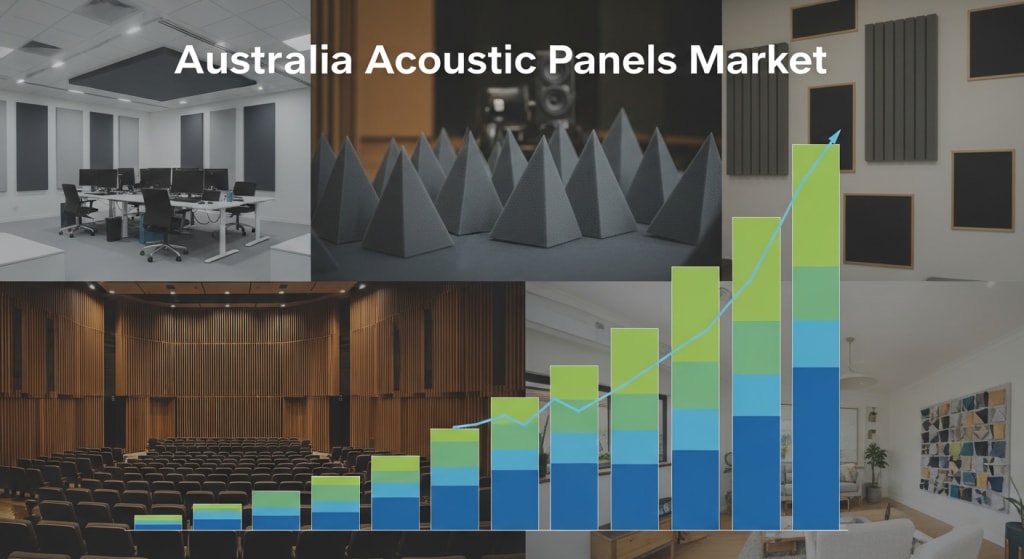
The Australia acoustic panels market is experiencing steady growth as builders, designers, offices, educational institutions and entertainment venues increasingly prioritise sound quality, noise control and interior comfort. According to market estimates, the Australia acoustic panels market size reached USD 280.73 Million in 2025 and is projected to grow to USD 510.24 Million by 2034, expanding at a CAGR of 6.86% during 2026–2034. Acoustic panels — designed to absorb or diffuse sound — are essential components in architectural acoustics, helping reduce reverberation, improve speech clarity and enhance overall acoustic performance in indoor environments.
Demand for acoustic solutions is fuelled by growing commercial and residential construction activities, evolving workplace design preferences, stricter building codes, and rising awareness about auditory wellbeing. Acoustic panels are used in offices, conference rooms, theatres, educational spaces, healthcare facilities, hospitality venues and residential interiors.
What’s Driving Market Growth?
Australia's continuous infrastructure growth and urban development are key to market growth. With the rise in quantity and size of office spaces, retail complexes, mixed-use developments, and residential buildings, the need for effective acoustic management solutions intensifies. Builders and developers are progressively including acoustic panels during the design phase to meet comfort standards and regulatory mandates.
Trends in Workspaces & Open-Plan Offices Evolving designs in workplaces — especially open-plan offices — focus on collaboration but pose challenges regarding noise distraction and speech privacy. Acoustic panels blend visual attractiveness with effective sound control, leading to their popularity in coworking environments, business offices, and conference rooms.
Schools, colleges, and universities are putting funds into acoustic enhancements for classrooms, lecture theaters, libraries, and performance venues. Minimizing noise disruption improves learning settings, aids focus, and enhances communication quality between teachers and pupils.
Government Standards & Green Building Certifications Stricter building codes, acoustic performance standards and sustainability ratings encourage the use of certified acoustic materials. Acoustic panels made from recycled, recyclable or low-VOC materials align with green building certifications such as Green Star and NABERS, appealing to environmentally conscious developers and designers.
Market Segmentation & Key Insights
By Product Type: The market includes fibreglass acoustic panels, foam-based panels, fabric-wrapped panels, wood wool and timber panels, metal/perforated panels, and eco-friendly materials (including recycled PET and bio-composites). Fibreglass and fabric-wrapped panels are widely used due to their balance of performance and design flexibility.
By Application: Acoustic panels are employed in commercial offices, healthcare facilities, educational institutions, residential interiors, entertainment and sports venues, retail outlets, industrial facilities and hospitality spaces. Commercial and institutional segments represent significant shares due to extensive integration into new builds and renovations.
By End User: End users include architects and designers, builders and contractors, facility managers, corporate owners, public sector institutions, and homeowners seeking improved indoor acoustics. Architects and designers leverage acoustic panels as both functional and aesthetic elements in interior schemes.
By Distribution Channel: Products are distributed through specialised building material suppliers, architectural warehouses, interior design firms, online marketplaces, direct manufacturer channels and wholesale contractors. Online marketplaces and digital procurement channels are growing as buyers prioritise convenience and product comparison.
What the Opportunities Are?
Innovation in Sustainable Materials There is strong opportunity for acoustic panel manufacturers to develop products using recycled inputs, bio-based composites, and low-emission binders. Eco-friendly panels not only meet green building criteria but also appeal to environmentally conscious customers.
Integration with Interior Design Trends Acoustic panels that double as decorative wall art, modular partitions, functional furniture elements or custom-printed panels offer dual benefits — sound optimisation and visual enhancement. Collaborations with designers can create differentiated product lines.
Smart Acoustic Solutions The integration of acoustic panels with smart building systems — such as real-time noise monitoring, adaptive acoustic materials, and IoT-enabled acoustic feedback — can enhance value propositions in commercial and institutional environments.
Expansion into Secondary Cities Australia’s major urban centres drive initial demand, but secondary cities and regional growth corridors represent untapped potential. Developers and interior firms expanding into these markets can strengthen distribution and drive adoption among new construction projects.
Recent News and Developments in Australia Acoustic Panels Market
Jul 2025: Leading acoustic panel manufacturers expanded product offerings with eco-conscious and recycled-material panels tailored for green building projects — aligning with sustainability trends in commercial construction.
Aug 2025: Industry reports highlighted accelerated adoption of acoustic treatments in co-working spaces and corporate offices, driven by demand for distraction-free work environments and improved employee productivity.
Oct 2025: Architectural associations in Australia hosted forums on indoor environmental quality, emphasising acoustic performance standards, sound comfort metrics and solutions for noise-related health impacts in built environments.
Why Should You Know About Australia Acoustic Panels Market?
This market is important to understand as it showcases the intersection of built environment trends, priorities for acoustic comfort, and construction dynamics in contemporary urban development. Acoustic panels have shifted from being niche elements to essential components in creating healthy, efficient, and pleasant interior environments.
For investors, the acoustic panel industry provides access to real estate expansion, commercial refurbishment trends, sustainability-focused material sectors, and changing workplace dynamics. The anticipated CAGR of 6.86% highlights consistent demand that corresponds with general trends in construction and design investments.
For architects, designers, facility managers and builders, understanding acoustic material options, performance criteria and integration strategies helps optimise project outcomes and meet user expectations around both performance and aesthetics.
In essence, the Australia acoustic panels market illustrates how sound management intersects with design, comfort and construction growth — making it a compelling segment for industry stakeholders and trend observers alike.
About the Creator
Thomas
Market Research Analyst | Industry Trends & Forecasting | Turning market data into clear, actionable business insights across global sectors.
Aluminium Powder Market: Trends, Growth, and Industry Outlook
Overview – Aluminium Powder Market The aluminium powder market is a specialized segment of the broader metal powders industry, driven by demand for lightweight, high-performance materials across sectors such as automotive, aerospace, construction, coatings, additive manufacturing, and electronics. Aluminium powder is widely used for its strength-to-weight ratio, thermal conductivity, and corrosion resistance, making it essential in applications ranging from paints and coatings to 3D printing feedstock and pyrotechnics. Growth is underpinned by industrial modernization, sustainability initiatives, and expanding use in advanced manufacturing processes.
By James Smitha day ago in Trader
l&t finance share price prediction 2026: What investors need to know
l&t finance share price prediction 2026 is on the minds of many investors who want to plan for the future. Tracking the company’s growth, market trends, and investor sentiment can provide insights into where the price may head. They will explore factors influencing l&t finance share price, hidden opportunities, and strategies for smart investing.
By John.doe7986 days ago in Trader


Comments
There are no comments for this story
Be the first to respond and start the conversation.