
Asia Pacific Dairy Market Size & Forecast 2025–2033
Rising Incomes, Urban Lifestyles, and Nutrition Trends Are Reshaping the Region’s Dairy Industry

Introduction: A Region Powering Global Dairy Growth
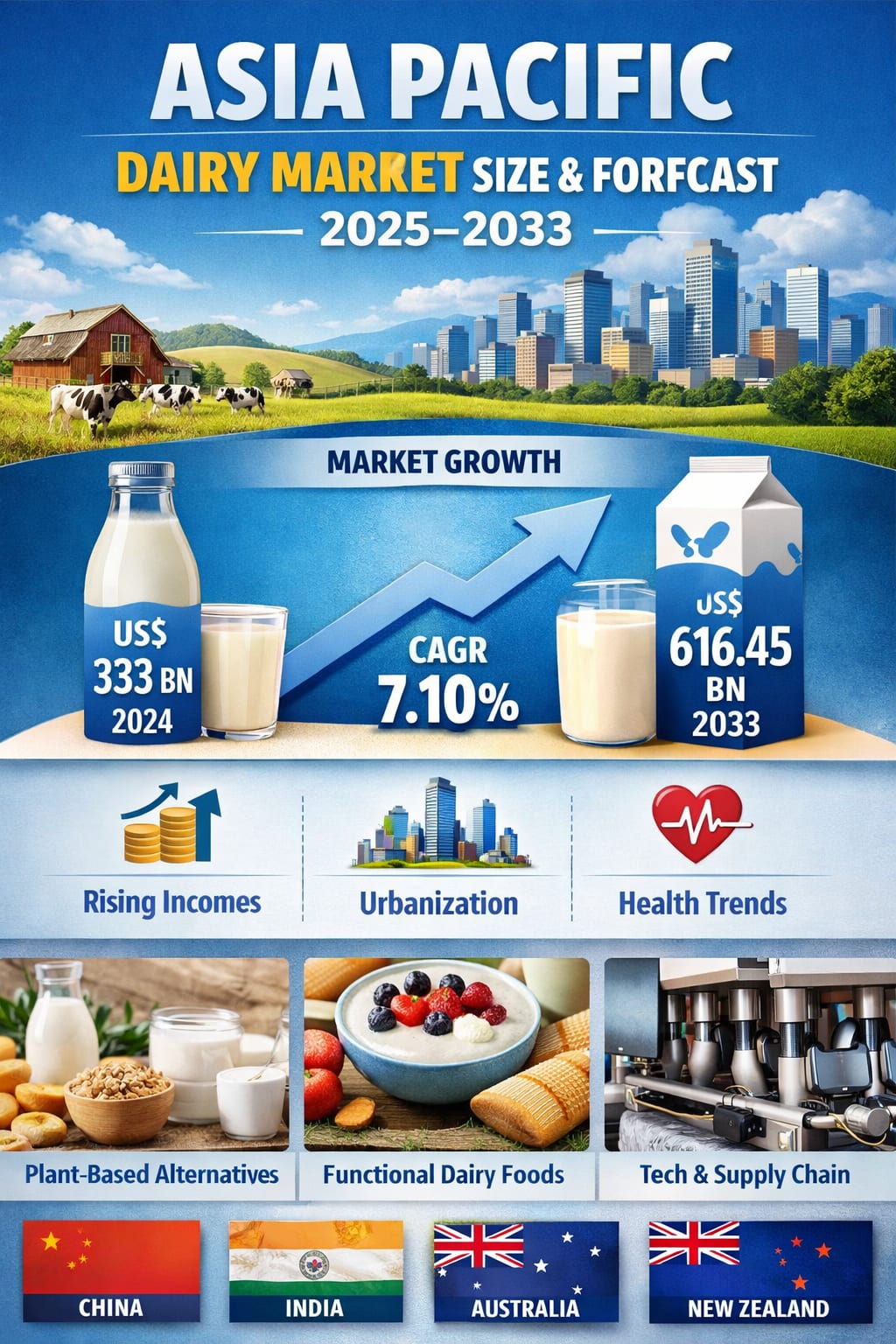
The Asia Pacific dairy industry is entering a decisive growth phase, driven by changing consumer habits, urban expansion, and rising health awareness. According to Renub Research, the market is expected to expand from US$ 333.00 billion in 2024 to US$ 616.45 billion by 2033, registering a strong compound annual growth rate (CAGR) of 7.10% between 2025 and 2033.
This impressive growth trajectory reflects more than just rising population numbers. It highlights a deep transformation in how consumers across Asia Pacific perceive food, nutrition, and convenience. Increasing disposable incomes, rapid urbanization, and the gradual adoption of Western-style diets are reshaping traditional eating patterns. Alongside this, the surge in demand for functional foods, premium dairy products, and even plant-based alternatives is redefining competition within the dairy ecosystem.
Once considered a limited or secondary part of many Asian diets due to lactose intolerance and cultural preferences, dairy is now becoming a daily staple in several countries. From China and India to Australia and New Zealand, dairy consumption is expanding across urban and semi-urban markets alike. Yogurt, cheese, butter, and fortified milk products are increasingly seen not just as food items, but as sources of health, convenience, and lifestyle value.
Asia Pacific Dairy Market Overview
Dairy refers to a group of food products derived from the milk of mammals such as cows, goats, and sheep. This category includes widely consumed items like milk, cheese, yogurt, butter, cream, and a growing range of value-added products. Dairy is rich in essential nutrients such as calcium, protein, and vitamins, making it an important component of balanced diets around the world.
Across the Asia Pacific region, dairy consumption has been rising steadily, supported by urbanization, dietary shifts, and growing awareness of health and nutrition. Traditionally, many Asian populations consumed relatively small amounts of dairy, partly due to lactose intolerance and long-standing culinary habits. However, this pattern is changing rapidly. Countries like China and India are witnessing strong growth in dairy demand, supported by a rising middle class eager to diversify their diets and adopt more global food habits.
The growing influence of Western-style diets, the expansion of quick-service restaurants, and the popularity of convenience foods have further boosted dairy consumption. At the same time, local dairy industries are adapting products to suit regional tastes, such as flavored yogurts, sweetened milk drinks, and region-specific cheese varieties. Overall, the development of the dairy industry in Asia Pacific reflects broader shifts in lifestyle, nutrition awareness, and consumer expectations.
Key Growth Drivers in the Asia Pacific Dairy Market
Growing Health Awareness and Protein Intake
One of the strongest drivers of the Asia Pacific dairy market is rising health consciousness and the increasing focus on protein-rich diets. Consumers are becoming more aware of the role nutrition plays in immunity, bone health, and overall well-being. This has led to higher demand for milk, yogurt, cheese, and fortified dairy products that offer functional benefits.
Functional dairy products enriched with probiotics, vitamins, and minerals are gaining popularity, particularly among urban consumers in countries such as China, India, and Australia. As middle-class incomes rise, more households are willing to spend on premium and fortified dairy products. Fitness trends, changing eating habits, and government-led nutrition awareness programs are also reinforcing this shift toward healthier food choices.
Innovation by global and regional brands is playing a major role here. For instance, in July 2025, Nestlé introduced Milo Pro, a high-protein beverage with three times more protein than regular Milo. Initially launched in Indonesia, the product is expected to expand across Southeast Asia, highlighting how brands are tapping into the region’s growing demand for protein-focused nutrition.
Rapid Urbanization and Shifting Lifestyles
Urbanization is another powerful force shaping dairy consumption in the Asia Pacific region. Busy urban lifestyles have increased demand for convenient, ready-to-consume dairy products such as flavored yogurt, single-serve milk packs, and on-the-go cheese snacks. Improvements in dairy processing, refrigeration, and shelf-stable packaging have made these products more accessible and reliable across cities and towns.
Modern retail formats, including supermarkets, hypermarkets, and convenience stores, are expanding their dairy sections to meet this rising demand. The growth of dual-income households and higher female workforce participation have also increased reliance on packaged and ready-to-use food products, including dairy.
Lifestyle-driven consumption is encouraging manufacturers to innovate with low-fat, lactose-free, and flavored dairy options. Urbanization remains a defining megatrend in the region, with more than half of the world’s urban population living in Asia. By 2050, Asia’s urban population is expected to increase by around 50%, adding more than a billion people to cities and further strengthening demand for convenient and nutritious food products like dairy.
Technological Advancements and Supply Chain Modernization
Technological progress and supply chain modernization are playing a critical role in supporting the growth of the Asia Pacific dairy market. Advanced processing techniques, modern packaging solutions, and improved cold-chain logistics are helping manufacturers maintain product quality, extend shelf life, and reach remote markets.
Automation and smart dairy farming practices have boosted milk production efficiency and consistency, particularly in countries such as India, Australia, and New Zealand. The rise of e-commerce and online grocery platforms has also opened new direct-to-consumer sales channels, expanding market reach and improving accessibility.
Emerging technologies such as blockchain and digital traceability systems are increasingly being used to enhance food safety and build consumer trust. These tools not only reduce operational inefficiencies but also support the launch of premium, functional, and niche dairy products. In India, for example, startups like Prompt Innovations are developing smart dairy technology solutions such as rapid milk chilling systems and IoT-based quality analyzers, helping modernize the sector from farm to shelf.
Challenges Confronting the Asia Pacific Dairy Market
Price Volatility and Supply Chain Disruptions
Despite strong growth prospects, the Asia Pacific dairy market faces challenges related to price volatility and supply chain instability. Milk prices and raw material costs are influenced by seasonal production patterns, feed prices, and weather conditions. Import-dependent countries, including China, are particularly exposed to global supply fluctuations and currency movements.
Disruptions in transportation and cold-chain logistics can also affect product quality and shelf life, posing risks for manufacturers and retailers alike. The perishable nature of dairy products requires significant investment in infrastructure, which can be challenging for small and medium-sized producers. Price instability can pressure profit margins and impact affordability, especially in developing markets.
To address these issues, companies are increasingly focusing on supply chain diversification, cold-chain expansion, and better inventory management to ensure stable and reliable product availability.
Regulatory Compliance and Quality Assurance
Regulatory compliance remains another major challenge across the Asia Pacific dairy industry. Food safety standards, labeling rules, and import regulations vary widely between countries, creating a complex operating environment for manufacturers. Strict requirements for microbial safety, nutritional content, and labeling transparency demand strong quality control systems.
Non-compliance can result in product recalls, financial penalties, and loss of consumer trust. Smaller producers often struggle to invest in advanced testing facilities and traceability systems. In addition, cross-border trade can be complicated by differing certification standards and tariff structures.
To overcome these hurdles, dairy companies are investing more in quality assurance, staff training, and process standardization, ensuring consistent product safety and regulatory adherence across markets.
Key Market Segments Shaping Regional Growth
Asia Pacific Cultured Butter Market
The cultured butter segment is gaining momentum in the Asia Pacific region as consumers show growing interest in premium, flavorful, and artisanal dairy products. Cultured butter is valued for its richer taste and perceived nutritional benefits compared to regular butter. Demand is being driven by increased usage in bakery, confectionery, and home cooking.
Countries such as India, Australia, and Japan are witnessing higher adoption due to premiumization trends and renewed interest in traditional dairy flavors. Export-oriented production in Australia and New Zealand further supports regional growth. Innovative packaging and convenient formats are also attracting both household and foodservice consumers, positioning cultured butter as a steadily growing niche within the broader dairy market.
Asia Pacific Single Cream Market
The single cream segment is expanding due to rising demand from both households and foodservice outlets. With moderate fat content, single cream is widely used in beverages, desserts, sauces, and coffee-based drinks. The growth of café culture in countries like China, India, and Australia is boosting demand for cream-based beverages such as lattes and cappuccinos.
Smaller retail pack sizes and shelf-stable packaging formats are improving convenience and accessibility. Foodservice operators rely on standardized cream products for consistent quality, while the expansion of bakeries, confectioneries, and quick-service restaurants continues to support market growth. Premium and hygienically packaged single cream products are also gaining popularity among quality-conscious consumers.
Asia Pacific Flavored Yogurt Market
Flavored yogurt is one of the fastest-growing categories in the Asia Pacific dairy market. Health awareness, combined with taste preferences, is driving strong demand for probiotic and nutrient-enriched yogurt products in a variety of flavors, including fruit, chocolate, and region-specific options.
Children, millennials, and urban professionals are key target groups for this segment. Convenient packaging formats such as cups, pouches, and multipacks support on-the-go consumption. Brands are also introducing low-fat, organic, and plant-based variants to appeal to health-focused consumers. With increasing experimentation in flavors and strong retail and e-commerce presence, flavored yogurt has become a regular part of daily diets across the region.
Asia Pacific Dairy Convenience Stores Market
Convenience stores play a vital role in distributing dairy products across urban Asia Pacific markets. As lifestyles become faster paced, consumers increasingly rely on easily accessible outlets for everyday dairy needs such as milk, yogurt, cheese, and ready-to-drink beverages.
In countries like China, India, and Australia, large convenience store chains are expanding their chilled and packaged dairy offerings. Improvements in small-format refrigeration and cold-chain infrastructure ensure better product freshness and availability. Promotional campaigns, loyalty programs, and strategic in-store placement further boost sales, making convenience stores an essential channel for dairy consumption in urban environments.
Country-Level Market Insights
Australia Dairy Market
Australia is a major contributor to the Asia Pacific dairy market, known for its high-quality milk, cheese, yogurt, and butter. The country benefits from strong export demand, particularly from China and Southeast Asia, alongside stable domestic consumption. Advanced farming practices, mechanization, and automation ensure high efficiency and consistent quality.
Premium segments such as organic, lactose-free, and fortified dairy products are gaining traction among health-conscious consumers. Strict quality and safety standards enhance Australia’s global reputation, while continuous investment in research and development supports innovation in functional dairy products.
India Dairy Market
India is the world’s largest producer of milk, and its domestic dairy market continues to expand rapidly. Population growth, urbanization, and rising incomes are driving higher consumption of liquid milk, yogurt, cheese, and value-added dairy products. Government support through institutions like the National Dairy Development Board and cooperative networks strengthens production and supply chains.
Growing awareness of nutrition, along with demand for fortified and functional dairy, is boosting premium product sales. The expansion of organized retail and cold-chain infrastructure is improving market reach, while café culture and processed food consumption are creating new growth opportunities.
New Zealand Dairy Market
New Zealand’s dairy industry is globally recognized for its premium quality milk, cheese, and infant formula products. Favorable climate conditions, advanced farming technology, and strong quality standards support its export-driven growth model. Asia remains a key destination for New Zealand dairy exports.
Domestically, consumers are showing greater interest in functional, organic, and specialty dairy products. Sustainability, traceability, and environmental responsibility are becoming increasingly important, reinforcing New Zealand’s position as a trusted supplier in the global dairy value chain.
China Dairy Market
China is one of the fastest-growing dairy markets in the Asia Pacific region, driven by rising health awareness, urbanization, and evolving dietary habits. Demand for milk, yogurt, cheese, and fortified dairy products is particularly strong in urban areas. Government nutrition programs and school initiatives further support market expansion.
Functional and flavored dairy products are especially popular among younger consumers. The growth of modern retail and e-commerce platforms ensures wide product availability, while stricter quality regulations have encouraged both local production and demand for premium imported dairy. With rising incomes and lifestyle changes, China remains a cornerstone of regional dairy growth.
Final Thoughts
The Asia Pacific dairy market is on a strong and sustainable growth path, set to nearly double in value from US$ 333.00 billion in 2024 to US$ 616.45 billion by 2033, according to Renub Research. Driven by urbanization, rising incomes, health awareness, and technological progress, dairy is becoming an integral part of daily diets across the region.
While challenges such as price volatility and regulatory complexity remain, ongoing investments in supply chains, quality systems, and product innovation are strengthening the industry’s long-term outlook. From flavored yogurt and premium butter to functional milk and convenient retail formats, the region’s dairy sector is evolving to meet the needs of a modern, health-conscious, and increasingly urban population.
In the years ahead, the Asia Pacific dairy market will not only remain a key growth engine for the global dairy industry but also a powerful reflection of how food, lifestyle, and nutrition trends are reshaping consumer choices across one of the world’s most dynamic regions.
About the Creator
Keep reading
More stories from shibansh kumar and writers in Trader and other communities.
United Arab Emirates Foodservice Market Size and Forecast 2025–2033
United Arab Emirates Foodservice Market Overview Foodservice refers to the preparation, serving, and sale of food for consumption outside the home. This includes restaurants, cafés, quick-service outlets, catering services, food trucks, and an increasingly important category—cloud kitchens and delivery-only brands. In the UAE, foodservice is not merely a support industry; it is a central pillar of urban lifestyle, tourism, and hospitality.
By shibansh kumar3 days ago in Trader
Asia Pacific Data Centre Market Size and Forecast 2025
Introduction: The Digital Backbone of Asia-Pacific’s Future The Asia-Pacific data center market is entering a golden era of expansion as the region accelerates its digital transformation journey. Valued at US$ 26.95 billion in 2024, the market is projected to grow at a robust CAGR of 12.70% from 2025 to 2033, reaching an impressive US$ 79.05 billion by 2033. This growth reflects not just rising data consumption, but a fundamental shift in how businesses, governments, and consumers across the region operate in an increasingly digital-first world.
By Sakshi Sharmaabout 16 hours ago in Trader
Major Indian Stocks in Focus as Q3 Earnings Season Continues: Airtel, Nykaa, and LIC Set to Report Results
The Indian stock market remains in sharp focus as the Q3 earnings season gathers momentum, with several high-profile companies scheduled to announce their quarterly results today. Among the most closely watched names are Bharti Airtel, Nykaa, and Life Insurance Corporation of India (LIC). These companies operate in very different sectorstele communications, e-commerce beauty retail, and insurance but together they offer a broad snapshot of India’s economic and consumer trends during the third quarter of the financial year.
By Hammad Nawaza day ago in Trader
from death into life
Young Aldin of Wiloh had never contemplated death. It was almost strange — so many around him had the tendency to obsess over it, to clamor and claw almost desperately at their own perceptions of the end to know death as much as they could: when it would come, why it would come, where it would take them when it did.
By angela hepworth3 days ago in Fiction



Comments
There are no comments for this story
Be the first to respond and start the conversation.