
As debt, mergers, and shifting luxury demand reshape retail, Saks Global files for bankruptcy.
After a debt-heavy merger, slowing luxury sales, and shifting consumer habits combine to force the owner of Neiman Marcus and Saks Fifth Avenue to file for Chapter 11 bankruptcy protection.
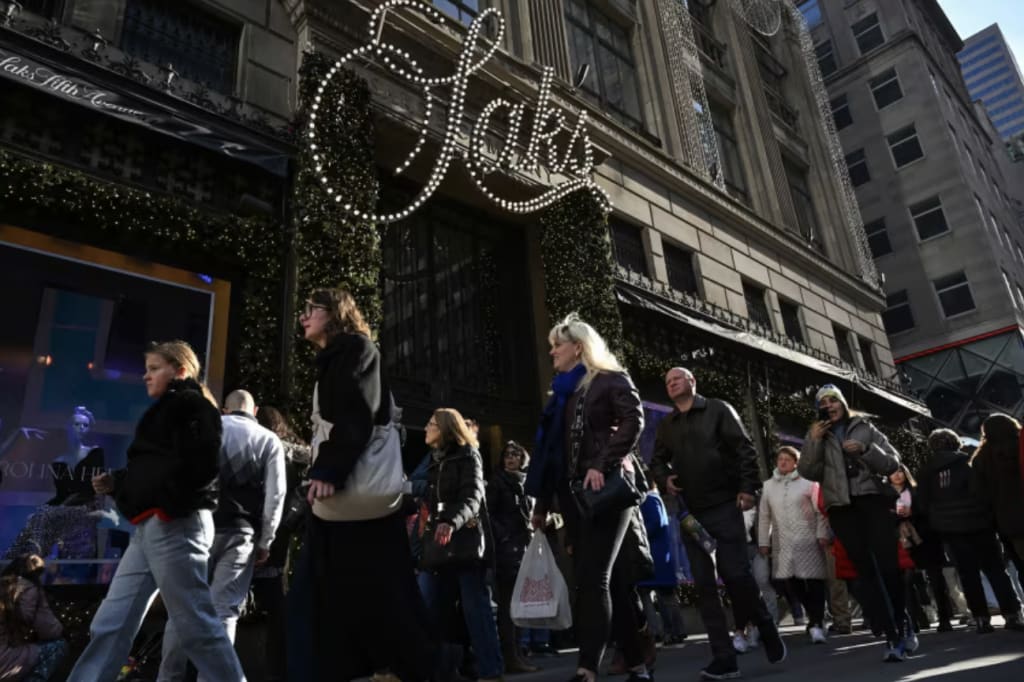
The iconic luxury conglomerate behind Saks Fifth Avenue, Neiman Marcus, and Bergdorf Goodman, Saks Global, has filed for Chapter 11 bankruptcy protection amid mounting financial pressure, shifting consumer habits, and unsustainable debt from a costly acquisition. This is a striking development for the retail landscape in the United States. One of the most significant collapses of department stores in recent memory was marked by the announcement, which was made on January 14, 2026.
Saks Global's demise demonstrates how legacy retailers struggle to adapt in a world dominated by digital commerce and shifting purchasing priorities. Saks Global was once a beacon of American high fashion. Saks Global’s bankruptcy is deeply tied to a 2024 deal that rocked the luxury retail sector. The Canadian retail giant Hudson's Bay Company, which also owns Saks Fifth Avenue, bought Neiman Marcus for $2.65 billion with the intention of creating a consolidated luxury juggernaut that could compete with rivals like Nordstrom, Bloomingdale's, and online fashion platforms.
The deal resulted in debt levels that the business was unable to maintain, not a stronger, more effective operation. As sales decreased and the macroeconomic context changed, high-interest borrowing, including more than $2 billion in secured notes and other forms of financing, became an obstacle. Within months, signs of distress appeared: vendors began reporting late payments, inventories thinned as suppliers hesitated to ship without guaranteed payment, and consumer demand at luxury price points dipped as shoppers became more cost conscious.
Rather than immediately liquidating, Saks Global entered Chapter 11 in the U.S. a structural reorganization procedure administered by the Bankruptcy Court for the Southern District of Texas that permits businesses to continue operating while they work to restructure their debt and operations. This strategy relied heavily on obtaining funding. For the duration of the bankruptcy, Saks Global was able to secure a financing package totaling $1.75 billion, which included a $1 billion debtor-in-possession (DIP) loan.
As the business seeks a path to viability, these funds provide the cash necessary to pay employees, suppliers, and other ongoing costs. Additional financing is also included in the agreement, which could be available when Saks emerges from bankruptcy in 2026, providing a rare but crucial bridge to a possible recovery. Saks Global has reorganized its leadership as part of the bankruptcy process. In the midst of financial turmoil, the company's former CEO, Marc Metrick, who guided it through the acquisition process, resigned. Richard Baker, executive chairman, succeeded him for a short time, but Baker also left the CEO position within weeks as plans for reorganization accelerated.
Geoffroy van Raemdonck, a seasoned retail executive who previously led Neiman Marcus through its own challenging period, will take the helm. His deep experience with an iconic luxury retailer positions him as a stabilizing force in a moment of upheaval, bringing in leaders like Darcy Penick and Lana Todorovich to oversee commercial strategy and brand partnerships.
Van Raemdonck has emphasized the company's commitment to honoring customer programs, vendor obligations, and employee pay throughout the bankruptcy process, describing this as a "defining era" for Saks Global. The bankruptcy of Saks Global has ripple effects far beyond the company's New York City headquarters. In recent years, luxury brands are increasingly selling directly to consumers through own-brand stores and online channels, stealing market share from department stores across the United States.
Additionally, consumer behavior is changing. According to information provided by consultants in the industry, "global luxury goods sales are expected to contract for a second consecutive year in 2026" as a result of decreased demand for high-end products due to factors such as inflation, economic anxiety, and shifts in spending priorities. Economists also point to larger structural issues: traditional department store formats struggle to compete on price, convenience, and customer experience with e-commerce platforms and agile players like Farfetch, Net-a-Porter, and brand-specific boutiques.
As a result, "outdated cost structures and inflexible physical footprints" have been left behind by legacy retailers like Saks. The breadth of Saks Global's financial reach is demonstrated by the fact that the bankruptcy filing lists between 10,000 and 25,000 creditors. Luxury brands like Chanel, Kering, and LVMH—the parent company of Gucci—are among the unsecured creditors. Each of these brands is owed a significant amount.
Long before the filing, several suppliers halted deliveries and refused to extend additional credit as the company's liquidity dwindled. This is a typical sign that a retailer is losing confidence in its ability to pay. Even though Saks Global's stores and online platforms are still open, the bankruptcy court process will determine the company's future. Sale to a new owner or reorganization are possible outcomes, but liquidation is also a real possibility if restructuring efforts fail.
The Chapter 11 filing of Saks Global is both a foreshadowing and a turning point for the retail industry as a whole, as well as for fashion brands, their employees, and customers. It brings to light the difficulties that legacy retailers face in an era of rapid change and prompts urgent inquiries regarding how luxury retail can adapt in the years to come.
About the Creator
Keep reading
More stories from Raviha Imran and writers in Trader and other communities.
The Simple Formula of Warren Buffett for His Wife's Inheritance: 90% Stocks, 10% Bonds
When legendary investor Warren Buffett gave instructions for how to divide a portion of his estate, he surprised many with a straightforward but effective plan for how to handle the majority of his wife's inheritance. Even though Buffett has led Berkshire Hathaway for decades, he doesn't want to make flashy stock picks or pick winners. Instead, he supports a straightforward strategy that is intended to provide steady, long-term growth: a preponderant allocation to an inexpensive index fund.
By Raviha Imran6 days ago in Trader




Comments
There are no comments for this story
Be the first to respond and start the conversation.