
Anxiety Disorders and Depression Treatment Market Set for Steady Growth Through 2033
Rising Awareness, Digital Therapies, and Drug Innovation Are Reshaping Global Mental Healthcare

Introduction: Mental Health Moves to the Center Stage
Mental health has quietly transformed from a neglected corner of healthcare into one of the most urgent global priorities of the 21st century. Anxiety disorders and depression, once spoken about in hushed tones, are now openly discussed in workplaces, schools, media, and public policy forums. This shift in awareness is not just social—it is also economic.
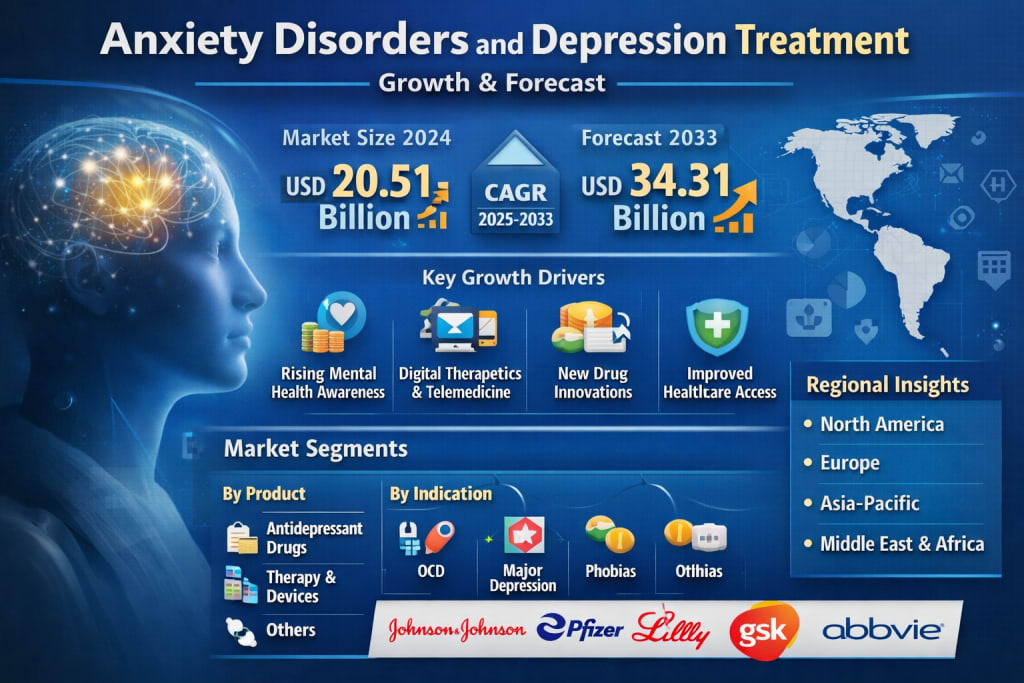
According to Renub Research, the Anxiety Disorders and Depression Treatment Market was valued at USD 20.51 billion in 2024 and is projected to reach USD 34.31 billion by 2033, expanding at a CAGR of 5.88% during 2025–2033. This steady growth reflects a world grappling with rising stress levels, changing lifestyles, post-pandemic mental health challenges, and greater acceptance of seeking professional help.
The market covers a wide range of solutions, from antidepressant drugs and therapy devices to digital therapeutics and psychological interventions, addressing conditions such as major depressive disorder (MDD), obsessive-compulsive disorder (OCD), phobias, and other anxiety-related illnesses. As healthcare systems evolve and technology bridges access gaps, mental healthcare is no longer a niche—it is becoming a mainstream pillar of global health.
Market Overview: A Multi-Dimensional Treatment Landscape
Anxiety disorders and depression are among the most common mental health conditions worldwide, affecting hundreds of millions of people across age groups and geographies. These disorders do not just impact emotional well-being; they influence productivity, physical health, relationships, and overall quality of life.
Treatment approaches today are more diverse than ever. They include:
Pharmacological therapies such as SSRIs, SNRIs, tricyclic antidepressants, and newer agents
Psychotherapies, especially cognitive behavioral therapy (CBT) and related approaches
Digital therapeutics, including mental health apps, teletherapy platforms, and AI-driven tools
Complementary approaches, such as mindfulness, lifestyle interventions, and wellness programs
Developed countries generally have more structured mental health systems, while emerging economies are rapidly investing in awareness programs, infrastructure, and access. Pharmaceutical companies are racing to develop more effective drugs with fewer side effects, while telehealth platforms are redefining how and where care is delivered.
With mental health now recognized as a core component of public health, demand for treatment options is expected to remain strong throughout the forecast period.
Key Growth Drivers Shaping the Market
1. Increased Awareness and Mental Health Advocacy
One of the most powerful forces behind market growth is the global shift in attitudes toward mental health. Governments, non-profits, healthcare organizations, and even social media influencers have played a role in reducing stigma and encouraging people to seek help.
Public campaigns, mental health awareness weeks, workplace wellness programs, and school-based initiatives are promoting early diagnosis and regular treatment. As conversations around mental well-being become more normalized, more individuals are turning to therapy, medication, or a combination of both. This cultural shift is directly translating into higher demand for treatment solutions worldwide.
2. Rise of Digital Therapeutics and Telemedicine
Digital health has emerged as a game-changer for mental healthcare. Telepsychiatry, online therapy platforms, mental wellness apps, and AI-powered chatbots are making care more accessible, affordable, and discreet—especially in rural or underserved regions.
The COVID-19 pandemic accelerated the adoption of virtual care, and many of these habits have remained. In October 2024, India’s National Tele Mental Health Programme (NTMHP) expanded its impact through Tele MANAS, a toll-free service offering counseling, psychotherapy, psychiatric consultations, and emergency support across the country. Such initiatives highlight how technology can bridge gaps in access and cost.
Digital tools also improve treatment adherence, enable continuous monitoring, and generate valuable data for more personalized care—further strengthening their role in the market.
3. Advances in Pharmacological Therapies
Psychopharmacology continues to evolve. Newer-generation antidepressants and anti-anxiety medications are being developed with better safety profiles, faster onset of action, and fewer side effects. Innovations such as SNRIs, atypical antipsychotics, and novel agents like esketamine are expanding options for patients who do not respond to traditional therapies.
In January 2025, Johnson & Johnson received FDA approval for a supplemental New Drug Application for SPRAVATO® (esketamine) CIII nasal spray as the first monotherapy for adults with major depressive disorder who have failed at least two oral antidepressants. Such breakthroughs are boosting confidence among clinicians and patients alike, driving broader adoption of modern treatment regimens.
Challenges Facing the Market
1. High Relapse Rates and Treatment Resistance
Despite the wide range of available therapies, a significant number of patients experience partial response, non-response, or relapse. Treatment-resistant depression and anxiety remain major clinical challenges, often linked to genetic differences, co-existing conditions, and issues with long-term medication adherence.
These challenges increase healthcare costs and place emotional and financial strain on patients and families. They also highlight the urgent need for more personalized and effective treatment approaches, which continues to be a key area of research and innovation.
2. Limited Access and Affordability in Low-Income Regions
In many low- and middle-income countries, mental healthcare remains underfunded and understaffed. Shortages of trained professionals, limited infrastructure, cultural stigma, and inadequate insurance coverage prevent millions from receiving proper care.
Rural populations face additional barriers, including distance from treatment centers and poor internet connectivity. Closing this treatment gap is essential not only for public health but also for the long-term, inclusive growth of the global market.
Segment Insights
Antidepressant Drugs: The Backbone of the Market
Antidepressant drugs represent a major share of the anxiety and depression treatment market. Classes such as SSRIs, SNRIs, MAOIs, and tricyclic antidepressants work by balancing brain chemicals to reduce symptoms like persistent sadness, fatigue, and panic.
SSRIs like sertraline and fluoxetine are among the most commonly prescribed due to their effectiveness and relatively good tolerability. Rising diagnosis rates, greater awareness, and continuous R&D into faster-acting and better-tolerated medications are sustaining demand. Pharmaceutical companies are also exploring novel delivery systems and combination therapies to improve outcomes and patient compliance.
Obsessive-Compulsive Disorder (OCD): A Growing Focus Area
OCD is a chronic condition characterized by intrusive thoughts and repetitive behaviors. Treatment typically combines cognitive behavioral therapy (especially exposure and response prevention) with medications such as SSRIs. In severe cases, advanced options like deep brain stimulation and ketamine-based therapies are being explored.
Improved screening tools and rising mental health literacy are helping reduce underdiagnosis. Digital therapy platforms and AI-based tools are also enhancing patient engagement, making this segment an increasingly important contributor to market growth.
Phobia Treatment: Innovation Through Technology
Phobias—whether social, situational, or specific—are commonly treated with exposure therapy, CBT, and anti-anxiety medications. One of the most exciting developments in this area is the use of virtual reality (VR) for exposure therapy, allowing patients to confront fears in a controlled and safe environment.
As awareness grows and technology becomes more affordable, innovative and immersive treatment options are expanding the reach and effectiveness of phobia therapies worldwide.
Regional Market Highlights
United States: A Global Leader
The U.S. remains one of the largest and most advanced markets for anxiety and depression treatment. High awareness, strong healthcare infrastructure, broad insurance coverage, and a robust pharmaceutical industry all support market growth. The rise of digital health platforms and ongoing research into psychedelic-assisted therapy and precision medicine further reinforce the country’s leadership position.
United Kingdom: Public Healthcare and Accessibility
In the UK, the NHS plays a central role in delivering evidence-based treatments. Programs like Improving Access to Psychological Therapies (IAPT) have significantly expanded the availability of CBT and counseling services. Digital tools and online consultations are increasingly used to ease pressure on the healthcare system and improve access to care.
India: Rapid Growth with Digital Support
India’s market is growing steadily due to rising awareness, urban stress, and youth mental health concerns. While stigma and workforce shortages remain challenges, telepsychiatry, mobile apps, and low-cost medications are improving access. Government initiatives like the National Mental Health Program aim to integrate mental healthcare into primary care, supporting long-term growth.
Saudi Arabia: Policy Support and Cultural Shift
Saudi Arabia is witnessing increased government focus on mental health under Vision 2030. Public awareness is rising, and digital platforms offering anonymous consultations are gaining popularity, especially among younger populations. Investments in infrastructure and professional training are helping reduce stigma and expand access.
Market Segmentation
By Product:
Antidepressant Drugs
Therapy and Devices
Others
By Indication:
Obsessive-Compulsive Disorder
Major Depressive Disorder
Phobia
Others
By Region:
North America (U.S., Canada)
Europe (France, Germany, Italy, Spain, UK, Belgium, Netherlands, Turkey)
Asia Pacific (China, Japan, India, Australia, South Korea, Thailand, Malaysia, Indonesia, New Zealand)
Latin America (Brazil, Mexico, Argentina)
Middle East & Africa (South Africa, Saudi Arabia, UAE)
Competitive Landscape
Key players shaping the market include:
AbbVie
Bristol-Myers Squibb Company
Eli Lilly & Co
GlaxoSmithKline
H. Lundbeck A/S
Johnson & Johnson
Merck & Co., Inc.
Pfizer Inc.
Sanofi-Aventis
Axsome Therapeutics
These companies are evaluated across overviews, key leadership, recent developments, product portfolios, and revenue performance, reflecting a highly competitive and innovation-driven environment.
Final Thoughts: A Market with Both Purpose and Potential
The global anxiety disorders and depression treatment market is no longer just a healthcare segment—it is a reflection of how societies are redefining well-being. With the market expected to grow from USD 20.51 billion in 2024 to USD 34.31 billion by 2033, the future points toward broader access, smarter therapies, and deeper integration of mental health into everyday healthcare.
Challenges remain, particularly around treatment resistance and access in low-income regions. But with continued innovation in pharmaceuticals, digital therapeutics, and public policy, the industry is steadily moving toward a more inclusive and effective mental healthcare ecosystem.
In a world where mental well-being is finally getting the attention it deserves, this market stands at the intersection of science, technology, and human need—and its growth story is only just beginning.
About the Creator
Private Equity Market Transforming Through AI Integration and Strategic Investments
Private Equity Market Overview The Private Equity Market involves investment funds that acquire, manage, and restructure private companies or public companies taken private, with the goal of improving performance and generating strong returns. Private equity firms typically invest in sectors such as technology, healthcare, manufacturing, consumer goods, and financial services. The market has witnessed steady growth due to increasing institutional investor participation, favorable economic conditions, and expanding opportunities in emerging industries. Additionally, private equity firms are focusing on operational improvements, digital transformation, and strategic acquisitions to maximize portfolio company value. The integration of advanced technologies, particularly artificial intelligence, is playing a crucial role in reshaping investment decision-making and portfolio management strategies.
By James Smith4 days ago in Trader
Lloyds Bank Closures 2026: How to Stay Ahead if Your Branch Is Closing
lloyds bank closures 2026 are affecting customers across the UK. Many people worry about losing access to their local branch, especially those who prefer in-person banking. Branch closures impact daily routines, small businesses, and communities that rely on face-to-face support. This article explains why lloyds bank closures 2026 are happening, which areas are most at risk, and steps you can take to stay prepared and maintain easy access to banking services.
By John.doe798about 9 hours ago in Trader



Comments
There are no comments for this story
Be the first to respond and start the conversation.