
Zohran Mamdani Is Sworn In as Mayor of New York City: A Historic Moment for the Big Apple
From grassroots activist to City Hall, Mamdani’s inauguration signals a generational and political shift in America’s largest city

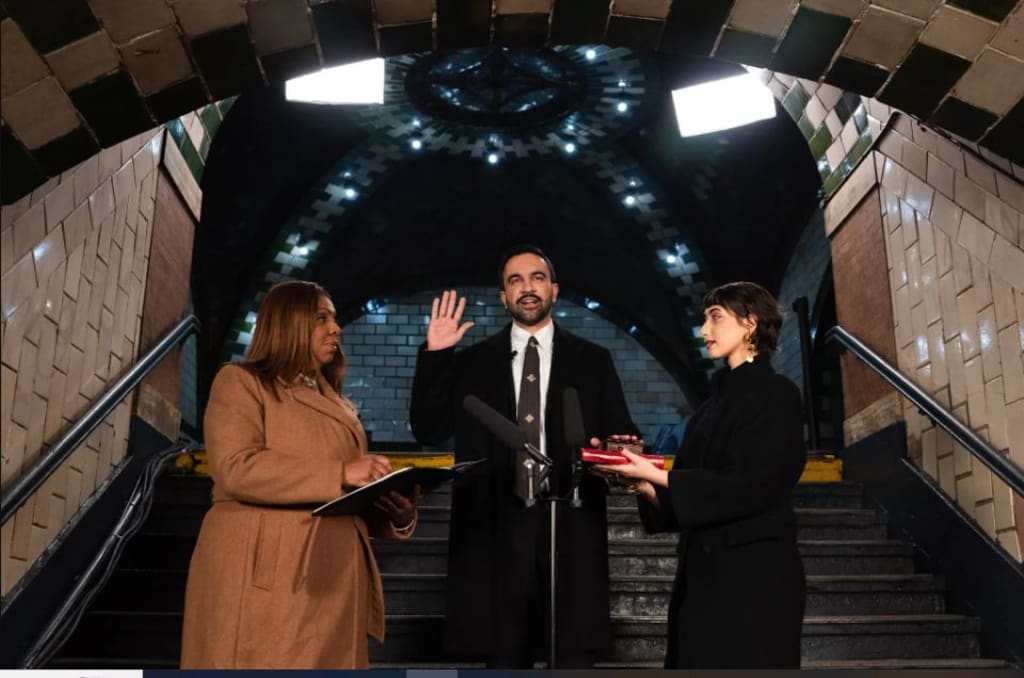
On January 1, 2026, New York City entered a new political era as Zohran Kwame Mamdani was officially sworn in as the city’s 112th mayor. The ceremony marked more than just a change in leadership — it symbolized a generational, cultural, and ideological shift in one of the world’s most influential cities.
Mamdani’s rise to City Hall reflects the changing priorities of New Yorkers, many of whom are demanding bold solutions to long-standing challenges like housing affordability, public transit, and economic inequality. His inauguration instantly became a defining moment in modern New York history.
Who Is Zohran Mamdani?
Zohran Mamdani’s story is deeply connected to the immigrant experience that defines New York City itself. Born in Kampala, Uganda, Mamdani moved to the United States as a child and grew up in New York. Before entering citywide politics, he served as a New York State Assembly member from Queens, representing the Astoria neighborhood.
Prior to holding office, Mamdani worked as a housing counselor, helping low-income families navigate eviction risks and rising rents. This experience shaped his political identity and became central to his policy agenda. Known for his democratic socialist values, Mamdani built his career around advocating for working-class communities, tenants, and marginalized voices.
At just 34 years old, he now stands among the youngest mayors in New York City’s long history — bringing fresh perspective to an office traditionally dominated by older, establishment figures.
A Swearing-In Ceremony Full of Meaning
Mamdani’s inauguration was rich in symbolism. He became the first Muslim mayor of New York City, the first mayor of South Asian descent, and the first mayor born in Africa — a powerful reflection of the city’s unmatched diversity.
In a private midnight ceremony, Mamdani took his oath of office with his hand placed on a Qur’an, honoring both his faith and family heritage. The decision resonated strongly with supporters, many of whom viewed it as a statement of inclusion rather than division.
Later in the day, a public ceremony at City Hall drew large crowds, celebrating what many described as a long-overdue transformation in city leadership. The atmosphere felt less like a traditional political event and more like a community celebration — energized, hopeful, and forward-looking.
How Mamdani Won the Mayor’s Race
The 2025 New York City mayoral election was one of the most competitive in recent memory. Mamdani ran against well-known political figures, including former New York Governor Andrew Cuomo and Republican candidate Curtis Sliwa.
Rather than relying on traditional campaign tactics, Mamdani built a grassroots movement. His platform focused on everyday struggles faced by New Yorkers, including:
Rising rent and housing insecurity
Expensive and unreliable public transportation
High grocery and living costs
Economic inequality across boroughs
His proposals — such as free bus service, rent freezes on stabilized apartments, and publicly operated grocery stores — sparked intense debate. Supporters praised the ideas as necessary and bold, while critics questioned their feasibility.
Ultimately, Mamdani’s message resonated strongly with younger voters, renters, and working-class families. High voter turnout and widespread community organizing helped propel him to victory.
What His Victory Means for New York City
Mamdani’s election signals a clear shift in what New Yorkers expect from their leaders. Voters didn’t just choose a new mayor — they chose a new political direction.
His leadership represents:
A move toward progressive urban governance
Greater representation for immigrant and minority communities
Increased pressure to address affordability at a structural level
Nationally, Mamdani’s victory is already being viewed as part of a broader trend in American cities, where younger and more progressive leaders are challenging traditional power structures.
The Challenges Ahead
While the inauguration was celebratory, the real work begins now. New York City faces enormous challenges — including housing shortages, homelessness, infrastructure repair, public safety concerns, and budget constraints.
Turning ambitious campaign promises into practical policies will require cooperation with the City Council, state officials, and federal partners. Mamdani must balance idealism with realistic governance while managing one of the most complex municipal systems in the world.
His success will largely depend on whether he can deliver tangible improvements in daily life for New Yorkers — especially those who placed their hopes in his vision.
A New Era Begins
Zohran Mamdani’s swearing-in as mayor is more than a political milestone; it’s a cultural moment that reflects New York City’s evolving identity. His journey — from immigrant child to mayor of America’s largest city — mirrors the aspirations of millions who call New York home.
As his administration begins, all eyes are on City Hall. Whether Mamdani becomes a transformational leader or faces the limits of political reality remains to be seen. What’s certain is this: New York City has entered a new era, and Zohran Mamdani is at its center.
About the Creator
Asad Ali
I'm Asad Ali, a passionate blogger with 3 years of experience creating engaging and informative content across various niches. I specialize in crafting SEO-friendly articles that drive traffic and deliver value to readers.
Wild Card Weekend Recap: What Happens Now?
I think I figured out why I love Wild Card Weekend so much. It's because it's the first playoff anything of the calendar year. The NFL season starts in the fall, and once upon a time, the champion was crowned either on or slightly before New Year's. The evolution of the NFL schedule has resulted in the playoffs starting just into the New Year, and currently, the final week of the season falls on the first weekend of the New Year, with Wild Card Weekend coming a week after that. So yes, chronologically, the NFL's Wild Card Weekend serves as the first playoff anything of the calendar year.
By Clyde E. Dawkins7 days ago in Unbalanced


Comments
There are no comments for this story
Be the first to respond and start the conversation.