
World Leaders Pledging 7.4 Billion To Destroy Deadly Virus
A fund-raising marathon organised by the European Union to develop and produce a vaccine globally accessible.
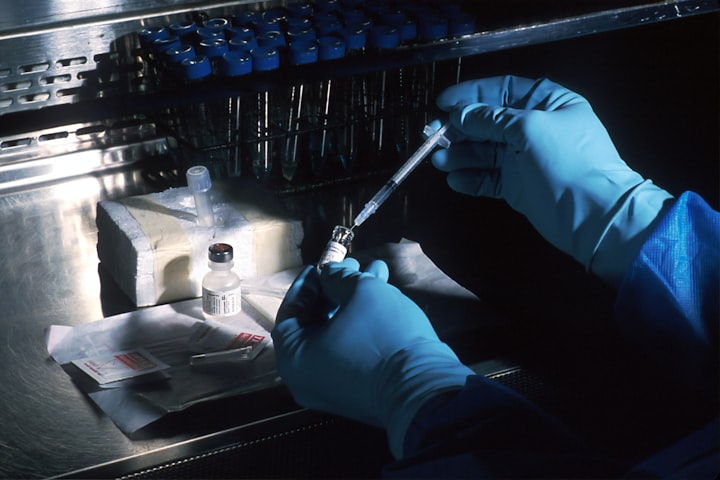
The European Commission, on Monday (4 May), launched the coronavirus global response framework to raise €7.5bn to fight the virus.
This joint effort is in response to the World Health Organization (WHO) appeal to speed up vaccines development, treatment and testing facility, securing that is "accessible to everyone and at affordable prices".
The president of the European commission Ursula von der Leyen in March, proposed to the G20 group of world leaders.
"We need to produce a vaccine, to develop it and deploy it to every angle of the world," von der Leyen said before of the announcement.
This initiative will take place in partnership with Saudi Arabia, which is the current G20 presidency, the United States, France, Germany, Norway and the UK, although Italy has also been asked to participate.
According to EU officials, these nations were selected due to their track-record linked to research and funding leadership. World leaders, with the notable exemption of Donald Trump, stumped up almost €7.4bn for Covid-19 vaccines and therapies research at a virtual event gathered by the EU, guaranteeing the funds will also be to distribute any vaccine to developing nations equally.
But in an indication of the fractured state of global health diplomacy, India, Russia or the US did not address the event. After a weekend of persuasion, China participated in it, sending its ambassador to the European Union.
A separate Coronavirus summit was staged earlier in the day and directed by the Indian prime minister, Narendra Modi, and other heads including, Hassan Rouhani, president of Iran
The EU-convened virtual summit was attended in person by the leaders of Germany, France, Spain, Italy, Norway, Canada, Japan, Jordan, Israel, South Africa and the EU. It took the style of a pledging marathon.
But the US state department issued a statement welcoming what it called "the pledging conference in Europe", even if the fundraising summit had always been seen as a global, rather than solely European effort.
The US also made clear its priority "to drug candidates and streamline clinical trials" instead od a vaccine. Trump has hinted a vaccine will be available by the end of this year, but several experts are doubtful that even with global efforts cooperation, such a target time can be met.
The money is largely intended to speed up the process by putting secured funds to coordinate the study and incentivise pharmaceutical organisations to distribute any vaccines and treatments to poorer nations, something that did not occur in the 2009 swine flu epidemic.
The president of France, Emmanuel Macron, said any vaccine "won't belong just to some country".
"Those who find it, of course, will be fairly retributed, but access will be to people across the world by the organisation we chose," he said.
EU officials said pharmaceutical corporations who will get the funding would not be asked to abandon their intellectual property claims on the new vaccine and medications, but they should commit to making them accessible worldwide at affordable costs.
A similar process has happened through Gavi, the global vaccine fund, which provides global network support over the distribution and value of a vaccine.
Boris Johnson was included to the summit by Ursula von der Leyen, the president of the EU Commission, as "a man who has been through every imaginable emotion during the past month".
The UK prime minister emphasised the search for a vaccine was not a contest between nations but instead needed collaboration that "defies the typical ways of operating".
He said: "We'll require a truly global effort – because no one nation, and no one pharmaceutical group, will be able to do this alone. The race to find the vaccine to beat this disease is not a contest between countries, but the most critical shared effort of our lifetimes. It is humanity versus the virus."
Many leaders used their short speeches to state their support for the current multilateral structure for global health, including the World Health Organization. The US last month halted funding for the WHO, criticising its association with China.
The Norwegian prime minister, Erna Solberg, and summit co-host, said "we support the direction of the WHO", adding that without the UN body "an efficient and coordinated response to the pandemic would not be achievable".
She said that "multilateral cooperation is more crucial than ever" and the gathering was the inauguration of a global effort "never seen before".
At the parallel "non-aligned movement" summit, Rouhani criticised the US choice to pull out of the WHO, calling it as "a strategic blunder".
The WHO director-general, Tedros Adhanom, in his speech to the EU-convened event, pointed out how fast China had distributed the genetic sequence of the virus amongst experts globally.
The European Union said near the close of the summit that a total 7.36bn of the €7.5bn been pledged, with Japan and Norway pledging the highest amounts. France, Italy and Germany all promised around €500m each. Turkey's contribution will be declared later in the month.
The exact value of individual nations pledges announced in the two-hour event was challenging to determine since some leaders drew on previous promises, or maintained their social contribution for specific organisations like the Red Cross, the WHO or Gavi.
Von der Leyen said the summit had shown "fantastic momentum" and that it was achievable to turn the course against the coronavirus.
From the €7.5bn sought, €4bn is for vaccine development, €2bn for treatments and €1.5bn for tests manufacture, according to the EU Commission.
The specific funding methodology, including how to select a vaccine for funding and the strings were not clearly said. But the world leaders will work with existing global health organisations such as Gavi as much as possible.
The guiding concept behind the meeting, supported by the Gates Foundation, is that an alliance is required not only to organise vaccine development but also therapies and tests.
Jeremy Farrar, director of the Wellcome Foundation, said: "I would have preferred China and the US to be part of the fundraising meeting ... both nations have incredibly deep technology and expertise in medical research and a big manufacturing base."
He added: "My guess is that those nations that have not yet signed up will do it in May to make sure this is a truly global event. We need everyone."
David Salisbury from the thinktank Chatham House remarked, however: "We have to recognise there is a tension among nations that want to protect their populations and the wish to spread the vaccine equitably.
"The companies for the most important vaccine producers are in Europe, the US and India. Will European companies be compelled by the EU to restrict sales first to European nations?"
About the Creator
Anton Black
I write about politics, society and the city where I live: London in the UK.
Keep reading
More stories from Anton Black and writers in The Swamp and other communities.
Parallel Protests
I haven't written for quite some time, but I have A LOT of thoughts about yesterday's protest rally against our government's involvement and complicity in America's war on Iran, on the harbourside of my home city Bristol, and I need to put them somewhere. My gorgeous girlfriend is always a loving and listening ear and sharing it all with her will always be a healthy and happy way of processing the mental and emotional weight, but getting it straight in my brain to share means writing it all down in straight lines, so, here we are and thanks for being here.
By Steph Cole6 days ago in The Swamp


Comments
There are no comments for this story
Be the first to respond and start the conversation.