
Work Continues to Boost Submarine Maintenance at Clyde
Upgrades and maintenance programs at Faslane aim to strengthen the UK’s undersea deterrent capabilities

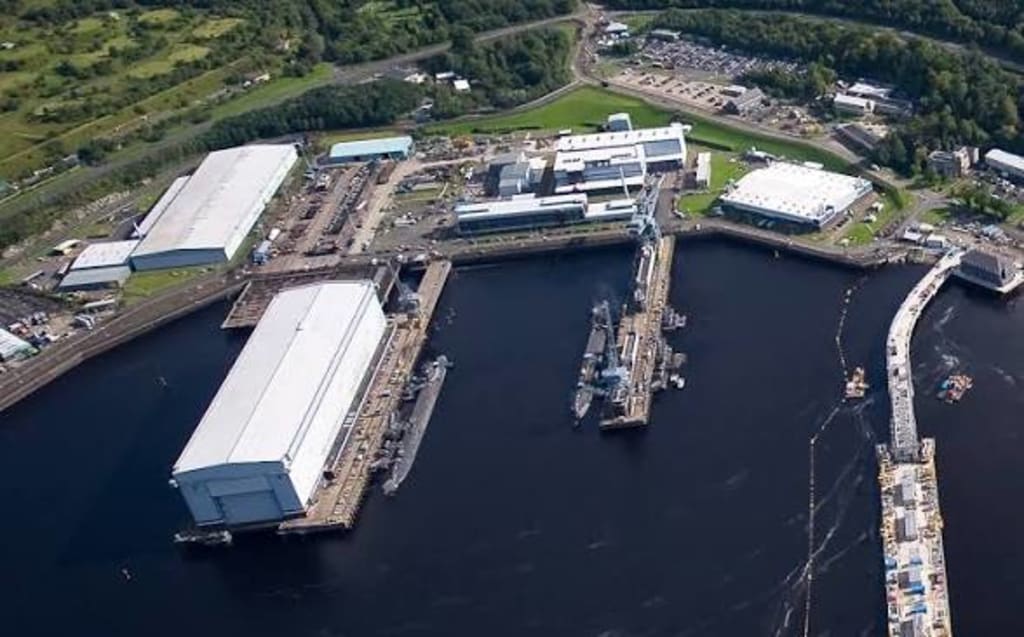
Maintenance and upgrade work at HMNB Clyde, the United Kingdom’s primary submarine base, is continuing at pace as the Royal Navy seeks to ensure its submarine fleet remains operationally ready and technologically advanced. Officials say ongoing projects are focused on enhancing safety, efficiency, and the long-term sustainability of the base’s nuclear-powered fleet.
Located near Faslane, Scotland, HMNB Clyde is home to the UK’s strategic nuclear submarines, including those carrying the Trident nuclear missiles. The base plays a critical role in national defense, and the maintenance and modernization of its submarines are central to the country’s continuous at-sea deterrent strategy.
Maintenance Programs and Upgrades
The Ministry of Defence (MoD) confirmed that multiple maintenance programs are ongoing at Clyde, including scheduled overhauls, hull inspections, and technological upgrades to navigation, propulsion, and weapons systems. These efforts are intended to extend the service life of submarines and ensure they meet evolving operational requirements.
Officials highlighted the importance of preventative maintenance, noting that regular inspections and repairs reduce the risk of unexpected technical failures. “Our goal is to maintain our submarine fleet at peak readiness,” a senior MoD spokesperson said. “That requires careful planning, skilled personnel, and the right infrastructure.”
Workforce and Expertise
HMNB Clyde employs a combination of Royal Navy personnel and civilian engineers who specialize in submarine maintenance. The workforce is highly trained to manage complex systems, including nuclear propulsion and advanced weapons platforms.
The maintenance work also provides opportunities for apprentices and engineers in the UK defense sector, contributing to the development of a skilled workforce capable of supporting sophisticated maritime operations.
Safety and Environmental Measures
Safety remains a top priority at Clyde, particularly given the nuclear-powered nature of the submarines stationed there. Maintenance procedures are governed by strict protocols to protect both personnel and the environment.
The MoD has emphasized that all operations comply with regulatory standards and include measures for waste management, radiation monitoring, and emergency response. These measures are designed to ensure that maintenance work is conducted without compromising environmental or public safety.
Infrastructure Improvements
Alongside submarine maintenance, investment in the base’s infrastructure is ongoing. This includes upgrades to dock facilities, enhanced security systems, and improved logistical support for submarine operations. By modernizing the base itself, the Royal Navy ensures that maintenance, refueling, and repairs can be conducted efficiently and safely.
Infrastructure upgrades also support training facilities, allowing engineers and crew to practice complex procedures in controlled environments before applying them to active vessels.
Strategic Significance
HMNB Clyde is central to the UK’s strategic deterrence posture. The continuous at-sea deployment of nuclear-armed submarines ensures that the country maintains a credible and resilient defense capability. By investing in maintenance and upgrades, the Royal Navy reduces the risk of operational downtime and strengthens deterrent credibility.
Defense analysts note that consistent maintenance is essential for the reliability of the UK’s submarine fleet. Any extended periods of inactivity or technical issues could affect operational readiness and, by extension, national security.
Challenges and Operational Demands
Maintaining a nuclear-powered submarine fleet presents unique challenges, including complex engineering requirements, tight safety regulations, and the need to coordinate with multiple defense contractors. The MoD has emphasized that despite these challenges, the Clyde maintenance program remains on schedule and continues to meet operational objectives.
Furthermore, the Royal Navy must balance routine maintenance with the operational demands of patrols and strategic deployments. This requires careful scheduling to ensure submarines are available when needed without compromising the quality of maintenance work.
Future Outlook
Looking ahead, the MoD plans to continue investing in Clyde, both in terms of submarine maintenance and base infrastructure. As the UK develops its next-generation Dreadnought-class submarines, the base will play a critical role in supporting these vessels throughout their service life.
Officials stress that the continued modernization of both submarines and facilities is key to maintaining the effectiveness and credibility of the UK’s nuclear deterrent for decades to come.
Conclusion
Maintenance and upgrade efforts at HMNB Clyde demonstrate the UK’s commitment to sustaining a reliable and technologically advanced submarine fleet. Through careful planning, skilled workforce management, and infrastructure investment, the Royal Navy ensures that its undersea deterrent remains ready to respond to emerging threats.
As work continues at Clyde, the focus remains on safety, operational readiness, and long-term strategic capability — vital components of the nation’s defense posture in an increasingly complex global security environment.
About the Creator
Fiaz Ahmed Brohi
I am a passionate writer with a love for exploring and creating content on trending topics. Always curious, always sharing stories that engage and inspire.
Keep reading
More stories from Fiaz Ahmed Brohi and writers in The Swamp and other communities.
Iran’s Supreme Leader Ayatollah Ali Khamenei, Who Led the Islamic Republic Since 1989, Is Dead at 86
Ayatollah Ali Khamenei, the supreme leader of the Iran for more than three decades, has died at age 86, Iranian state media confirmed, marking a historic turning point for Tehran and a potential reshaping of Middle East geopolitics. His death was announced Sunday following a major joint military operation by the United States and Israel that reportedly struck his compound in Tehran over the weekend.
By Fiaz Ahmed Brohi14 days ago in The Swamp
The Forsyth House Fire
Since 1851, Forsyth House has stood on the corner of Union Street and Gordon Street in the heart of Glasgow. Its iconic, or was... because on Sunday 8th of March, 2026, a fire broke out in a small, seemingly un-named shop in the building and tore all that history down. As I write, the rubble is still unsettled and the street is still blocked off. Central Station is quiet on the upper level, and around 30 small businesses have quite literally gone up in smoke.
By S. A. Crawforda day ago in The Swamp


Comments
There are no comments for this story
Be the first to respond and start the conversation.