
Woman Whose Botched Jesus Fresco Became a Viral Sensation Dies, Aged 94
“How an amateur restoration transformed a small Spanish fresco into one of the internet’s most unforgettable viral moments.”
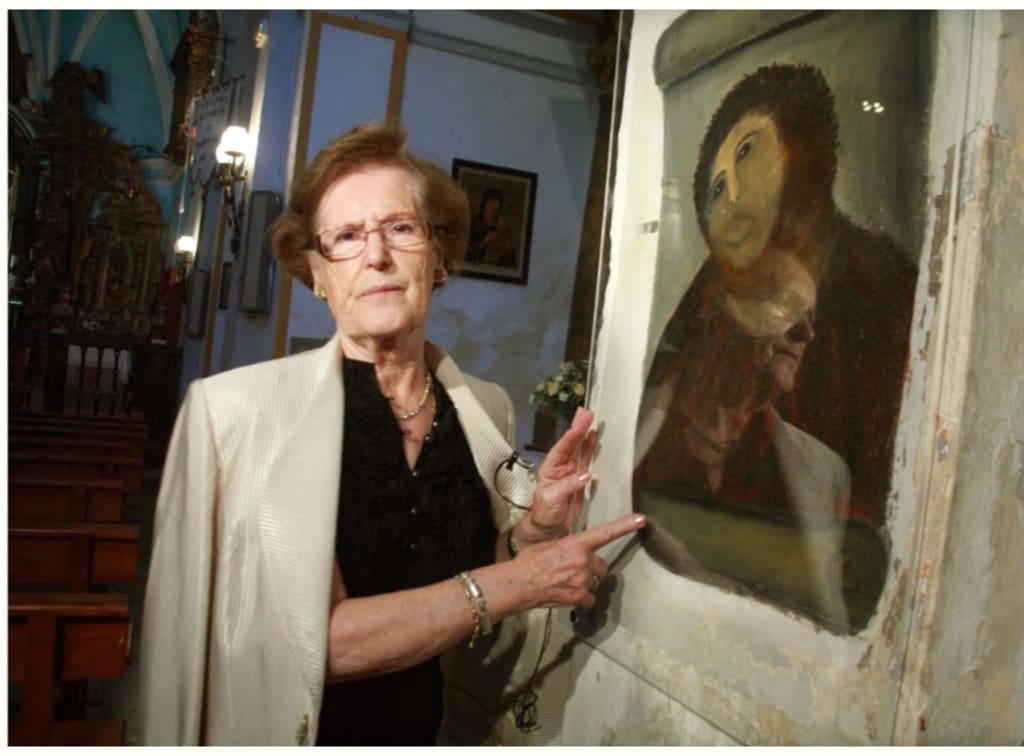
Cecilia Giménez, the Spanish woman whose failed attempt to restore a fresco of Jesus Christ unexpectedly turned her into a global internet sensation, has died at the age of 94. Her passing marks the end of a remarkable and unlikely chapter in modern cultural history—one that blended art, humor, controversy, and the unpredictable power of the internet.
Giménez was an amateur artist from the small town of Borja, near Zaragoza in northeastern Spain. In 2012, she attempted to restore a deteriorating fresco known as “Ecce Homo” (Latin for “Behold the Man”), which depicted Jesus Christ wearing a crown of thorns. The artwork, painted in the early 20th century by local artist Elías García Martínez, hung on the wall of the Sanctuary of Mercy, a modest church rarely known beyond the region.
What followed was something no one—least of all Giménez herself—could have imagined.
From Quiet Restoration to Global Fame
Concerned that the fresco was flaking and fading, Giménez decided to take matters into her own hands. With no formal training in art restoration, she began repainting the image in her spare time. However, before the work was completed, photos of the altered fresco surfaced online.
The result was startling. The original delicate image of Christ had transformed into a distorted, almost cartoonish figure. The face was blurred, the eyes uneven, and the overall appearance resembled what many described as a “monkey” or “potato.” Almost overnight, the image went viral.
Social media exploded with memes, parodies, and jokes. International media outlets dubbed the fresco “Ecce Mono” instead of “Ecce Homo.” What might have been a small local mishap became a global viral phenomenon, spreading across continents and languages.
Mockery Turns Into Cultural Icon
At first, the reaction was largely mocking. Giménez faced intense criticism, ridicule, and even threats of legal action. Many art experts condemned the restoration as a disaster, while others questioned how such an attempt had been allowed in the first place.
But as time passed, public sentiment began to shift.
Rather than being remembered purely as a failure, the fresco became a symbol of human imperfection, sincerity, and unintended creativity. Tourists began flocking to Borja—something the town had never experienced before. Visitors lined up to see the fresco that had “broken the internet” years before the phrase became commonplace.
The local council eventually decided to preserve the altered version. Far from being erased, Giménez’s restoration was protected behind glass, turning it into an unexpected cultural landmark.
Economic and Cultural Impact
The viral fame had a surprising upside. Tourism surged dramatically, bringing new life and revenue to the town. Merchandise featuring the fresco appeared, including postcards, T-shirts, and mugs. Proceeds from ticket sales and souvenirs were partially donated to charitable causes, including elderly care.
What began as a mistake transformed into an economic lifeline for Borja and a unique case study in how viral culture can reshape real communities.
Cecilia Giménez herself eventually embraced the attention. In later interviews, she spoke candidly about the experience, acknowledging her lack of professional skill while emphasizing her good intentions. She maintained that her goal had always been to protect the painting, not to gain fame.
A Human Story Behind the Meme
Behind the jokes and headlines was a deeply human story. Giménez was a devout woman who cared about her church and community. Friends and family described her as humble, kind, and deeply affected by the initial backlash.
Over time, she became a figure of sympathy and admiration. Many saw her as a reminder that not all mistakes deserve condemnation, and that vulnerability can resonate powerfully in a world obsessed with perfection.
Her story has since been referenced in discussions about amateur art, internet shaming, and the ethics of restoration. Universities, artists, and sociologists alike have used the fresco as an example of how digital culture can redefine meaning and value.
A Legacy That Endures
Cecilia Giménez died peacefully at the age of 94, surrounded by family, according to local reports. Tributes poured in from around the world, many expressing gratitude for the joy and laughter her story brought during difficult times.
Though she never sought fame, her legacy is undeniable. The “botched” Jesus fresco became more famous than the original ever was, and Giménez’s name is now permanently etched into internet history.
In an age where virality is often fleeting, her story stands out as something rare: a moment where humor, humanity, and art collided in a way that continues to resonate more than a decade later.
Cecilia Giménez may be gone, but her unlikely contribution to global culture lives on—proof that even the most unexpected moments can leave a lasting mark on the world.
About the Creator
Keep reading
More stories from Aarif Lashari and writers in The Swamp and other communities.
Sydney Welcomes 2026 with Spectacular Fireworks Display – In Pictures
Sydney kicked off 2026 in style! As the clock struck midnight on December 31, 2025, the city’s skyline exploded with color, light, and life during its world-famous New Year’s Eve fireworks display. Sydney Harbour, with the Sydney Opera House and Harbour Bridge as the backdrop, transformed into a dazzling canvas, creating unforgettable memories for locals and visitors alike.
By Aarif Lashari18 days ago in The Swamp
Trump Announces Tariffs on European Countries Opposing Greenland Takeover
In a move that has reignited global debate and unsettled international markets, former U.S. President Donald Trump has announced the possibility of imposing new tariffs on European countries that oppose what he describes as America’s “strategic interest” in Greenland. The statement, delivered during a recent political rally and later reinforced through campaign surrogates, has once again placed Greenland, European unity, and transatlantic trade relations at the center of global attention.
By Aqib Hussainabout 9 hours ago in The Swamp




Comments
There are no comments for this story
Be the first to respond and start the conversation.