
Why You Should Love/Hate the Filibuster
In the End, The Country cannot do without

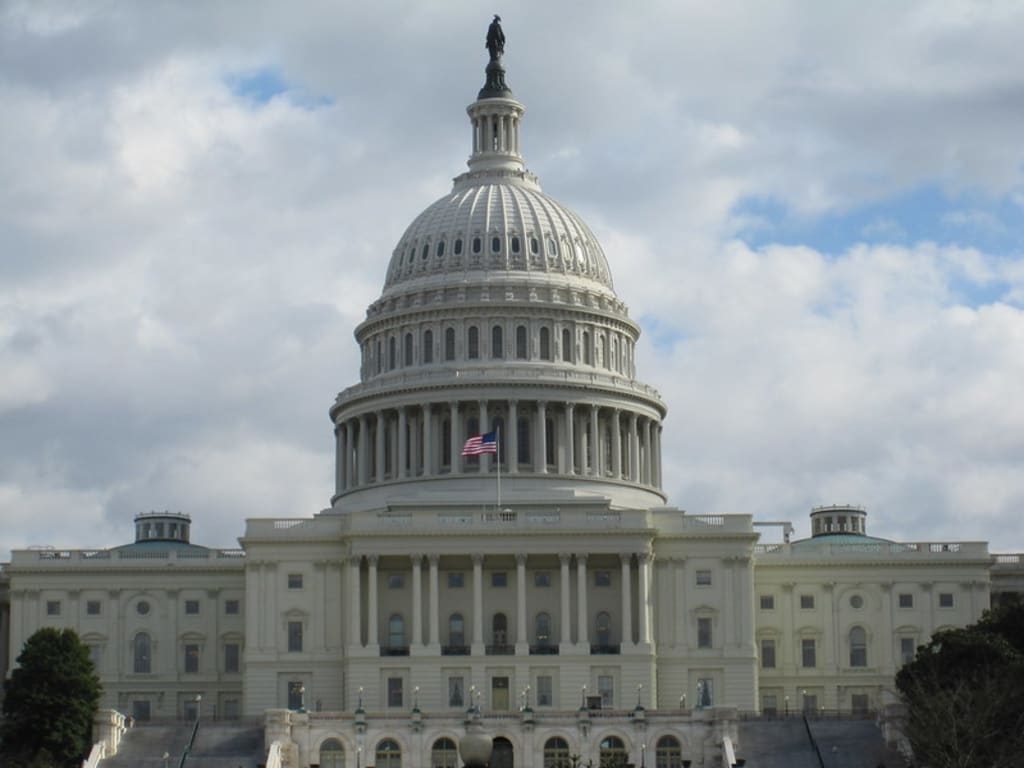
Photo by kidTruant
When Donald Trump was President, Democrats saw the filibuster as their savior. Of course, the ascendency of Joe Biden and a senate majority has the Donkeys clawing for the end of the antiquated procedure. Unlikely to fall either way, the stagnation that has ruled the day for years will continue. But no matter the majority, 2020 won’t be the last congress or constituency to question why the republic must stand still as the public boils well beyond 232 degrees Fahrenheit.
Robert Caro's, The Years of Lyndon Johnson : Master of the Senate, offers a dissertation that starts with the concerns first raised by Thomas Jefferson. Over hot coffee, Washington slid Jefferson a cup of milk to make his point about the necessity of a second house. "It cools the blend, and the senate will do the same to the nation when its overheating," foretold Washington.
In keeping, the founders understood the tyranny of kings and a system of check and balances demonstrates that. But there was another form of oppression that concerned them as much.
The tyranny of the people (or the majority) could be just as destructive. The French Revolution showed the violent hysteria then, and majority backlashes such as the one in Rwanda speaks for itself today.
The first test came as Thomas Jefferson himself wanted to impeach Justice Samuel Chase on the grounds of political disagreement. The majority in the house stood with their president and the Republican wave sweeping the country. But the senate stepped back, and ten Republican senators were able see the consequences such a precedent would have had.
The Senate’s greatest age coincided with the compromises that put off our inevitable civil war. With unforgettable oratory, men such as Henry Clay and John C. Calhoun rose to the aspirations of the founding fathers. Delayed, the young nation survived something it might not have been able to in 1820 or even 1850.
Unfortunately, the senate went from a platform that the world envied to the petty and ineffective body that we are familiar with today. The filibuster would kill The League of Nations, and as the seeds were again sewn for another monumental struggle, isolationist senators killed FDR's attempts to stand up to the axis and retool for war.
Domestically, Civil Rights legislation was held hostage to a Southern Filibuster for 75 years. Passed in the House throughout the 20th Century, 22 Southern Senators utilized the body's long windedness by using a refrain we heard in our healthcare debate. State's rights were supreme, and federal control would lead to tyranny.
Nonetheless, the senate managed to shine on two crucial occasions. FDR's court packing plan of 1937 was an attempt to reverse New Deal Legislation that had been ruled unconstitutional. Putting aside the merits of the FDR's plans, more power would have been concentrated in the executive branch - thus disrupting our system of checks and balances.
The senate came through again in 1951. Caro describes the scene in the words of William Manchester. "A senior officer in full uniform, contemptuously defying a constitutional Commander in Chief and undertaking to force an alteration in the highest decisions of civil government," he said in describing MacArthur's exit from his farewell address.
Jets flying over head, 250,000 people in pandemonium, journalist George Reedy feared for the very republic. "I'll never forget watching him go up Pennsylvania Avenue - had he said, 'let's take it,' and had he started a charge toward the White House, the adoring crowds would have followed him."
Congressional Correspondent William S. White reported a similar sentiment. "I have never feared more for the institutions of my country. I felt if the speech had gone on much longer, there might have been a march on the White House."
At the same time, MacArthur's military strategy posed an even greater threat, and with the nation's overwhelming support, an early attempt to challenge by Freshman Senator Robert Kerr showed the charged atmosphere. "You could just feel the hostility in the gallery, and they hated Kerr at that moment," George Reedy recalled.
Senator Richard Russell of Georgia was the one hope of slowing the runaway train, and the tsunami sweeping the country. Despite being the archenemy of Civil Rights Legislation, he was probably the most respected U.S. Senator.
At a time when Southern Senators freely slung the n-word around, no one was more knowledgeable of the senate's workings and his impassioned, dignified approach couldn't be ignored. This even by the northern liberals who hated him.
As for the issues at hand, wrote Caro, "Russell understood the terrible dangers of the policies of MacArthur the global strategist, and he was aware of the danger inherent in MacArthur's challenge to the president's authority.”
Russell also knew the senate provided the forum in which all sides of this complex issue could be viewed. Slowed down, Americans could fully gauge the situation.
First, the senator kept the cameras out so emotion could not be swayed by MacArthur's oratory skills. But Russell also made sure that as much information as possible made it to the American people. As for his tone, Russell afforded the general the respect he deserved, and the American people expected.
On display, MacArthur made his position clear. He proposed that Manchuria be bombed, China blockaded and Chang allowed to invade the mainland from Formosa. The Truman administration's attempt to make war piecemeal would lead to a broader conflict as appeasement always did, Caro paraphrased.
In response, Russell's intent was to demonstrate that MacArthur was a theater commander making decisions that required a global understanding. What if Chang's forces were wiped out - would US troops have to defend Formosa? What then if Russia invaded Japan or what if seeing its allies defeated, they enter the fray. Thus widening the war, the conflict could possibly provoke a nuclear attack.
Asked point blank, How do you propose to defend America against that war?
MacArthur almost made the case against himself. "That doesn't happen to be my responsibility Senator," the general faultered. "My responsibilities are in the Pacific."
The tide had turned, and the virulent general turned out to be as lactose intolerant as the founders intended.
Regardless, you're perfectly justified to hate the filibuster, but at least a little solace can be taken in the restraint it provides. So we can only hope that the future brings the type of people that the Constitutional Convention envisioned in 1787. In other words, the kind that equaled the historical challenge and didn’t sink with the sugar.
Please Like My Page on Facebook
About the Creator
Rich Monetti
I am, I write.
Keep reading
More stories from Rich Monetti and writers in The Swamp and other communities.
Author Discusses African American Cemeteries in Westchester
Photo by Patrick Feller You cannot travel very far in Westchester without coming across a burial site that dates back well beyond our current century. Each stone containing a hidden history, author Patrick Raftery of the Westchester Historical Society has written three volumes on the subject. “I think through burial practices, you learn a lot about people and the situations they faced,” said the author of The Cemeteries of Westchester County.
By Rich Monetti5 years ago in The Swamp
Parallel Protests
I haven't written for quite some time, but I have A LOT of thoughts about yesterday's protest rally against our government's involvement and complicity in America's war on Iran, on the harbourside of my home city Bristol, and I need to put them somewhere. My gorgeous girlfriend is always a loving and listening ear and sharing it all with her will always be a healthy and happy way of processing the mental and emotional weight, but getting it straight in my brain to share means writing it all down in straight lines, so, here we are and thanks for being here.
By Steph Cole6 days ago in The Swamp
Israel–Iran Attack: Rising Tensions Shake the Middle East
The long-standing rivalry between Israel and Iran has erupted into a major military confrontation, raising fears of a wider war across the Middle East. Over the past week, the region has witnessed intense airstrikes, missile launches, and retaliatory attacks that have drawn global attention and concern. The latest escalation began when Israel launched a large-scale military operation targeting Iranian military and strategic facilities. The strikes were part of a coordinated campaign known as Operation Lion’s Roar, which involved precision airstrikes against key locations in Tehran and other cities. The operation reportedly targeted missile bases, command centers, and facilities connected to Iran’s military infrastructure. Israeli officials said the attacks were aimed at preventing what they described as an imminent threat from Iran’s missile and nuclear programs. Israel has long accused Tehran of attempting to expand its military influence in the region and of supporting armed groups hostile to Israel. Iranian leaders have repeatedly denied seeking nuclear weapons, but tensions over the issue have remained high for years. In response to the strikes, Iran launched a wave of retaliatory missile and drone attacks targeting Israeli territory and regional military sites. Sirens sounded across several Israeli cities as air defense systems were activated to intercept incoming projectiles. Although many missiles were reportedly intercepted, some managed to strike near urban areas, causing damage and injuries. The conflict intensified further after reports emerged that Iran’s Supreme Leader, Ali Khamenei, was killed in a targeted airstrike during the early phase of the operation. The strike was part of a broader attempt to weaken Iran’s command structure during the escalating conflict. Following the attack, Iran declared that it would continue to retaliate against Israel and its allies. Iranian officials warned that any further attacks would trigger a broader regional response. As a result, military forces in several neighboring countries have been placed on high alert. The situation has also drawn in the United States, which has supported Israeli operations and carried out additional strikes against Iranian targets. According to reports, U.S. forces have attacked hundreds of sites believed to be connected to Iran’s military and security infrastructure. At the same time, political tensions inside the United States have grown. Lawmakers in Washington debated whether the president should have sought congressional approval before launching military operations. A resolution aimed at limiting the president’s war powers was narrowly rejected in the House of Representatives, reflecting deep divisions over the conflict. The conflict has also triggered reactions from groups allied with Iran. In Lebanon, the militant group Hezbollah began launching attacks toward northern Israel, opening another front in the conflict. These developments have raised fears that the fighting could spread across several countries in the region. Meanwhile, Israel has declared a nationwide state of emergency as authorities prepare for possible further missile strikes. Schools have been closed, public gatherings restricted, and thousands of military reservists mobilized to strengthen defenses. The humanitarian impact of the conflict is already severe. Reports indicate that hundreds of people have been killed and thousands injured as airstrikes continue across Iran and missile attacks hit Israeli cities. Civilian infrastructure has also been damaged, and international organizations are warning that the situation could deteriorate further if hostilities continue. Global leaders are now urging both sides to exercise restraint and return to diplomatic negotiations. Many fear that continued escalation could destabilize the entire Middle East, disrupt global energy supplies, and increase the risk of a much larger international conflict. For now, the Israel-Iran confrontation remains one of the most dangerous geopolitical crises in recent years. As missiles continue to fly and diplomatic efforts struggle to gain traction, the world is watching closely to see whether the situation will move toward peace—or spiral into a prolonged regional war.
By Fiaz Ahmed 3 days ago in The Swamp



Comments
There are no comments for this story
Be the first to respond and start the conversation.