
Why Minimum Wage is Outdated and Harmful
From the Perspective of a Socialist

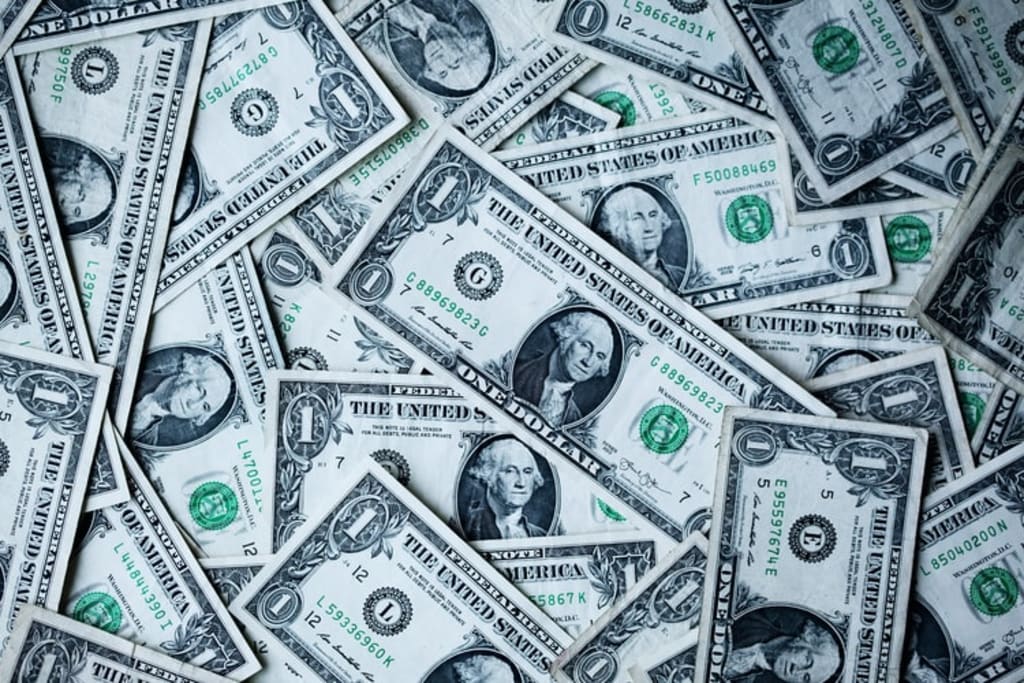
Minimum wage has continued to be a divisive issue since its conception in 1938. Advocates insist it gives the poorest of the population a living wage to ensure that they can support themselves. Critics have claimed everything from minimum wage actually hurting the poorest by promoting discrimination to the idea accomplishing nothing at all since the economy simply readjusts in response, leaving things exactly how they were.
That sounds like a relatively simple argument, but as the perpetual disagreement suggests, that is deceptive. I firmly believe the framing from the liberal side as minimum wage being a no-brainer that any human being with a heart would support, combined with the conservatives’ claims of it being economically useless, contribute to the view of this as a simple issue without acknowledging the fairly obvious intricacies of the debate.
Before suggesting my solution, I want to take an honest look at those main points, which are the ones I see the most and the ones that seem to convince most people to take one side or the other. Let’s start with the critiques.
Does minimum wage hurt poor people? It seems clear at first that giving everyone enough money to live should only help people! But that isn’t what minimum wage does. What it does is give everyone who works enough money to live. The unemployed get nothing from this, but do have a harder time getting any job at all since the higher wages mean employers need their workers to do more to be worth the pay. And if employers need workers to do more, that’s more of a service per person in the lowest income jobs. If there’s a finite amount of service that needs to be done for our economy, that must mean that employers will post less jobs. Overall, jobs will be lost, and the unemployed do not benefit and have a harder time finding a job. From this perspective, minimum wage looks harmful to the most disadvantaged, the exact people it was created to help!
Let’s examine how the economy readjusts to hammer this in. If you put into place a minimum wage, what happens to the distribution of wealth? From the traditional perspective of an advocate for minimum wage, it means even the poorest will get a large boost in money. Things will get more expensive as the economy readjusts, but it can’t go up that much since only the lowest wages changed. Essentially, it benefits poor people more than it hurts them, and hurts rich people more than it benefits them, slightly changing the balance.
This thinking is somewhat true, but makes the same huge mistake as before: minimum wage does not help the unemployed, and creates more unemployed. Prices may readjust somewhat, but most of the money going towards minimum wage increases is coming from other jobs which previously paid less than minimum wage needing to be eliminated to make way for workers who have to be productive enough to earn the new wages, therefore doing the work of what was once more than one job. Most of the rebalancing that happens is some already financially disadvantaged people losing their jobs while the rest get a pay increase. Unfortunately, that has the side effect of causing the ones that benefitted to also have more work to do, but to still think that minimum wage was a good idea since they would be earning much more and benefiting from it.
That discussion looks bad for minimum wage, but let’s discuss what it was supposed to accomplish to see why it wasn’t a terrible idea. From when it was created to the present, the main idea was to give everyone a living wage. Essentially, it was made to ensure that everyone, regardless of their circumstances, could live on the money they earned without fear of extreme poverty, homelessness, starving, etc. Putting aside our political convictions, I think we can all agree that is a noble goal which we all should strive for. If everyone earned at least as much as they needed to survive, poverty goes to zero, something which is essentially unprecedented. Kids don’t go hungry, suicide rates drop, everyone is healthier and happier. At the time, during the Great Depression, when the American Dream was more the American Pipe Dream, minimum wage was the best they could come up with. It gave hope to the lowest classes that they were paving the way to a utopia. That alone may have contributed to the climb out of that dark time, whether or not the wage increase actually helped in a practical sense.
But this wasn’t intended to say “minimum wage was a good idea, but it didn’t work, oh well.” There’s a solution that these problems and intentions make very clear that wasn’t possible during the Great Depression, but is now. Let’s look briefly at the root of the problems with minimum wage again. It hurts the unemployed because they didn’t earn anything, so a minimum didn’t help them. It causes unemployment rates to increase, because the money that goes into low wage jobs comes from other low wage positions that had to be eliminated. It causes jobs to be more difficult to find since there are fewer low wage positions and they are all at a minimum pay, and therefore a minimum quality of work. Most importantly, the misconception that led to the utopian thinking was that everyone would earn as much as they needed to survive. But not everyone can earn as much as they need to survive.
That is the problem with minimum wage, and it’s the solution, too. If not everyone can earn that much, but if they did it would work mostly as intended, maybe they should get enough to survive regardless of whether or not they earn it. That would have been radically un-American when the minimum wage was first created, not to mention a logistical nightmare, but now it’s been considered and even tested on small scales. This is Universal Basic Income, which pays everyone a sum of money with no strings attached. We need to accept that minimum wage no longer makes sense economically, socially, or politically, and shift to a system which solves all of the problems we meant to solve, and more.
If everyone gets enough money to survive, they have the freedom to seek jobs they want, from low-effort jobs paying much less than current minimum wage to the same high-paying jobs we have now. Our poverty rate drops significantly, we are all able to be healthier and happier, and homelessness nearly ceases to be a problem.
UBI is not without criticisms, and many stem from the same place as minimum wage criticisms. But luckily, there are real, honest answers to all of them. For example, what about wealth redistribution? Doesn’t the economy readjust to make things how they were? Well, no. It does have to adjust to providing for more people, and that will cause problems, but as long as it is done gradually enough not to stress entire markets, the only long term effects should be everyone getting what they need and some slight price shifts. A small increase in wages for the rich makes little difference, but the less money someone makes from their job, the larger the bonus is to them. Wages from jobs would have to decrease to make way for UBI, but they wouldn’t all decrease by the same amount. Lower wage jobs would have to decrease by less, leading to exactly the same sort of wealth distribution minimum wage was intended to cause.
What about motivation? Why would anyone work if they have everything they need to survive? That is a legitimate question, but luckily it doesn’t hold up as an actual criticism. Most people would not be happy with only having what they require to survive, rather than what they need to be happy. That means most people will want to work. They will also be healthier mentally and physically, and more able and motivated to work. There will be more low-effort positions if minimum wage is abolished, allowing even lazier people who are content with very little extra money to contribute to society in a meaningful way. On top of all of that, the economy is able to adjust. If people begin to stop caring about working, and there is a shortage of jobs or a market begins to suffer from increased demand and decreased supply, prices go up. Wages in that area increase. More people are motivated to work, and a balance is found. Essentially, this is capitalism at its finest. It regulates itself!
Then there are logistical concerns. To me, these are the most legitimate. How can we distribute money to every citizen? I think it is important to note that the government already has found an efficient way to demand taxes from every citizen who makes taxable money. If this can be done, I believe UBI can be worked out. But to address the problem more directly, even taxes have stipulations, complicated laws and regulations, etc. But UBI is universal, there are no requirements, nothing to look into, and no bureaucracy. Every citizen gets the money, and there is nothing else to it. That sounds relatively simple.
Rolling out these changes in the first place may be more complicated. I’m not an economist, but it doesn’t take a genius to see that wealth redistribution on a large scale can’t be done overnight without serious consequences, sometimes in places no one expects. Extreme care needs to be put into making this transition, and it likely should be done incrementally.
The final major concern is the most political. Naturally, if the government is paying everyone enough to survive, that money must be coming from somewhere. That place is taxes. And naturally, to redistribute wealth, those taxes must be on a progressive scale for UBI not to fall apart. Assuming each of the 210 million adults in the United States receives $1,000 per month, the government would have to pay the people 2.5 trillion dollars each year. That is a lot of money, and it would require higher tax brackets to pay a large proportion of their income towards funding UBI. But it might not be as crippling as you may think.
It’s an oversimplification to say UBI replaces welfare, as there are many people who are disabled or otherwise unable to work who would need help to do anything more than survive, but it does replace a significant portion of it. Currently, the US pays over one trillion dollars per year towards welfare programs. Assuming a significant portion of that goes towards UBI instead, the initial transition may not require major modifications to tax brackets. Once they are required, funding would be similar to Bernie Sanders’ universal child care plan, which required $1.5 trillion from modifications to taxes only for people who make over $500,000 per year.
Unlike the child care plan, UBI has the potential to solve huge swaths of massive problems: unemployment, poverty, malnutrition, homelessness, crime, drug abuse, child abuse, and mental health. Considering the wildly successful tests of UBI which have not seemed to decrease the amount of work people do overall, it’s safe to say that it’s worth a shot, at least for anyone who isn’t making $500,000 a year.
About the Creator
Why Black History Matters in America?
The United States of America is celebrating their 250th anniversary in 2026. I'm proud to be an American and as someone who was born here, I wouldn't imagine myself living anywhere else. This is a country where opportunities are possible. Where anyone can be successful in anything they desire to do. Equality, community, and togetherness are the backbones of what America is and should be about. However, we have an administration who wants to erase and disregard those who have made positive, meaningful impacts in our country, specifically Black figures, such as Martin Luther King, Jr., Rosa Parks, and Maya Angelou. President Trump and his administration have been constantly complaining and fighting against what they call the "Woke agenda". They use this excuse as a distraction from other issues they refuse to address, such as the high cost of living, climate change, and inflation. That equality is dividing America, when in reality, it's bringing us together. Being woke is not tied to a specific political party. No matter where you stand on the political spectrum, you can still care about other people and their plights. Compassion and empathy for others isn't tied to a political party, either. We were taught as children to treat others the way we want to be treated and not judge others because they're different from us. Caring about others isn't a personal attack on your beliefs. It doesn't make you any less of a person. People who are easily offended over African American figures, past or present, or anything related to it, are grasping at straws. Current and future generations need to know who people like Harriet Tubman and Shirley Chisholm were, especially in the classroom. Black History is part of American History. It should be recognized, not hidden or forgotten. Besides, you can't shield children from everything, just because your feelings are easily hurt.
By Mark Wesley Pritchard 27 days ago in The Swamp



Comments
There are no comments for this story
Be the first to respond and start the conversation.