
Why China's Belt and Road Initiative is not Exactly as it Seems.
This article gives insight into the Peoples' Republic of China's Belt and Road initiative.

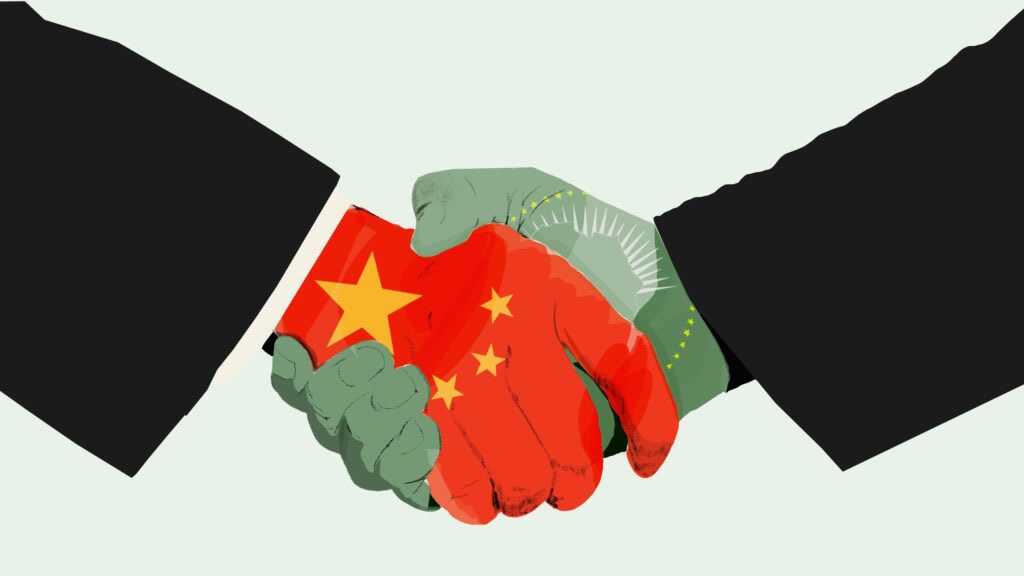
In the last four decades, China has seen unprecedented growth in economics, education, and overall quality of life. This growth was a shock to most of the world because it contrasted with the isolated agrarian society China had been living under for centuries after its peak during the Qing period when Chinese territory reached its greatest extent and the political atmosphere of the nation was relatively stable.
So how does this connect with modern-day China's growing influence in Asia in Africa you might ask. Well to fully understand China's "Belt and Road Initiative", you must understand The Silk Road.
Overview of The Silk Road
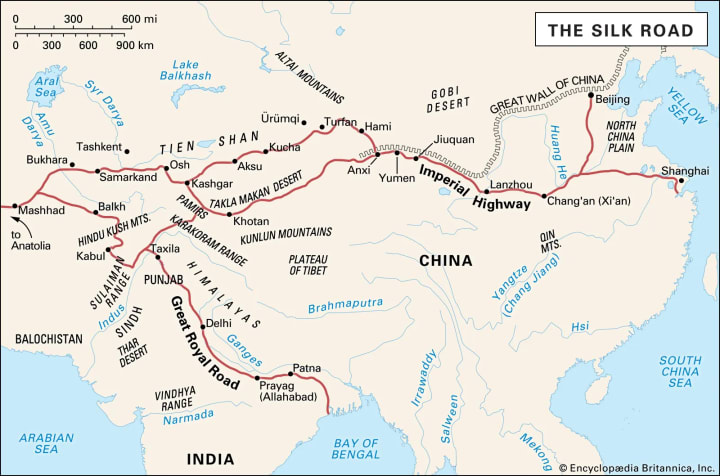
The ancient Silk Road was a massive trade route connecting Asia to Africa and Europe which came to be during China’s Han Dynasty (206 BCE–220 CE). Its name famously came from the desired product of Silk that could only come from China. This trade route ran through Afghanistan, Kazakhstan, Kyrgyzstan, Tajikistan, Turkmenistan, and Uzbekistan, as well as modern-day India and Pakistan. The Silk Road routes extended more than four thousand miles to Europe.
The Silk Road connected the once isolated country of China to the rest of the world. It carried silk, spices, tea, ivory, cotton, wool, precious metals, and more throughout the continents of Asia, Europe, and Africa. This trade ushered in a time of economic growth for China and helped fund mega projects like the famous Great Wall of China. Use of the route peaked during the first millennium, under the leadership of first the Roman and then Byzantine Empires, and the Tang Dynasty (618–907 CE) in China.
This economic growth did not continue though. China had been facing a problem with The Mongols who were a nomadic tribe living in modern-day Mongolia and parts of modern-day Russia. The Mongols routinely attacked traders on The Silk Road, ransacked villages, and ultimately took the whole nation of China over and t one point in time. With all of this danger, and advancements in technology meaning that trade with China was not as necessary. Many nations opted out of using The Silk Road.
How The Ancient Silk Road Relates to China's Belt and Road Initiative.
With China's economy booming, and military might being at the highest it ever has, President Xi Jinping announced The Belt and Road Initiative. He announced this massive infrastructure plan during official visits to Kazakhstan and Indonesia in 2013. There were two plans included in Xi's announcement. The first one being the overland Silk Road Economic Belt and the second one being the Maritime Silk Road. Later on, they began being referred to as simply The Belt and Road Initiative.
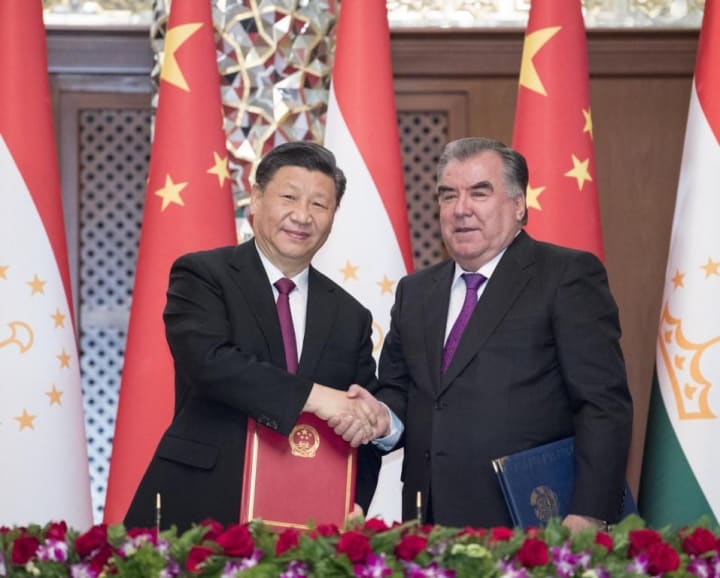
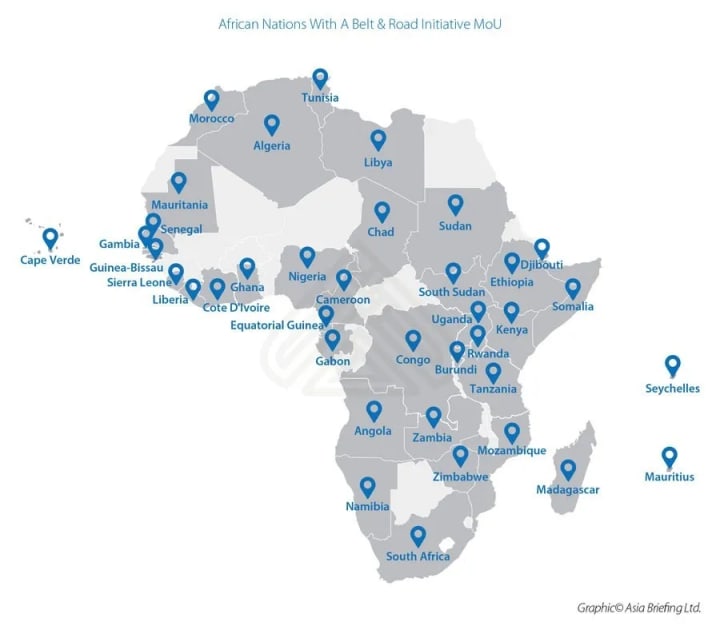
President Xi Jinping's plan is to reinforce China's control of trade in the region by recreating the success of the ancient Silk Road. The Belt and Road Initiative outlines projects in over sixty countries such as railways, energy pipelines, highways, and streamlined border crossings. The Belt and Road Initiative's impact can already be seen, especially in Africa where China lists 39 African countries on The Belt and Road Initiative's official website.
In total China has spent US$143 billion in Africa, with around half of these loans given in just the last four years. This money is being put towards railways, airports, stadiums, and electricity systems in Africa. Xi does not question these countries' governments before dolling out checks which makes him particularly attractive to some African leaders who can not usually get money from other world superpowers.
Some are questioning the reasons behind these loans, why?
From government officials, professors, economists, and just regular people, there has been a lot of skepticism about the real reasons being The Belt and Road Initiative. Many see President Xi Jinping's plan as what economists call a "debt trap". A debt trap is when a wealthy country lures poor, and or developing countries into agreeing on unsustainable loans to pursue infrastructure projects so that, when they experience financial difficulty, the wealthier country can use the poorer country's debt against them, subsequently trapping them, with the wealthier country able to use them for economic or military benefits.
People see the BRI as a debt trap because it specifically invests in countries that do have the ability to quickly pay China back. For example, Sri Lanka currently has a USD 8 billion debt to China, and instead of paying it off, Sri Lanka agreed to lease one of its ports to China for a whopping 99 years. This all while Sri Lanka is going through its worst economic downturn since gaining independence in 1948.

With many of the African nations, China has invested in not having the ability to quickly pay back loans, economists see a possibility of China gaining more economic, military, and even political sway in the region. China has repeatedly responded to these claims saying they are false. When asked President Xi Jinping said:
The BRI may be China's idea, but its opportunities and outcomes are going to benefit the world. China has no geopolitical motives, seeks no exclusionary blocs, and imposes no business deals on others
While there is no clear answer as to if China's Belt and Road Initiative is going to be used as a debt trap, we do know that historically China has always had special interests when it comes to the loaning of money and I believe that the BRI is no different.
About the Creator
Keep reading
More stories from Ethan Cohen and writers in The Swamp and other communities.
Who is to blame for the mass shooting epidemic in the United States?
Today, yesterday, and every single day before that, I guarantee that something related to gun violence popped up on your phone. Why so frequently you might wonder. Well, to state it simply, there have been 319 mass shootings this year, and only 186 days into 2022. This means that on any given day, there will almost certainly be more than one mass shooting.
By Ethan Cohen4 years ago in The Swamp
First French FDI Frigate Begins Long-Duration Deployment
The French Navy has officially commenced the long-duration deployment of its first FDI (Frégate de Défense et d’Intervention) frigate, marking a significant milestone in France’s maritime defense capabilities. Designed for multi-mission roles, the FDI class frigates are intended to replace older vessels in the French fleet while delivering advanced technological capabilities for both national defense and international operations. This deployment signals France’s commitment to maintaining a robust naval presence in strategic waters amid rising global maritime tensions. The FDI frigate, equipped with state-of-the-art sensors, stealth features, and advanced weapons systems, is expected to perform a variety of missions during its deployment. These include maritime surveillance, anti-submarine warfare, protection of sea lanes, and supporting international coalition operations. The ship’s design incorporates modern combat systems, including the Sea Fire 500 radar and Aster missile systems, allowing it to track and neutralize aerial, surface, and underwater threats. French naval officials emphasize that the FDI frigate is capable of operating autonomously or as part of a larger naval task force, enhancing operational flexibility. The deployment represents not only a technological achievement but also a strategic statement. France has been actively expanding its naval influence in key regions, including the Indo-Pacific, the Mediterranean, and the Atlantic. With global security challenges evolving rapidly, particularly in contested maritime zones, the FDI frigate’s extended deployment demonstrates France’s readiness to project power and safeguard maritime interests. Officials have highlighted that this deployment will involve extensive exercises, joint maneuvers with allied navies, and operational patrols in areas critical to international trade and security. The FDI program itself has been a centerpiece of French naval modernization efforts. These frigates are smaller and more cost-effective than larger destroyers, but they do not compromise on firepower or technological sophistication. The construction of the first FDI frigate involved advanced shipbuilding techniques to improve stealth capabilities, reduce maintenance costs, and ensure long-term sustainability. By integrating cutting-edge electronics, propulsion systems, and automated operations, these frigates exemplify a new generation of naval engineering that blends efficiency with combat readiness. French defense experts note that the FDI frigate’s deployment is part of a broader plan to reinforce Europe’s maritime security posture. As geopolitical tensions rise in areas such as the South China Sea, the Eastern Mediterranean, and the North Atlantic, France aims to maintain a credible naval presence that can respond swiftly to emerging threats. The FDI frigate’s ability to integrate with multinational naval forces, including NATO operations, enhances its role as a versatile instrument of both national defense and international cooperation. During the upcoming deployment, the frigate will participate in exercises designed to test its combat systems under realistic conditions. These exercises are expected to include anti-air, anti-ship, and anti-submarine operations, providing valuable operational data and refining crew readiness. Furthermore, the deployment will involve diplomatic visits to friendly ports, reinforcing France’s role as a strategic partner in global maritime affairs. This dual focus on operational capability and international cooperation underscores the strategic importance of the FDI program. The successful launch and deployment of the FDI frigate also have broader implications for France’s domestic defense industry. The program supports high-tech manufacturing jobs, fosters innovation in shipbuilding, and strengthens the country’s strategic independence. The integration of advanced weaponry and electronics demonstrates France’s capability to produce cutting-edge military technology domestically, reducing reliance on foreign suppliers. In conclusion, the long-duration deployment of the first French FDI frigate marks a major milestone in both naval modernization and strategic maritime presence. Its advanced capabilities, versatility, and readiness to operate in diverse scenarios highlight France’s commitment to safeguarding its interests and contributing to international maritime security. As the FDI frigate begins its mission, it not only showcases France’s technological achievements but also signals its enduring commitment to maintaining a credible and agile naval force on the global stage.
By Fiaz Ahmed Brohi3 days ago in The Swamp



Comments
There are no comments for this story
Be the first to respond and start the conversation.