
What is Socialism?
Socialism is a hot button term, but in order to effectively debate it we must first understand it.

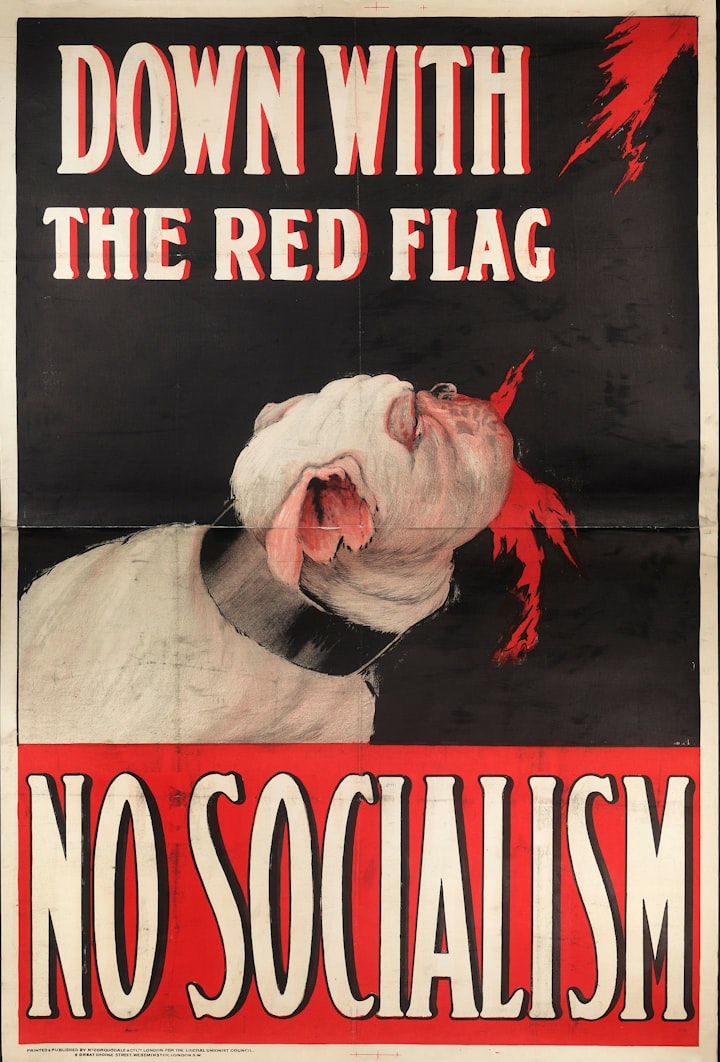
Socialism - this might be one of the most used and least understood words of the moment. Some people praise it, some fear it, others despise it. But how many can define it?
Could it be that one of the reasons why socialism is such a trigger word is that we are all thinking of different things when we use it? Tell me, when you think of socialism do you think of Denmark or Venezuela? Do you think of Stalin or Sanders? What about FDR?
The truth is, none of those answers are wrong. But neither of them offer the full picture either.
Lets start with the basics:
Socialism is both economic and political.
The most important thing to understand is that socialism is an economic system where the public owns the means of production - that’s it. Traditionally this means resources like the land, physical machinery and factories used to produce goods, but it can also include publicly owned companies (also referred to as State Owned Enterprises).
Social ownership can also mean the government takes a more active role in controlling the market, to varying degrees. If you think of a spectrum with extreme capitalism - a completely free, unregulated market- on one end, and communism - total state control and ownership over every aspect of economic life - on the other end, then socialism could be just about anything in between, depending on who you ask.
But, socialism is also a political philosophy - with various degrees of expression.
Revolutionary socialism emphasises the struggle between the working and ownership classes of society and calls for a revolutionary overthrow of the social order. The version you are more likely to hear about today is democratic socialism, which aims for reform rather than revolution, and supports ideas like universal access to public benefits such as health care and education as well as policies that protect workers.
For the most part, the revolutionary brand of socialism fell out of favor in the 20th century and today most nations are capitalist in some way. The central debate now is to what extent do we use socialist principles to regulate free markets? Let me give you an example: Social Security. When any of us start working and making money, a portion of our salary is withdrawn and deposited into a national social security fund. This money is invested so that the fund grows over time and, eventually, provides us with an income after we retire. Today, social security is a basic expectation from participating in the workforce, but when FDR first introduced it to Americans in the 1930s he was crucified by critics and accused of making America "socialist". Social security is a socialist principle - it is our money, in a fund managed by the government - but I think you’d have a hard time finding anyone who’d refer the US as a socialist country. This whole thing gets confusing because everyone has their own personal limits on what is an acceptable level of government involvement and what policy goes too far. Most American’s probably support free k-12 education, but people have differing views on whether or not college should be tax payer funded, for example.
So, the next time someone cries “socialist” press them to clarify what they mean. What is it about that particular politician or policy that makes it socialist? Do they view socialism as an ideology that is inherently good or evil, or do they understand it correctly as a spectrum of ideas?
Any productive conversation has to start with a basic understanding of what it is we are actually debating.
About the Creator
Nathalia Ramos
Spanish/Australian living in LA.
Actor. Writer. Political Scientist.
IG: @NathaliaRamos Twit: @nathalia73
Keep reading
More stories from Nathalia Ramos and writers in The Swamp and other communities.
Democracy in Action
My dad grew up in Spain under the Franco dictatorship. To this day, Spaniards of that era still remember the day, Feb 23rd, 1981, when armed Guardia Civil officers stormed the Congress of Deputies in an attempt to overthrow Spain’s first democratically elected government.
By Nathalia Ramos5 years ago in The Swamp
Why Black History Matters in America?
The United States of America is celebrating their 250th anniversary in 2026. I'm proud to be an American and as someone who was born here, I wouldn't imagine myself living anywhere else. This is a country where opportunities are possible. Where anyone can be successful in anything they desire to do. Equality, community, and togetherness are the backbones of what America is and should be about. However, we have an administration who wants to erase and disregard those who have made positive, meaningful impacts in our country, specifically Black figures, such as Martin Luther King, Jr., Rosa Parks, and Maya Angelou. President Trump and his administration have been constantly complaining and fighting against what they call the "Woke agenda". They use this excuse as a distraction from other issues they refuse to address, such as the high cost of living, climate change, and inflation. That equality is dividing America, when in reality, it's bringing us together. Being woke is not tied to a specific political party. No matter where you stand on the political spectrum, you can still care about other people and their plights. Compassion and empathy for others isn't tied to a political party, either. We were taught as children to treat others the way we want to be treated and not judge others because they're different from us. Caring about others isn't a personal attack on your beliefs. It doesn't make you any less of a person. People who are easily offended over African American figures, past or present, or anything related to it, are grasping at straws. Current and future generations need to know who people like Harriet Tubman and Shirley Chisholm were, especially in the classroom. Black History is part of American History. It should be recognized, not hidden or forgotten. Besides, you can't shield children from everything, just because your feelings are easily hurt.
By Mark Wesley Pritchard 28 days ago in The Swamp
Lebanon’s Second Airport Could Receive Passengers by Summer, Officials Say
Lebanese officials have announced that the country’s long-awaited second commercial airport could begin receiving passenger flights by the summer, a development seen as both a practical boost to transportation and a symbolic step toward economic recovery after years of crisis. The airport, located in northern Lebanon near the coastal city of Tripoli, has been undergoing renovation and infrastructure upgrades aimed at easing pressure on the country’s only major international gateway, Beirut-Rafic Hariri International Airport. Officials say the project is in its final stages, with runways, passenger terminals, and security systems nearing readiness. A Strategic Alternative to Beirut For decades, Beirut’s airport has served as Lebanon’s sole hub for international travel, making it vulnerable to disruptions caused by political unrest, regional conflict, or technical failures. The opening of a second airport is expected to improve resilience and provide an alternative route for both civilian and humanitarian flights. A senior transport ministry official said the northern airport would initially handle a limited number of domestic and regional flights, with gradual expansion to international routes once operational stability is confirmed. “Our priority is safety and reliability. We want to ensure the airport meets international standards before opening fully to passengers,” the official said. Economic and Regional Impact Supporters of the project argue that the airport could become a catalyst for economic activity in northern Lebanon, a region that has long suffered from high unemployment and underinvestment. Local business leaders believe increased air traffic could boost tourism, encourage foreign investment, and create new jobs in aviation, hospitality, and logistics. Tripoli’s port and industrial zones are expected to benefit from improved connectivity, allowing the city to serve as a secondary gateway for trade and travel. Analysts note that this could help decentralize Lebanon’s economy, which has traditionally been concentrated around Beirut. “This is not just an airport project; it is a regional development strategy,” said an economist at a Beirut-based research institute. “If managed properly, it could bring long-term benefits to the north and reduce pressure on the capital.” Security and Political Considerations Security remains one of the main concerns surrounding the project. Lebanon’s volatile political environment and ongoing regional tensions have raised questions about whether the new airport can be adequately protected and managed. Officials insist that advanced screening systems and coordination with national security agencies will be in place before any commercial flights begin. The government has also emphasized that the airport will operate under full civilian authority, countering fears that it could become entangled in political or military disputes. International aviation bodies have reportedly been consulted to ensure compliance with safety and regulatory standards. Infrastructure Challenges Despite optimism, challenges remain. Lebanon’s financial crisis has severely limited public spending, forcing authorities to rely on international assistance and private partnerships to complete construction and modernization. Power supply, fuel availability, and staffing are additional hurdles that must be addressed before summer operations can begin. Engineers working on the site said that runway resurfacing and navigation equipment installation were among the most complex tasks. “We are racing against time, but progress has been steady,” one project manager said. “If funding continues and there are no major political disruptions, we can meet the target.” Relief for Travelers and Airlines Airlines have shown cautious interest in using the new airport, particularly for short-haul routes within the Middle East. Travel industry representatives say an alternative hub could help reduce congestion at Beirut’s airport, which often struggles with overcrowding during peak seasons and periods of political instability. For Lebanese citizens, the new airport could offer shorter travel times for those living in the north and provide reassurance that the country’s transport network is becoming more robust. “It’s about having options,” said a Tripoli resident who frequently travels for work. “If something happens in Beirut, at least we won’t be completely cut off from the world.” A Symbol of Recovery Beyond logistics, the airport project carries symbolic weight. Lebanon has endured years of economic collapse, the aftermath of the Beirut port explosion, and political paralysis. Opening a second airport would signal that at least some national infrastructure projects can move forward despite adversity. Officials caution that timelines remain tentative and dependent on final safety approvals. Still, the announcement has generated cautious hope among citizens and business leaders alike. “If this airport opens as planned, it will show that Lebanon is capable of rebuilding and adapting,” said a former aviation official. “It won’t solve all our problems, but it’s a step in the right direction.” As summer approaches, attention will focus on whether the country can meet its ambitious deadline and turn a long-discussed plan into a functioning gateway for passengers and commerce.
By Fiaz Ahmed 4 days ago in The Swamp



Comments
There are no comments for this story
Be the first to respond and start the conversation.