
What If World War III Began Between Iran and the U.S.?
A chilling exploration of how a long-standing rivalry in the Middle East could spark a global catastrophe.

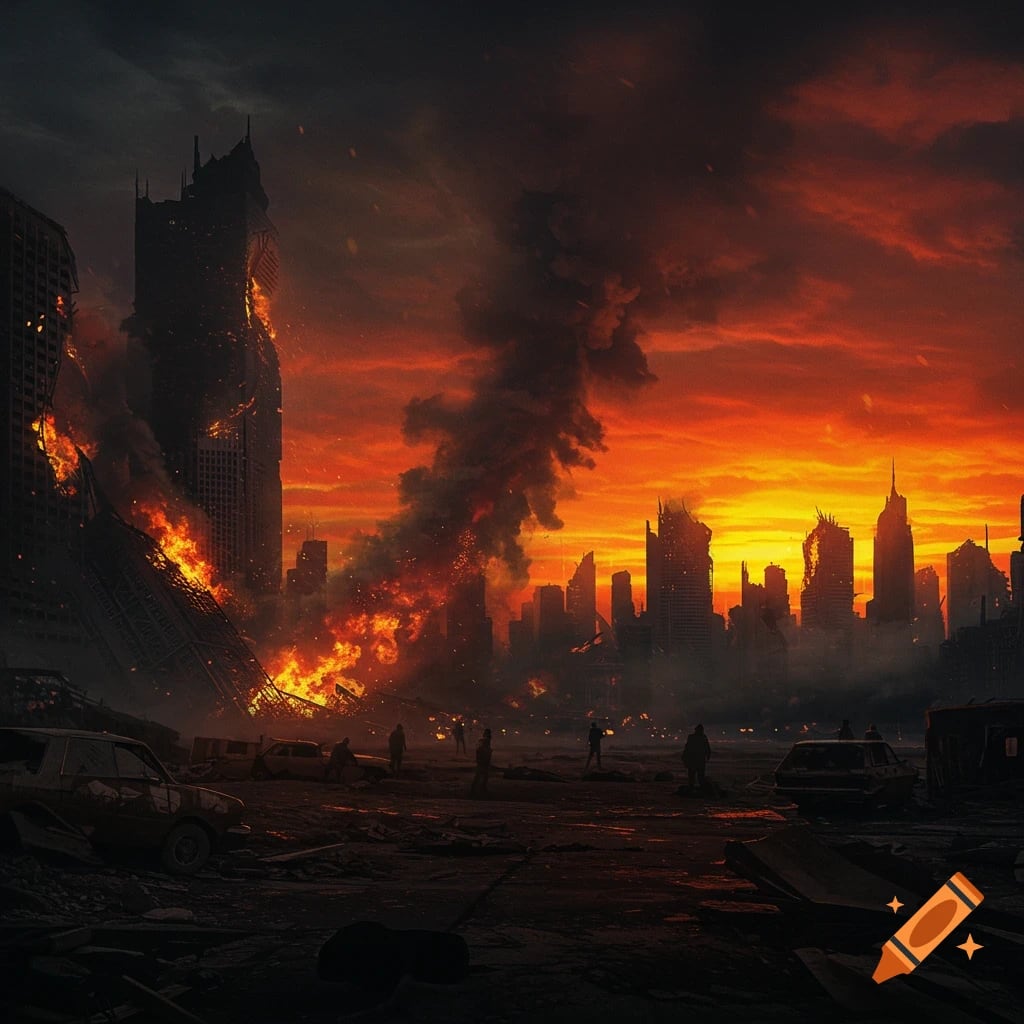
In the realm of geopolitics, few scenarios send chills down the spine like the thought of World War III. Over the decades, tensions between Iran and the United States have simmered, boiled, and occasionally erupted into violent confrontations. But what if one of those flare-ups escalated beyond control—igniting a global conflict of unimaginable scale? What if World War III started not in Europe or East Asia, but in the Middle East—between Iran and the U.S.?
A Long History of Tension
The relationship between Iran and the United States has been strained since the 1979 Iranian Revolution, when the U.S.-backed Shah was overthrown and American diplomats were taken hostage in Tehran. Over the following decades, sanctions, military confrontations, and ideological rivalry have only deepened the divide.
The killing of Iranian General Qasem Soleimani by a U.S. drone strike in January 2020 brought the two nations closer to open war than ever before in the 21st century. Iran responded with missile strikes on U.S. bases in Iraq, and though both sides pulled back from further escalation, it was clear that the potential for a wider conflict loomed large.
But what if things had gone differently? What if neither side had backed down?
The Spark That Lights the Fire
Imagine a scenario where Iran retaliates to a U.S. strike not just with missiles, but by attacking a major American warship in the Persian Gulf, resulting in significant loss of life. In response, the U.S. launches full-scale airstrikes across Iranian military infrastructure. Iran then closes the Strait of Hormuz, cutting off nearly 20% of the world’s oil supply. Global markets crash. Oil prices skyrocket.
China, heavily dependent on Iranian oil and wary of increasing U.S. presence in the region, sides with Iran diplomatically. Russia, long an Iranian ally in Syria, seizes the opportunity to support Tehran militarily, providing arms and intelligence. NATO allies are pressured to stand with the U.S., while countries like India, Pakistan, and Turkey are forced into difficult political positions.
A regional war spirals into a global confrontation.
The Battlefield Expands
With Iran under attack, its regional allies and proxy groups spring into action. Hezbollah in Lebanon launches rockets into Israel. Houthi rebels in Yemen target Saudi oil fields. Iraqi militias attack remaining U.S. troops and facilities. The entire Middle East is engulfed.
U.S. bases across the region become targets. American aircraft carriers in the Gulf are under constant threat from Iranian drones and anti-ship missiles. Cyberattacks cripple American infrastructure back home, traced to Iran but supported by Russian cyber units.
In retaliation, the U.S. and its allies conduct regime-change operations in Tehran, further inflaming regional resentment. Iran’s resistance becomes a symbol for anti-Western movements across the globe.
A New Kind of World War
Unlike the world wars of the 20th century, this one doesn’t involve trench warfare or nuclear bombs dropped from planes. Instead, World War III is defined by cyber warfare, drone swarms, misinformation campaigns, and economic disruption. Cities are not only bombed but blacked out by hacking attacks. Satellites are destroyed in space. Internet access is weaponized.
The war bleeds into South Asia. Pakistan and India—longtime nuclear rivals—face destabilizing political pressures. China's involvement in the war brings the South China Sea into the conflict. Taiwan becomes a flashpoint. The U.S. finds itself fighting on multiple fronts: physical, digital, and ideological.
Human Cost and Global Collapse
As the war stretches into years, the global economy is shattered. Millions are displaced from conflict zones. Refugee crises spill into Europe and neighboring countries. Supply chains break down. Food and medicine shortages occur worldwide.
Back home in the U.S., protests erupt against the prolonged war. In Iran, despite the devastation, national unity strengthens under the banner of resistance. Other nations try to mediate peace, but distrust runs deep.
The dream of global cooperation—already fragile—is torn apart.
Could It Happen?
This hypothetical is not merely speculative fiction—it’s a cautionary tale. While cooler heads have so far prevailed in real life, history shows that wars often begin not with a grand plan, but with a mistake, a miscommunication, or an emotional reaction.
Both the U.S. and Iran possess powerful militaries, strong alliances, and nuclear-adjacent capabilities. Any future misstep could trigger a reaction that spirals far beyond control. The lesson is clear: diplomacy, patience, and mutual respect are not luxuries—they are necessities in a world armed to the teeth.
Final Thoughts
World War III, sparked by U.S.–Iran conflict, would not look like the wars of the past. It would be faster, more destructive, and far more difficult to contain. The human, economic, and ecological cost would be catastrophic.
But imagining this dark scenario serves a purpose. It reminds us of the stakes involved in every drone strike, every sanction, every speech made by a leader. The world cannot afford another world war—especially one that could begin from a long-standing rivalry in the heart of the Middle East.
About the Creator
Zaheer Uddin Babar
Writer of love, life, and everything in between. Sharing stories that touch hearts, spark thoughts, and stay with you long after the last word. Explore romance, drama, emotion, and truth—all through the power of storytelling.
Keep reading
More stories from Zaheer Uddin Babar and writers in The Swamp and other communities.
Parallel Protests
I haven't written for quite some time, but I have A LOT of thoughts about yesterday's protest rally against our government's involvement and complicity in America's war on Iran, on the harbourside of my home city Bristol, and I need to put them somewhere. My gorgeous girlfriend is always a loving and listening ear and sharing it all with her will always be a healthy and happy way of processing the mental and emotional weight, but getting it straight in my brain to share means writing it all down in straight lines, so, here we are and thanks for being here.
By Steph Cole10 days ago in The Swamp
Worth the Wait: Puerto Viejo, Costa Rica
Beach bumming in a small Caribbean beach town sounded like a perfect way to end our 6-month trip through Mexico and Central America. Or so we thought. The foul, fishy stench of rotten seaweed hit our nostrils as we stepped from the cramped bus and looked out at a rather depressing, empty, and underwhelming black sand beach. It was pouring with rain, and we had to quickly fish out our ponchos. We thought, this couldn’t be it, could it?
By Sh*t Happens - Lost Girl Travel7 days ago in Wander



Comments
There are no comments for this story
Be the first to respond and start the conversation.