
What Does It Mean to Have Air Superiority Over Iran?
Control of the Skies Shapes Military Strategy—but Risks Remain Understanding Air Superiority, Its Advantages, and Its Limits Dominating Airspace Over Iran Could Transform Operations and Regional Security From Tactical Advantage to Strategic Implications: The Role of Air Power What It Really Means When One Side Controls the Skies in a Conflict Zone Air Superiority Explained: Military Power, Risk, and the Challenge of Iran’s Defenses

As conflict in the Middle East intensifies, military leaders and analysts have increasingly discussed the concept of air superiority over Iran—and what achieving it would mean for the course of hostilities, regional security, and global geopolitics. But what exactly does “air superiority” mean in this context, and why is it such a critical military objective?
What Is Air Superiority?
In simple terms, air superiority is a military condition in which one side can operate its own aircraft freely while significantly limiting the opposing side’s ability to do the same. It does not necessarily mean total control of all skies, but rather a decisive advantage in aerial operations, such that one force can fly and strike with reduced threat from enemy aircraft and air defenses. Air superiority falls short of air supremacy, which is a state where the adversary’s air capabilities are almost entirely negated.
In historical contexts such as the 1991 Gulf War, coalition forces achieved air superiority within hours, allowing air campaigns to dominate the battlefield and support ground operations without significant aerial retaliation.
The Current Campaign and Claims of Sky Control
In the ongoing conflict involving Iranian territory, United States Central Command and allied forces have conducted thousands of airstrikes targeting Iranian air defenses, missile sites, and military infrastructure as part of what has been called Operation Epic Fury. CENTCOM says these strikes—numbering more than 3,000 in the first week—have resulted in an air dominance condition over large swaths of Iranian airspace and a significant drop in Iran’s ability to launch drones and missiles.
Senior military officials have echoed claims that Iranian air defenses no longer pose the same level of danger to Western aircraft operating at higher altitudes, noting that fighters can penetrate deeper into Iranian territory “with relative impunity.”
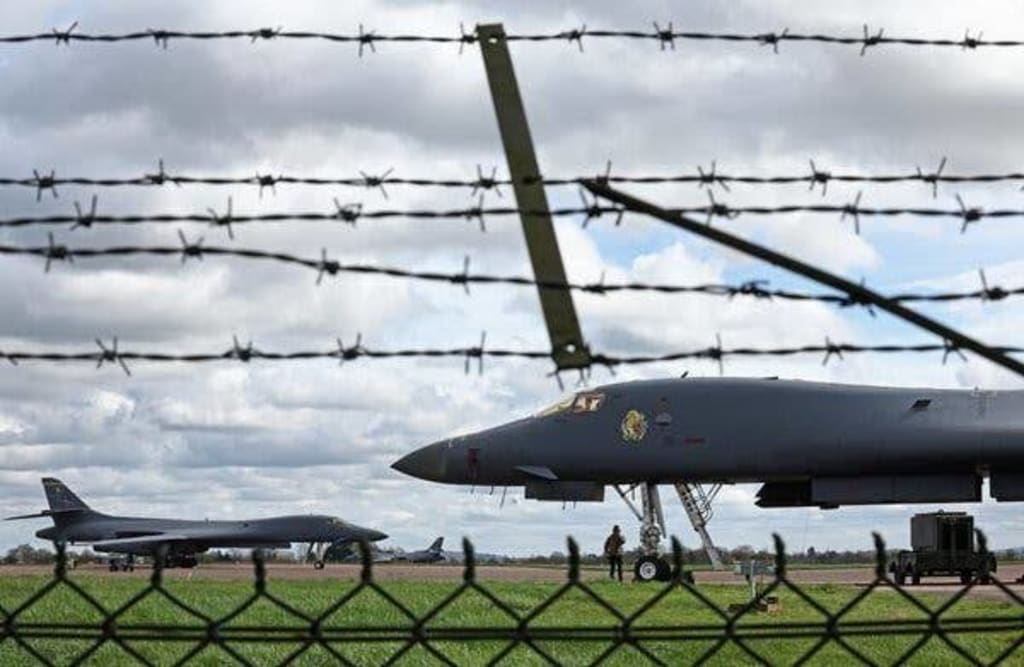
Former senior U.S. commanders, including David Petraeus, have even suggested the U.S. might be operating at a level approaching air supremacy rather than just superiority, particularly given the use of long‑range bombers like B‑52s and B‑1s alongside stealth and fighter platforms.
Why Air Superiority Matters
Achieving air superiority fundamentally shifts the dynamics of conflict in several ways:
1. Freedom of Movement and Strike Capability
Once an air force dominates the skies, its aircraft can conduct strikes on critical military and infrastructure targets with reduced risk. Without fear of enemy interceptors or dense air defenses, planners can schedule precision and strategic bombing missions, interdict supply lines, and support ground or naval forces more effectively.
This freedom also extends to aerial reconnaissance, intelligence gathering, and electronic warfare missions, allowing superior situational awareness across the battlefield.
2. Protection of Friendly Forces
Air superiority reduces the risk to friendly aircraft and troops. With enemy air defenses degraded, forces can move more safely across contested zones without facing surface‑to‑air missile (SAM) threats or hostile fighters. This aspect is especially crucial in conflicts involving integrated air defense systems, where even a small radar network can pose serious danger to aircrews.
3. Psychological and Strategic Impact
Controlling the skies can also influence the broader political and psychological dimensions of war. It can discourage enemy forces from attempting aerial operations and can limit their capacity to launch retaliatory strikes. In this conflict, commanders have emphasized that suppressing Iranian air defenses was a first step toward broader operational goals, including limiting missile threats to allied nations.
The Limits and Misconceptions
Despite official claims, air superiority is not absolute, and military experts caution against oversimplification.
Even if higher‑end SAM systems are degraded, mobile or hidden air defense units—such as road‑mobile missile launchers or loitering SAMs—can remain viable threats deep into enemy territory. These systems can make certain airspace contested rather than truly uncontested.
Additionally, air superiority does not guarantee political or strategic victory. Air power alone, no matter how dominant, has rarely been sufficient to force regime change or resolve complex conflicts historically. Past campaigns have shown that without effective ground operations or political strategies, aerial dominance can lead to prolonged stalemates.
Iran’s Defense and Continued Challenges
Iran’s air defenses, while degraded in recent operations, have not vanished entirely. Independent observers note that air superiority claims are relative—destroying major radar and missile sites may open corridors for strikes, but risk remains, particularly along eastern fronts where defenses are still active.
Moreover, Iran has continued to project power with missile and drone launches, indicating that air superiority over some skies does not eliminate all threat vectors.
As the conflict evolves, the pursuit of air superiority remains a central strategic priority for coalition forces. Continued targeting of air defenses and integration of advanced aircraft and long‑range platforms may further consolidate control of airspace.
However—and critically—air superiority is not an end state unto itself. It is a tool that, when paired with coherent political objectives and ground strategies, influences the broader trajectory of conflict. The skies above Iran may be dominated at a tactical level today, but the long‑term consequences—military, diplomatic, and humanitarian—will unfold far beyond aerial operations alone.
About the Creator
Fiaz Ahmed
I am Fiaz Ahmed. I am a passionate writer. I love covering trending topics and breaking news. With a sharp eye for what’s happening around the world, and crafts timely and engaging stories that keep readers informed and updated.
Keep reading
More stories from Fiaz Ahmed and writers in The Swamp and other communities.
Sanctuaries in the Sky’: Eight of the World’s Most Stunning Penthouses
From glittering city skylines to serene coastal vistas, penthouses have long represented the pinnacle of luxury living. For those seeking privacy, space, and unmatched panoramas, these residences offer more than just a home—they are elevated sanctuaries. Around the world, architects and designers have pushed the boundaries of style, combining opulent interiors, state-of-the-art technology, and outdoor terraces that blend seamlessly with nature or urban landscapes. Here are eight of the world’s most stunning penthouses that exemplify this elevated lifestyle. 1. One57, New York City, USA Soaring above Manhattan, the One57 penthouse commands views of Central Park and the iconic skyline. Spanning over 10,000 square feet, the residence features floor-to-ceiling windows, a private elevator, and sleek interiors combining modern minimalism with classic luxury. Amenities include a private spa, media room, and expansive terrace, perfect for entertaining against a backdrop of the city that never sleeps. 2. The Shard, London, UK Perched atop Western Europe’s tallest building, The Shard’s penthouse offers a 360-degree view of London’s historic and contemporary landmarks. Designed with dramatic double-height ceilings, marble floors, and bespoke furnishings, the space also incorporates smart-home technology, allowing residents to control lighting, climate, and security with a touch. Its private terraces provide an unparalleled vantage point of the Thames and the city below. 3. Odeon Tower, Monaco The penthouse at Odeon Tower epitomizes Mediterranean luxury with a stunning infinity pool that seems to pour directly into the sea. The residence features multiple levels, open-plan living spaces, and a sky terrace perfect for sunset cocktails. Monaco’s luxury real estate market ensures the highest standards of security and privacy, making this penthouse ideal for high-profile residents seeking exclusivity. 4. Marina Bay Sands, Singapore Singapore’s skyline is defined by the iconic Marina Bay Sands, and its penthouses are no exception. Combining panoramic city and sea views with futuristic design, these residences boast high-tech kitchens, indoor gardens, and private pools. Balconies overlook the Marina Bay area, offering a sense of serenity in one of the world’s busiest urban centers. 5. 432 Park Avenue, New York City, USA Another Manhattan gem, 432 Park Avenue, offers ultra-modern penthouses characterized by their minimalist interiors, soaring ceilings, and sweeping cityscapes. Residents enjoy full access to five-star amenities, including private gyms, libraries, and concierge services. The combination of scale, design, and exclusivity makes it a highly coveted address among global elites. 6. Tour Odeon Sky Penthouse, Monaco Distinct from the earlier Odeon Tower entry, this penthouse claims the title of Europe’s highest, featuring private indoor and outdoor swimming pools, a rooftop helipad, and panoramic views of the French Riviera. Interiors blend contemporary design with bespoke elements, while expansive glass walls ensure uninterrupted vistas of the Mediterranean Sea. 7. Burj Khalifa, Dubai, UAE The world’s tallest building is home to some of the most extraordinary penthouses. Stretching over several floors, these residences offer a combination of luxury finishes, home automation, and private elevators. Outdoor terraces provide breathtaking views of the desert, city, and Persian Gulf. Residents also enjoy access to the building’s world-class amenities, including gyms, infinity pools, and concierge services. 8. One Thousand Museum, Miami, USA Designed by famed architect Zaha Hadid, Miami’s One Thousand Museum penthouses exemplify futuristic luxury. The curved, fluid lines of the interior complement panoramic ocean views, while private pools, helipads, and expansive terraces create a seamless indoor-outdoor living experience. These penthouses combine architectural innovation with a focus on lifestyle, privacy, and entertainment. What Makes a Penthouses Truly Exceptional? Across continents, exceptional penthouses share several defining traits: Views: Whether overlooking a city skyline, ocean, or mountains, breathtaking panoramas are essential. Space and Layout: Open-plan interiors, high ceilings, and expansive terraces create a sense of freedom and grandeur. Privacy and Security: Exclusive access, private elevators, and tight security ensure peace of mind for residents. Amenities: From infinity pools to private gyms and spas, luxurious features elevate the everyday experience. Design Excellence: Attention to detail, bespoke furnishings, and seamless integration of indoor and outdoor spaces distinguish the best penthouses. These “sanctuaries in the sky” illustrate the pinnacle of architectural innovation, luxury, and lifestyle. They provide a retreat from the bustling world below, combining comfort, prestige, and unrivaled vistas in a way few other residences can match. For those who can afford them, these penthouses are not just homes—they are statements of style, sophistication, and aspiration. As urban landscapes continue to evolve, penthouses will remain symbols of elevated living, blending design, technology, and natural beauty to create extraordinary spaces that inspire awe and offer a lifestyle beyond imagination.
By Fiaz Ahmed about 17 hours ago in The Swamp
Parallel Protests
I haven't written for quite some time, but I have A LOT of thoughts about yesterday's protest rally against our government's involvement and complicity in America's war on Iran, on the harbourside of my home city Bristol, and I need to put them somewhere. My gorgeous girlfriend is always a loving and listening ear and sharing it all with her will always be a healthy and happy way of processing the mental and emotional weight, but getting it straight in my brain to share means writing it all down in straight lines, so, here we are and thanks for being here.
By Steph Cole11 days ago in The Swamp
My First Time Skiing and I Got Lost, Alone, in the French Alps
Looking back, I can trace some of my life’s biggest adventures to a simple action from my sister. She’d introduced me to Tommy (a very long time ago), a colleague of hers, who had overshared his penchant for Italian-looking women, and I ticked that box.
By Chantal Christie Weissabout 20 hours ago in Humans



Comments
There are no comments for this story
Be the first to respond and start the conversation.