
Western Media and the Double Standard in Portraying Black Men
How Media Narratives Still Distort the Image of Black Men While Excusing White Violence and Privilege

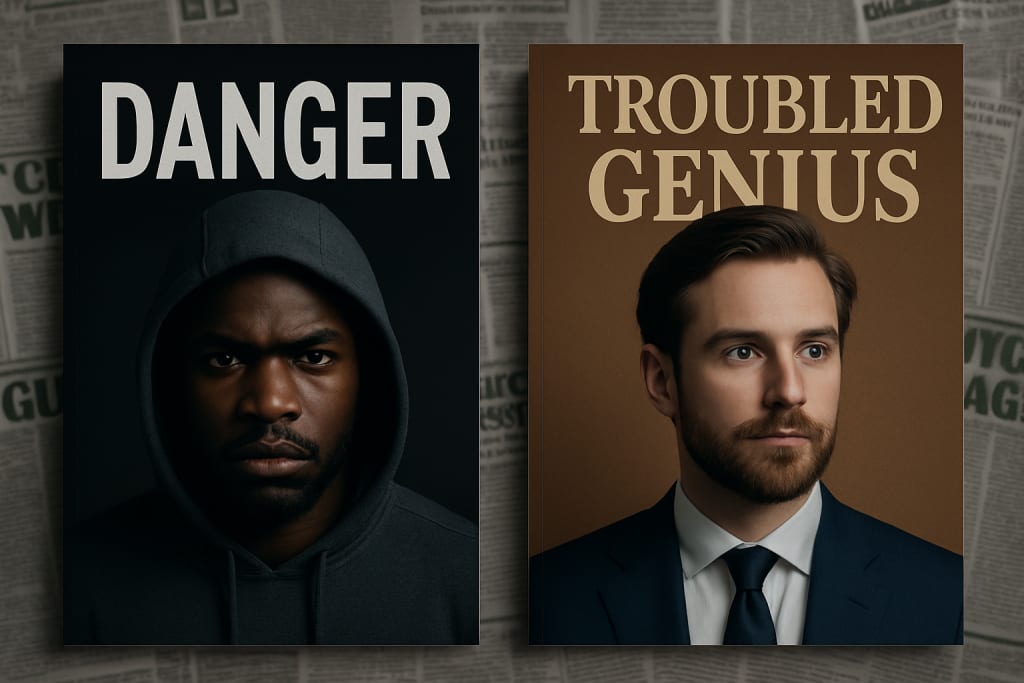
In the digital age, media narratives significantly shape public perception. However, a persistent issue remains: the portrayal of Black men in Western media often reflects deep-seated biases and double standards. These portrayals not only influence societal attitudes but also have tangible effects on the lives of Black individuals.
The Case of Daniel Penny and Jordan Neely
In May 2023, Daniel Penny, a 26-year-old white Marine veteran, fatally choked Jordan Neely, a 30-year-old unhoused Black man, on a New York City subway. Neely, who suffered from severe mental illness, was reportedly acting erratically but posed no physical threat. Despite this, Penny's actions led to Neely's death. In December 2024, Penny was acquitted of all charges, including second-degree manslaughter and criminally negligent homicide.
The media's portrayal of Penny was notably sympathetic. He was often depicted as a concerned citizen acting in self-defense, with significant attention given to his military background and intentions. Conversely, Neely's history of mental illness and homelessness was emphasized, subtly shifting the narrative to suggest culpability on his part. This dichotomy in portrayal underscores a broader issue: the tendency of Western media to humanize white perpetrators while dehumanizing Black victims.
The Leadership Narrative in Sports
In sports media, Black athletes often face a different set of standards compared to their white counterparts. A 2025 article from The Guardian highlighted how Black football players like Marcus Rashford, Bukayo Saka, and Jude Bellingham are frequently overlooked or scrutinized when displaying leadership qualities. In contrast, white players such as Jordan Henderson receive widespread acclaim for similar behaviors. This disparity suggests an underlying bias in how leadership is perceived and celebrated in sports, often favoring traditional white masculinity.
Media's Empathetic Coverage of White Suspects
The case of Luigi Mangione, a 26-year-old white man accused of murdering United Healthcare CEO Brian Thompson, further exemplifies media bias. Reports delved into Mangione's personal struggles, including a back injury and social isolation, painting a picture of a troubled individual rather than focusing solely on the crime. This empathetic coverage contrasts sharply with how Black suspects are often portrayed, where personal backgrounds are overshadowed by negative stereotypes.
The Ralph Yarl Incident: A Demand for Worthiness
In April 2023, Ralph Yarl, a Black teenager in Kansas City, Missouri, was shot by 84-year-old homeowner Andrew Lester after mistakenly arriving at the wrong address. Yarl's survival and subsequent media coverage highlighted another troubling trend: the need to emphasize a Black victim's achievements to garner public sympathy. Yarl's involvement in the Science Olympiad and marching band were spotlighted, suggesting that his worthiness of empathy was tied to his accomplishments—a standard rarely applied to white victims.
Systemic Patterns in Media Representation
These cases are not isolated incidents but part of a systemic pattern in Western media. Studies have shown that African American crime suspects are often presented in more threatening contexts than white suspects, reinforcing harmful stereotypes. Such portrayals contribute to societal biases, influencing public opinion and, potentially, judicial outcomes.
Furthermore, media coverage often magnifies the mistakes of Black athletes while downplaying similar errors by white athletes. This disparity in scrutiny perpetuates a narrative that questions the competence and character of Black individuals in high-profile positions.
A Call for Equitable Representation
The media wields significant power in shaping narratives and public perception. Recognizing and addressing the double standards in the portrayal of Black men is crucial for fostering a more equitable society. It's imperative for media outlets to reflect on their reporting practices, ensuring that all individuals, regardless of race, are depicted with fairness and humanity.
By shedding light on these disparities, we take a step toward a media landscape that upholds justice and equality for all.
About the Creator
Mohammad Ashique
Curious mind. Creative writer. I share stories on trends, lifestyle, and culture — aiming to inform, inspire, or entertain. Let’s explore the world, one word at a time.
Keep reading
More stories from Mohammad Ashique and writers in The Swamp and other communities.
The Forsyth House Fire
Since 1851, Forsyth House has stood on the corner of Union Street and Gordon Street in the heart of Glasgow. Its iconic, or was... because on Sunday 8th of March, 2026, a fire broke out in a small, seemingly un-named shop in the building and tore all that history down. As I write, the rubble is still unsettled and the street is still blocked off. Central Station is quiet on the upper level, and around 30 small businesses have quite literally gone up in smoke.
By S. A. Crawford3 days ago in The Swamp
A Transparent Look at Vocal Challenges and Top Stories
Almost three years ago, we shared a resource article that served as a place for people to suggest new challenge prompts. We thought it would be a good idea to refresh that thread, and take the opportunity to answer a few common questions about top stories, how challenges are judged and how submissions are reviewed.
By Vocal Curation Team4 days ago in Resources



Comments
There are no comments for this story
Be the first to respond and start the conversation.