
Warning over ‘Heart Attack’ Snow as US Sees Record Snowfall
Record-breaking snowfall in the northeastern U.S. prompts “heart attack” warnings as officials urge caution while battling hazardous roads, stranded travelers, and health risks from strenuous snow removal.

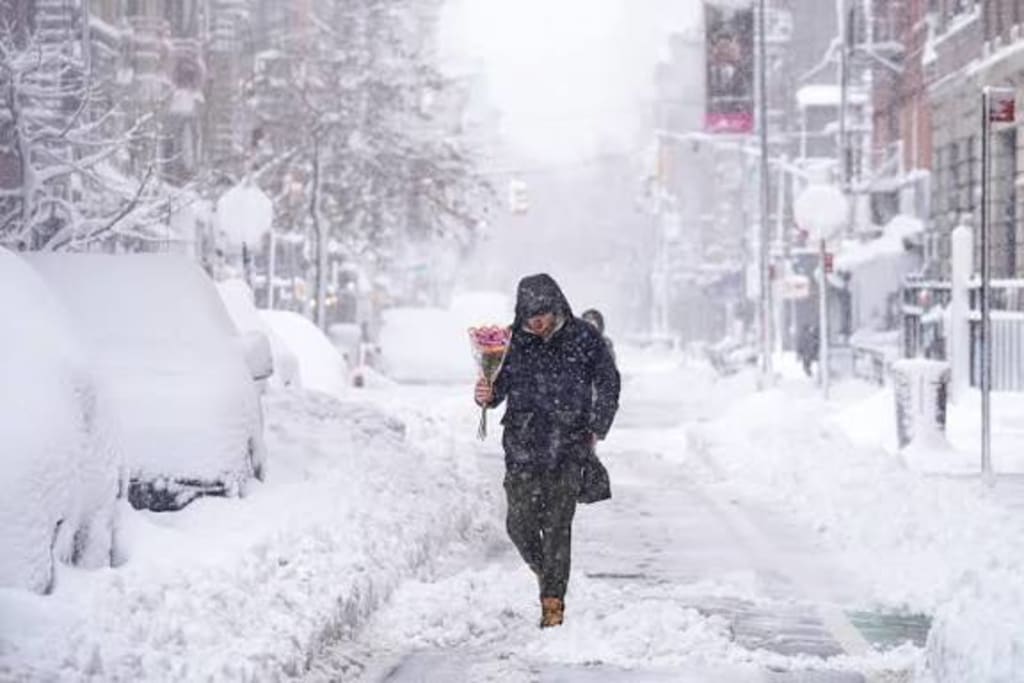
Parts of the northeastern United States are grappling with record-breaking snowfall this week, prompting health warnings and transportation disruptions as authorities struggle to manage both the snow and its dangerous side effects. Meteorologists have described the storm as one of the most severe of the season, with some regions seeing several feet of accumulation in just 24 hours.
The unusually heavy snow has sparked a so-called “heart attack snow” alert from medical professionals. The term refers to the physical strain caused by shoveling deep, dense snow, which can trigger heart attacks in people with underlying cardiovascular conditions. Hospitals in affected areas have reported an increase in patients experiencing chest pains, shortness of breath, and other warning signs after strenuous snow removal.
Record Snowfall Across the Northeast
States including New York, Massachusetts, and Pennsylvania have recorded snow accumulations exceeding previous winter records. The storm has caused road closures, grounded flights, and forced school districts to cancel classes. The National Weather Service issued winter storm warnings and urged residents to stay indoors unless travel is essential.
Snowplow operations are running around the clock, but officials warn that the volume and intensity of snowfall are creating hazardous conditions. Sidewalks and secondary roads remain blocked in many suburban and rural areas, making it difficult for emergency services to respond quickly.
Health Risks of Heavy Snow
Medical experts stress that “heart attack snow” is a serious concern. Shoveling heavy, wet snow is highly strenuous and can raise blood pressure and heart rate dramatically. Individuals with pre-existing heart conditions, high blood pressure, or sedentary lifestyles are particularly at risk. The combination of cold temperatures, physical exertion, and stress can overwhelm the cardiovascular system.
Dr. Karen Matthews, a cardiologist in Boston, advised residents to take precautions: “If you must shovel snow, take it slowly, use smaller amounts at a time, and consider enlisting help. Even otherwise healthy people can experience heart problems if they overexert themselves in extreme cold.”
Emergency departments in the hardest-hit areas have reported seeing a notable uptick in patients complaining of chest discomfort, some of whom required immediate intervention.
Transportation and Infrastructure Disruptions
The storm has caused widespread travel disruptions. Major airports in New York City and Philadelphia canceled hundreds of flights, stranding thousands of passengers. Interstate highways remain treacherous, and officials advise travelers to avoid non-essential trips until snow removal operations are completed.
Public transit systems have been severely affected. Train schedules are delayed due to snow on tracks, and bus routes are operating on limited schedules. Authorities have mobilized National Guard units in some states to assist with emergency response and snow clearance in critical areas.
Community Response
Communities are mobilizing to help vulnerable residents, particularly the elderly and those with medical conditions. Volunteers are clearing sidewalks and driveways and delivering groceries and medicines. Hospitals and emergency services have increased staffing to manage the potential surge in weather-related medical emergencies.
Local governments have issued guidelines for safe snow removal, urging residents to use ergonomic shovels, dress in layers, and stay hydrated. Some municipalities are considering temporary shelters for those stranded by the storm or without power.
Looking Ahead
Forecasters predict that temperatures will remain below average for the next week, slowing snowmelt and prolonging hazardous conditions. Residents are urged to monitor local weather updates, follow safety advisories, and avoid unnecessary exertion.
While winter storms are a familiar challenge in the northeastern U.S., experts emphasize that the combination of record snowfall and health risks makes this particular event unusually dangerous. Awareness campaigns are ongoing to prevent avoidable injuries and ensure that communities can weather the storm safely.
In summary: The “heart attack” snow warning highlights the deadly intersection of extreme weather and human vulnerability. As the storm continues to impact millions, officials emphasize caution, proper preparation, and seeking help when needed to reduce the risk of serious injury or death.
About the Creator
Fiaz Ahmed
I am Fiaz Ahmed. I am a passionate writer. I love covering trending topics and breaking news. With a sharp eye for what’s happening around the world, and crafts timely and engaging stories that keep readers informed and updated.
Keep reading
More stories from Fiaz Ahmed and writers in The Swamp and other communities.
Up to 23,000 Terrorists Operating in Afghanistan, Russian Report Says
A recent report from Russia claims that up to 23,000 militants are currently operating in Afghanistan, highlighting ongoing security concerns despite the withdrawal of U.S. and NATO forces in 2021. The assessment, released by Russian intelligence sources, emphasizes that Afghanistan remains a fertile ground for extremist activity and could continue to pose a threat to regional and global stability. The report, circulated among security analysts and government officials, identifies multiple armed groups, including the Taliban, Islamic State’s Khorasan Province (ISIS-K), and smaller affiliated cells. Russian officials claim that these groups are engaged in recruitment, training, and cross-border operations, with some receiving logistical support from local networks. Taliban Control and Security Challenges Although the Taliban holds formal political control over Afghanistan, Russian analysts argue that its governance is fragile, particularly in rural provinces. While the Taliban maintains authority in many urban centers, the report suggests that several regions remain contested. ISIS-K, in particular, continues to launch attacks against both Taliban forces and civilians, underscoring the group’s persistent threat. The Russian assessment claims that extremist networks exploit weaknesses in local governance and security infrastructure to expand their operations. According to the report, some groups maintain training camps in mountainous areas, allowing them to operate with relative impunity. Russian analysts warn that this situation could lead to the re-emergence of Afghanistan as a base for international terrorist operations if not closely monitored. Regional Implications The presence of thousands of militants in Afghanistan has drawn concern from Russia and neighboring countries, including Pakistan, Iran, and the Central Asian republics. Moscow has long expressed apprehension that instability in Afghanistan could spill over into Central Asia, threatening border security and potentially fostering cross-border insurgency. In response, Russia has increased military and intelligence engagement with regional partners, including joint border monitoring exercises and security consultations. Russian officials have also urged the Taliban to crack down on extremist elements that could target Russian or allied interests in the region. International Concerns Global security analysts note that Afghanistan remains a complex environment where terrorism, political instability, and humanitarian crises intersect. While the Russian report highlights the scale of militant activity, independent observers caution that numbers are difficult to verify. Nonetheless, the figure of 23,000 extremists aligns with other estimates suggesting that multiple armed factions continue to operate with varying degrees of influence. The resurgence of militant activity in Afghanistan has implications for counterterrorism strategies worldwide. Countries including the United States, India, and European states remain concerned about the potential for Afghanistan to serve as a launchpad for attacks beyond its borders. Monitoring, intelligence-sharing, and targeted operations are seen as critical to preventing a re-emergence of transnational terrorism. Humanitarian and Governance Issues Experts emphasize that the security threat is compounded by ongoing humanitarian challenges. Economic instability, food shortages, and displacement create conditions in which extremist groups can recruit vulnerable populations. Critics argue that addressing only the militant threat without improving governance, infrastructure, and economic opportunities will likely limit long-term stability. The Russian report suggests that Taliban cooperation is key to containing terrorist activity. However, internal divisions, limited resources, and ideological constraints may hinder the group’s ability to fully suppress rival factions. Analysts warn that a failure to address these challenges could prolong Afghanistan’s security crisis. Looking Ahead As Afghanistan marks years of continuing turmoil, the reported presence of up to 23,000 terrorists serves as a stark reminder that the country’s challenges are far from resolved. Regional powers, including Russia, appear determined to remain engaged in monitoring and mitigating risks, while the international community debates strategies to support stability without direct military intervention. In conclusion, Afghanistan’s security landscape remains precarious. The combination of militant activity, governance gaps, and socio-economic pressures underscores the need for coordinated regional and international efforts. Without sustained attention, the country risks remaining a focal point for extremism with consequences that extend far beyond its borders.
By Fiaz Ahmed about 8 hours ago in The Swamp
A Gathering of Evil Bosses
“I’m the queen of chin jutting while I smooth my hair, attacking, insulting, and deflecting to protect my appointer.” “Oh, please, Blondi, my hair is curled, highlighted, and longer than yours. I feature television commercials telling immigrants that we will give them a free plane ride home, and if they voluntarily turn themselves in, they will be allowed to legally apply for re-entry. It runs everywhere, and I look good in it! You can’t compete because of your blond hair. Mine is nicer, and my lips are prettier than yours.”
By Andrea Corwin 6 days ago in The Swamp



Comments
There are no comments for this story
Be the first to respond and start the conversation.