
USS Iwo Jima: A Powerful Symbol of Modern U.S. Naval Strength
Exploring the history, mission, and global impact of one of America’s most powerful amphibious assault ships.

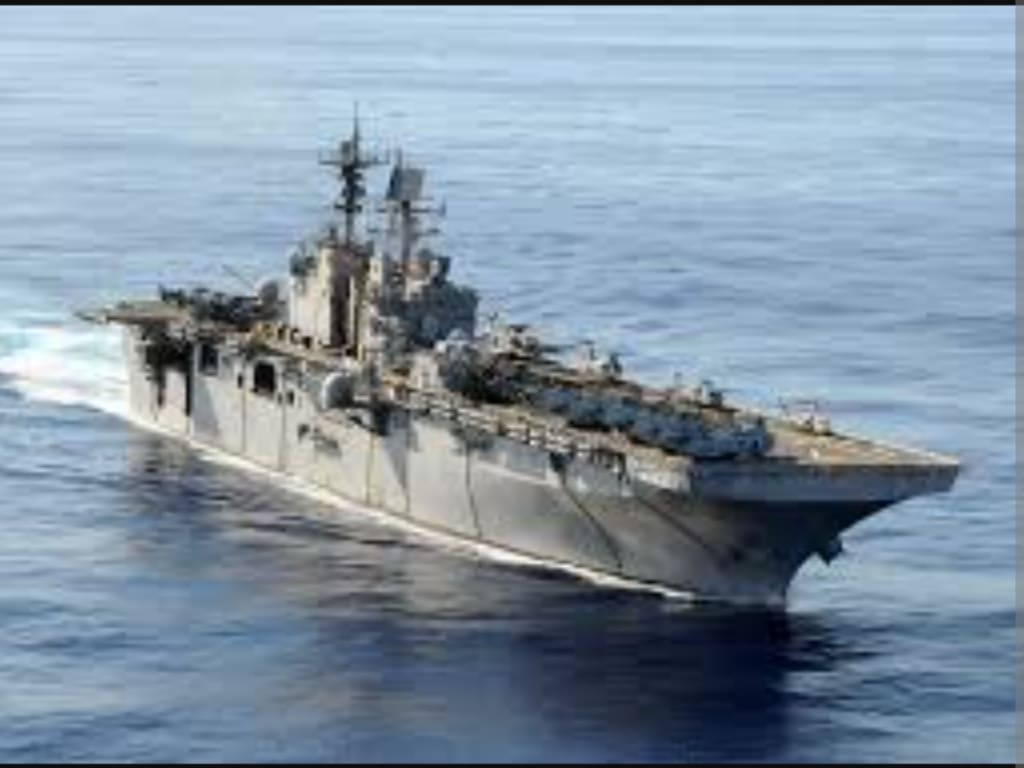
The USS Iwo Jima (LHD-7) stands as one of the most formidable amphibious assault ships in the United States Navy, representing decades of naval evolution, military strategy, and global presence. Named after the historic Battle of Iwo Jima during World War II, this warship carries a legacy of resilience, sacrifice, and tactical dominance. Since its commissioning, the USS Iwo Jima has played a vital role in military operations, humanitarian missions, and international defense cooperation.
A Ship Named After History
The name Iwo Jima holds deep significance in American military history. The Battle of Iwo Jima in 1945 was one of the bloodiest conflicts of World War II, symbolizing courage and determination. By naming the ship USS Iwo Jima, the Navy honors the Marines and sailors who fought bravely on that volcanic island. This naming tradition ensures that modern service members remain connected to the sacrifices of the past.
USS Iwo Jima is the second U.S. Navy ship to carry the name, following the earlier amphibious assault ship USS Iwo Jima (LPH-2), which served during the Cold War era.
Design and Technical Capabilities
Commissioned in 2001, USS Iwo Jima belongs to the Wasp-class of amphibious assault ships. These ships are designed to function as small aircraft carriers while supporting Marine Corps expeditionary operations. Measuring over 840 feet in length and displacing more than 40,000 tons, the USS Iwo Jima is a floating base capable of projecting power across the globe.
The ship can carry thousands of Marines, along with helicopters, landing craft, and advanced weaponry. Its flight deck supports aircraft such as the MV-22 Osprey, CH-53 Sea Stallion, and AH-1Z Viper, enabling rapid troop deployment and air support. The well deck allows amphibious vehicles and landing craft to launch directly into the sea, making it ideal for beach landings and coastal operations.
Role in Amphibious Warfare
USS Iwo Jima’s primary mission is amphibious assault, a key element of U.S. military strategy. Amphibious ships provide the ability to deploy forces quickly without relying on foreign bases or ports. This capability is crucial during conflicts, evacuations, and crisis response scenarios.
The ship often operates as part of an Amphibious Ready Group (ARG), accompanied by other naval vessels. Together, these groups can respond to threats, conduct joint military exercises, or deliver humanitarian aid within days of deployment.
Combat Operations and Deployments
Over the years, USS Iwo Jima has participated in numerous military operations and security missions. It has supported U.S. efforts in the Middle East, Mediterranean, and Atlantic regions, often serving as a command-and-control platform during high-risk operations.
The ship has been involved in counterterrorism missions, maritime security patrols, and large-scale military exercises with allied nations. These deployments demonstrate America’s commitment to maintaining stability and readiness in strategically important regions.
Humanitarian and Disaster Relief Missions
Beyond combat, USS Iwo Jima has played a crucial role in humanitarian assistance and disaster relief (HADR) operations. Amphibious ships are uniquely suited for these missions due to their medical facilities, helicopters, and onboard supplies.
The ship has assisted in evacuations, disaster response efforts, and emergency relief operations following natural disasters. Its onboard medical teams and ability to deliver aid to remote coastal areas make it a lifeline during humanitarian crises.
Life Aboard the USS Iwo Jima
Life on USS Iwo Jima is demanding yet deeply structured. The ship houses a diverse crew of sailors and Marines who operate around the clock. From flight deck crews and engineers to medical staff and command officers, every individual plays a vital role in the ship’s success.
Despite the intensity of naval life, the ship provides essential facilities such as medical bays, dining areas, fitness spaces, and chapels. Crew members undergo rigorous training to ensure readiness for both combat and emergency situations.
Strategic Importance in Modern Naval Warfare
In an era of evolving global threats, ships like USS Iwo Jima remain strategically essential. Amphibious assault ships offer flexibility, deterrence, and rapid response capabilities that few other platforms can match. As geopolitical tensions rise and maritime security becomes increasingly critical, the role of such vessels continues to expand.
USS Iwo Jima also contributes to joint operations, working closely with allied navies and international partners. These collaborations strengthen diplomatic ties and enhance global security through shared training and mutual defense planning.
A Living Legacy
USS Iwo Jima is more than just a warship—it is a living symbol of American naval tradition, innovation, and strength. By combining historical legacy with modern technology, the ship embodies the Navy’s commitment to protecting national interests while honoring the sacrifices of those who came before.
As it continues to sail the world’s oceans, USS Iwo Jima remains a powerful reminder that history, service, and preparedness are deeply intertwined in the defense of freedom.
About the Creator
Asad Ali
I'm Asad Ali, a passionate blogger with 3 years of experience creating engaging and informative content across various niches. I specialize in crafting SEO-friendly articles that drive traffic and deliver value to readers.
Yankee, Go Home’: Greenlanders Protest Trump’s Takeover Plans
In a wave of vocal opposition, thousands of Greenlanders have taken to the streets in protest, chanting “Yankee, go home” as news of former President Donald Trump’s reported interest in acquiring the Arctic island reverberates across the territory. The protests highlight the deep-seated concern among Greenlanders that foreign intervention could undermine their autonomy, culture, and control over strategic natural resources. The controversy began after reports surfaced that Trump had proposed purchasing Greenland, a vast autonomous territory of Denmark, rich in minerals, rare earth elements, and strategic Arctic real estate. Although the plan was officially dismissed by Danish officials, the mere suggestion ignited strong reactions across Greenland, where local residents and politicians see such a move as a threat to their self-governance and national identity. Protests and Public Sentiment In Nuuk, the capital of Greenland, demonstrators waved flags, carried banners, and voiced frustration at what they perceive as a historical pattern of foreign powers attempting to exert influence over their land. “We are not a commodity to be bought,” one protester told local media. Another held a sign reading, “Our home, our rules”, reflecting widespread sentiments that Greenlanders should have the final say in decisions affecting their territory. This public outcry is not just about land ownership—it is deeply tied to the preservation of Greenlandic culture and environmental stewardship. Many Greenlanders fear that foreign control could lead to exploitation of natural resources without consideration for local needs or environmental impact. Greenland, with its fragile Arctic ecosystem, is already facing the consequences of climate change, making sustainable governance a critical priority for its residents. Strategic Importance of Greenland Greenland’s geopolitical significance extends far beyond its ice-covered landscape. It sits atop rich deposits of rare earth minerals essential for modern electronics, renewable energy, and defense technology. Its location also gives strategic access to the Arctic Ocean, which is becoming increasingly navigable due to melting ice. These factors have drawn attention from major powers seeking a foothold in the Arctic, including the United States, China, and Russia. Trump’s interest, while unprecedented in modern times, underscores the island’s importance on the global stage. Analysts suggest that U.S. leaders view Greenland as critical for national security, satellite positioning, and Arctic military strategy. However, Greenlanders and Danish officials alike have made it clear that such considerations cannot override the rights and wishes of the people who call the island home. Danish Response and Autonomy Denmark, which governs Greenland under a framework of autonomous self-rule, swiftly rebuffed any talk of selling the territory. Danish Prime Minister stated that Greenland is “not for sale”, emphasizing that decisions about the island’s future must involve its residents and government. Greenlandic Premier echoed this sentiment, warning that foreign proposals, no matter how influential, would not bypass local authority. The protests, therefore, are not just directed at Trump personally, but at what is perceived as a disregard for Greenlandic sovereignty. Citizens demand that their voices be central in international discussions that impact their land, economy, and environment. Environmental Concerns Beyond political sovereignty, Greenlanders are acutely aware of the environmental implications of foreign intervention. Mining operations, military installations, and large-scale infrastructure projects could disrupt local ecosystems, wildlife habitats, and traditional ways of life, particularly for communities reliant on fishing and hunting. Many protesters argue that Greenland’s fragile Arctic environment must be prioritized over geopolitical and economic ambitions. Climate scientists have also weighed in, noting that Greenland’s ice sheet plays a critical role in regulating global sea levels. Any mismanaged exploitation of the island could have consequences that extend far beyond its borders, affecting coastal communities worldwide. Global Reactions The protests have drawn international attention, highlighting Greenland as a symbol of self-determination in a region increasingly contested for its resources. Observers from neighboring countries, as well as global media outlets, have noted that Greenlanders’ activism sends a clear message: foreign powers must respect local governance, culture, and environmental stewardship. Conclusion The slogan “Yankee, go home” captures the essence of the Greenlandic response—a firm assertion of autonomy in the face of external pressures. While Greenland remains under Danish governance, the island’s residents are clearly sending a message to the world: any discussion about their land, resources, or political future must include their voices. The protests serve as a reminder that even in the era of global geopolitics, the rights and perspectives of local communities cannot be ignored. As the Arctic continues to gain strategic and economic importance, Greenland’s stance may become a template for other regions seeking to protect sovereignty and environmental integrity in the face of international pressure. For now, Greenlanders remain united in their call: their home is their own, and no foreign power—no matter how influential—can override that right.
By Fiaz Ahmed Brohiabout 20 hours ago in The Swamp




Comments
There are no comments for this story
Be the first to respond and start the conversation.