
US Shoots Down Iranian Drone Approaching Aircraft Carrier: Rising Tensions in the Middle East
A U.S. Military Response to Potential Threat Amid Growing Geopolitical Friction
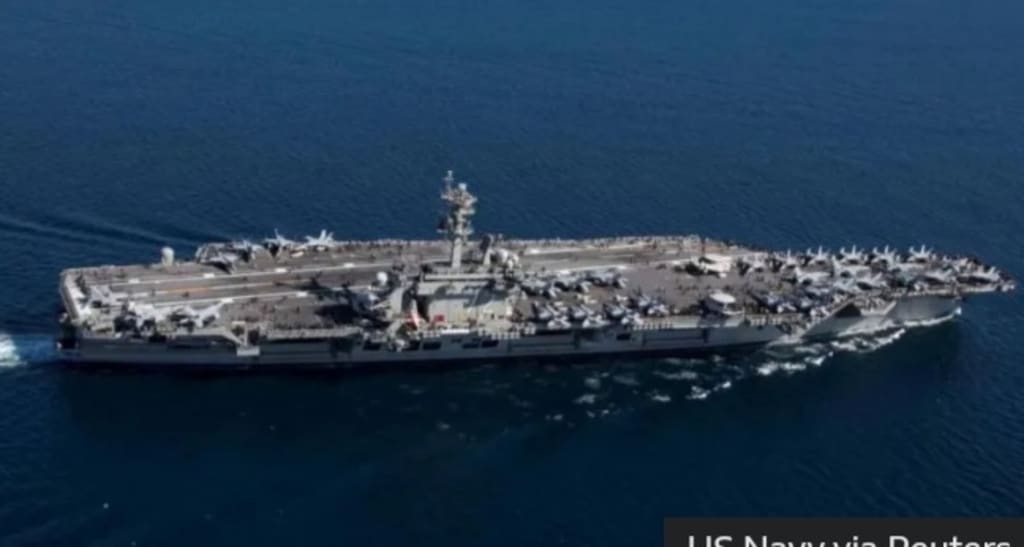
In a significant escalation of tensions in the Middle East, the United States military recently announced that it successfully shot down an Iranian drone that was reportedly heading towards one of its aircraft carriers. The incident, which took place in the Strait of Hormuz, has added to growing concerns about the security situation in the region, where military confrontations between the U.S. and Iran have been on the rise.
The Incident: U.S. Defense Response
According to U.S. officials, the Iranian drone was spotted approaching the USS Nimitz, an aircraft carrier stationed in the Persian Gulf. The drone, identified as an Islamic Revolutionary Guard Corps (IRGC) drone, was rapidly approaching the vessel, raising immediate security concerns. The U.S. Navy, responding to the perceived threat, fired warning shots before engaging the drone and successfully bringing it down.
The U.S. military's action is being portrayed as a precautionary measure to ensure the safety of American personnel and assets in the region. Pentagon officials stated that the decision to shoot down the drone was made after multiple attempts to warn the drone off. However, once it became clear that the drone was not responding to signals and was continuing its trajectory towards the aircraft carrier, the U.S. forces decided to take decisive action.
Rising Tensions in the Gulf
The incident is just the latest in a series of confrontations between the U.S. and Iran in the region. In recent years, there have been numerous reports of close encounters between U.S. warships and Iranian vessels in the Strait of Hormuz, a critical shipping lane for global oil trade. The region has long been a flashpoint for geopolitical conflict, particularly as Iran seeks to assert its dominance in the Persian Gulf.
The Strait of Hormuz is one of the most strategically important waterways in the world, with roughly 20% of global oil supplies passing through it. The U.S. has long maintained a military presence in the region to ensure the safe passage of vessels and to counter Iranian influence. The Iranian government, on the other hand, has frequently threatened to disrupt global oil shipments if it faces pressure from the West, especially the United States.
This recent drone incident underscores the growing tension between the two nations, with both sides engaging in military maneuvers and posturing. For the U.S., maintaining a robust defense posture in the Gulf is essential not only for protecting its assets but also for ensuring the continued flow of energy resources from the region. For Iran, asserting its presence through asymmetric tactics, such as drone operations and naval confrontations, is a way to project power and challenge U.S. dominance in the area.
The Role of Drones in Modern Warfare
The use of drones in modern warfare has rapidly evolved, with many countries adopting these unmanned aerial vehicles (UAVs) for surveillance, reconnaissance, and even offensive operations. Iran, in particular, has made significant advancements in drone technology, employing UAVs to gather intelligence and carry out attacks on both military and civilian targets.
The incident involving the U.S. aircraft carrier illustrates the growing importance of drones in the military calculus of both state and non-state actors. While drones are often seen as a cost-effective and versatile tool for military operations, they also present significant challenges for defense systems, especially in high-stakes situations like the one that occurred in the Gulf. The ability to quickly and accurately identify a drone's intentions and neutralize the threat without causing unnecessary escalation is a delicate balance that military forces must navigate.
The U.S. military has spent years refining its counter-drone capabilities, with a focus on developing advanced radar systems and intercept technologies to detect and neutralize threats. The incident near the Nimitz highlights the growing need for nations to invest in such technologies, particularly as drones become more ubiquitous on the global stage.
Diplomatic Fallout and Global Reactions
While the U.S. has framed its actions as necessary for the protection of its personnel and assets, the Iranian government has condemned the downing of the drone, labeling it an act of aggression. Iranian officials have claimed that the drone was merely conducting routine reconnaissance and was not posing a direct threat to the American carrier.
This latest incident is likely to further complicate efforts for diplomatic engagement between the U.S. and Iran. Relations between the two nations have been strained for years, particularly since the U.S. withdrew from the Iran nuclear deal in 2018 and imposed a series of sanctions on the Iranian economy. In response, Iran has progressively scaled back its commitments under the agreement, raising concerns about the potential for a nuclear arms race in the region.
The downing of the drone may also impact broader geopolitical dynamics, as other international actors with interests in the Gulf region closely monitor the situation. European powers, such as the United Kingdom and France, have expressed concern over Iran's military activities and its growing influence in the region. Meanwhile, countries like China and Russia have sought to increase their presence in the Middle East, further complicating the security landscape.
The Path Forward: Diplomatic or Military Confrontation?
In the aftermath of the drone shootdown, many analysts are wondering what the next steps will be. While the U.S. has made it clear that it will continue to defend its interests in the Gulf, there are growing calls for diplomatic engagement to de-escalate tensions before they spiral into full-scale military confrontation.
One potential avenue for diplomacy is through multilateral talks involving the U.S., Iran, and other regional stakeholders. A renewed focus on dialogue could help to address underlying security concerns and create mechanisms for managing future incidents. However, given the long-standing animosity between Washington and Tehran, such discussions may prove difficult to initiate.
For now, the situation remains volatile. The U.S. military is likely to maintain its heightened presence in the Gulf, while Iran will likely continue to assert its influence through proxy forces, maritime provocations, and drone operations. The risk of miscalculation or unintended escalation remains high, and both nations will need to tread carefully to avoid a conflict that could destabilize the entire Middle East.
In the end, the downing of the Iranian drone may be just one chapter in a larger narrative of confrontation, with the potential for both diplomatic efforts and military escalation hanging in the balance. For now, the world watches closely as the U.S. and Iran navigate their complex relationship in one of the most geopolitically sensitive regions on the planet.
About the Creator
Keep reading
More stories from Ayesha Lashari and writers in The Swamp and other communities.
Police Investigate Peter Mandelson Over Allegations of Leaking Information to Jeffrey Epstein
Peter Mandelson, a prominent British politician and former Cabinet Minister, is at the center of a storm of controversy as police have launched an investigation into allegations that he may have leaked sensitive information to the convicted sex offender Jeffrey Epstein. This news has stirred the political landscape and brought back to the forefront the long-standing association between powerful figures and Epstein, whose network of influential friends and business associates has been widely scrutinized in the wake of his arrest and subsequent death in 2019.
By Ayesha Lashari4 days ago in The Swamp
Why Black History Matters in America?
The United States of America is celebrating their 250th anniversary in 2026. I'm proud to be an American and as someone who was born here, I wouldn't imagine myself living anywhere else. This is a country where opportunities are possible. Where anyone can be successful in anything they desire to do. Equality, community, and togetherness are the backbones of what America is and should be about. However, we have an administration who wants to erase and disregard those who have made positive, meaningful impacts in our country, specifically Black figures, such as Martin Luther King, Jr., Rosa Parks, and Maya Angelou. President Trump and his administration have been constantly complaining and fighting against what they call the "Woke agenda". They use this excuse as a distraction from other issues they refuse to address, such as the high cost of living, climate change, and inflation. That equality is dividing America, when in reality, it's bringing us together. Being woke is not tied to a specific political party. No matter where you stand on the political spectrum, you can still care about other people and their plights. Compassion and empathy for others isn't tied to a political party, either. We were taught as children to treat others the way we want to be treated and not judge others because they're different from us. Caring about others isn't a personal attack on your beliefs. It doesn't make you any less of a person. People who are easily offended over African American figures, past or present, or anything related to it, are grasping at straws. Current and future generations need to know who people like Harriet Tubman and Shirley Chisholm were, especially in the classroom. Black History is part of American History. It should be recognized, not hidden or forgotten. Besides, you can't shield children from everything, just because your feelings are easily hurt.
By Mark Wesley Pritchard 6 days ago in The Swamp
The US Wants These Critical Minerals, but Militants with American Weapons Stand in the Way
The United States is racing to secure access to critical minerals essential for its clean energy transition and national security. Lithium, cobalt, nickel, and rare earth elements are key components in electric vehicle batteries, renewable energy systems, and advanced military technology. Yet in several regions where these resources are found, American strategic goals are colliding with an unexpected obstacle: militant groups armed with U.S.-supplied weapons. This troubling reality highlights a growing contradiction in Washington’s foreign policy—promoting stability and development while confronting armed actors who have gained power through decades of conflict and weapons proliferation. Minerals at the Heart of U.S. Strategy Critical minerals are the backbone of modern industry. From fighter jets to smartphones, these materials are required for everything from microchips to missile guidance systems. The U.S. government has identified over 50 minerals as vital to economic and national security, many of which are currently dominated by Chinese supply chains. To reduce dependence on China, Washington has turned to resource-rich countries in Africa, Latin America, and parts of Asia. Nations such as the Democratic Republic of Congo, Mali, Niger, and Afghanistan possess enormous reserves of lithium, cobalt, and rare earths. These regions are now central to U.S. diplomatic and investment efforts. However, many of these mineral-rich areas are also plagued by instability, insurgency, and weak governance—conditions that allow militant groups to flourish. Militants and the Legacy of American Arms One of the most difficult challenges facing U.S. mineral strategy is the spread of American-made weapons among militant organizations. In Afghanistan, the Taliban seized large stockpiles of U.S.-supplied military equipment following the withdrawal of American forces in 2021. Similar patterns have occurred in parts of Africa where U.S. or allied weapons have ended up in the hands of insurgents through battlefield capture or black-market sales. These weapons have strengthened armed groups that now control or influence territories rich in mineral deposits. In some regions, militants tax mining operations or directly oversee extraction, turning natural resources into a source of revenue for their campaigns. Security analysts warn that this dynamic creates a dangerous cycle: minerals fund militancy, militancy deters foreign investment, and the lack of investment deepens poverty and instability. Strategic Competition with China The U.S. push for critical minerals is also driven by competition with China, which dominates global processing and refining capacity. Beijing has invested heavily in mining infrastructure across Africa and South America, often offering loans and construction projects in exchange for long-term resource access. Washington sees this as a strategic vulnerability. If China controls both extraction and processing, it could potentially disrupt supply chains during times of crisis. This fear has prompted the U.S. to form new partnerships, including the Minerals Security Partnership with allies such as Japan and the European Union. But unlike China, which often works directly with central governments regardless of security risks, U.S. companies face higher political and legal hurdles when operating in conflict zones. Militants armed with advanced weapons make operations even more dangerous. Human Rights and Environmental Risks Another concern is that militant-controlled mining often involves severe human rights abuses. Child labor, unsafe working conditions, and environmental destruction are common in unregulated mining zones. The U.S. government has pledged that its mineral supply chains will meet ethical and environmental standards, making cooperation with such regions more complicated. American officials argue that stable, transparent mining projects can help bring economic growth and weaken extremist groups by offering legitimate jobs. Yet achieving this requires security guarantees that are often impossible in territories dominated by armed factions. “Critical minerals are not just an economic issue—they’re a governance issue,” said one senior policy adviser. “You cannot build secure supply chains in places where the rule of law doesn’t exist.” Regional Examples In the Sahel region of Africa, countries like Mali and Niger have seen rising militant activity alongside growing interest in lithium and uranium mining. Western companies have withdrawn or delayed projects due to safety concerns, leaving space for armed groups to expand their influence. In Afghanistan, vast lithium reserves have drawn international attention, but the Taliban’s control and the presence of U.S.-origin weapons complicate any potential cooperation. Sanctions and diplomatic isolation further limit Washington’s ability to engage directly. Meanwhile, in parts of Latin America, drug cartels armed with military-grade weapons have moved into illegal mining, particularly gold and rare earth extraction, turning minerals into another pillar of criminal economies. A Policy Dilemma for Washington The United States now faces a difficult choice. It can either increase security involvement in mineral-rich regions or accept continued dependence on rival supply chains. Neither option is politically simple. Direct military involvement risks repeating past interventions that produced unintended consequences. But without security support, U.S. companies may refuse to invest in high-risk areas, leaving minerals in the hands of militants or rival powers. Some policymakers argue for a third path: working through regional governments, strengthening local institutions, and funding infrastructure projects tied to transparency and anti-corruption measures. This approach is slower but potentially more sustainable. Conclusion The race for critical minerals has become a defining feature of 21st-century geopolitics. For the United States, the challenge is not only geological but political and moral. Militants armed with American weapons now stand between Washington and the resources it needs for clean energy, technological leadership, and national defense. This contradiction exposes the long-term consequences of foreign conflicts and arms transfers. As the U.S. seeks to secure its future supply chains, it must confront a reality shaped by its past policies. Whether it can balance security, ethics, and strategic necessity will determine its success in the global competition for the minerals that power the modern world. In the end, the struggle for lithium and cobalt may prove as complex as any battlefield—fought not with tanks and planes, but with diplomacy, development, and difficult choices about responsibility and risk.
By Fiaz Ahmed 4 days ago in The Swamp



Comments
There are no comments for this story
Be the first to respond and start the conversation.