
US Pushes Russia and Ukraine to End War by June, Says Zelensky
Washington Sets a Summer Deadline for Peace as Fighting Continues and Diplomatic Pressure Mounts
The United States is intensifying its diplomatic push to bring an end to the ongoing war between Russia and Ukraine, with a proposed deadline set for June, according to Ukrainian President Volodymyr Zelensky. The revelation signals renewed urgency from Washington as the conflict drags on, exacting a heavy toll on civilians, global security, and international relations.
Speaking to journalists earlier this month, President Zelensky disclosed that the U.S. has made it clear it wants both Kyiv and Moscow to reach a peace agreement before the start of summer. While previous attempts at negotiations have struggled to produce lasting results, this new timeline reflects growing pressure from international stakeholders to halt one of Europe’s most destructive wars in decades.
A Clear Timeline from Washington
According to Zelensky, American officials believe that prolonging the conflict further would deepen humanitarian suffering and destabilize global politics. The proposed June deadline is meant to accelerate negotiations and force meaningful engagement from both sides.
“The United States wants the war to end by the beginning of summer,” Zelensky said, adding that Washington is likely to apply pressure on both parties to meet this timeline. Ukrainian officials have reportedly agreed to participate in upcoming talks, expected to take place in the U.S., signaling Kyiv’s willingness to explore diplomatic solutions—though not at any cost.
This approach marks a shift from earlier, more open-ended peace efforts. By introducing a specific deadline, the U.S. appears to be signaling that patience is wearing thin.
Why June Matters
Political analysts suggest that the June target is not accidental. The timeline aligns closely with internal political considerations in the United States, where foreign policy successes often carry significant domestic weight. Ending—or at least de-escalating—the war would be a major diplomatic achievement for Washington.
Zelensky himself acknowledged this reality, noting that U.S. domestic politics are playing a role in shaping the urgency of the peace push. While Washington continues to publicly support Ukraine militarily and financially, there is increasing interest in transitioning the conflict from the battlefield to the negotiating table.
However, previous promises of a swift resolution have failed to materialize, raising questions about whether this deadline will be any different.
Talks Planned, But Trust Remains Fragile
The upcoming peace discussions are expected to build on earlier meetings held in neutral locations, which resulted in limited progress. While some humanitarian agreements—such as prisoner exchanges—were achieved, core political and territorial disputes remained unresolved.
Trust between the two sides is extremely fragile. Ukraine remains skeptical of Russia’s intentions, citing repeated violations of ceasefires in past negotiations. Russia, meanwhile, continues to frame the war as a necessary response to broader security concerns.
Despite these challenges, diplomats argue that continued dialogue is essential. Even incremental progress could pave the way for a broader agreement in the future.
Major Obstacles to Peace
Several key issues continue to stand in the way of a settlement:
Territorial Control
Russia insists on maintaining control over occupied regions in eastern and southern Ukraine. Kyiv has repeatedly rejected any proposal that would legitimize territorial losses, calling such terms unconstitutional and unacceptable.
Security Guarantees
Ukraine is demanding firm international security guarantees to prevent future aggression. Russia, on the other hand, wants assurances regarding Ukraine’s military alliances and regional influence.
Strategic Infrastructure
Control of critical sites—particularly the Zaporizhzhia nuclear power plant—remains a major sticking point. Any agreement involving such facilities carries serious safety and sovereignty implications.
Until these issues are addressed, progress toward a comprehensive peace deal remains uncertain.
War Continues on the Ground
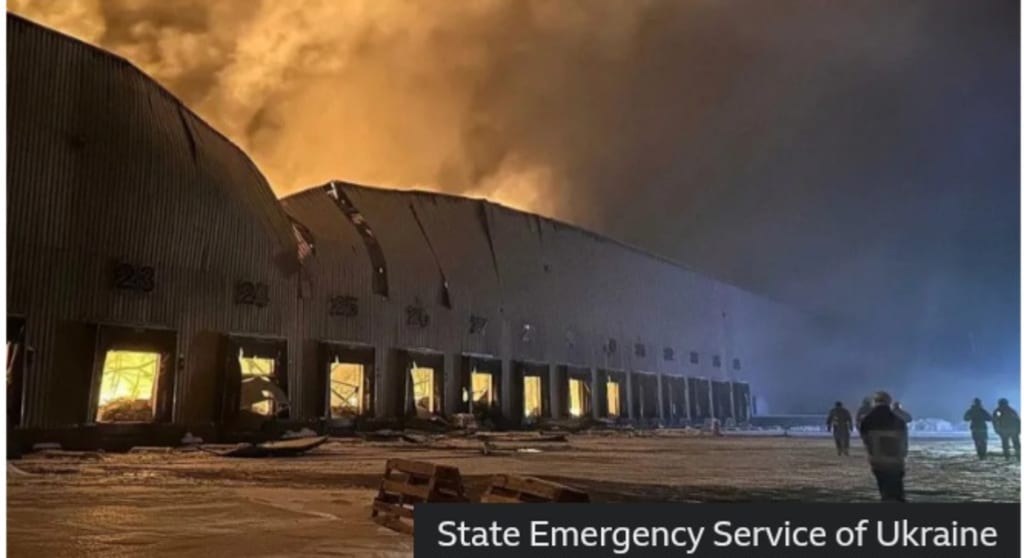
While diplomats discuss timelines and frameworks, the reality on the ground tells a harsher story. Fighting continues across multiple fronts, with missile strikes and drone attacks targeting infrastructure and energy facilities.
Ukraine’s power grid has suffered repeated damage, leading to blackouts and increased hardship for civilians, especially during winter months. Millions remain displaced, and rebuilding efforts are stalled by ongoing insecurity.
These conditions underscore the urgency behind the U.S. push for peace—but they also complicate negotiations, as both sides attempt to gain leverage through continued military action.
Global Reactions and Diplomatic Stakes
International reactions to the June deadline have been mixed. Western allies largely support U.S. efforts but emphasize that any agreement must respect international law and Ukraine’s sovereignty.
Some European leaders worry that a rushed peace deal could set a dangerous precedent, rewarding aggression and undermining long-term regional stability. Others argue that ending the war—even imperfectly—is preferable to prolonged destruction.
Russia has responded cautiously, reiterating its longstanding demands while leaving the door open for talks.
What Comes Next
As summer approaches, the question remains: can diplomatic pressure succeed where years of fighting have failed?
For Ukraine, peace cannot come at the expense of independence or territorial integrity. For Russia, strategic gains and security concerns dominate its negotiating position. And for the United States, the challenge lies in balancing urgency with fairness, pressure with diplomacy.
Whether the June deadline leads to a breakthrough or becomes another missed milestone, it has already reshaped the conversation. The coming months will be critical—not only for Ukraine and Russia, but for the future of global security.
For now, the world watches closely, hopeful that diplomacy may finally succeed where war has brought only loss.
About the Creator
Keep reading
More stories from Ayesha Lashari and writers in The Swamp and other communities.
Who Is Starmer’s Former Chief of Staff Morgan McSweeney
Morgan McSweeney is not a household name, yet his influence on modern British politics is difficult to overstate. As the former chief of staff to Labour leader Keir Starmer, McSweeney played a pivotal role in reshaping the Labour Party after its crushing defeat in the 2019 general election. While Starmer became the public face of Labour’s revival, McSweeney operated behind the scenes, quietly redefining strategy, discipline, and political messaging.
By Ayesha Lashariabout 7 hours ago in The Swamp
Why Black History Matters in America?
The United States of America is celebrating their 250th anniversary in 2026. I'm proud to be an American and as someone who was born here, I wouldn't imagine myself living anywhere else. This is a country where opportunities are possible. Where anyone can be successful in anything they desire to do. Equality, community, and togetherness are the backbones of what America is and should be about. However, we have an administration who wants to erase and disregard those who have made positive, meaningful impacts in our country, specifically Black figures, such as Martin Luther King, Jr., Rosa Parks, and Maya Angelou. President Trump and his administration have been constantly complaining and fighting against what they call the "Woke agenda". They use this excuse as a distraction from other issues they refuse to address, such as the high cost of living, climate change, and inflation. That equality is dividing America, when in reality, it's bringing us together. Being woke is not tied to a specific political party. No matter where you stand on the political spectrum, you can still care about other people and their plights. Compassion and empathy for others isn't tied to a political party, either. We were taught as children to treat others the way we want to be treated and not judge others because they're different from us. Caring about others isn't a personal attack on your beliefs. It doesn't make you any less of a person. People who are easily offended over African American figures, past or present, or anything related to it, are grasping at straws. Current and future generations need to know who people like Harriet Tubman and Shirley Chisholm were, especially in the classroom. Black History is part of American History. It should be recognized, not hidden or forgotten. Besides, you can't shield children from everything, just because your feelings are easily hurt.
By Mark Wesley Pritchard 7 days ago in The Swamp
Modi Takes Aim at Trump Threats With Budget to Shield India
In a dramatic response to tariff threats and trade pressure from U.S. President Donald Trump, Indian Prime Minister Narendra Modi and Finance Minister Nirmala Sitharaman unveiled the 2026–27 Union Budget on Feb. 1, 2026, prioritising strategic protection for India’s economy in a shifting global order. � finance.yahoo.com +1 The budget—often described as a shield-building exercise for India’s economy—comes as ongoing U.S.–India trade tensions escalate, including steep U.S. tariffs imposed on Indian goods and the risk of more punitive measures that could hit everything from textiles to manufactured exports. � finance.yahoo.com Tariff Challenges From the U.S. Since 2025, the Trump administration has leveraged tariffs as a tool of trade policy, imposing duties on Indian imports—particularly in labour-intensive sectors—and reportedly even asked the European Union to join in punitive tariffs on India and China. � www.ndtv.com Although neither leader names the other when discussing trade policy in official speeches, India’s budget strategy was clearly shaped by these external pressures. That includes U.S. tariffs—some targeted at India’s purchases of Russian oil and other strategic imports—which have dented competitiveness for Indian farmers and exporters alike. � arcamax.com Budget Focus: Economic Resilience and Strategic Investment 1. Boost for Exporters and Strategic Sectors The budget includes measures aimed directly at countering tariff impacts and supporting exporters: Targeted relief for sectors hit hardest by U.S. tariffs, especially labour-intensive industries like textiles and furniture. Duty exemptions and incentives designed to make Indian exports more competitive abroad. Expansion of support for rare earths, semiconductors, biopharmaceuticals, and critical minerals—sectors central to future global supply chains. � arcamax.com +1 2. Strong Infrastructure and Modernisation Push India’s 2026–27 budget also allocates record funding toward long-term growth drivers: A nearly 9% jump in capital expenditure to expand infrastructure, manufacturing capacity, and core industries. Incentives for cloud computing, data centres, and semiconductor fabrication that aim to attract global investment and reduce dependence on foreign supply. Significant increases in defence spending—up by double digits—strengthening India’s strategic posture amid geopolitical uncertainty. � ft.com 3. Keeping Fiscal Discipline While Responding to External Pressure Despite these strategic outlays, the government largely avoided broad tax cuts or unfunded spending booms, sticking instead to a balanced approach that maintains fiscal discipline and debt targets—a key credit-rating and investment consideration. � uk.finance.yahoo.com That cautious stance reflects concerns about global economic volatility, the impact of external headwinds, and the need to counter risks without destabilising India’s economic fundamentals. Self-Reliance and “Atmanirbhar Bharat” as Core Themes Modi has long championed the idea of self-reliant India (Atmanirbhar Bharat)—an economic vision that traces back to domestic-manufacturing goals and resilience against global shocks. This budget deepens that focus by reinforcing: Domestic value chains for high-technology and strategic industries. Policies aimed at reducing reliance on imports that could be hit by foreign tariffs or supply disruptions. Support for micro, small and medium enterprises (MSMEs), often most vulnerable to tariff shocks, through dedicated growth funds and cluster revitalisation programs. � The Times of India Economists say the strategy is designed not only to cushion India from external trade shocks but also to position the country as an alternative manufacturing hub to China—an increasingly attractive narrative for global investors. � ft.com Market and Political Reactions The budget’s reception has been mixed: Investors reacted nervously to tax hikes in areas like equity market transactions, triggering short-term stock market volatility. Some analysts argue that while the budget strengthens resilience, it lacks bold reforms needed to significantly accelerate growth and fully counter external pressures. � Reuters Politically, the budget also sends a message: that India will not be easily diverted from its chosen path of economic reform and global engagement, even in the face of protectionist pressures. Trade Diplomacy and Global Partnerships In parallel with domestic policy, India is also pursuing strategic trade partnerships to offset U.S. tariff pressure. A major free-trade agreement with the European Union—called by some observers the “mother of all deals”—was completed after nearly two decades of negotiation late in 2025, offering new export opportunities for Indian firms. � The Times of India Earlier, similar agreements with the UK and New Zealand boosted India’s market diversification strategy. These diplomatic trade moves are complementary to the budget’s push for economic resilience. Looking Ahead: Balancing Growth and Geopolitical Pressures Modi’s 2026–27 budget marks a critical moment in India’s economic strategy: It signals strategic readiness to withstand external shocks—including tariffs from the U.S.—without sacrificing long-term growth goals. It reinforces a self-reliance narrative that dovetails with global supply-chain realignment and the push for manufacturing-led growth. It highlights India’s determination to remain integrated with global markets while building internal buffers against geopolitical and trade risks. � uk.finance.yahoo.com As global trade tensions continue, observers will be watching how India balances domestic growth imperatives with the need to manage relations with major partners like the United States. For now, the Modi government’s budget represents a clear attempt to shield the economy from looming risks while charting a path toward a stronger, more diversified future.
By Zahid Hussain7 days ago in The Swamp
📢 Raise Your Voice Thread: 02/05/2026
Our “Raise Your Voice Threads” are hosted most alternating Thursdays at 12PM ET to offer creators more avenues to uncover exceptional stories on Vocal. As we are continuously searching for fresh creators and inspiring stories, this thread provides an opportunity to exchange and discuss the stories that have moved and motivated us on Vocal.
By Raise Your Voice by Vocal3 days ago in Resources




Comments
There are no comments for this story
Be the first to respond and start the conversation.