
🇺🇸🤝🇨🇳 “US–China Trade Deal Nears Completion: Could It Redefine Global Politics?” By Kareem Kochi | Political Analysis | October 2025
US-China Trade Deal 2025, Donald Trump Xi Jinping Meeting, Global Trade Agreement, China Technology Partnership, International Diplomacy, Trump in Beijing, World Politics, US-China Relations, Trade War Resolution, Global Economy 2025

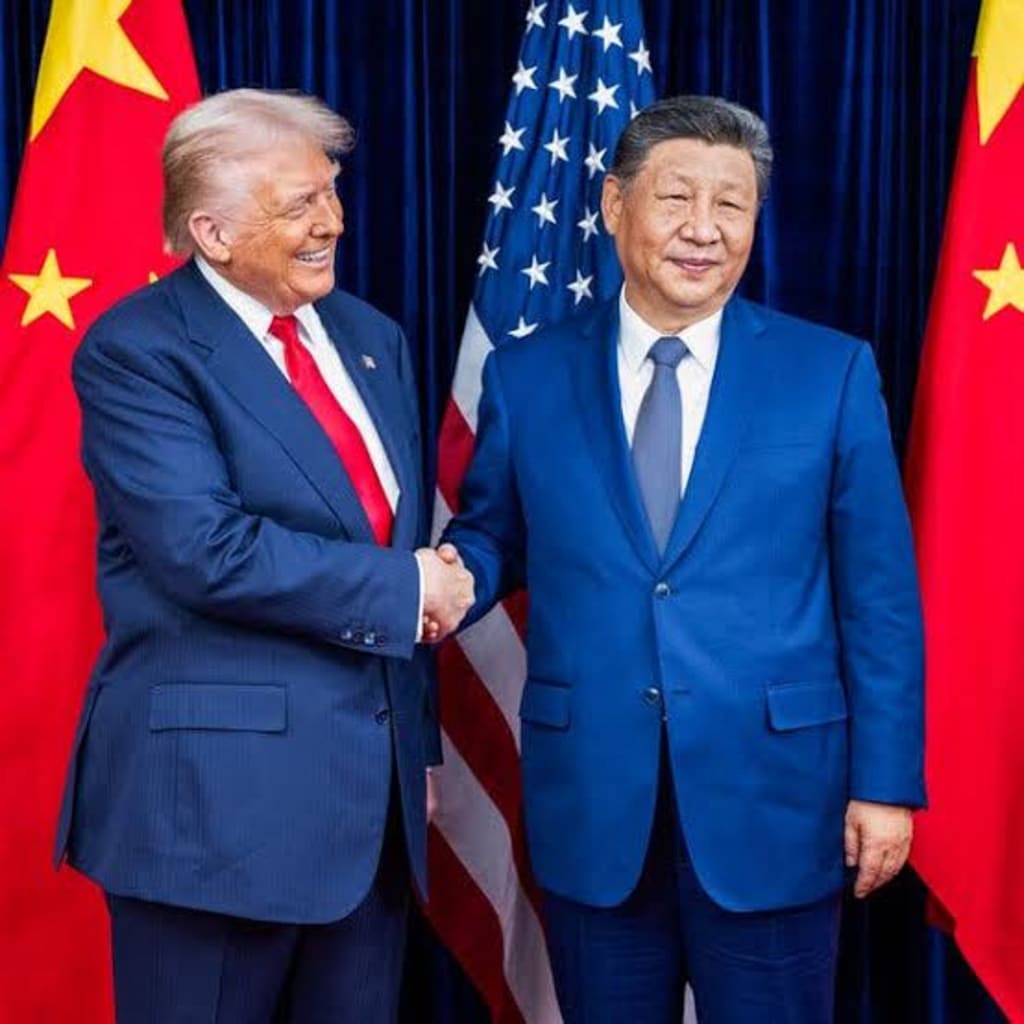
🌏 Introduction: A New Chapter in Global Diplomacy
In recent weeks, the world’s attention has once again shifted toward the corridors of power in Washington and Beijing. Former U.S. President Donald Trump and Chinese President Xi Jinping have reportedly made significant progress toward finalizing a new trade and technology agreement — one that could reshape the very foundation of international politics and economics.
This development comes amid years of strained relations, tariff wars, and accusations of espionage and unfair trade practices. But if this agreement truly materializes, it could signal a strategic rebalancing between two superpowers that have defined the global order for decades.
⚙️ Background: From Trade Wars to Tentative Peace
During Trump’s presidency, the United States initiated a series of aggressive tariffs against China, accusing Beijing of currency manipulation and intellectual property theft. This sparked one of the most intense trade wars in modern history.
Now, in Trump’s renewed diplomatic efforts, he seeks to repair what was once broken — not through weakness, but through strategic engagement. The talks between U.S. and Chinese negotiators reportedly focus on:
Reduced tariffs on American goods, especially agriculture and energy.
Technology cooperation in areas like AI and semiconductor production.
Security assurances to prevent industrial espionage.
For Xi Jinping, this deal offers an opportunity to stabilize China’s economy after years of international pressure and to project China as a reliable global economic partner.
💡 Key Elements of the Emerging Deal
The agreement, as per early leaks, includes several critical components:
1. Mutual Tariff Reductions – Both nations would roll back punitive tariffs imposed since 2018.
2. Tech & AI Collaboration – Establishment of a joint research council for innovation security.
3. Supply Chain Diversification – New trade routes and agreements to protect essential industries.
4. Cybersecurity Accord – A mutual commitment to avoid state-backed cyberattacks on critical infrastructure.
5. Intellectual Property Enforcement – China to tighten IP laws protecting U.S. tech firms.
If implemented, this framework could become the largest trade stabilization accord since the WTO reforms of the 1990s.
💬 Human Perspective: Why This Deal Matters to Ordinary People
Beyond numbers and policies, the effects of this trade deal would reach everyday citizens.
For Americans, it might bring cheaper imported goods and stronger job creation in tech manufacturing.
For Chinese workers, it could mean higher export stability and wage growth.
For the world, it offers hope that two economic giants might finally prioritize cooperation over confrontation.
In a time when inflation, supply chain disruptions, and geopolitical tensions dominate global headlines, this potential agreement feels like a breath of diplomatic relief.
🧠 Analyst’s View: The Political Calculations Behind the Curtain
As an observer of international politics, my personal view is that this negotiation is less about trade and more about image rebuilding.
Donald Trump aims to reassert his global relevance and position himself as a dealmaker ahead of the U.S. elections. Xi Jinping, on the other hand, seeks to restore China’s credibility in the Western economic narrative.
In essence, this deal is a stage where both leaders are performing — not just for each other, but for their domestic audiences. Yet, that doesn’t make the deal meaningless. On the contrary, it shows that global power now depends as much on perception as it does on policy.
⚖️ Global Reactions: Europe, Russia, and the Middle East
European Union leaders have welcomed the talks cautiously, viewing them as a stabilizing factor for global trade.
Russia, however, seems uneasy. A closer U.S.-China trade alliance could reduce Moscow’s leverage in Asia.
Middle Eastern economies are eyeing the deal as an opportunity to expand their own partnerships in technology and energy export.
Thus, while the deal may begin as bilateral, its ripple effects could touch nearly every major global economy.
🗣️ Final Thoughts: Cooperation or Competition?
This emerging partnership raises a profound question:
> Is the world witnessing the dawn of a new era of cooperation — or just another temporary truce between two rivals playing for power?
Only time will tell whether this deal becomes a cornerstone of peace or another fleeting page in the long history of U.S.–China rivalry.
Written by: Kareem Kochi
Category: Political Insight / Global Affairs
Published for: Okla Media – Independent Global Journalism
About the Creator
Filmon Ke Raaz | Movie Mysteries Explained
Filmon Ke Raaz is a storytelling platform where movies are explained in a simple and engaging way. We uncover hidden meanings, untold facts, and deep mysteries behind thriller, horror, and mystery films.
Keep reading
More stories from Filmon Ke Raaz | Movie Mysteries Explained and writers in The Swamp and other communities.
Donald Trump’s European Tour: A New Geopolitical Game or Strategic Diplomacy?
1. Introduction: A Return That Shakes Global Politics Donald Trump’s recent European visits have reignited global debate about America’s role in international affairs. From Berlin to Paris, his arrival drew headlines, protests, and speculation. Is Trump rebuilding old alliances or redrawing the geopolitical map? As his comeback to the world stage unfolds, Europe once again finds itself balancing between admiration and apprehension.
By Filmon Ke Raaz | Movie Mysteries Explained3 months ago in The Swamp


Comments
There are no comments for this story
Be the first to respond and start the conversation.