
United States Wiring Device Market Size and Forecast 2025–2033
How Smart Homes, Infrastructure Upgrades, and Safety Regulations Are Powering America’s Wiring Device Boom

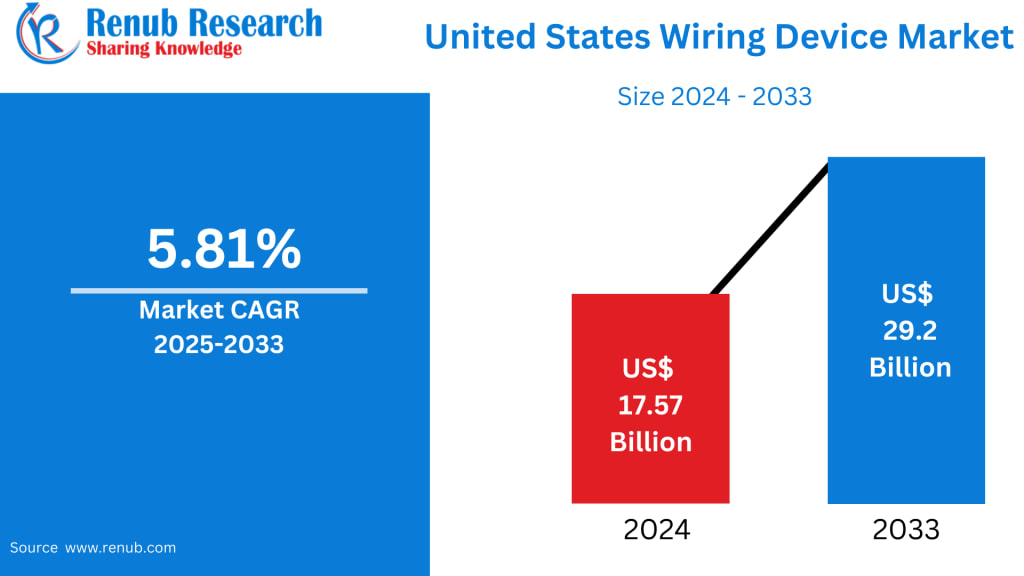
The United States Wiring Device Market is entering a defining growth phase, driven by a confluence of technology upgrades, infrastructure renewal, and rising safety concerns across residential, commercial, and industrial sectors. According to Renub Research, the market is projected to grow from US$ 17.57 billion in 2024 to US$ 29.2 billion by 2033, expanding at a CAGR of 5.81% between 2025 and 2033. The expansion comes amid rising construction activity, the rapid integration of smart home technologies, stringent energy-efficiency regulations, and the modernization of aging electrical systems nationwide.
From basic switches to intelligent, voice-controlled outlets, wiring devices are evolving into highly functional digital components that ensure safety, efficiency, and convenience. As America continues its shift toward electrification—spanning EV charging, renewable energy, and automated buildings—the wiring device industry is poised to play a central role in shaping the nation’s infrastructure.
Understanding the United States Wiring Device Market
Wiring devices include a broad range of components such as switches, outlets, dimmers, receptacles, wall plates, connectors, metal contacts, plugs, USB charging receptacles, and smart controls. These devices ensure safe distribution of electricity while allowing users to control lighting, appliances, and power flow throughout homes and buildings.
In the U.S., demand is rising due to:
Growing urbanization and infrastructure redevelopment
Surging adoption of smart homes
Expanding EV charging networks
The race toward energy-efficient buildings and LEED certification
Increased focus on electrical safety and code compliance
Homeowners are installing smart switches and outlets to remotely operate lights and appliances via smartphones or voice assistants. Meanwhile, commercial buildings are adopting energy-efficient wiring devices to reduce consumption and comply with federal and state regulations.
With a large share of America’s built environment aging and in need of upgrades, modern wiring devices have become a critical component in new construction, renovation, and modernization projects.
Growth Drivers in the U.S. Wiring Device Market
1. Rapid Growth in Smart Homes and Connected Devices
Smart home adoption has become one of the strongest forces propelling market growth. As consumers embrace connected living, they are increasingly installing:
Wi-Fi–enabled switches
Smart receptacles
App-controlled dimmers
USB charging outlets
Programmable lighting systems
These devices support seamless integration with platforms like Amazon Alexa, Google Home, and Apple HomeKit.
In January 2024, Honeywell introduced next-generation smart outlets that prioritize interoperability across major ecosystems. This push toward standardization and enhanced user experience is accelerating consumer willingness to adopt smart wiring technologies.
Smart homes are especially prevalent in new construction, where builders now integrate automation as a default value-added feature.
2. Infrastructure Modernization and Active Construction Industry
Government investment in infrastructure—from residential zones to transportation hubs—continues to stimulate wiring device demand. New and upgraded facilities such as data centers, schools, hospitals, airports, industrial plants, and public buildings all require advanced wiring systems.
The Bipartisan Infrastructure Law and state-led electrification initiatives emphasize:
Energy-efficient building upgrades
Safer electrical installations
Expansion of EV charging networks
Digital transformation of infrastructure
In March 2025, Schneider Electric announced over US$ 700 million in new U.S. investments to expand manufacturing capacity supporting energy modernization and AI-driven infrastructure. This move alone is expected to boost demand for wiring devices across multiple states including Texas, Ohio, Tennessee, and the Carolinas.
3. Emphasis on Electrical Safety and Code Compliance
Electrical safety regulations are more stringent than ever. Building codes now require:
Tamper-resistant outlets (TRRs)
Ground-fault circuit interrupters (GFCIs)
Arc-fault circuit interrupters (AFCIs)
These features reduce fire hazards, electrical shock risks, and household accidents. As awareness grows, homeowners and businesses are choosing certified, high-quality wiring components over low-cost alternatives.
This shift is particularly notable in states with rigorous code enforcement like California, New York, and Illinois.
Key Challenges in the U.S. Wiring Device Market
1. Highly Competitive and Price-Sensitive Market
The U.S. wiring device sector faces intense competition from:
Established domestic brands
Low-cost imported products
New players entering the smart home category
Price sensitivity is significant, especially in large-scale construction projects where cost efficiency often outweighs premium features. To differentiate, companies are turning toward:
Branding
Innovation
Smart technology integration
Sustainable product design
Enhanced warranties and customer support
2. Supply Chain Disruptions and Raw Material Volatility
Materials such as copper, plastics, and electronic components remain susceptible to price swings due to global instability or trade restrictions. While supply chains have improved since post-pandemic disruptions, manufacturers still face unpredictability that affects:
Lead times
Production output
Profitability
Inventory management
These uncertainties push companies to invest in nearshoring and local manufacturing—a trend gaining traction across North America.
Segment Analysis of the U.S. Wiring Device Market
Receptacles Market
Receptacles remain the most widely used wiring devices across all applications. Emerging product trends include:
USB and USB-C charging outlets
Biometric-enabled outlets
Weather-resistant GFCI receptacles
Smart outlets with energy monitoring
Modern intelligent receptacles with remote control capabilities are increasingly used in smart buildings, hotels, and high-end residential projects.
Electric Switches Market
Switches are experiencing a major digital transformation. Consumers are shifting from traditional mechanical switches to:
Touch-sensitive switches
Wi-Fi connected switches
Voice-activated switch systems
Modular switch panels
Occupancy sensor switches
Dimmable smart switches
These advancements align with interior design preferences and sustainability goals. Commercial buildings, in particular, are adopting automated lighting systems to reduce energy consumption.
Residential Wiring Device Market
The residential sector represents one of the strongest demand generators. Growth is fueled by:
New housing construction
Home renovation and remodeling
Post-pandemic emphasis on home upgrades
Rising adoption of smart home technologies
Safety devices such as GFCIs and AFCIs are increasingly mandated in kitchens, bathrooms, bedrooms, and outdoor areas. Meanwhile, homeowners prefer energy-efficient and remote-controlled devices, accelerating smart outlet adoption.
Construction Wiring Device Market
The construction sector drives large-scale demand across:
Multifamily buildings
Corporate offices
Industrial warehouses
Hospitals and educational institutions
Sustainable and LEED-certified buildings
As building codes evolve toward digital and energy-efficient environments, wiring devices have become essential components in modern infrastructure.
State-Level Market Insights
California
California leads the U.S. wiring device market thanks to:
The nation’s strictest energy efficiency codes
Strong adoption of smart homes
Rapid urban development
High demand for solar-compatible devices
Cities like Los Angeles and San Francisco drive major residential and commercial installations.
New York
New York’s dense urban architecture and rapid construction cycles support strong wiring device demand. Large-scale renovations in high-rise buildings and public infrastructure are further accelerating the need for smart, compliant devices.
New Jersey
A blend of suburban expansion and commercial development makes New Jersey a steady growth market. Electrification programs and EV infrastructure push wiring demand in both public and private projects.
Illinois
Driven by Chicago’s thriving development ecosystem, Illinois shows robust demand for high-tech wiring solutions. Mixed-use developments and infrastructure modernization sustain growth across residential and commercial applications.
Recent Developments in the U.S. Wiring Device Market
ABB and Niedax Group (Nov 2024): Formed Abnex Inc. to expand cable tray solutions across North America.
Panasonic Connect (Sept 2024): Launched the Let’s note FV4 laptop in the U.S. to support hybrid work environments.
BSH Hausgeräte GmbH (July 2024): Opened its first North American refrigeration facility in Mexico.
Legrand x Microsoft (Sept 2023): Introduced Signature Microsoft Teams Rooms with advanced connectivity infrastructure.
Eaton & Tesla (Sept 2024): Collaborated on integrating Tesla’s Powerwall with Eaton’s AbleEdge™ intelligent breakers.
Leviton & NECA (Oct 2023): Signed a three-year contract to drive electrical training and innovation nationwide.
Market Segmentation
By Type
Receptacles
Light Dimmers
Lamp Holders
Metal Contacts
Electric Switches
Wire Connectors
By Application
Residential
Construction
Institutional Occupancies
Top 10 States
California, Texas, New York, Florida, Illinois, Pennsylvania, Ohio, Georgia, Washington, New Jersey
Key Companies Covered
Siemens AG
ABB Ltd.
Eaton Corporation
Panasonic Corporation
Honeywell International Inc.
General Electric Company
Hager Group
Molex, LLC
Rockwell Automation, Inc.
Emerson Electric Co.
Each company profile includes: Overview, Key Persons, Recent Developments, SWOT Analysis, and Revenue Analysis.
Final Thoughts
The United States Wiring Device Market is undergoing a profound transformation as technology reshapes how homes, buildings, and infrastructure distribute and consume electrical power. With smart homes transitioning from niche luxury to mainstream necessity and government-driven modernization accelerating nationwide, the demand for advanced wiring devices will only escalate. Safety codes, sustainability goals, and electrification initiatives—particularly in EV and renewable energy sectors—will further define market trends over the next decade.
The future belongs to manufacturers that innovate, integrate smart technologies, and align with America’s next wave of digital and energy-efficient infrastructure.
About the Creator
Janine Root
Janine Root is a skilled content writer with a passion for creating engaging, informative, and SEO-optimized content. She excels in crafting compelling narratives that resonate with audiences and drive results.
Keep reading
More stories from Janine Root and writers in The Swamp and other communities.
Saudi Arabia Circuit Breaker Market Size and Forecast 2025–2033
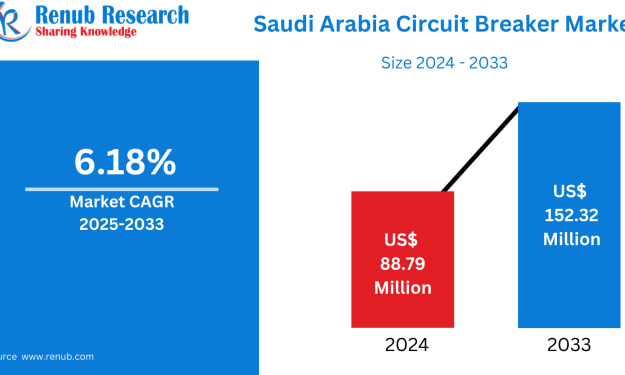
The Saudi Arabia Circuit Breaker Market is anticipated to grow to US$ 152.32 million by 2033, rising from US$ 88.79 million in 2024, according to Renub Research. This reflects a healthy CAGR of 6.18% from 2025–2033, underscoring the Kingdom’s accelerating investments in modern infrastructure, renewable energy, smart grids, and industrial expansion.
By Janine Root about a month ago in The Swamp
Let's Don't Do This
"I just can't do this anymore..." "Do what?" What can't you do? Put gas in your own car? I swear to God you make me take care of everything, don't you? You know I'm on my way to work right now but that never stops you from bothering me, does it?"
By Shirley Belk7 days ago in Fiction


Comments
There are no comments for this story
Be the first to respond and start the conversation.