
United States Renewable Energy Market Size and Forecast 2025–2033
Clean Power Momentum Reshaping America’s Energy Future

United States Renewable Energy Market Outlook
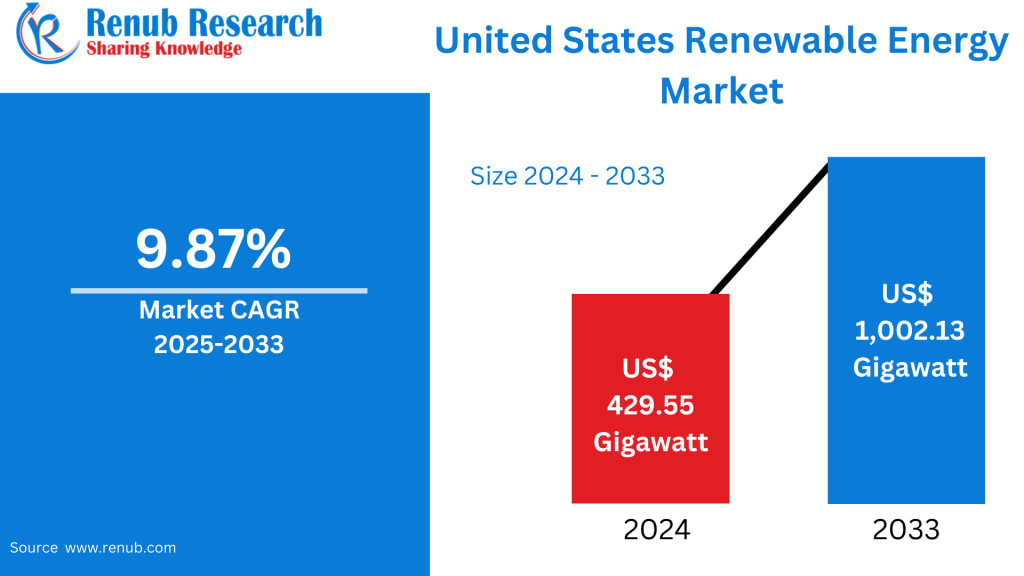
The United States Renewable Energy Market is entering a decisive decade of expansion, driven by climate commitments, rapid technological innovation, and strong policy backing. According to Renub Research, the market is expected to reach 1,002.13 Gigawatt by 2033, rising from 429.55 Gigawatt in 2024, at a CAGR of 3.64% from 2025 to 2033.
With continuous growth anticipated across solar, wind, hydropower, and bioenergy, the U.S. renewable energy sector is strengthening its role as a cornerstone of national energy security and economic development. Investor confidence, declining technology costs, and government incentives are collectively accelerating adoption across residential, commercial, and industrial end users.
United States Renewable Energy Industry Overview
Over the past decade, renewable energy has transitioned from an alternative power source to a core pillar of the U.S. energy mix. Federal and state initiatives have expanded the use of solar, wind, hydroelectric, geothermal, and biofuels, transforming how electricity is generated and distributed nationwide.
The industry spans a wide ecosystem of stakeholders—utilities, independent power producers, equipment manufacturers, EPC contractors, and financial institutions—all actively contributing to clean energy deployment. Decarbonization commitments from governments and corporations have pushed renewable investments to record levels, while breakthroughs in battery storage, smart grids, and digital energy management have improved reliability and efficiency.
Large-scale infrastructure projects, including offshore wind farms and utility-scale solar parks, are redefining regional energy landscapes. At the same time, corporate renewable procurement through power purchase agreements (PPAs) has made clean energy increasingly competitive with fossil fuels.
Solar Power: A Key Growth Engine
Solar energy remains the fastest-growing segment within the U.S. renewable market. All solar categories—utility-scale, commercial, and residential—have shown remarkable growth, resulting in nearly 188 GW of total installed capacity nationwide.
The utility-scale segment alone added 22.5 GW of capacity, while nearly 800,000 U.S. households adopted rooftop solar systems. Looking ahead, the U.S. plans to add around 30 GW of solar capacity annually until 2025, before ramping up to 60 GW per year between 2025 and 2030.
By 2034, cumulative solar capacity is projected to reach 673 GW, capable of powering more than 100 million homes, underscoring solar PV’s central role in the clean energy transition.
A standout example is the Edwards & Sanborn Solar + Energy Storage Project, launched in January 2024. Developed with 1.9 million solar panels, the project delivers 875 MWdc of solar capacity and approximately 3.3 GWh of energy storage, making it one of the largest renewable projects in the United States.
Key Factors Driving Market Growth
1. Supportive Policies and Regulatory Incentives
Federal and state-level policies remain the backbone of renewable energy expansion. Instruments such as Renewable Portfolio Standards (RPS), along with the Production Tax Credit (PTC) and Investment Tax Credit (ITC), have significantly improved project economics.
The Inflation Reduction Act (IRA) has further strengthened investor confidence by offering long-term visibility and incentives for clean energy development, domestic manufacturing, and grid modernization. At the state level, ambitious clean energy mandates and carbon reduction targets are accelerating renewable adoption nationwide.
2. Technological Advancements and Cost Reduction
Technological progress continues to reduce the levelized cost of electricity (LCOE) for renewable sources. Improvements in solar PV efficiency, wind turbine scale, and battery storage performance have enhanced project viability across regions.
Advanced grid technologies—including real-time monitoring, predictive analytics, and smart metering—are enabling better integration of intermittent renewable power. As economies of scale grow and learning curves advance, renewable energy is becoming increasingly cost-competitive with traditional fossil fuels.
3. Rising Corporate and Consumer Demand
Corporate sustainability commitments are reshaping electricity markets. Major enterprises are securing renewable power through PPAs to meet net-zero and ESG goals, providing long-term revenue stability for developers.
At the residential level, homeowners are embracing rooftop solar and community solar programs for cost savings, energy independence, and environmental responsibility. Together, corporate and consumer demand is reinforcing long-term growth prospects across all market segments.
Challenges Facing the U.S. Renewable Energy Market
Grid Infrastructure and Integration Constraints
Aging grid infrastructure remains a critical challenge. Many transmission networks were not designed to handle the variable output of wind and solar energy. Transmission congestion, interconnection delays, and lengthy permitting for new lines continue to slow project deployment.
Significant investment in grid modernization, energy storage, and digital management systems is essential to ensure reliability as renewable penetration increases.
Regulatory and Permitting Complexities
Lengthy and fragmented permitting processes pose another hurdle. Utility-scale solar and offshore wind projects often face land-use disputes, environmental reviews, and jurisdictional inconsistencies.
Streamlined regulatory frameworks and coordinated federal-state permitting reforms will be vital to accelerating renewable capacity additions over the coming decade.
United States Renewable Energy Market by States
California Renewable Energy Market
California leads the nation in renewable adoption, driven by abundant solar resources and aggressive climate policies. The state aims for 100% clean electricity by 2045, supported by advanced cap-and-trade mechanisms.
Solar dominates California’s renewable mix, complemented by wind, geothermal, and bioenergy. Investments in battery storage and demand response are addressing intermittency challenges, while the California Independent System Operator (CAISO) plays a key role in grid integration.
Texas Renewable Energy Market
Texas is the undisputed leader in wind power capacity, supported by vast land availability and strong wind corridors. Solar power is also expanding rapidly, with large utility-scale projects reshaping the state’s energy portfolio.
Despite its fossil fuel legacy, Texas demonstrates how market-driven energy models can accelerate renewable deployment. The ERCOT grid continues to adapt to rising renewable penetration, although weather resilience and transmission expansion remain priorities.
New York Renewable Energy Market
New York’s clean energy transition is guided by the Climate Leadership and Community Protection Act, mandating 70% renewable electricity by 2030 and net-zero emissions by 2050.
The state is investing heavily in offshore wind, solar, hydroelectric power, and energy storage, coordinated by the New York State Energy Research and Development Authority (NYSERDA). While urban density presents challenges, strong policy leadership and public-private partnerships are driving progress.
Market Segmentation
By Power Source
Hydro Power
Wind Power
Solar Power
Bioenergy
Others
By End User
Industrial
Residential
Commercial
By States
California
Texas
New York
Florida
Illinois
Pennsylvania
Ohio
Georgia
Washington
New Jersey
Rest of the United States
Competitive Landscape and Company Analysis
The U.S. renewable energy market is moderately consolidated, with global and domestic players investing in innovation, capacity expansion, and strategic partnerships. Key players covered include:
General Electric Company
First Solar Inc.
Sunrun Inc.
NextEra Energy Inc.
Vestas Wind Systems AS
Mitsubishi Heavy Industries Ltd
Siemens Gamesa Renewable Energy SA
Canadian Solar Inc
Trina Solar Co. Ltd
JinkoSolar Holding Co. Ltd
Each company is analyzed based on business overview, key personnel, recent developments, SWOT analysis, and revenue performance, offering a comprehensive view of competitive positioning.
Final Thoughts
The United States Renewable Energy Market is firmly positioned for sustained growth through 2033. Falling technology costs, robust policy support, and rising demand from businesses and households are transforming renewables into a mainstream energy solution.
While challenges related to grid infrastructure and regulatory complexity remain, ongoing investment and innovation are steadily addressing these barriers. As renewable energy strengthens energy independence, creates jobs, and supports climate goals, it will continue to play a strategic role in shaping America’s energy future.
With capacity expected to surpass 1,000 Gigawatt by 2033, the U.S. renewable energy sector stands as one of the most dynamic and influential clean energy markets globally—powering not just homes and industries, but a more sustainable economic future.
About the Creator
Renub Research
Renub Research is a Market Research and Consulting Company. We have more than 15 years of experience especially in international Business-to-Business Researches, Surveys and Consulting. Call Us : +1-478-202-3244
Keep reading
More stories from Renub Research and writers in The Swamp and other communities.
India Car Rental Market Size and Forecast 2025–2033
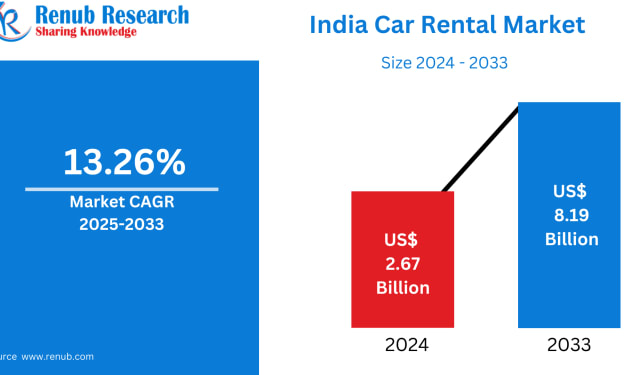
India Car Rental Market Outlook The India Car Rental Market is undergoing a rapid transformation, emerging as one of the fastest-growing mobility segments in the country. According to Renub Research, the market is projected to expand from US$ 2.67 billion in 2024 to US$ 8.19 billion by 2033, registering a strong CAGR of 13.26% during 2025–2033.
By Renub Research12 days ago in The Swamp
The Biggest Travel Trends of 2026: Insider Insights and Hot Destinations Everyone’s Talking About
The travel industry is evolving faster than ever. After years of recovery from the pandemic, travelers are embracing new experiences, destinations, and ways to explore the world. According to 14 leading voices in travel—from hotel executives and tour operators to trend analysts and travel influencers—2026 promises to be a year of innovation, adventure, and conscious exploration. Here’s a deep dive into the trends and destinations everyone is talking about. 1. Sustainable and Eco-Conscious Travel Takes Center Stage Sustainability has shifted from a niche concern to a central factor in travel planning. Many travelers now actively seek eco-friendly accommodations, regenerative tourism experiences, and trips that minimize carbon footprints. Experts predict that carbon-neutral flights, eco-lodges, and community-based tourism initiatives will grow dramatically in 2026. Destinations like Costa Rica, Iceland, and New Zealand are expected to remain favorites for travelers prioritizing sustainability. Even urban destinations like Copenhagen and Vancouver are making waves with green infrastructure, bike-friendly streets, and eco-conscious hotel developments. 2. Experiential Travel Outshines Traditional Sightseeing The new generation of travelers craves authentic, hands-on experiences rather than simple sightseeing. Cooking classes, artisan workshops, cultural immersion tours, and volunteer trips are on the rise. “Travelers want to live like locals, not just see the sights,” says one trend analyst. Destinations that facilitate deep cultural experiences, like Kyoto, Marrakech, and Lisbon, are expected to top itineraries in 2026. 3. AI and Smart Travel Technology Revolutionize Planning Artificial intelligence is no longer just a buzzword—it’s shaping how people plan and experience travel. AI-powered itinerary planning, personalized hotel recommendations, and smart translation apps are becoming mainstream. “Travelers will expect hyper-personalized experiences that adapt in real-time to their preferences,” predicts a travel tech CEO. Cities like Singapore and Tokyo, which are already tech-forward, will benefit from this shift. 4. Micro-Travel and Weekend Escapes Surge Short trips are gaining popularity as work-life balance takes center stage. Travelers are prioritizing frequent mini-getaways over long vacations, often exploring regions within driving distance or quick flights. In Europe, cities like Barcelona, Amsterdam, and Budapest are emerging as perfect weekend escapes. In the U.S., destinations like Sedona, Charleston, and Asheville are attracting travelers looking for immersive yet manageable trips. 5. Remote Work and “Workcations” Become Permanent The trend of blending work with travel is expected to expand in 2026. Hotels and resorts are offering co-working spaces, high-speed connectivity, and long-stay packages to cater to “workcationers.” Destinations like Bali, Lisbon, and Mexico City are emerging as hotspots for digital nomads and remote workers seeking lifestyle flexibility without sacrificing productivity. 6. Off-the-Beaten-Path Destinations Gain Traction Mainstream destinations are no longer enough for travelers seeking unique experiences. Hidden gems and emerging travel hotspots are rising in popularity. Eastern Europe, Central America, and Southeast Asia feature prominently on this list. Think Albania, Panama, and Laos—places offering rich culture, affordability, and fewer crowds. 7. Luxury Travel Redefined Luxury travel is no longer just about opulence. Modern luxury emphasizes privacy, exclusivity, and unique experiences. Boutique resorts, private island stays, and curated adventure packages are seeing unprecedented demand. For example, the Maldives, Fiji, and Patagonia are attracting travelers seeking once-in-a-lifetime experiences combined with comfort and style. 8. Health and Wellness Travel Booms Wellness travel is set to grow in 2026 as travelers focus on mental, physical, and emotional well-being. Yoga retreats, spa resorts, and mindfulness-focused trips are gaining momentum, particularly among Millennials and Gen Z travelers. Destinations like Bali, Costa Rica, and Sedona are becoming wellness hubs, offering experiences that rejuvenate the mind and body while connecting travelers to nature. 9. Culinary Tourism Takes Flight Food continues to be a powerful driver of travel decisions. Culinary tourism—exploring destinations through local cuisine, cooking classes, and food festivals—is booming. Cities like Lyon, Bangkok, and Mexico City are attracting travelers hungry for authentic flavors and immersive dining experiences. Street food tours, wine tastings, and farm-to-table experiences are on the rise. 10. Adventure Travel Becomes More Diverse Adventure travel is evolving to include low-impact and culturally respectful experiences. Beyond traditional hiking or skiing, travelers are exploring eco-adventures, volcano tours, and wildlife conservation trips. Destinations such as Patagonia, Iceland, and Costa Rica continue to dominate for nature lovers, while Morocco and Jordan appeal to those seeking desert adventures. 11. Personalized Travel Through Data Big data and analytics are transforming travel, allowing companies to predict preferences and anticipate traveler needs. Personalized travel experiences—from private tours to customized hotel amenities—are expected to dominate 2026. Travelers will increasingly seek platforms that offer real-time recommendations, such as hidden local gems or tailored adventure routes, creating experiences that feel unique to each individual. 12. Sustainable Aviation and Eco-Friendly Transport Sustainable aviation is also on the rise, as travelers become more conscious of their carbon footprint. Electric planes, hybrid aircraft, and expanded rail networks are shaping travel decisions. Countries investing in green transportation like Sweden and Japan are likely to attract eco-minded travelers. 13. Cultural Festivals and Local Experiences Take Priority Rather than generic sightseeing, travelers increasingly prioritize events, music festivals, and local cultural experiences. These activities offer opportunities to connect deeply with communities. In 2026, festivals in destinations like Edinburgh, Rio de Janeiro, and Jaipur are expected to draw international travelers eager to experience local culture authentically. 14. The Rise of Slow Travel Finally, slow travel is gaining traction. Travelers are choosing longer stays in fewer destinations, seeking deeper connections and meaningful experiences over quantity. Destinations that encourage immersive, relaxed experiences—such as Tuscany, Kyoto, and Provence—are becoming go-to choices for travelers seeking quality over quantity. Hot Destinations Everyone’s Talking About in 2026 Across these trends, certain destinations consistently stood out: Bali, Indonesia – Wellness, workcation, adventure. Lisbon, Portugal – Culture, remote work, micro-trips. Costa Rica – Eco-tourism, adventure, sustainability. Kyoto, Japan – Cultural immersion, slow travel. Patagonia, Argentina/Chile – Adventure, luxury escapes, wellness retreats. Mexico City, Mexico – Culinary tourism, workcation, urban adventure. Iceland – Eco-tourism, adventure, short escapes. Conclusion: Travel in 2026 Is About Choice and Conscience 2026 promises to be a year where travelers prioritize authenticity, sustainability, and personal experiences. Technology, wellness, and eco-conscious choices will shape not only where people go, but how they experience the journey. Whether you’re seeking adventure, culinary delights, or immersive cultural experiences, the year ahead offers a wealth of opportunities—and a growing awareness that travel is about more than destinations; it’s about connection, purpose, and impact.
By Muhammad Hassan4 days ago in The Swamp
Bruce Lee and The God of War: Kuan Ti
It starts with love.. The Power to the God Of War and Wealth Walk into a Chinese restaurant (even in Oklahoma, USA), a Chinese police station, a kung fu martial arts studio or even a Chinese temple and you often see a red faced warrior holding a heavy quan-do (spear like weapon).
By WILD WAYNE : The Dragon King4 days ago in Chapters



Comments
There are no comments for this story
Be the first to respond and start the conversation.