
Ukraine War Briefing: Drone Attack on Russian Port Sparks Fires Ahead of Fresh Peace Talks
Blazes erupt at a key Russian Black Sea port as Kyiv intensifies long-range strikes and diplomats prepare to resume negotiations aimed at easing the conflict.

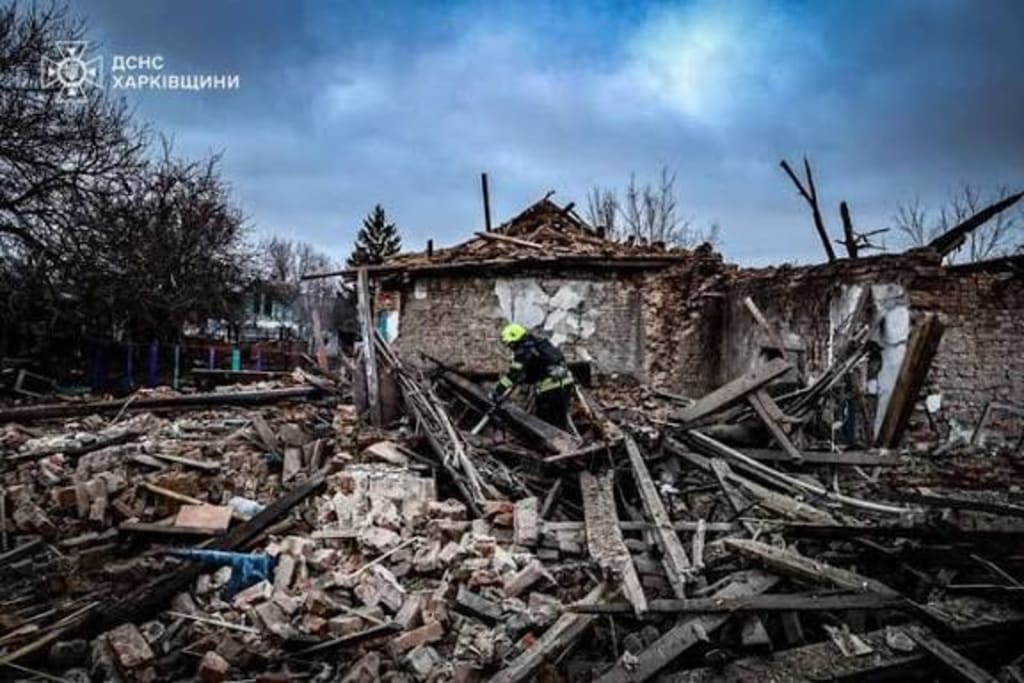
A drone attack on a major Russian port city has triggered fires and disrupted maritime operations, raising tensions just days before renewed diplomatic efforts aimed at exploring a possible path toward peace. The strike, which Russian authorities blamed on Ukrainian forces, underscores how the conflict continues to escalate even as negotiators prepare to meet.
The attack targeted facilities near the Black Sea port of Novorossiysk, a critical hub for Russian oil exports and military logistics. Local officials said multiple unmanned aerial vehicles struck fuel storage areas and nearby infrastructure, causing several blazes that burned through the night. Emergency services worked for hours to contain the fires, while port traffic was temporarily suspended.
Russia’s defense ministry said its air defenses intercepted some drones but acknowledged that others reached their targets. There were no immediate reports of mass casualties, though authorities confirmed damage to industrial buildings and warehouses. Videos circulating on social media showed thick columns of smoke rising over the harbor, highlighting the vulnerability of strategic coastal sites to long-range drone attacks.
Ukrainian officials did not immediately comment on the incident. However, Kyiv has previously said strikes on Russian military and energy facilities are intended to weaken Moscow’s ability to sustain its war effort. Over the past year, Ukraine has increasingly relied on domestically produced drones capable of traveling hundreds of kilometers to hit targets deep inside Russian territory.
The timing of the attack is significant. It comes just ahead of fresh peace discussions expected to involve intermediaries from regional and international partners. While expectations remain low, diplomats say the talks could help reduce risks of further escalation, particularly around the Black Sea, where shipping routes and energy infrastructure are highly sensitive.
The war, now well into its third year, continues to grind on with heavy losses on both sides. Russian forces have intensified air strikes on Ukrainian cities and front-line positions, while Ukraine has expanded its campaign against Russian supply depots, ports, and air bases. Civilian areas remain vulnerable, and air raid sirens continue to sound regularly across large parts of Ukraine.
In Ukraine, authorities reported overnight missile and drone attacks on several regions, including energy facilities and transport hubs. Power outages were recorded in some districts, and emergency crews worked to restore electricity and water services. Ukrainian military officials said air defenses shot down many incoming drones but warned that Russia is using more sophisticated tactics, including mixed barrages of missiles and unmanned aircraft to overwhelm defenses.
Meanwhile, in Russia, officials tightened security around ports, refineries, and military installations. The Kremlin described the Novorossiysk attack as “terrorist activity” and vowed retaliation. Russian state media emphasized the need to protect strategic assets, particularly those linked to energy exports that provide crucial revenue for the war effort.
Analysts say drone warfare has become one of the defining features of the conflict. Unlike traditional missiles, drones are cheaper to produce and can be launched in large numbers, making them an effective tool for both sides. Their use has expanded from battlefield reconnaissance to long-range strikes on infrastructure, blurring the line between front-line combat and rear-area targets.
International reaction to the latest developments has been cautious. European Union officials reiterated calls for restraint and stressed the importance of keeping diplomatic channels open. The United States said it was monitoring the situation closely while continuing to support Ukraine’s defense against Russian aggression.
The upcoming peace talks are expected to focus on humanitarian corridors, prisoner exchanges, and potential confidence-building measures rather than a comprehensive ceasefire. Previous negotiations have collapsed amid mutual accusations of bad faith and continued fighting. Still, diplomats argue that even limited dialogue can reduce misunderstandings and prevent sudden escalations.
For civilians on both sides, the drone strike is another reminder that the war shows no sign of ending soon. Residents near the Russian port reported hearing explosions and seeing flames from their windows, while Ukrainians continue to endure daily air alerts and damage to homes and infrastructure.
As fires are extinguished and damage assessments begin in Novorossiysk, attention now turns to the peace talks. Whether they can ease tensions or simply coexist with continued military operations remains uncertain. What is clear is that the conflict has entered a phase where diplomacy and drone warfare are unfolding side by side, each shaping the next chapter of Europe’s most devastating war in decades.
About the Creator
Fiaz Ahmed
I am Fiaz Ahmed. I am a passionate writer. I love covering trending topics and breaking news. With a sharp eye for what’s happening around the world, and crafts timely and engaging stories that keep readers informed and updated.
Keep reading
More stories from Fiaz Ahmed and writers in The Swamp and other communities.
As Sudanese City Returns to Life After Two-Year Siege, Drone Threat Lingers
After nearly two years of isolation, hunger, and constant shelling, parts of a once-thriving Sudanese city are cautiously returning to life. Markets have reopened, children are back in makeshift classrooms, and families are attempting to rebuild homes reduced to rubble. Yet despite the visible signs of recovery, fear still hangs in the air as drone attacks and sporadic fighting continue to threaten fragile stability. The city, located near the conflict-scarred capital region of Khartoum, had been under siege since fighting erupted between the Sudanese Armed Forces and the paramilitary Rapid Support Forces in April 2023. Roads were blocked, electricity cut, and medical supplies depleted as residents endured months of bombardment and starvation. Now, with front lines shifted and some checkpoints lifted, civilians are slowly returning to neighborhoods that had been abandoned. Street vendors have resumed selling vegetables and tea, while small workshops are repairing bicycles, phones, and generators. “We survived on dried bread and rainwater for months,” said Ahmed, a shopkeeper who reopened his grocery stall last week. “It feels like the city is breathing again.” Hospitals that were once overwhelmed or destroyed are beginning to function with limited capacity. Volunteer doctors and aid workers have re-established clinics using donated equipment and emergency supplies brought in through newly accessible routes. However, health services remain fragile. Many medical professionals fled during the siege, and medicine shortages persist. Despite the return of daily activity, danger has not disappeared. Drone attacks have become a defining feature of the conflict’s latest phase. Residents report hearing buzzing sounds overhead, followed by explosions targeting military positions or suspected supply routes. While the strikes are often aimed at fighters, civilians are frequently caught in the crossfire. “Drones don’t distinguish between soldiers and families,” said Fatima, a mother of four whose home was damaged by a blast last month. “We are rebuilding, but every time we hear one, we run inside and pray.” Security analysts say drones have changed the nature of the war. Once dominated by ground battles and artillery fire, the conflict now includes long-range aerial surveillance and targeted strikes. Both sides accuse each other of using drones to intimidate civilian populations and disrupt humanitarian efforts. International organizations warn that renewed attacks could reverse the fragile recovery. Aid agencies are attempting to expand food and medical assistance but face challenges due to insecurity and damaged infrastructure. Power lines and water systems remain unreliable, forcing residents to depend on generators and wells. The humanitarian toll remains staggering. Millions across Sudan have been displaced since the war began, with entire communities pushed into refugee camps or neighboring countries. Those returning to the city describe scenes of devastation: schools reduced to shells, mosques burned, and markets looted. Local leaders have formed neighborhood committees to organize clean-up efforts and mediate disputes. Young volunteers sweep debris from streets and repair shattered windows using scrap wood and plastic sheets. These grassroots efforts have become symbols of resilience in a city that many feared would never recover. Still, residents say peace feels temporary. Nighttime curfews remain in place, and many families sleep in one room for safety. The sound of distant gunfire is common after dark, reminding everyone that the conflict is far from over. Diplomatic efforts to broker a ceasefire have so far failed to bring lasting peace. Talks mediated by regional and international partners have stalled repeatedly, while clashes continue in multiple parts of the country. For now, people are focused on survival and small victories—opening a shop, planting vegetables, or sending children back to school. “We don’t know what tomorrow will bring,” said Ahmed. “But today, at least, we can live.” As the city struggles to rise from the ruins of a two-year siege, its future remains uncertain. Life is returning, but under the constant shadow of drones and renewed violence, the path to lasting peace still seems distant.
By Fiaz Ahmed 4 days ago in The Swamp
Why Black History Matters in America?
The United States of America is celebrating their 250th anniversary in 2026. I'm proud to be an American and as someone who was born here, I wouldn't imagine myself living anywhere else. This is a country where opportunities are possible. Where anyone can be successful in anything they desire to do. Equality, community, and togetherness are the backbones of what America is and should be about. However, we have an administration who wants to erase and disregard those who have made positive, meaningful impacts in our country, specifically Black figures, such as Martin Luther King, Jr., Rosa Parks, and Maya Angelou. President Trump and his administration have been constantly complaining and fighting against what they call the "Woke agenda". They use this excuse as a distraction from other issues they refuse to address, such as the high cost of living, climate change, and inflation. That equality is dividing America, when in reality, it's bringing us together. Being woke is not tied to a specific political party. No matter where you stand on the political spectrum, you can still care about other people and their plights. Compassion and empathy for others isn't tied to a political party, either. We were taught as children to treat others the way we want to be treated and not judge others because they're different from us. Caring about others isn't a personal attack on your beliefs. It doesn't make you any less of a person. People who are easily offended over African American figures, past or present, or anything related to it, are grasping at straws. Current and future generations need to know who people like Harriet Tubman and Shirley Chisholm were, especially in the classroom. Black History is part of American History. It should be recognized, not hidden or forgotten. Besides, you can't shield children from everything, just because your feelings are easily hurt.
By Mark Wesley Pritchard 18 days ago in The Swamp
Tucker Carlson
Tucker Carlson is one of the most recognizable and polarizing figures in modern American media and political commentary. Over more than two decades, he rose to national prominence as a television host, writer, and commentator whose influence shaped public discourse—especially on conservative audiences. From his early days as a columnist to his height of fame on cable television, and now his work as an independent media figure, Carlson’s career reflects dramatic shifts in how political ideas are communicated and consumed in the 21st century.
By Saboor Brohi about 14 hours ago in The Swamp
What Happens To Your Brain When You Stop Multitasking
Digital technology is the culprit that is causing us to doom scroll when tired, disengaged and unmotivated with the content that motivated you to log onto your device to consume in the first place. That is only the beginning. In the modern workplace (and even when filing cabinets were around, I confirmed this with my adopted parents to get my facts right); reading files while you are supposed to be present to the caller on the other end of the phone line is another classic example of multitasking that causes your brain (although adaptable and intelligent) to lose focus and concentration.
By Justine Crowley6 days ago in Psyche




Comments
There are no comments for this story
Be the first to respond and start the conversation.