
Ukraine Talks Called ‘Productive’, But Far From Finished: Rubio Says More Work Ahead
“Geneva discussions show promise, yet major hurdles stand in the way of a lasting peace deal.”

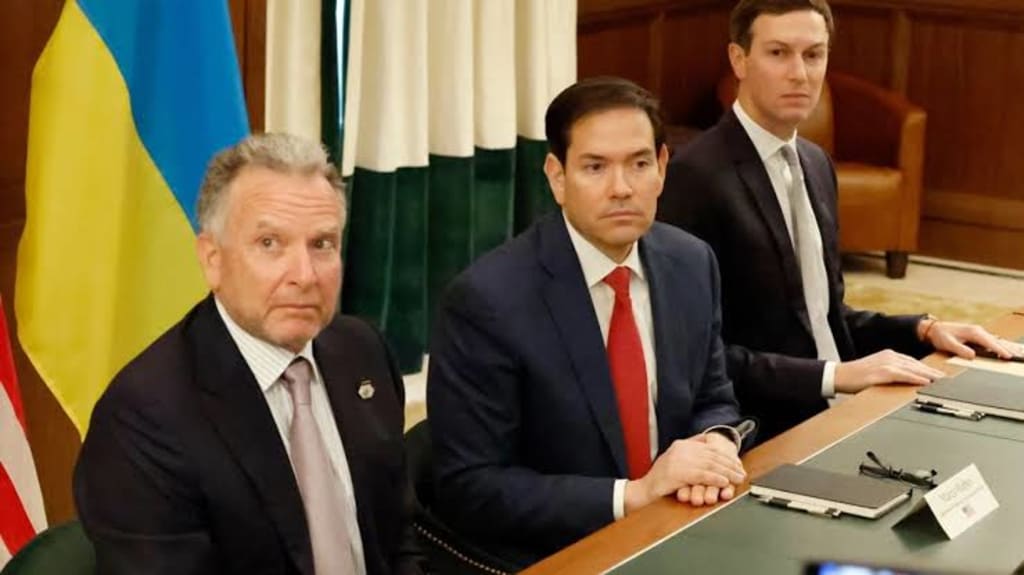
Diplomatic efforts surrounding the Russia-Ukraine war saw a cautious but notable shift this week as U.S. Senator Marco Rubio described the latest round of talks with Ukrainian representatives as “productive.” While the comment sparked a wave of optimism among observers hoping for progress, Rubio was quick to emphasize that the path to meaningful resolution remains long and challenging. His assessment paints a picture of diplomacy that is slowly moving forward—yet still weighed down by the realities of an exhausting war entering its fourth year.
A Conversation Marked by Cautious Optimism
The senator’s remarks came after meetings held with Ukrainian officials and senior members involved in the wartime strategy. According to Rubio, the discussions were constructive, touching on crucial matters such as battlefield updates, economic stability, and Ukraine’s long-term security concerns. He noted that Ukrainian representatives were “honest, strategic, and deeply committed to defending their sovereignty.”
However, despite describing the talks as “productive,” Rubio stressed that major gaps still exist between what is needed and what the international community can currently deliver. The emphasis on “more work needed” suggests that while progress is taking shape, the diplomatic scaffolding required for a lasting agreement is far from complete.
Security Challenges Remain Front and Center
One of the central themes of the talks was Ukraine’s growing concern about Russian attacks on critical infrastructure, especially energy grids and transportation networks. With winter approaching and past winters marked by large-scale outages, Ukrainian officials emphasized the urgent need for stronger air-defense systems and sustained military aid.
Rubio acknowledged these concerns, noting that the U.S. and its allies are reviewing ways to accelerate and expand equipment support. Still, he pointed out that coordinating multinational defense commitments—each with its own political constraints—remains a difficult process.
Ukraine’s biggest request continues to be the guarantee of reliable, long-term support. Leaders fear that fluctuating international politics could threaten the stability of their resistance, especially as fatigue from the prolonged conflict spreads across Western nations.
Economic Stability: A Battle of Its Own
Beyond the battlefield, the war has taken a major toll on Ukraine’s economy. Rebuilding cities, supporting displaced families, and maintaining essential services require billions of dollars, most of which depend on foreign assistance. During the talks, Ukrainian officials highlighted the importance of economic aid that goes beyond short-term relief.
Rubio expressed sympathy but acknowledged the difficulty of securing large-scale financial packages in the current U.S. political environment. Still, he stated that discussions on long-term economic support were “heading in the right direction,” signaling a slight shift in momentum.
The Peace Question: Still Out of Reach
While analysts are eager to interpret “productive talks” as a sign of peace negotiations, Rubio made it clear that any discussion of formal peace is premature. Ukraine insists that any settlement must include the restoration of its territorial sovereignty. Russia, on the other hand, continues to reject proposals requiring military withdrawal.
Rubio’s remarks reflect this stalemate. He emphasized that stakeholders must continue working, collaborating, and resisting the temptation to rush toward superficial solutions that would fail to address the root causes of the conflict.
Why These Talks Still Matter
Even though a breakthrough has not yet arrived, these discussions are significant. They signal that communication channels remain open, alliances remain strong, and the possibilities for coordinated action are still alive. In long conflicts, diplomacy often moves slowly—sometimes appearing stagnant—but each productive conversation forms a building block toward eventual resolution.
Rubio ended his statement by affirming that the U.S. remains committed to supporting Ukraine for “as long as it takes”—a phrase that has become both a promise and a test of endurance for Western allies.
A Moment of Measured Hope
For now, Ukraine and its allies will continue navigating a complex diplomatic landscape. The latest talks offer a glimmer of hope, not because peace is suddenly in sight, but because international collaboration remains firm. It is a reminder that even in times of uncertainty, progress—however small—matters.
The world continues to watch, hoping that today’s “productive” discussions will become tomorrow’s turning point.
About the Creator
Fiaz Ahmed Brohi
I am a passionate writer with a love for exploring and creating content on trending topics. Always curious, always sharing stories that engage and inspire.
Keep reading
More stories from Fiaz Ahmed Brohi and writers in The Swamp and other communities.
HMS Prince of Wales Returns to Portsmouth
The return of HMS Prince of Wales to Portsmouth has sparked national attention as one of the Royal Navy’s most advanced aircraft carriers sailed back into its homeport after months at sea. The moment marked not only the end of a significant operational period, but also the beginning of a renewed debate about the UK’s strategic readiness, global defense posture, and future maritime ambitions.
By Fiaz Ahmed Brohi3 months ago in The Swamp
Parallel Protests
I haven't written for quite some time, but I have A LOT of thoughts about yesterday's protest rally against our government's involvement and complicity in America's war on Iran, on the harbourside of my home city Bristol, and I need to put them somewhere. My gorgeous girlfriend is always a loving and listening ear and sharing it all with her will always be a healthy and happy way of processing the mental and emotional weight, but getting it straight in my brain to share means writing it all down in straight lines, so, here we are and thanks for being here.
By Steph Cole9 days ago in The Swamp
Dozens Killed as Israeli Commandos Raid Lebanon in Hunt for Missing Airman
In a dramatic escalation of tensions along the Israel–Lebanon border, Israeli commandos launched a deep raid into Lebanese territory in an attempt to locate a missing Israeli airman. According to regional authorities and security sources, the operation triggered intense clashes that left dozens of people dead and many others injured. The incident has intensified fears of a broader regional conflict and sparked urgent calls for restraint from the international community.
By Jameel Jamali5 days ago in The Swamp
Lycan Lore
As the students of my 10am mythology class take their seats, I decide to steer the day's curriculum away from Greek and dive into a Western European discourse on the misaligned beliefs of the Werewolf. A tale of truth or fiction. No one really knows.
By Lamar Wigginsabout 7 hours ago in Fiction



Comments
There are no comments for this story
Be the first to respond and start the conversation.