
Ukraine–Russia Talks Begin in Abu Dhabi After ‘Massive’ Strikes on Kyiv
Talks open hours after heavy missile and drone attacks on Ukraine’s capital Rare dialogue begins amid rising military pressure and civilian suffering Abu Dhabi hosts fragile negotiations as war intensifies Europe urges restraint while Kyiv and Moscow return to the table War and diplomacy collide in a tense bid for limited agreements Humanitarian issues top agenda as violence overshadows talks Strikes on Kyiv cast shadow over renewed peace efforts

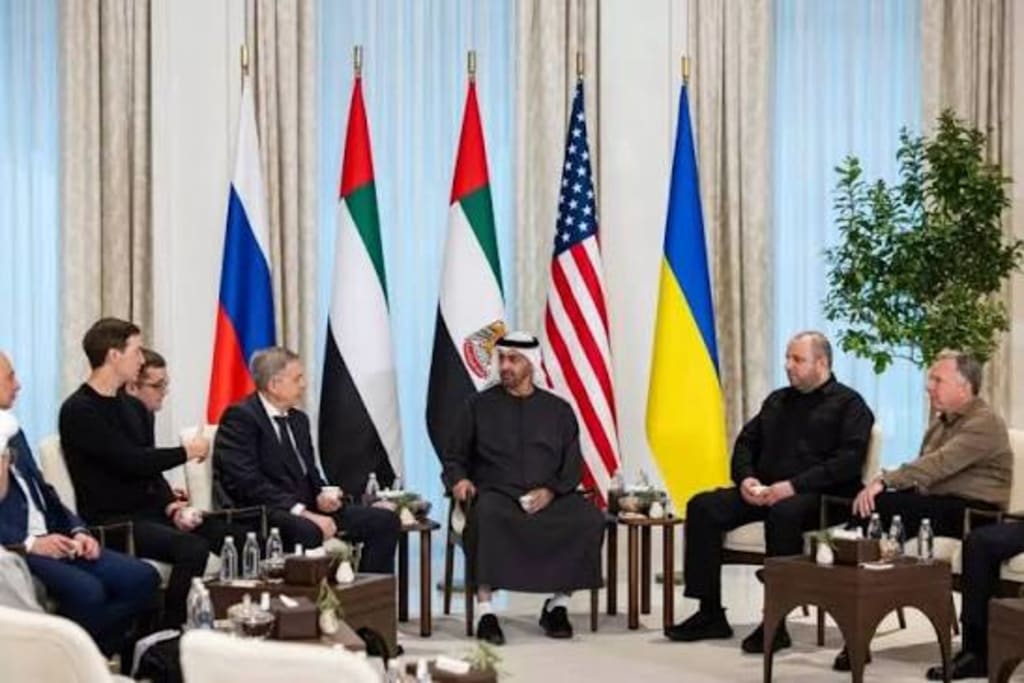
Negotiations between Ukraine and Russia have begun in Abu Dhabi following one of the heaviest waves of missile and drone attacks on Kyiv in recent weeks, marking a rare moment of diplomacy amid escalating violence. The talks, facilitated by regional and European intermediaries, come as Ukraine assesses the damage from overnight strikes that targeted critical infrastructure and residential areas, underscoring the fragile and contradictory nature of attempts to revive dialogue while the war continues unabated.
Ukrainian officials described the attacks as “massive,” saying air defenses intercepted many incoming missiles and drones but that several still reached their targets. Emergency services reported fires, power outages, and injuries across multiple districts of the capital. The strikes were widely seen as a message of military pressure ahead of the talks, raising questions about Moscow’s intentions and Kyiv’s ability to negotiate under fire.
Despite the violence, delegations from both sides arrived in Abu Dhabi under tight security. The United Arab Emirates has increasingly positioned itself as a diplomatic intermediary in international conflicts, offering neutral ground for discussions that would be difficult to hold in Europe or within either country’s territory. European officials confirmed that representatives from several EU states were present as observers, reflecting Europe’s deep stake in the outcome of the conflict.
A Narrow Agenda
According to sources close to the talks, the negotiations are expected to focus on limited, practical issues rather than a comprehensive peace settlement. These include humanitarian corridors, prisoner exchanges, and the protection of energy infrastructure as winter approaches. Broader political questions such as territorial control, NATO relations, and long-term security guarantees are unlikely to be resolved in this round.
Ukraine has consistently stated that any serious peace talks must respect its territorial integrity and international law. President Volodymyr Zelensky has reiterated that Kyiv will not accept arrangements that legitimize Russian occupation of Ukrainian land. Russian officials, meanwhile, have framed the talks as part of a gradual process toward “stabilization,” while continuing to assert their strategic goals in the region.
The timing of the negotiations has drawn particular attention. The strikes on Kyiv occurred just hours before the opening session, reinforcing concerns that diplomacy is being used in parallel with military escalation rather than as an alternative to it.
Europe Watches Closely
European leaders reacted with a mixture of cautious optimism and skepticism. Several EU officials welcomed the fact that talks were taking place at all, noting that direct communication channels between Kyiv and Moscow have been limited for months. At the same time, they condemned the overnight strikes as incompatible with genuine efforts toward peace.
Germany and France issued statements urging both sides to prioritize civilian protection and to treat the Abu Dhabi talks as an opportunity to reduce suffering rather than score political points. Eastern European countries, particularly Poland and the Baltic states, warned that Russia’s actions demonstrate it is negotiating from a position of force and should not be rewarded with concessions.
For Europe, the conflict remains not only a security challenge but also an economic and humanitarian one. Energy markets remain sensitive to developments in Ukraine, and millions of refugees continue to depend on European support. Any sign of progress in talks, even limited, is therefore closely scrutinized.
Military Pressure and Diplomacy
Analysts say the juxtaposition of heavy strikes and renewed negotiations reflects a familiar pattern in the war. Russia has often intensified military operations ahead of diplomatic moments, seeking to strengthen its bargaining position. Ukraine, for its part, has used talks to push for humanitarian relief and international backing while continuing its own military defense.
“The message is contradictory but deliberate,” said one European security expert. “Bombing Kyiv while sitting at the table in Abu Dhabi sends a signal that Moscow believes pressure, not compromise, creates leverage.”
Ukraine’s leadership has emphasized that participation in talks does not signal weakness. Officials argue that maintaining dialogue helps secure prisoner exchanges and keeps international attention focused on the conflict’s human cost.
The Role of Abu Dhabi
The choice of Abu Dhabi as a venue reflects a growing trend of Middle Eastern states acting as diplomatic brokers in global conflicts. The UAE has maintained working relations with both Russia and Ukraine, allowing it to host discussions without appearing overtly aligned with either side.
Diplomats say the location also offers logistical advantages and political symbolism. Holding talks outside Europe may reduce the perception that negotiations are dominated by Western interests, while still involving European stakeholders.
Uncertain Prospects
Expectations for a breakthrough remain low. Past rounds of talks have produced limited agreements, often undermined by renewed fighting. Trust between the two sides is minimal, and the battlefield situation continues to evolve.
Still, the mere fact that delegations are meeting is seen by some observers as a modest step toward de-escalation. Humanitarian organizations hope the discussions will at least lead to expanded aid access and protections for civilians.
For Ukrainians in Kyiv, however, the reality of the war remains immediate and personal. As emergency crews cleared debris from damaged buildings, residents questioned how meaningful talks could be while missiles continued to fall.
Conclusion
The opening of Ukraine–Russia negotiations in Abu Dhabi, following massive strikes on Kyiv, captures the stark tension between war and diplomacy that has defined the conflict for more than two years. While the talks offer a narrow window for humanitarian progress, the continued violence underscores how far both sides remain from a lasting peace.
Europe and the wider international community now watch closely to see whether these discussions will lead to tangible relief—or become another chapter in a conflict where dialogue and destruction unfold side by side.
About the Creator
Fiaz Ahmed
I am Fiaz Ahmed. I am a passionate writer. I love covering trending topics and breaking news. With a sharp eye for what’s happening around the world, and crafts timely and engaging stories that keep readers informed and updated.
Keep reading
More stories from Fiaz Ahmed and writers in The Swamp and other communities.
Russia Ready to Respond to Any US Weapons Deployment in Greenland: Ryabkov
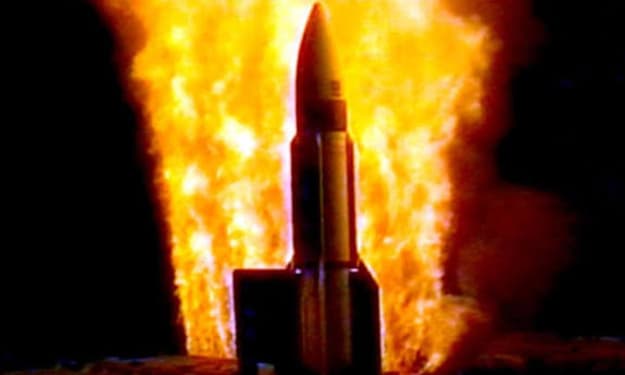
Russia has issued a stark warning that it is prepared to respond with “military and technical compensatory measures” if the United States moves forward with plans to deploy weapons systems — particularly elements of its proposed Golden Dome missile defense architecture — in Greenland, according to comments by Russian Deputy Foreign Minister Sergey Ryabkov. The warning comes at a tense moment in U.S.–Russia relations, just days before the expiration of the New START nuclear arms control treaty, and highlights the complex strategic contest unfolding in the Arctic and broader geopolitical landscape. � Al Jazeera +1 Strategic Significance of Greenland Greenland, an autonomous territory of the Kingdom of Denmark, occupies a pivotal geographic location in the Arctic. Its proximity to the North American and Eurasian landmasses makes it a powerful site for missile defense, early warning systems, and radar infrastructure. For the United States, strengthening its military footprint in the Arctic — including possible deployments of advanced missile defense systems — is seen as part of broader attempts to counter emerging threats from Russia and China. In recent months, U.S. interest in Greenland has intensified. U.S. President Donald Trump has publicly discussed the Golden Dome missile defense concept, a multilayered defensive network intended to enhance protection against ballistic missile threats, with components potentially positioned in high northern latitudes like Greenland. While details remain scant, the idea reflects Washington’s focus on new strategic postures for the Arctic region amid shifting global power balances. � Al Jazeera +1 Moscow’s Warning Ryabkov made his remarks during a press briefing at the Russian Embassy in Beijing, where he emphasized that any movement by the United States to “pump some weapons systems to the region or deploy certain elements of their Golden Dome concept” in Greenland would prompt Moscow to take what he described as “military and technical compensatory measures.” He added that Russian specialists “will be quite ready to take them” without hesitation. � Al Jazeera +1 While Russia has not specified exactly what actions it might take in response, military and technical measures could include redeployments, force augmentations, air or naval adjustments, or enhancements to Russia’s own missile defenses. The precise form those steps would take remains unclear, but the rhetoric signals Moscow’s deep concern about the implications of expanded U.S. weapons deployments near its borders. Interlinked with Nuclear Arms Control Ryabkov’s statements were made against the backdrop of the impending expiration of the New START treaty, the last remaining nuclear arms control agreement between the United States and Russia. Signed in 2010 and extended in 2021, this pact has for years served as a key mechanism limiting both countries’ deployed strategic nuclear warheads and delivery systems while facilitating inspections and transparency. � Al Jazeera +1 With New START scheduled to expire, the formal arms control framework restraining the world’s two largest nuclear arsenals is on the brink of collapse, prompting warnings from global security officials about a more dangerous era of unchecked nuclear competition. Ryabkov has said that despite proposals from Moscow to extend the treaty’s limits for another year, Washington has yet to respond, interpreting the lack of reply as a rejection of further cooperation. � HICGI News Agency A Broader Security Context Moscow’s Greenland warning is part of a broader response to perceived U.S. and NATO shifts in strategic posture. Russia has consistently objected to Western military activities near its borders — from naval deployments in the Arctic to missile defense initiatives in Europe — viewing them as destabilizing and reminiscent of Cold War-era brinkmanship. Russian officials often describe such moves as threats to their national security that necessitate equivalent responses. � TASS For example, Ryabkov has previously warned that deployments of intermediate-range missiles near Russian borders would compel Moscow to take corresponding steps, framing these positions as defensive and reactive rather than offensive. � Anadolu Ajansı Reactions and Regional Implications The idea of weapon deployments in Greenland has drawn a range of reactions internationally. Denmark, which retains sovereignty over the territory, has rejected notions of U.S. acquisition or stationing of forces without its consent, emphasizing Greenland’s autonomy and strategic significance. Other NATO members have also expressed caution about entangling their alliance in Arctic tensions. � HICGI News Agency Meanwhile, analysts caution that Russia’s warnings could be aimed as much at European audiences as American policymakers. By loudly denouncing potential U.S. military moves in the Arctic, Moscow seeks to sow concern among NATO members about escalating costs of security cooperation — a tactic that could influence alliance cohesion. Geopolitical Stakes Beyond the Arctic The warning regarding Greenland is linked to larger geopolitical debates about security, deterrence, and strategic balance. With New START expiring, confidence-building measures between Moscow and Washington have eroded, and issues like missile defense deployment, space-based surveillance, and emerging technologies are increasingly part of the broader strategic rivalry. Experts warn that without renewed arms control frameworks or new agreements, both sides may feel compelled to enhance their capabilities in response to each other’s deployments, creating a cycle of escalation rather than stability. Conclusion Russia’s readiness to respond to any U.S. weapons deployment in Greenland reflects broader tensions between Moscow and Washington over military posture, strategic security, and the future of arms control. With the Arctic gaining fresh strategic importance and the New START treaty expiring, the risk of miscalculation and competitive weapon build-ups is rising. Ryabkov’s warning underscores how geopolitical rivalries are no longer confined to traditional battlefields but extend to strategic geography like Greenland, where great power competition for influence, deterrence, and technological edge is bringing renewed diplomatic and military tensions to the forefront of international security.
By Fiaz Ahmed 4 days ago in The Swamp
Why Black History Matters in America?
The United States of America is celebrating their 250th anniversary in 2026. I'm proud to be an American and as someone who was born here, I wouldn't imagine myself living anywhere else. This is a country where opportunities are possible. Where anyone can be successful in anything they desire to do. Equality, community, and togetherness are the backbones of what America is and should be about. However, we have an administration who wants to erase and disregard those who have made positive, meaningful impacts in our country, specifically Black figures, such as Martin Luther King, Jr., Rosa Parks, and Maya Angelou. President Trump and his administration have been constantly complaining and fighting against what they call the "Woke agenda". They use this excuse as a distraction from other issues they refuse to address, such as the high cost of living, climate change, and inflation. That equality is dividing America, when in reality, it's bringing us together. Being woke is not tied to a specific political party. No matter where you stand on the political spectrum, you can still care about other people and their plights. Compassion and empathy for others isn't tied to a political party, either. We were taught as children to treat others the way we want to be treated and not judge others because they're different from us. Caring about others isn't a personal attack on your beliefs. It doesn't make you any less of a person. People who are easily offended over African American figures, past or present, or anything related to it, are grasping at straws. Current and future generations need to know who people like Harriet Tubman and Shirley Chisholm were, especially in the classroom. Black History is part of American History. It should be recognized, not hidden or forgotten. Besides, you can't shield children from everything, just because your feelings are easily hurt.
By Mark Wesley Pritchard 6 days ago in The Swamp
China Is Said to Pause Panama Deals After Ports Operation Nulled
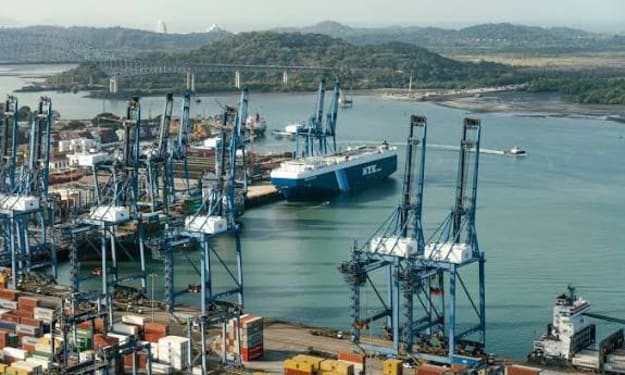
China has reportedly suspended a series of commercial and infrastructure negotiations with Panama following the annulment of a major ports operation agreement, a move that underscores growing geopolitical tensions surrounding strategic trade routes and foreign investment in Central America. According to officials familiar with the matter, Chinese state-owned enterprises were instructed to halt discussions on port development, logistics projects, and related infrastructure investments after Panamanian authorities invalidated a long-standing contract involving port operations at key facilities near the Panama Canal. The decision has been interpreted in Beijing as a political signal aligned with increasing U.S. influence in the region. The ports agreement in question had granted a foreign operator control over terminal facilities that serve as vital hubs for cargo transshipment between the Atlantic and Pacific oceans. Its cancellation followed a legal and regulatory review by Panamanian authorities, who cited concerns over transparency, national security, and compliance with concession terms. While Panama has insisted the decision was based on domestic legal considerations, Chinese officials view the move as part of a broader effort by Western powers to curb Beijing’s presence in strategically sensitive locations. Strategic Importance of the Panama Canal The Panama Canal remains one of the most important maritime corridors in the world, handling roughly 5 percent of global trade and serving as a key route for energy shipments, manufactured goods, and agricultural exports. Control over port infrastructure near the canal is seen as economically lucrative and geopolitically sensitive. Over the past decade, China has expanded its footprint in Panama through investments in ports, construction projects, and logistics hubs. This followed Panama’s decision in 2017 to cut diplomatic ties with Taiwan and formally recognize Beijing, a move that opened the door to deeper economic cooperation. However, Chinese involvement in canal-adjacent infrastructure has drawn scrutiny from Washington, which views the waterway as critical to U.S. national security and regional stability. “The canal is not just a commercial artery; it is a strategic asset,” said a regional security analyst. “Any foreign control over nearby ports raises concerns about influence, surveillance, and long-term leverage.” Beijing’s Reaction Sources said Beijing’s decision to pause talks was intended as a signal of dissatisfaction and a warning that trust between the two countries has been damaged. Chinese companies had been negotiating new port upgrades, container terminal expansions, and logistics centers designed to strengthen Panama’s role as a shipping hub for Latin American trade with Asia. “These projects are now effectively frozen,” said one person with knowledge of the discussions. “There is frustration in Beijing that commercial agreements are being overturned for political reasons.” China’s foreign ministry has not formally confirmed the suspension but stated that it expects Panama to “honor its commitments to Chinese enterprises” and provide a fair and predictable environment for foreign investors. Panama’s Position Panamanian officials have defended the annulment of the ports operation contract as a legal necessity rather than a political maneuver. A government spokesperson said the review process revealed irregularities in how the concession had been granted and managed over the years. “Our responsibility is to ensure that strategic infrastructure is operated in accordance with national law and the public interest,” the spokesperson said. “This decision does not target any country specifically.” Nevertheless, Panama faces mounting pressure from competing global powers. The United States has increased diplomatic engagement with the country in recent years, emphasizing the importance of safeguarding the canal from undue foreign influence. U.S. officials have previously warned about the security risks posed by foreign control of port facilities near critical waterways. While they have not commented directly on the annulment, analysts say Washington likely welcomed the move. Economic Consequences The pause in negotiations could have tangible economic effects for Panama, which has relied on foreign investment to modernize its ports and expand logistics capacity. Chinese companies had been expected to finance several billion dollars in upgrades, potentially creating thousands of jobs. Local business leaders expressed concern that prolonged uncertainty could discourage other investors as well. “If contracts can be canceled abruptly, it raises questions about stability,” said a representative of Panama’s shipping industry association. For China, the setback complicates its broader Belt and Road Initiative, which aims to build a global network of ports, railways, and trade corridors linking Asia to Europe, Africa, and the Americas. Panama was seen as a critical node in this network because of its unique geographic position. Broader Geopolitical Context The development reflects a wider trend of countries reassessing Chinese involvement in strategic infrastructure. From ports in Europe to telecommunications networks in Africa, governments have grown more cautious about allowing Chinese state-linked firms to manage assets tied to national security. “This is not just about Panama,” said a Latin America expert. “It is part of a global recalibration of how governments view Chinese investment in sensitive sectors.” China has argued that its overseas projects are purely commercial and mutually beneficial. But critics contend that state-backed firms often serve Beijing’s strategic interests, blurring the line between business and geopolitics. Uncertain Future It remains unclear whether the pause in negotiations will be temporary or lead to a broader cooling of China–Panama relations. Diplomatic channels remain open, and some officials hope a compromise can be reached that allows certain projects to proceed under revised terms. For now, however, the annulled ports deal has become a symbol of Panama’s delicate balancing act between economic opportunity and geopolitical pressure. As global competition for influence over trade routes intensifies, small but strategically located nations like Panama are finding themselves at the center of great-power rivalries. The outcome of this dispute could shape not only Panama’s economic future but also the broader dynamics of Chinese investment in the Western Hemisphere. Whether negotiations resume or tensions deepen will depend on how both sides navigate the intersection of commerce, law, and international politics in the months ahead.
By Fiaz Ahmed Brohi3 days ago in The Swamp


Comments
There are no comments for this story
Be the first to respond and start the conversation.