
Ukraine Accepts a Demilitarised Zone to End the Russia War — But Do DMZs Really Work?
History shows demilitarised zones can stop fighting—but rarely deliver lasting peace

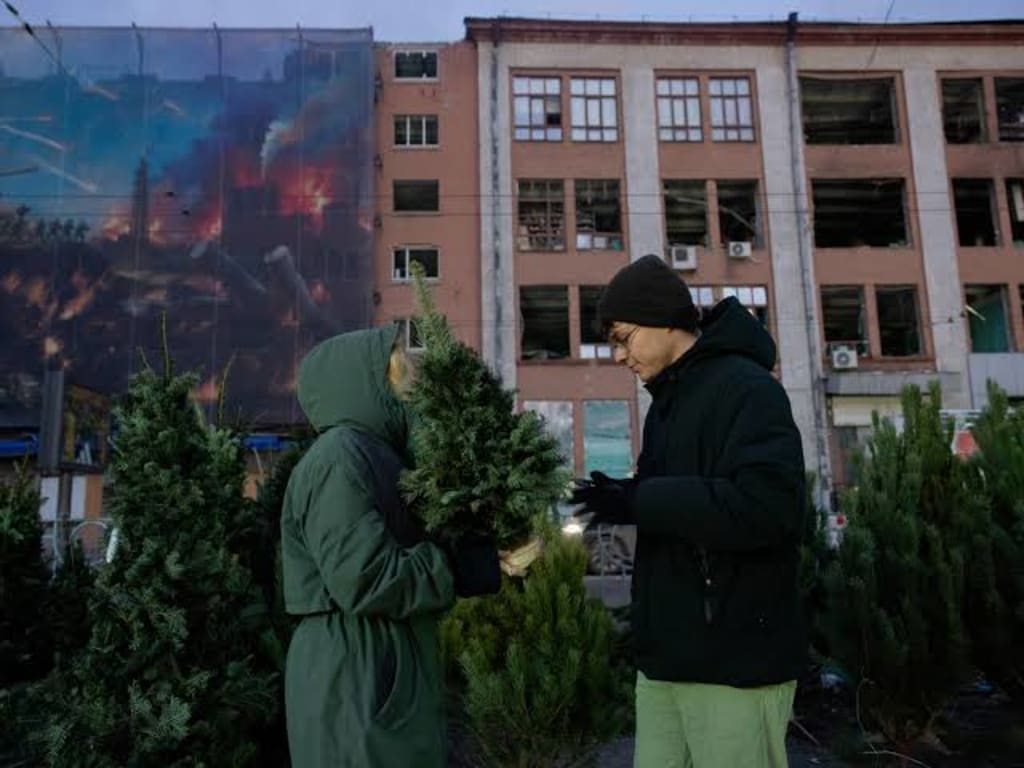
After years of relentless conflict, mounting casualties, and economic exhaustion, Ukraine’s reported acceptance of a proposed demilitarised zone (DMZ) has sparked cautious global attention. The idea is being discussed as a potential pathway to de-escalation in the brutal war with Russia. Yet history urges restraint. While demilitarised zones have, in some cases, frozen conflicts and prevented immediate bloodshed, they have also failed spectacularly in others. The question now facing Ukraine — and the world — is simple but profound: can a DMZ actually deliver lasting peace, or will it merely pause the fighting?
A demilitarised zone is a buffer area where military forces, heavy weapons, and fortifications are prohibited. Typically monitored by international observers or peacekeeping forces, DMZs aim to reduce accidental clashes, create space for diplomacy, and protect civilians caught between hostile armies. On paper, the concept appears logical. In practice, it is deeply complex.
For Ukraine, the acceptance of a DMZ reflects both strategic realism and humanitarian urgency. After prolonged battles, infrastructure devastation, and civilian displacement, Kyiv faces immense pressure to stabilize frontlines without formally conceding territory. A DMZ offers a compromise: halting active hostilities while avoiding explicit recognition of Russian territorial gains. It is not a peace treaty, but it may be a ceasefire mechanism with guardrails.
Supporters of the proposal argue that a demilitarised zone could save thousands of lives almost immediately. Reduced shelling would allow aid deliveries, reconstruction of essential services, and the return of displaced families. It could also create diplomatic breathing room, enabling talks on prisoner exchanges, economic recovery, and longer-term security guarantees. For war-weary civilians, even an imperfect pause in violence could feel like relief.
However, critics warn that DMZs often freeze conflicts rather than resolve them. The Korean Peninsula offers the most famous example. The Korean DMZ has prevented full-scale war since 1953, yet it has not produced peace. Tensions remain high, families divided, and military readiness constant. While the guns are largely silent, the conflict itself is unresolved decades later.
Another cautionary tale lies in Cyprus, where a UN-monitored buffer zone has separated Greek and Turkish Cypriots since 1974. Though large-scale violence has been avoided, political reconciliation has stagnated. The island remains divided, demonstrating how DMZs can institutionalize separation instead of healing it.
In Ukraine’s case, skepticism is amplified by Russia’s past behavior. Multiple ceasefires since 2014 — particularly after the annexation of Crimea and during fighting in eastern Ukraine — were repeatedly violated. Ukrainian officials and analysts fear that a DMZ could be exploited by Moscow to regroup, resupply, and later resume military operations from a stronger position. Without robust enforcement, a buffer zone risks becoming a strategic pause rather than a path to peace.
Enforcement is the heart of the issue. A demilitarised zone only works if violations carry real consequences. That typically requires credible international oversight, clear rules of engagement, and political unity among guarantor states. If monitoring forces lack authority or backing, a DMZ can quickly become symbolic rather than protective. For Ukraine, trust in enforcement mechanisms will be crucial — and hard-earned.
Another challenge is sovereignty. Even a temporary DMZ may limit Ukraine’s ability to deploy forces on its own territory. Critics argue this could normalize restricted sovereignty and weaken Kyiv’s long-term security posture. Accepting a DMZ may be tactically wise, but strategically risky if it constrains Ukraine more than Russia.
Yet it is equally true that endless war carries its own risks. Prolonged fighting drains economies, radicalizes politics, and devastates future generations. From that perspective, a DMZ could function as a necessary first step — not the destination, but the bridge. If paired with sustained diplomacy, reconstruction funding, and binding security guarantees, it might help convert a battlefield stalemate into a political process.
Ultimately, demilitarised zones are neither miracle solutions nor guaranteed failures. They are tools — and like any tool, their effectiveness depends on how, where, and why they are used. For Ukraine, accepting a DMZ does not mean surrendering its goals, but it does mean betting that restraint can open doors violence has slammed shut.
Whether this gamble pays off will depend less on maps and buffer lines, and more on political will, international unity, and the credibility of enforcement. History shows that DMZs can stop wars from getting worse — but stopping a war is not the same as ending it. The world now watches to see whether this pause becomes a platform for peace, or merely another chapter in a conflict that refuses to fade.
About the Creator
Fiaz Ahmed Brohi
I am a passionate writer with a love for exploring and creating content on trending topics. Always curious, always sharing stories that engage and inspire.
Keep reading
More stories from Fiaz Ahmed Brohi and writers in The Swamp and other communities.
Germany’s Empty Churches Find New Life as Congregations Continue to Shrink
Across Germany, church bells still ring and steeples still dominate town skylines—but inside many of these historic buildings, pews now sit largely empty. As church attendance continues to decline, Germany is facing a profound cultural shift: what should be done with thousands of underused or abandoned churches? Increasingly, the answer is repurposing them for entirely new roles in modern society. This transformation reflects not only changing religious habits, but also deeper shifts in demographics, belief systems, and community life. A Steady Decline in Congregations Germany has long been considered a Christian country, with Protestant and Catholic churches playing central roles in social and cultural life. However, over the past few decades, church membership has dropped sharply. Younger generations are less likely to identify with organized religion, while older congregants—once the backbone of church life—are dwindling. High-profile exits from the church tax system, combined with scandals and changing social values, have accelerated the decline. As a result, many parishes no longer have enough members to justify maintaining large, costly buildings. Financial Pressures and Difficult Decisions Maintaining historic churches is expensive. Heating, structural repairs, and preservation costs can run into hundreds of thousands of euros annually. For shrinking congregations, these expenses are simply unsustainable. Church authorities across Germany are now faced with emotionally charged decisions: merge parishes, sell properties, or close buildings that may have stood for centuries. While some churches are demolished, many are instead being creatively adapted for new uses—allowing the structures to survive even as their original purpose fades. From Sacred Spaces to Community Hubs Repurposed churches in Germany now serve a wide range of functions. Some have become libraries, concert halls, art galleries, or museums, capitalizing on their acoustics and architectural beauty. Others have been transformed into community centers, daycare facilities, cafés, or coworking spaces. In urban areas, former churches have even been converted into apartments or cultural venues, blending modern design with historic features like stained glass windows and vaulted ceilings. These projects often aim to preserve the building’s character while making it relevant again. Balancing Heritage and Change Not everyone is comfortable with these transformations. For many Germans, churches are symbols of identity, memory, and tradition. Turning them into commercial or secular spaces can feel like a loss of spiritual heritage. To address this, some repurposing projects include agreements that maintain a sense of respect—such as preserving religious artwork or allowing occasional services. Others ensure the new use serves the public good, keeping the building open rather than abandoned. Heritage conservation groups also play a role, ensuring historically significant structures are protected even as their functions evolve. A Mirror of Social Transformation The decline of church attendance in Germany reflects broader European trends toward secularism. Religion increasingly plays a private rather than public role, while communities seek connection through culture, activism, and shared spaces rather than formal worship. Repurposed churches symbolize this transition. Where sermons once gathered congregations, concerts, lectures, or neighborhood meetings now bring people together. In this way, churches continue to function as gathering places—just in a different form. Rural Areas Face Unique Challenges While cities often find creative new uses for empty churches, rural communities face tougher choices. With fewer residents and limited funding, some villages struggle to repurpose buildings at all. In these areas, churches may be sold, left unused, or reluctantly demolished. Local residents often resist closures, seeing the church as the heart of village life—even if they rarely attend services. This tension highlights the emotional weight these buildings still carry. What the Future Holds Germany’s churches are unlikely to disappear entirely, but their role will continue to change. Some congregations are rethinking how they engage with communities, experimenting with flexible services, social outreach, and shared spaces. Meanwhile, architects, urban planners, and cultural organizations see opportunity in reimagining sacred spaces for a new era. The challenge lies in honoring the past while acknowledging present realities. More Than Empty Buildings Germany’s empty churches tell a larger story about faith, identity, and change. Their transformation is not just about real estate—it is about how societies adapt when traditions evolve. As congregations shrink, these buildings are finding new life, proving that even as religious practice declines, the need for shared spaces and collective meaning remains.
By Fiaz Ahmed Brohi24 days ago in The Swamp
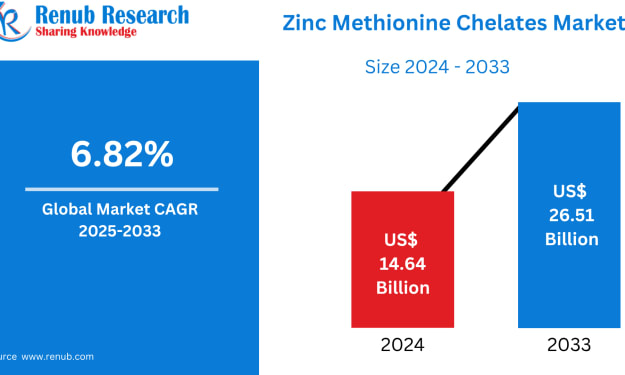
Zinc Methionine Chelates Market Size and Forecast 2025–2033
Introduction As global agriculture enters a new era of efficiency, sustainability, and precision nutrition, the role of advanced feed additives is becoming more critical than ever. Among these, Zinc Methionine Chelates are gaining notable attention for their superior bioavailability, environmental benefits, and impact on animal productivity. Once considered a niche solution, chelated trace minerals are now reshaping livestock nutrition strategies across developed and emerging economies alike.
By jaiklin Fanandish6 days ago in The Swamp



Comments
There are no comments for this story
Be the first to respond and start the conversation.