
UK and South Korea Strike Trade Deal: What the Agreement Means for Both Economies
A Strategic Partnership Strengthening Economic Ties in a Changing Global Trade Landscape

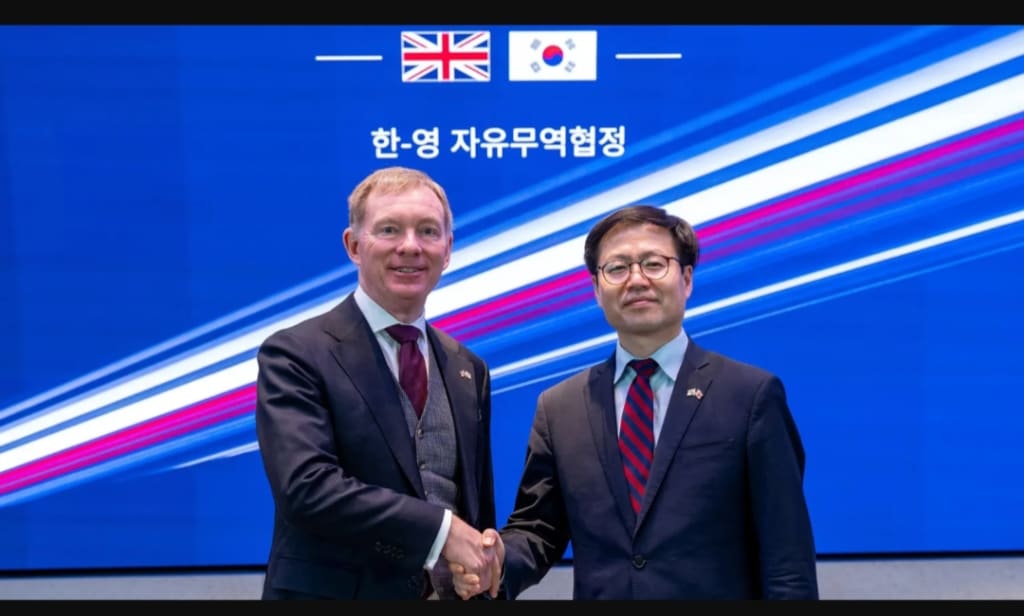
The UK and South Korea trade deal marks a significant step in strengthening economic ties between two advanced, export-driven economies. As global trade patterns continue to shift after Brexit and amid wider geopolitical uncertainty, this agreement highlights how strategic partnerships are becoming central to economic stability and growth.
This blog breaks down the key elements of the UK–South Korea trade deal, why it matters, and how it could shape future trade relations for both nations.
Background: A Relationship Built on Trade
The United Kingdom and South Korea have enjoyed strong commercial ties for decades. South Korea is one of Asia’s most advanced economies, known for its dominance in electronics, automobiles, shipbuilding, and technology. The UK, on the other hand, remains a global leader in finance, services, education, and advanced manufacturing.
Following the UK’s departure from the European Union, securing bilateral trade agreements became a top priority for London. South Korea emerged as a natural partner due to its innovation-driven economy and strategic position in East Asia. The newly struck trade deal builds upon earlier agreements while expanding cooperation into new sectors.
Key Features of the Trade Deal
The UK–South Korea trade agreement focuses on reducing barriers and modernizing trade rules to reflect today’s digital and service-based economies. Some of the major components include:
1. Reduced Tariffs and Easier Market Access
The deal aims to lower or eliminate tariffs on a wide range of goods, making British and South Korean products more competitive in each other’s markets. This is particularly beneficial for automotive parts, electronics, pharmaceuticals, and consumer goods.
2. Boost for Services and Digital Trade
Services play a major role in the UK economy. The agreement improves access for British firms in sectors such as finance, legal services, and consulting, while also supporting digital trade, data flows, and e-commerce cooperation.
3. Support for Small and Medium Enterprises (SMEs)
Special provisions are included to help SMEs navigate international trade more easily. Simplified customs procedures and clearer regulatory frameworks are designed to reduce costs and administrative burdens for smaller businesses.
4. Stronger Intellectual Property Protection
Both countries emphasized the protection of intellectual property, a critical issue for technology, creative industries, and research-driven sectors.
Why the Deal Matters for the UK
For the UK, this trade deal represents another step in redefining its global trade identity after Brexit. South Korea is a high-value market with strong consumer demand and advanced industrial capacity.
British exporters stand to benefit from improved access to Korean markets, especially in areas like luxury goods, education services, green technology, and financial services. The agreement also signals that the UK is serious about deepening economic ties in the Asia-Pacific region.
Benefits for South Korea
South Korea gains increased access to the UK market, one of Europe’s most important financial and commercial hubs. Korean manufacturers, particularly in automobiles, electronics, and clean energy technology, are expected to benefit from reduced trade barriers.
Additionally, the deal supports South Korea’s long-term strategy of diversifying export destinations and strengthening partnerships beyond its immediate region.
Strategic and Geopolitical Implications
Beyond economics, the UK–South Korea trade deal carries strategic significance. Both nations share democratic values and strong security alliances with Western partners. Strengthening economic ties reinforces broader cooperation in areas such as defense, technology, and climate policy.
In a world increasingly shaped by regional trade blocs and geopolitical competition, such agreements help countries reduce dependence on single markets and increase resilience against global shocks.
Challenges and Criticism
While the trade deal has been widely welcomed, some critics argue that its economic impact may be modest in the short term. Others stress the importance of ensuring that labor standards, environmental protections, and consumer rights are upheld as trade expands.
Like all trade agreements, its success will ultimately depend on how effectively businesses use the opportunities it creates.
What Comes Next?
The UK and South Korea are expected to continue negotiations on deeper cooperation in areas such as green energy, artificial intelligence, and supply-chain security. As implementation begins, businesses in both countries will closely monitor how quickly promised benefits translate into real-world growth.
Final Thoughts
The UK and South Korea trade deal is a forward-looking agreement designed to reflect modern economic realities. While it may not transform trade overnight, it strengthens a vital partnership and opens doors for long-term collaboration.
For both nations, the deal represents confidence in open markets, innovation, and international cooperation—principles that will remain essential in an increasingly interconnected global economy.
About the Creator
Asad Ali
I'm Asad Ali, a passionate blogger with 3 years of experience creating engaging and informative content across various niches. I specialize in crafting SEO-friendly articles that drive traffic and deliver value to readers.
HMRC Hits 300,000 Taxpayers With “Trivial” Bills — Why Small Tax Errors Are Becoming a Big Problem
Thousands of people across the UK were surprised — and in many cases frustrated — after receiving unexpected letters from HMRC demanding payment for what many are calling “trivial” tax bills. According to recent reports, around 300,000 taxpayers have been contacted by HM Revenue & Customs over small underpayments, some as low as just a few pounds. While the amounts may seem minor, the impact has been anything but small.
By Waqar Khan5 days ago in The Swamp



Comments
There are no comments for this story
Be the first to respond and start the conversation.