
U.S. Strikes Deal Blow to Iran’s Nuclear Program
Intelligence Indicates Months-Long Setback, but Experts Warn Tehran Could Rapidly Rebuild Capabilities
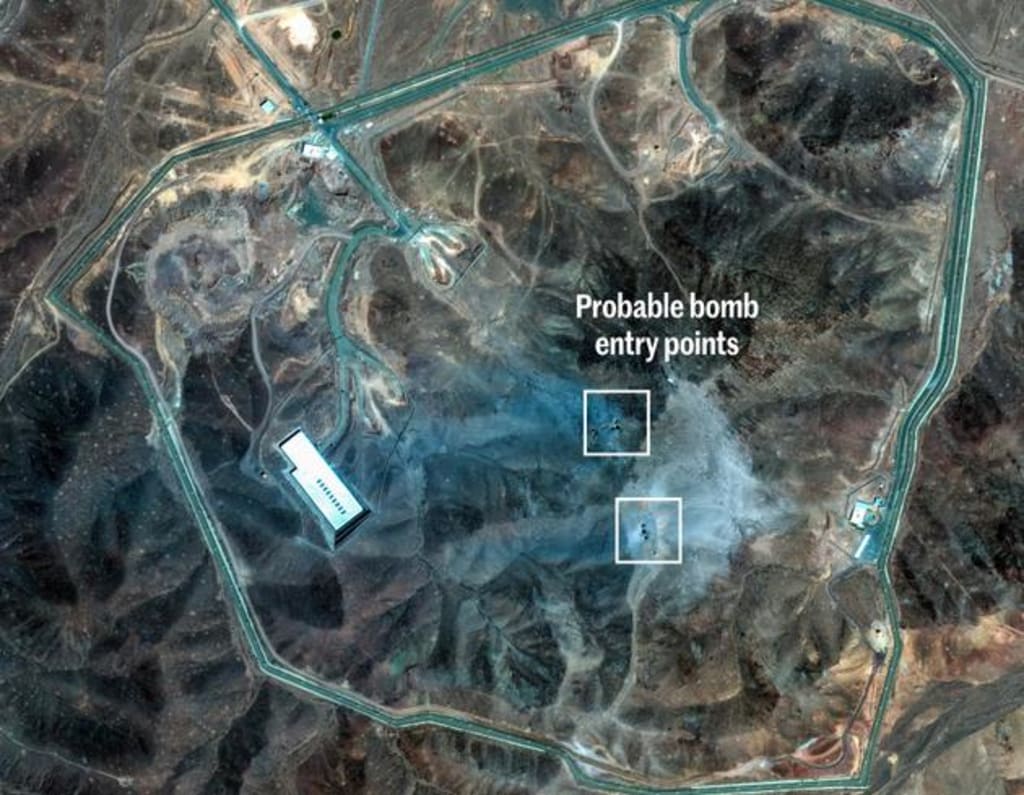
Acording to multiple Western intelligence sources, the precision strikes have inflicted considerable damage on key facilities linked to Iran’s uranium enrichment infrastructure, setting back the country’s nuclear ambitions by several months. However, analysts caution that the disruption is likely temporary, and Iran retains the knowledge and capacity to resume its nuclear activities.
Background: A Stealthy Escalation
The operation, carried out in early June 2025, followed months of covert tensions and a steady rise in hostilities across the Middle East. The strikes, authorized after credible intelligence suggested Iran was accelerating enrichment activities beyond the levels permissible under the now-defunct 2015 Joint Comprehensive Plan of Action (JCPOA), targeted underground centrifuge installations near Natanz and Fordow, as well as research facilities believed to be tied to weaponization efforts.
The Pentagon has not officially disclosed the scope of the operation, but sources familiar with the mission report that a mix of stealth drones and long-range precision missiles were employed. The strikes reportedly avoided civilian areas and focused exclusively on military and nuclear-linked infrastructure.
Intelligence Assessment: Progress Interrupted
According to a classified intelligence briefing leaked to the press, U.S. analysts believe the attacks caused enough physical and technical damage to delay Iran’s nuclear enrichment timeline by 6 to 12 months. Satellite imagery released by independent research groups shows extensive structural damage at one of the centrifuge halls, and international nuclear inspectors from the IAEA were reportedly denied access to several affected facilities, raising suspicions of concealed impacts.
One senior U.S. intelligence official, speaking on condition of anonymity, stated:
> “The operation achieved its tactical goals. Iran’s most advanced centrifuges have been destroyed or rendered inoperable, and critical support systems were disrupted. They will need time to rebuild—time we can use to reassess our diplomatic and strategic posture.”
Iran’s Response: Defiance and Secrecy
Iranian state media has confirmed that several military installations were “subject to foreign aggression,” but has not acknowledged the extent of the damage. Supreme Leader Ayatollah Ali Khamenei, in a televised speech days after the strikes, vowed that Iran would "respond forcefully to any act of sabotage" and accused the U.S. and its allies of attempting to suppress Iran's sovereign rights.
In the days following the strike, Iran has increased air defense drills near sensitive sites and expelled several IAEA inspectors under the claim of "security violations." Tehran also moved key assets to undisclosed locations, further shrouding its nuclear activities in secrecy.
Experts Warn: Knowledge Is Intact
Despite the apparent success of the strikes in causing physical setbacks, nuclear non-proliferation experts warn that the most important aspect of Iran’s nuclear program—its scientific expertise—remains untouched. According to Dr. Jeffrey Lewis, a nuclear policy expert at the Middlebury Institute of International Studies:
> “Iran can rebuild what was lost. The real concern is not hardware—it’s know-how. Once you master the nuclear fuel cycle, you can’t bomb that knowledge out of existence.”
Analysts emphasize that while infrastructure can be delayed, the momentum of Iran’s nuclear research community and the decentralized nature of its program make permanent rollbacks exceedingly difficult without a diplomatic solution.
Diplomatic Fallout and Global Reactions
The strikes have also reignited international tensions. Russia and China have condemned the U.S. action as unilateral and destabilizing, accusing Washington of undermining regional peace. European powers, while more measured in their response, have expressed concern about the consequences for non-proliferation efforts and the IAEA’s ability to monitor compliance.
Israel, on the other hand, has openly praised the U.S. move. Prime Minister Yaakov Ben-David called the strikes a "necessary act of defense against an existential threat" and hinted that Israeli intelligence assisted in targeting decisions—though U.S. officials declined to confirm any collaboration.
At the United Nations, the Security Council held an emergency session, but no consensus emerged on further action. A French-sponsored resolution calling for renewed diplomatic talks was blocked by both Russia and China.
Regional Security Implications
The immediate consequence of the strikes has been a marked increase in regional tension. U.S. bases in Iraq and Syria have been placed on high alert, and there have been multiple rocket and drone attacks on U.S.-aligned targets in the region, widely believed to be the work of Iran-backed militias.
Oil prices have also seen significant fluctuations, reflecting market fears of a broader military confrontation in the Persian Gulf. Analysts warn that even a limited war between Iran and the U.S. or Israel could severely disrupt global energy supplies.
Next Steps: Diplomacy or Escalation?
With the Iranian nuclear program disrupted but not dismantled, the Biden administration faces a delicate balancing act. Domestically, the move has received bipartisan support, with many lawmakers praising the targeted nature of the strikes and calling for a firm stance against Iranian proliferation.
However, some foreign policy experts are urging caution. Former U.S. diplomat Wendy Sherman stated:
> “Military action can buy time, but it cannot provide a durable solution. We must use this window to re-engage diplomatically and build a stronger, multilateral framework.”
There are also growing calls within Iran’s political establishment for withdrawal from the Non-Proliferation Treaty (NPT), a move that would trigger a full-blown nuclear crisis and strip away any remaining international oversight.
Conclusion: A Pause, Not a Solution
While the recent U.S. strikes have temporarily set back Iran’s nuclear program, the broader strategic challenge remains unresolved. The core of Iran’s capabilities—its scientific knowledge, its motivation, and its geopolitical leverage—endures. Without a return to meaningful diplomacy and a robust verification regime, Iran’s nuclear ambitions may only be delayed, not deterred.
The next few months will be critical in determining whether the world edges closer to another cycle of confrontation or pivots toward a renewed path of negotiation.
---
About the Creator
Iran Says Over 100 Officers Killed as Protesters Defy Government Crackdown
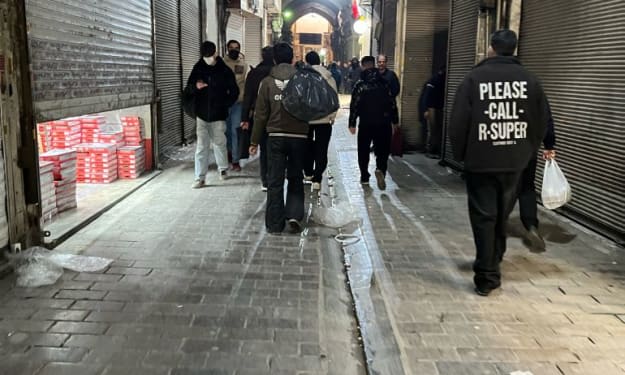
In a dramatic escalation of unrest, Iran is reporting that more than 100 security officers and personnel have been killed in clashes with demonstrators who have defied a violent government crackdown. The nationwide protests — some of the largest Iran has seen in years — have been met with intense force by state authorities, even as protesters continue to push for economic justice and political change. � Reuters +1 A Nation in Turmoil What began in late December 2025 as protests over mounting economic hardships — including soaring prices, inflation, and the collapse of the Iranian rial — quickly evolved into widespread opposition to the regime itself. Demonstrations have spread across all 31 provinces, uniting diverse segments of Iranian society in a shared display of discontent. � Le Monde.fr In response, the Iranian government has launched a harsh crackdown. Security forces, including the elite Islamic Revolutionary Guard Corps (IRGC) and police units, have deployed live ammunition, tear gas, and mass arrests to suppress dissent. A nationwide internet and communications blackout has been in effect for days, limiting independent verification of events but failing to halt the flow of information entirely. � Reuters +1 Conflicting Casualty Reports Iranian state media has highlighted fatalities among security personnel. Official reports suggest that dozens of police and security officers have been killed in clashes with protesters, describing them as casualties of violent “rioters” or coordinated attacks against state institutions. Some of these reported deaths occurred during confrontations in provinces such as Isfahan. � Al Jazeera However, independent sources paint a much broader picture of suffering. Human rights groups and activist networks estimate that the death toll — including civilian protesters — has risen significantly. According to some reports, at least 116 people have been killed overall, with thousands more arrested and hundreds wounded during the unrest. � AP News Discrepancies between state figures and those from international rights organizations make it difficult to verify the precise scale of violence. What is clear, however, is that the human cost is high — and growing. The combination of communications blackouts and state media control has made reliable reporting exceptionally challenging. � Le Monde.fr What Protesters Are Demanding The demonstrations initially centered on economic grievances, such as rising living costs and unemployment. Yet, a considerable number of protesters have shifted their focus toward political reform and even regime change. Many are calling for fundamental shifts in governance, greater freedoms, and accountability from leadership that they perceive as unresponsive and repressive. � Reddit In cities across Iran, crowds have formed in public squares, bazaars, and streets — often chanting slogans against state authorities and demanding improved living conditions. The breadth of participation demonstrates widespread frustration, cutting across age groups and social classes. � Reddit Government Response Iran’s leadership has framed the unrest as a security threat, insisting that what they term “rioters” are engaged in violent acts. Officials have issued stern warnings to foreign nations, particularly the United States and Israel, claiming external influences are at play. Some hard-line figures have even threatened retaliatory action in the event of foreign intervention. � People Daily Supreme Leader Ayatollah Ali Khamenei and other senior officials have portrayed the demonstrations as opportunistic uprisings fueled by foreign enemies intent on destabilizing Iran. Such rhetoric underscores a deepening divide between authorities and ordinary Iranians. � Financial Times The Role of Communication Blackouts One of the most significant facets of the current crisis is Iran’s near-total internet shutdown. Analysts argue this serves two purposes: obscuring the true extent of violence, and limiting the ability of protesters to organize. Groups like NetBlocks have confirmed widespread disruptions to connectivity, making independent reporting and documentation of abuses more difficult. � Reuters Despite these restrictions, videos and testimonials continue to leak online — often through VPNs, satellite connections, or foreign platforms — revealing scenes of intense street clashes, mass detentions, and military presence in urban centers. � Le Monde.fr Global Reaction International responses to the crisis have been mixed. Western nations, including the United States and members of the European Union, have condemned the violence and called for restraint. Former President Donald Trump publicly stated that the U.S. is “ready to help” Iranian protesters, a remark that was both welcomed by opposition activists and condemned by Tehran as interference. � Reuters Human rights organizations have also called for independent investigations into alleged abuses and urged Iran to lift its communication restrictions, emphasizing the need for transparency and accountability. � Le Monde.fr What Lies Ahead? With tensions continuing to escalate, Iran faces one of its most significant internal challenges in years. If protests persist and the government maintains its hard-line stance, the violence could deepen, risking a broader humanitarian crisis. Whether the state will soften its approach or double down on repression remains uncertain. As the world watches, the voices of both protesters and security personnel — their suffering, fears, and aspirations — illustrate the human toll of political unrest and the complex dynamics of power in one of the Middle East’s most influential nations.
By Fiaz Ahmed Brohi7 days ago in The Swamp



Comments
There are no comments for this story
Be the first to respond and start the conversation.