
Two Killed in Suspected Palestinian Ramming and Knife Attack in Israel
Deadly incident reignites security fears and highlights the ongoing cycle of violence in the Israeli-Palestinian conflict
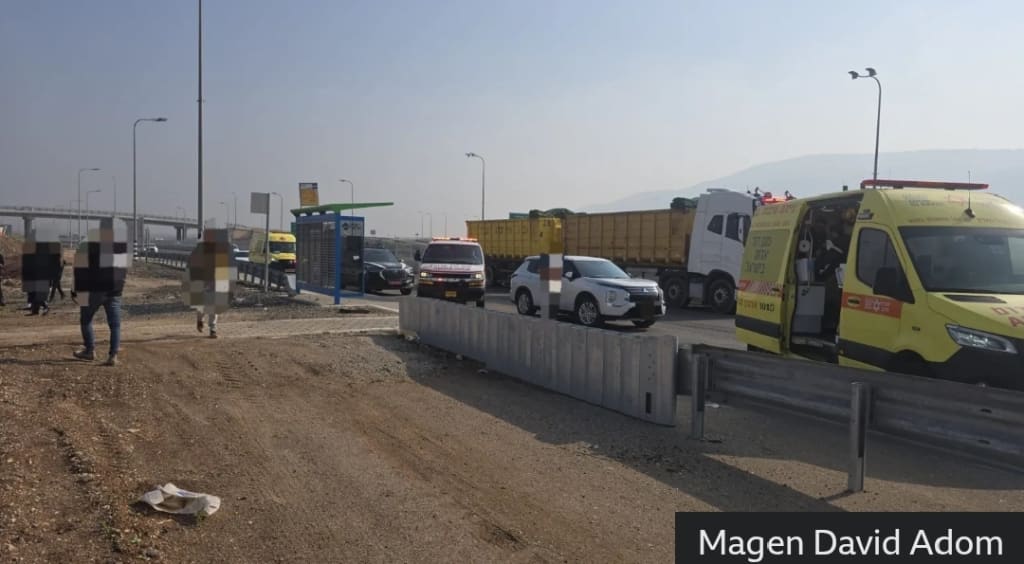
A suspected Palestinian ramming and knife attack in Israel has once again underscored the deep-rooted tensions and ongoing cycle of violence that continue to grip the region. According to Israeli authorities, two people were killed in the incident, which involved a vehicle ramming followed by a stabbing, a method of attack that has been seen repeatedly during periods of heightened unrest. The attack has sparked renewed security alerts across Israel and reignited debate over safety, retaliation, and the broader Israeli-Palestinian conflict.
What Happened?
Initial reports from Israeli police indicate that the incident unfolded when an assailant used a vehicle to ram into pedestrians before exiting the car and carrying out a knife attack. Emergency services responded quickly, but two victims were pronounced dead at the scene due to the severity of their injuries. Several others were reportedly wounded, some of them critically, and were rushed to nearby hospitals for urgent medical treatment.
Israeli security forces shot and neutralized the attacker shortly after the incident. Authorities described the act as a “suspected terrorist attack” and launched an immediate investigation to determine the identity of the assailant and whether the attack was carried out independently or with external coordination.
Security Response and Immediate Aftermath
Following the attack, Israeli police and military units increased their presence in surrounding areas, setting up roadblocks and conducting searches as part of precautionary security measures. Public transportation routes were temporarily disrupted, and residents were advised to remain vigilant.
Israeli officials strongly condemned the attack, describing it as a deliberate act of violence against civilians. Senior political figures expressed condolences to the families of the victims and reiterated Israel’s commitment to maintaining security. Statements from government leaders emphasized that security forces would act decisively to prevent further attacks.
On the Palestinian side, reactions were mixed. While some Palestinian officials condemned violence against civilians, others pointed to the broader political and humanitarian context, arguing that continued occupation, settlement expansion, and daily hardships contribute to rising anger and desperation among Palestinians.
A Pattern of Violence
Ramming and knife attacks have become a recurring feature of the Israeli-Palestinian conflict, particularly during times of political tension or military escalation. These attacks are often carried out by individuals acting alone, making them difficult for security agencies to predict or prevent. Analysts note that such assaults require minimal resources but have a profound psychological impact, instilling fear in everyday public spaces.
Over the years, Israeli authorities have responded by enhancing surveillance, increasing security patrols, and implementing stricter controls in sensitive areas. Despite these measures, sporadic attacks continue to occur, highlighting the limitations of purely security-based solutions.
Impact on Civilians
For ordinary Israelis and Palestinians alike, incidents like this reinforce a sense of insecurity and loss. Civilians are frequently caught in the middle, bearing the emotional and physical consequences of the conflict. Families of the victims are left grieving, while communities grapple with fear, anger, and uncertainty about what may come next.
Mental health experts in Israel have repeatedly warned about the long-term psychological toll of living under constant threat. Similarly, Palestinians living under occupation face daily stress, restricted movement, and economic hardship, factors that contribute to a volatile environment.
Regional and International Reactions
International reactions to such attacks typically include calls for restraint and de-escalation. Global leaders often condemn violence against civilians and urge both sides to avoid actions that could further inflame tensions. Human rights organizations continue to stress the importance of addressing the root causes of the conflict rather than focusing solely on reactive security measures.
The incident also comes at a time when the Middle East is experiencing broader instability, making the Israeli-Palestinian conflict a focal point for regional and international concern.
The Bigger Picture
While individual attacks dominate headlines, they are symptoms of a much larger and unresolved conflict. Decades of failed peace efforts, mutual distrust, and cycles of retaliation have made lasting peace elusive. Experts argue that without meaningful political dialogue, economic opportunities, and respect for human rights on both sides, violence is likely to persist.
For many observers, the tragedy serves as a grim reminder that the status quo is unsustainable. Each new incident hardens attitudes, reduces trust, and makes compromise more difficult.
Conclusion
The suspected Palestinian ramming and knife attack that killed two people in Israel is another painful chapter in a long history of violence. Beyond the immediate shock and grief, it raises urgent questions about security, justice, and the future of Israeli-Palestinian relations. As investigations continue and tensions remain high, civilians on both sides are once again left hoping for calm, accountability, and a path toward lasting peace.
About the Creator
The Forsyth House Fire
Since 1851, Forsyth House has stood on the corner of Union Street and Gordon Street in the heart of Glasgow. Its iconic, or was... because on Sunday 8th of March, 2026, a fire broke out in a small, seemingly un-named shop in the building and tore all that history down. As I write, the rubble is still unsettled and the street is still blocked off. Central Station is quiet on the upper level, and around 30 small businesses have quite literally gone up in smoke.
By S. A. Crawford2 days ago in The Swamp
Judge Halts Removal of Eritrean Asylum Seeker from UK to France Under ‘One in, One Out’
A British judge has temporarily blocked the removal of an Eritrean asylum seeker from the United Kingdom to France under the government’s controversial “one in, one out” migration arrangement, marking the first major legal challenge to the scheme. The ruling, delivered by a judge at the High Court of Justice, came after lawyers argued that sending the asylum seeker to France without fully reviewing his protection claim could breach the United Kingdom’s obligations under international refugee law. The unnamed Eritrean man arrived in the UK earlier this year after crossing the English Channel in a small boat. Under the government’s migration framework, irregular arrivals may be transferred to France while, in exchange, the UK accepts another asylum seeker who has a legal connection to Britain. The policy has been widely referred to as a “one in, one out” system and was introduced as part of broader efforts by the government to deter dangerous Channel crossings. Officials from the UK Home Office said the arrangement was designed to disrupt smuggling networks and reduce the incentive for migrants to attempt the risky journey across the Channel. The government argues that the program allows the UK and France to manage migration flows cooperatively while maintaining humanitarian commitments. However, human rights organizations and refugee advocates have criticized the plan, saying it risks treating asylum seekers as interchangeable individuals rather than people with unique protection needs. Legal experts also warn that the system could conflict with international conventions governing the treatment of refugees. In the case brought before the High Court, the Eritrean man’s legal team argued that his removal to France would violate his right to a fair asylum process in the United Kingdom. They also claimed that he faced particular vulnerabilities due to past persecution in his home country. Eritrea has long been associated with widespread human rights concerns, including indefinite military conscription and restrictions on civil liberties. Because of these conditions, many Eritrean nationals seek refuge in Europe each year. Lawyers representing the asylum seeker told the court that transferring him to France before a full assessment of his claim could expose him to additional legal uncertainty and delay. They argued that the new migration policy had not yet been thoroughly tested in British courts and therefore required careful judicial scrutiny. The judge granted an interim order preventing the deportation while the legal challenge proceeds. The ruling does not determine the final legality of the policy but ensures that the individual cannot be removed from the UK until the court reviews the broader arguments. The decision has sparked immediate political debate. Supporters of the government’s migration strategy say the court intervention risks undermining efforts to control irregular migration. Critics, however, argue that the case highlights the legal complexities of policies designed to deter asylum seekers. A spokesperson for the UK Home Office said the government would continue to defend the policy in court. Officials insist that the exchange arrangement with France complies with international obligations and includes safeguards to protect vulnerable individuals. Meanwhile, refugee advocacy groups welcomed the ruling, describing it as an important step toward ensuring that asylum seekers receive proper legal consideration before being transferred between countries. Legal analysts say the case could become a significant test of Britain’s evolving migration strategy. If the courts ultimately rule that the policy conflicts with refugee protections, the government may be forced to revise or abandon parts of the program. The case also highlights the continuing tensions surrounding migration policy in Europe. Countries across the continent are searching for ways to balance humanitarian obligations with domestic political pressure to reduce irregular arrivals. For the Eritrean asylum seeker at the center of the case, the immediate outcome means he will remain in the UK while the courts examine the legality of the transfer scheme. For the government, the ruling represents the beginning of what could become a lengthy legal battle over one of its most controversial immigration policies. As proceedings continue, the case is likely to draw close attention from policymakers, human rights groups, and legal scholars who are closely watching how Britain’s courts interpret the balance between migration control and refugee protection.
By Fiaz Ahmed 3 days ago in The Swamp


Comments
There are no comments for this story
Be the first to respond and start the conversation.