
Trump Visits Georgia as Republicans Focus on Midterm Momentum
Former president returns to a state central to past election disputes while party leaders seek voter energy ahead of key races

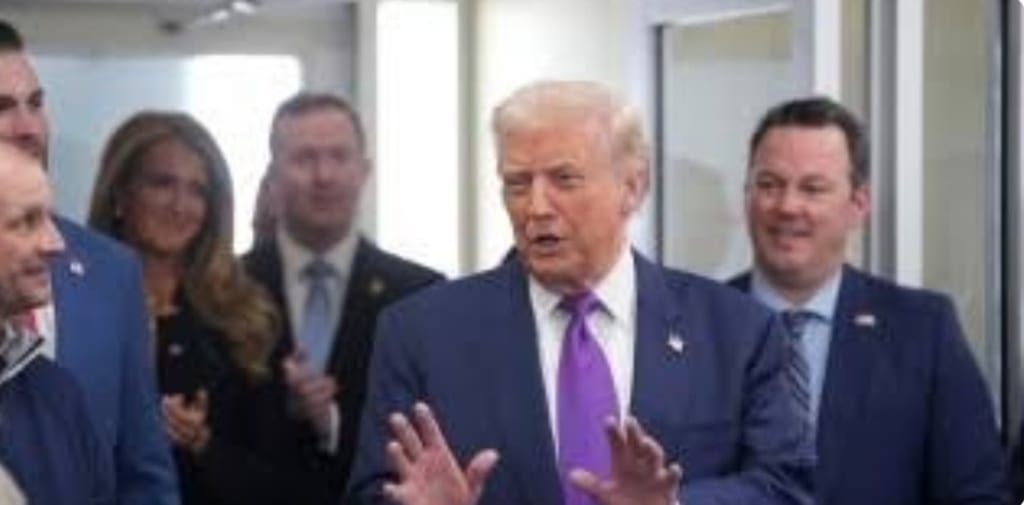
Return to a Politically Charged State
Former President Donald Trump traveled to Georgia, a state that has played a major role in recent election disputes, as Republicans work to build support ahead of upcoming midterm elections.
Georgia has been central to national political conversations since the 2020 presidential election, when President Joe Biden narrowly won the state. Trump has continued to dispute aspects of that election outcome, despite multiple reviews and court decisions affirming the results.
His visit signals an effort to energize Republican voters in a state that remains competitive and closely watched.
Georgia’s Political Significance
Georgia has shifted politically over the past decade. Once considered a reliably Republican state in presidential elections, it has become more competitive due to demographic changes and increased voter turnout in urban and suburban areas.
In 2020, Georgia’s electoral votes went to Biden, marking the first time a Democratic presidential candidate carried the state since 1992. The state later held closely contested Senate runoffs that resulted in Democratic victories, further increasing its national importance.
Because of this history, campaign stops in Georgia carry both symbolic and strategic weight for national leaders.
The Focus on Midterm Elections
Republicans view the upcoming midterm elections as an opportunity to regain or strengthen their position in Congress and at the state level. Trump’s visit is part of a broader effort to motivate conservative voters and support GOP candidates.
Midterm elections often serve as a referendum on the sitting president’s administration. Political analysts note that turnout and enthusiasm play a key role in determining outcomes, particularly in competitive states like Georgia.
By appearing at rallies and campaign events, Trump aims to influence primary contests, boost Republican nominees, and encourage voter participation.
Ongoing Debate Over Election Claims
Trump’s continued criticism of the 2020 election has shaped Republican politics in Georgia. State officials, including members of his own party, have defended the integrity of the election process after recounts and audits confirmed the results.
Several legal challenges were filed following the election, but courts dismissed many of the claims due to lack of evidence. Georgia’s voting system underwent additional scrutiny and review after the election cycle.
While some Republican voters continue to express concern about election security, others within the party emphasize focusing on future races rather than revisiting past disputes.
Reaction From Georgia Leaders
Georgia’s Republican leadership has shown a range of responses to Trump’s visit. Some officials welcome his involvement, citing his ability to draw large crowds and media attention. Others have encouraged candidates to prioritize local issues such as economic development, public safety, and education.
Democratic leaders in the state have criticized Trump’s appearance, arguing that continued discussion of election claims distracts from policy debates. They have framed his visit as part of a broader national political strategy rather than a focus on Georgia-specific concerns.
The varied reactions reflect the state’s evolving political landscape.
Campaign Themes and Messaging
During his visit, Trump focused on themes common in his recent appearances: border security, inflation, crime, and economic policy. He also referenced election integrity, maintaining his stance on the 2020 results.
Republican candidates appearing alongside him often balance alignment with Trump’s national message while addressing local voter priorities. The challenge for candidates in competitive districts is to unify party supporters without alienating independent voters.
Campaign messaging in Georgia continues to reflect broader national debates while adapting to state-specific issues.
Voter Engagement and Turnout
Georgia has seen record voter turnout in recent election cycles. Early voting participation and grassroots organizing have played a significant role in shaping outcomes.
Both parties are investing in outreach efforts. Republicans are emphasizing voter registration drives and turnout operations in rural and suburban areas. Democrats are focusing on coalition-building and mobilizing younger voters and communities of color.
Trump’s rally serves as one element in a larger strategy aimed at increasing enthusiasm among Republican voters.
Broader National Context
Trump remains an influential figure within the Republican Party. His endorsements continue to carry weight in primary elections across the country. A visit to Georgia reflects his ongoing role in shaping the party’s direction ahead of national elections.
The midterms will determine control of congressional seats and influence legislative priorities in Washington. As such, campaign events in competitive states receive national media attention.
Georgia’s results could again serve as a signal of broader political trends.
The Balance Between Past and Future
One of the key questions facing Republicans in Georgia is how much attention to devote to past election disputes versus forward-looking policy goals. Some party strategists argue that focusing on economic and community concerns may broaden appeal. Others believe election integrity remains a motivating issue for core supporters.
Trump’s presence highlights this balancing act. While he continues to raise concerns about the 2020 election, many Republican candidates are also promoting messages centered on governance and policy.
How voters respond may shape not only Georgia’s political landscape but also national party strategy.
Looking Ahead
As the midterm elections approach, Georgia remains a focal point for campaign efforts. Both parties are organizing events, advertising campaigns, and voter outreach initiatives.
Trump’s visit underscores the state’s importance and the Republican Party’s desire to strengthen its position. Whether the strategy translates into electoral gains will depend on turnout, candidate appeal, and the issues that resonate most strongly with voters.
Political observers note that Georgia’s electorate has shown independence in recent years, making predictions challenging.
Conclusion
Donald Trump’s return to Georgia reflects the state’s continued role in national politics. As Republicans seek to build momentum for the midterm elections, his visit aims to energize supporters and reinforce party messaging.
Georgia’s recent history with close elections and intense scrutiny places added significance on campaign events there. The coming months will determine whether Republican efforts translate into electoral success or whether Georgia remains a competitive battleground.
For now, the visit serves as a reminder that the state continues to shape the national political conversation.
About the Creator
Saad
I’m Saad. I’m a passionate writer who loves exploring trending news topics, sharing insights, and keeping readers updated on what’s happening around the world.
A Gathering of Evil Bosses
“I’m the queen of chin jutting while I smooth my hair, attacking, insulting, and deflecting to protect my appointer.” “Oh, please, Blondi, my hair is curled, highlighted, and longer than yours. I feature television commercials telling immigrants that we will give them a free plane ride home, and if they voluntarily turn themselves in, they will be allowed to legally apply for re-entry. It runs everywhere, and I look good in it! You can’t compete because of your blond hair. Mine is nicer, and my lips are prettier than yours.”
By Andrea Corwin 3 days ago in The Swamp
United Kingdom Joins Norway, Italy, Iceland, Switzerland, France, and More European Countries in Taking a Stand on Sustainable Tourism with New Levies, Cruise Taxes, and Stay Limits
Travel in Europe is entering a new chapter—one where sustainability is no longer just a buzzword but a policy priority. From bustling historic cities to fragile natural landscapes, destinations are struggling with the effects of overtourism. Now, governments are responding with new visitor levies, cruise taxes, and stay limits designed to protect communities and preserve the environments that make Europe so desirable in the first place.
By Sajida Sikandar6 days ago in The Swamp
At My Wits’ End
Life is about taking out the trash and calling it trash because you have every reason to. It wasn't meant to be linear, they say. But the times you tried to make it straight led to problems, and you didn’t have the tools to put any of it to use. You don't put your right shoes on the right feet; you put the left shoes on the left feet. The grey hardened slab will trip you up anyway.
By Caitlin Charlton2 days ago in Humans




Comments
There are no comments for this story
Be the first to respond and start the conversation.