
Trump’s Russia Sanctions Push: The "Shadow Fleet" and the Limits of Presidential Power
As reports detail new sanctions moves, a look at what the next penalties could target and the constraints any president faces.

Headlines vs. Reality in Sanctions Policy
Recent reporting has centered on potential sanctions from former President Donald Trump targeting Russia’s oil revenue and the "shadow fleet" of tankers that helps evade current Western penalties. While advisors are crafting plans, the focus highlights a deeper question: how much direct control does any president truly wield over this global system?
Understanding the Target: Russia's "Shadow Fleet"
The "shadow fleet" is an informal network of hundreds of older tankers, often owned by obscure shell companies. These vessels operate outside Western shipping and insurance rules, allowing Russia to sell oil above the G7-imposed price cap of $60 per barrel. This system is crucial for funding Moscow's war in Ukraine by finding buyers in China and India.
Potential Measures Under Discussion
Plans being discussed include directly targeting more ships and their ownership networks. A more significant step would be "secondary sanctions," threatening foreign ports or banks that do business with shadow fleet entities. Other ideas involve drastically lowering the oil price cap or cracking down on the service providers that maintain these aging tankers.
The Clear Political Objective
The goal is to signal a harder line against Russia and disrupt a major source of Kremlin war funding. Supporters of a tougher approach argue current enforcement has been too weak, allowing the shadow fleet to become entrenched.
The Four Major Constraints on Any President
A president’s authority to impose sanctions is broad but faces practical limits. These constraints are economic reality, alliance politics, legal capacity, and market adaptation.
Constraint One: The Risk to Global Oil Prices
Russia is a top global oil producer. Successful sanctions that significantly reduce its oil exports could cause prices to spike worldwide. For any sitting president, this creates a direct domestic problem: higher gasoline prices that could anger American voters.
Constraint Two: The Challenge of Allied Unity
The existing price cap relies on cooperation from the G7 and European Union. Escalating to secondary sanctions would pressure countries like India or Turkey, potentially fracturing the coalition needed to maintain pressure on Russia. Unilateral action is less effective and strains alliances.
Constraint Three: Legal and Logistical Hurdles
Enforcing these sanctions is a resource-intensive chase. Targeting a ship owned by a shell company, managed elsewhere, and carrying oil for a third country requires vast intelligence and legal work. The system is designed for opacity, and new entities can be formed quickly in response.
Constraint Four: Market Adaptation Creates New Systems
Over two years, the shadow fleet has become an established, if risky, parallel industry. Buyers have adjusted their financial and refinery systems. Harsher sanctions may not stop trade but could accelerate a shift away from the U.S. dollar, a long-term strategic consequence some warn against.
A Case Study in Executive Power
Therefore, this issue is a clear example of the limits of the executive branch. A president can issue orders, but sanctions are not a simple switch for a complex, billion-dollar flow of oil the global economy has absorbed.
The True Test: Implementation and Endurance
The effectiveness of any policy depends on its sustained execution. It requires managing allies, tolerating potential price impacts, dedicating administrative resources, and planning for evasion. Congress can also mandate or limit actions, adding another layer.
Questions to Ask Beyond the Announcement
The public should look past the "tough new sanctions" headline. Key questions are: Is there a realistic enforcement plan? Are allies on board? How will oil price impacts be managed? Is the goal to completely halt exports or merely reduce Moscow's profit margin?
The Bottom Line on Geopolitical Power
The discussion around Trump and the shadow fleet underscores that modern power is not just about issuing decrees. It is the sustained ability to navigate global markets, diplomacy, and adversarial innovation. Any president's success will be measured by managing the constraints that allowed the shadow fleet to emerge, not just by the force of their political will.
About the Creator
Saad
I’m Saad. I’m a passionate writer who loves exploring trending news topics, sharing insights, and keeping readers updated on what’s happening around the world.
The Forsyth House Fire
Since 1851, Forsyth House has stood on the corner of Union Street and Gordon Street in the heart of Glasgow. Its iconic, or was... because on Sunday 8th of March, 2026, a fire broke out in a small, seemingly un-named shop in the building and tore all that history down. As I write, the rubble is still unsettled and the street is still blocked off. Central Station is quiet on the upper level, and around 30 small businesses have quite literally gone up in smoke.
By S. A. Crawford3 days ago in The Swamp
Epstein Used Modelling Agent to Recruit Girls, Brazilian Women Tell BBC
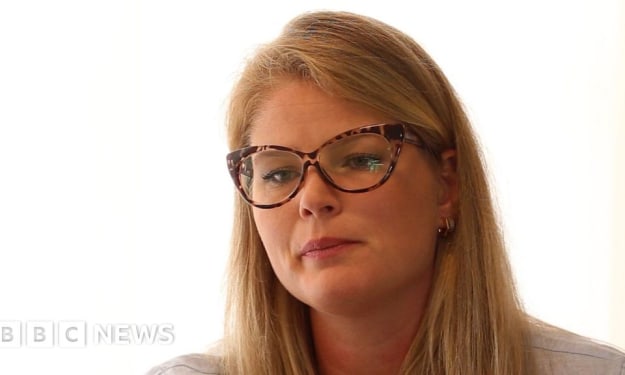
Several Brazilian women have told the BBC that they were approached by Jeffrey Epstein’s associates under the guise of modelling opportunities, claiming the financier used a modelling agent to recruit girls for his social circle. These testimonies provide further insight into the mechanisms Epstein allegedly employed to identify and manipulate vulnerable young women. The women, who spoke on the condition of anonymity due to safety concerns and ongoing investigations, said they were contacted in their teens by a modelling agent affiliated with Epstein. According to their accounts, the agent promised legitimate work in fashion and entertainment but subtly introduced them to environments connected with Epstein and his associates. “I thought it was a normal casting for modelling work,” one woman recalled. “At first, everything seemed professional, but soon I realized that the offers were not what they seemed, and the real purpose was much more disturbing.” These claims align with other reports from the United States and Europe, where Epstein allegedly leveraged positions of influence and networks in industries like modelling, fashion, and entertainment to gain access to young women and girls. Investigators have long described Epstein as using a combination of wealth, power, and charm to manipulate his victims. According to the Brazilian women, the modelling agent often acted as a gatekeeper, establishing initial trust and framing Epstein’s circle as aspirational or glamorous. Once introduced, the young women were encouraged—or in some cases pressured—into situations where they were expected to participate in activities benefiting Epstein or his associates. Legal experts note that using an intermediary such as a modelling agent is consistent with patterns observed in other high-profile trafficking cases. “Perpetrators often exploit professional or aspirational networks to make victims feel safe and validated,” said a criminal law specialist. “This strategy can mask exploitation under the appearance of legitimate opportunities.” Some of the women described traveling to other countries for meetings or photoshoots arranged by the agent. They recounted feeling anxious and confused about the situation but hesitant to refuse due to promises of career advancement or financial incentives. Brazilian authorities have previously investigated reports of minors being recruited under false pretenses for international modelling assignments. While not all cases are linked to Epstein, his operations appear to have intersected with similar networks that target young women seeking careers in fashion and entertainment. BBC journalists contacted representatives for Epstein’s estate and known associates, who did not provide comment. Epstein died in 2019 while in custody, but civil lawsuits and ongoing criminal investigations continue to reveal the extent of his network and recruitment strategies. Advocates for victims of sexual exploitation emphasize that these accounts highlight the importance of vigilance in industries that recruit young women. “Modeling and entertainment sectors must implement stricter safeguards to prevent predatory behavior,” said a representative from a non-profit organization supporting survivors. “The use of intermediaries can be an effective tool for traffickers, and awareness is critical.” Psychologists who work with survivors note that victims often experience long-term trauma, particularly when deception and manipulation are involved. Early experiences of being lured under false pretenses can affect trust, self-esteem, and emotional well-being for years. The Brazilian testimonies contribute to a growing body of evidence illustrating how Epstein and his associates allegedly exploited systemic vulnerabilities. While criminal convictions have been limited due to his death, civil cases and investigative journalism continue to expose the networks he used to operate across borders. For the women who came forward, sharing their experiences is part of an ongoing effort to raise awareness and prevent future exploitation. Their accounts emphasize the need for better protections for young people entering high-pressure industries like modelling, as well as the broader societal responsibility to recognize and intervene in situations where wealth and power may be abused. As investigations continue, authorities in multiple countries are reviewing the roles of intermediaries, facilitators, and enablers who may have contributed to Epstein’s operations. The Brazilian women’s testimonies are expected to inform both ongoing civil litigation and broader discussions about reform in vulnerable industries, ensuring that lessons are learned from one of the most notorious abuse networks in recent history.
By Fiaz Ahmed 4 days ago in The Swamp



Comments
There are no comments for this story
Be the first to respond and start the conversation.