
Trump's 2025 Reciprocal Tariffs Explained: Full List of Affected Countries and Economic Impact.
Discover how Trump’s new tariff policy is reshaping global trade impacting import prices and triggering worldwide economic responses in 2025.

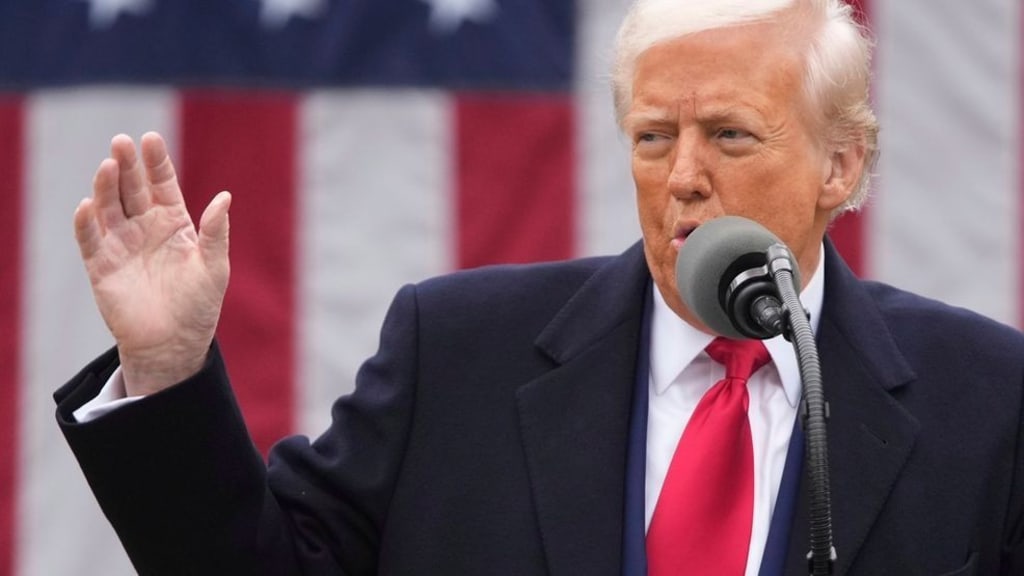
Trump's 2025 Reciprocal Tariffs Explained: Full List of Affected Countries and Economic Impact.
In a bold move that is reshaping global trade dynamics former President Donald Trump’s administration has implemented a new round of reciprocal tariffs on imports from around the world. The policy officially taking effect on April 9, 2025 is being described by Trump as a measure to combat what he calls decades of unfair trade practices by foreign nations. The concept of reciprocal tariffs is grounded in the principle of mirroring the trade barriers of other nations. In essence if a country imposes higher tariffs on American goods the U.S will now respond with an equivalent or even greater tariff on imports from that country. Trump argues that this approach ensures fairness and protects American industry from exploitation. We’ve allowed countries to take advantage of us for too long Trump said during a rally in Florida last week. If they tax our products, we’re going to tax theirs. It’s time to fight back.
Scope of the Tariffs
The new tariffs apply to more than 90 countries with rates ranging from 10% to over 100% depending on the size of the trade imbalance and the tariff structures in place. China long a target of Trump’s trade war during his previous presidency is among the hardest hit facing an average tariff of 104% on several categories of goods. Major trading partners like the European Union Japan South Korea and even close allies like Canada are affected. Specific product categories under the new policy include automobiles steel electronics agricultural products and textiles. U.S. importers now face increased costs on items ranging from smartphones to soy sauce. Economists and business leaders are split on the likely impact of the tariffs. Supporters argue that they could reduce the U.S trade deficit and revitalize American manufacturing. Critics however warn of inflation disrupted supply chains and global retaliation. According to an analysis by Deutsche Bank the tariffs could increase the average cost of imported goods by 15-20% translating to an additional $3,000 to $4,000 in annual costs for the average American household. Consumer electronics automobiles and clothing are expected to be among the most affected. On Wall Street the response was swift. The S&P 500 dropped by 10.5% in two days following the announcement while Asian markets also tumbled. Japan’s Nikkei index fell more than 3%, and the South Korean won plunged to its lowest level in 16 years.
Global Reaction
Foreign governments have not taken the move lightly. China announced a retaliatory 34% tariff on American imports and threatened additional restrictions on U.S businesses operating in the country. The European Union hinted at possible WTO challenges and countermeasures while countries like Japan and India are exploring diplomatic solutions to ease tensions. Malaysia's trade minister urged a soft diplomacy approach saying the world needed cooperation not conflict. Meanwhile India is pushing for a bilateral trade deal that might help it regain preferential access to the U.S market. Analysts believe the tariffs are not just about economics but also a political strategy. With the 2024 presidential election cycle still fresh in voters' minds Trump’s America First rhetoric continues to resonate with a substantial base of voters in industrial and manufacturing heavy states. Trump’s team argues that the tariffs are not permanent and are meant to force other nations to come to the negotiating table. Our goal is simple said a senior Trump advisor. Zero tariffs and fair trade. But until we get there, we’ll defend our interests. The world will be watching closely in the coming months to see whether Trump’s aggressive tariff strategy pays off or backfires. If nations retaliate and global trade slows the economic costs could be severe. On the other hand if Trump succeeds in securing new trade deals that reduce barriers and protect American industries it could mark a major shift in global commerce. For now importers consumers and governments alike are bracing for a turbulent period in international trade.
RELATED ARTICLE:
https://shopping-feedback.today/theSwamp/trump-warns-of-50-tariffs-on-china-trade-war-tensions-rise-in-2025%3C/p%3E%3Cstyle data-emotion-css="1e4ilk4-Heading">.css-1e4ilk4-Heading{font-size:1.625rem;margin-top:40px;line-height:1.2;font-weight:bold;}
SEO KEYWORD:
Trump 2025 tariffs, Reciprocal tariffs explained, Trump import policy 2025, Affected countries by Trump tariffs, US trade war 2025, Trump global trade policy, 2025 tariff list, Economic impact of Trump tariffs, What are Trump’s reciprocal tariffs 2025, How Trump’s tariffs affect global trade, List of countries impacted by US tariffs, Trump tariff policy full explanation, Global reaction to US tariffs 2025, Trump vs China tariffs 2025, US trade deficit and new tariffs.
About the Creator
Adnan Rasheed
Author & Creator | Writing News , Science Fiction, and Worldwide Update| Digital Product Designer | Sharing life-changing strategies for success.
Keep reading
More stories from Adnan Rasheed and writers in The Swamp and other communities.
Is Trump Planning Martial Law? Full Breakdown of the 1807 Insurrection Act.
Is Trump Planning Martial Law? Full Breakdown of the 1807 Insurrection Act. In recent political discourse particularly during times of national unrest or major protests the question often arises: Can a U.S President declare martial law? In the case of former President Donald Trump this question has surfaced repeatedly especially during the aftermath of the 2020 election and the events surrounding January 6, 2021. While Trump has not officially declared martial law the discussion around it especially in connection with the Insurrection Act of 1807 has stirred intense debate. Let’s break down what martial law means Trump’s association with it and what the Insurrection Act actually permits.
By Adnan Rasheed11 months ago in The Swamp
The Forsyth House Fire
Since 1851, Forsyth House has stood on the corner of Union Street and Gordon Street in the heart of Glasgow. Its iconic, or was... because on Sunday 8th of March, 2026, a fire broke out in a small, seemingly un-named shop in the building and tore all that history down. As I write, the rubble is still unsettled and the street is still blocked off. Central Station is quiet on the upper level, and around 30 small businesses have quite literally gone up in smoke.
By S. A. Crawford3 days ago in The Swamp
Hormuz Crisis Sparks Urgent Call to Boost UK Gas Storage
The escalating crisis in the Strait of Hormuz has prompted urgent warnings from energy industry groups and analysts that the United Kingdom must significantly expand its gas storage capacity to safeguard domestic supplies and protect consumers from volatile global markets. The crisis, triggered by the broader 2026 Iran war and Iran’s effective halt of maritime traffic through the vital Hormuz chokepoint, has disrupted global fuel and gas flows, pushing prices upward and exposing weaknesses in the UK’s energy infrastructure. Why the Hormuz Crisis Matters for UK Energy The Strait of Hormuz, a narrow but strategically critical waterway linking the Persian Gulf to the Gulf of Oman, normally sees about a fifth of the world’s oil and liquefied natural gas (LNG) transit daily. Since late February, it has been effectively closed due to hostilities following the war between Iran and U.S.–Israel forces — shutting down most tanker traffic and causing severe market disruptions. The knock‑on effects have been widespread: Brent crude oil prices spiked above $100 per barrel at the height of the disruption, and global LNG supplies — particularly from Qatar and the United Arab Emirates — have sharply contracted. In some cases, LNG output has been halted or shifted to alternative export points, further tightening global markets. Although the UK does not import much gas directly from the Middle East — it relies on North Sea production, Norwegian pipelines, and LNG imports — UK gas prices are still heavily influenced by global LNG markets and crude oil price trends. When prices surge in Asia and Europe due to supply restraints in the Gulf, UK wholesale energy costs rise in tandem, translating into higher heating and electricity bills for households and businesses. Current UK Gas Storage Capacity: A Weak Spot At present, the UK’s gas storage capabilities are limited compared with many continental European countries. The country’s main storage site, the Rough facility in the North Sea, was reopened in 2022 after being closed for maintenance but still only represents a fraction of the storage capacity historically available. Rough, under Centrica’s ownership, currently offers roughly 0.9 billion cubic metres of storage — enough for only a short buffer relative to national consumption. Storage levels in the UK are typically measured in days of supply, and industry figures suggest that the nation’s reserves equate to about a few weeks’ worth of gas at most. By contrast, some continental storage sites hold several months of inventory, allowing countries like Germany or France to ride out short‑term supply shocks more comfortably. Industry associations — including the Oil & Gas UK (OGUK) group and other energy sector bodies — argue that this exposed position leaves the UK vulnerable to price spikes and supply insecurity during extreme geopolitical or weather‑related disruptions. With the current crisis showing no sign of abating, pressure is mounting for policymakers to rethink storage strategy and investment priorities. Calls for Strategic Storage Expansion Experts and business groups have called on the UK government to expand gas storage capacity significantly, both by enlarging existing facilities like Rough and by developing new ones onshore and offshore. Such investments would provide a strategic cushion against future global supply shocks, whether caused by geopolitical crises, harsh winters, or infrastructure outages. An industry spokesperson told OilPrice.com that the UK’s current storage footprint — about 0.9 bcm, roughly equivalent to a short buffer compared with peak seasonal demand — is “insufficient in a world where global energy markets are increasingly tight and unpredictable.” Expanding storage would reduce dependence on just‑in‑time market deliveries and provide greater negotiating leverage when global prices surge. Critics of the status quo argue that previous policy decisions to shutter or under‑invest in storage facilities have left the UK exposed. For example, similar warnings were made after the 2021 UK gas supply crisis, when a combination of supply shortages and low storage stocks contributed to sharp price increases and market stress. Analysts now point to that episode as a cautionary lesson about the importance of robust strategic reserves. Government and Market Responses The UK government has acknowledged the price pressures stemming from the global supply disruption, but so far its focus has been on consumer protections and price monitoring rather than immediate infrastructure expansion. Recent statements from Downing Street officials emphasize avoiding deeper military involvement in the Middle East conflict while addressing the economic fallout, but long‑term energy resilience measures have yet to be fully outlined. In the meantime, regulators like Ofgem are monitoring wholesale price movements, and industry leaders are urging strategic planning that goes beyond short‑term consumer supports. Gas storage expansion — particularly in offshore depleted fields or salt caverns — could provide a foundation for a more resilient energy mix, smoothing the volatility that global crises like the Hormuz disruption can trigger. Why Storage Matters Beyond Short‑Term Prices Increasing gas storage capacity isn’t just about cushioning price shocks; it is about energy security, supply diversification, and national resilience. While renewable energy and efficiency improvements are crucial for long‑term sustainability, gas remains central to UK heating and power generation. Adequate storage helps bridge the gaps when intermittent renewables or pipeline imports fall short. As the Hormuz crisis continues to roil global markets, the calls for strategic stockpiles in the UK are likely to intensify. Industry voices contend that only by building greater physical buffers can the country reduce its vulnerability to distant geopolitical tensions and maintain stable, affordable energy for consumers and industries alike.
By Fiaz Ahmed about 3 hours ago in The Swamp



Comments
There are no comments for this story
Be the first to respond and start the conversation.