
Trump Comes to Tel Aviv: Peace Broker or Political Spectacle?
Donald Trump’s visit to Israel has reignited global debate. As he claims credit for brokering the Gaza ceasefire, critics question whether it’s genuine diplomacy or a carefully staged political show.

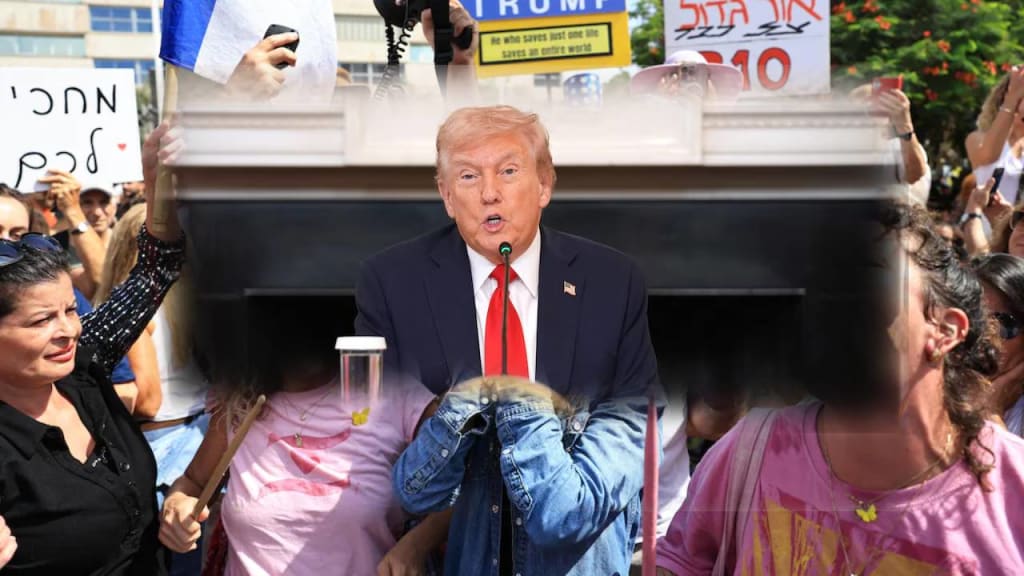
Former U.S. President Donald Trump has once again captured global attention with his highly publicized visit to Israel. Arriving in Tel Aviv amid the newly brokered Gaza ceasefire, Trump has framed his trip as a mission of peace, declaring that his diplomatic efforts “ended the war” and brought hostages home. His supporters hail him as the architect of stability, while critics view the visit as a carefully timed political move designed to boost his international image.
As the world watches Trump’s tour unfold, one question looms large: is this genuine statesmanship or another headline-driven performance?
A Visit Framed as Victory
Trump’s arrival in Israel comes at a sensitive yet hopeful moment. After months of destruction in Gaza, a U.S.-backed ceasefire has finally taken hold. The agreement, negotiated by American and regional mediators, resulted in the release of all remaining hostages and a partial withdrawal of Israeli troops. For Trump, the timing could not be more advantageous.
Standing before a cheering crowd in Tel Aviv, he proclaimed that “the war is over,” describing the ceasefire as proof that American leadership can bring lasting peace to the Middle East. His speech was full of familiar themes: strength, resolve, and the power of direct negotiation. For his followers, it was classic Trump diplomacy in action. For his detractors, it was political theater on a grand stage.
The Political Context
Trump’s trip also comes as he faces increasing scrutiny at home. With the 2026 election season already stirring, the former president is keen to reclaim the foreign-policy spotlight that once defined his administration. His allies argue that this ceasefire reflects the diplomatic instincts that led to the Abraham Accords, while his critics call it opportunism dressed as peacebuilding.
Observers point out that Trump’s involvement in the Gaza ceasefire was largely symbolic. The framework was built through months of negotiation by U.S. diplomats, Egyptian mediators, and Qatari officials. While Trump’s public statements may have helped pressure both sides toward resolution, the groundwork was laid long before his plane touched down.
Nonetheless, Trump’s ability to turn moments of global tension into opportunities for political resurgence remains unmatched. His Israel visit was broadcast live across American and international networks, blending elements of statesmanship with the unmistakable tone of a campaign rally.
Diplomacy or Public Relations?
The Knesset address scheduled during his visit was expected to highlight cooperation, but early excerpts show a familiar mix of praise for Israeli leadership and criticism of past U.S. administrations. Trump positioned himself as the decisive leader capable of “restoring order” and “ending endless wars.”
However, several foreign policy analysts have questioned whether his rhetoric matches reality. According to Reuters, the ceasefire’s success depends on strict adherence from both sides, with the United Nations and U.S. military observers monitoring compliance. Critics argue that turning such a delicate truce into a political victory risks undermining its fragile stability.
A senior Israeli diplomat, speaking anonymously, told reporters that “symbolism is important, but what we need now is consistency.” The diplomat emphasized that maintaining peace requires quiet coordination, not public spectacle.
Regional and Global Reaction
Reactions to Trump’s visit have been sharply divided. Israeli leaders have offered cautious gratitude, acknowledging the role of U.S. diplomacy while avoiding overt political alignment. In Gaza, residents have expressed relief that the bombings have stopped but remain skeptical that any foreign leader can deliver lasting peace.
Internationally, Trump’s tour has reignited debate about the role of personal diplomacy. Some commentators see his involvement as a reminder that personality still matters in global politics. Others argue that his trip risks turning complex humanitarian crises into photo opportunities.
Across social media, the conversation reflects this divide. Supporters are sharing clips of his speech under hashtags celebrating his “return to global leadership.” Critics are dissecting his remarks, questioning whether the visit prioritizes headlines over healing.
The Optics of Power
Regardless of intent, the optics of Trump’s Israel visit are powerful. Television images of him standing beside Israeli and American flags reinforce his long-cultivated image as a dealmaker. Yet, symbolism cannot substitute for substance. The ceasefire remains fragile, and both sides are navigating immense humanitarian and political challenges.
Analysts from The Guardian and AP report that while the ceasefire is holding for now, aid distribution, reconstruction, and regional trust remain uncertain. Any misstep could undo weeks of progress.
A Moment That Defines More Than One Man
Whether viewed as peace broker or political showman, Trump has once again placed himself at the center of global attention. His visit to Tel Aviv underscores his unmatched ability to dominate the narrative. However, the true measure of success will not be the applause in Israel or the headlines in Washington. It will depend on whether the ceasefire he celebrates endures long enough to rebuild lives and communities shattered by war.
History may judge this visit in two ways: as a turning point in Middle East diplomacy or as a moment of self-promotion disguised as peace. For now, one thing is certain. Donald Trump knows how to keep the world watching, even when the world is still counting its losses.
About the Creator
Syed Ali
I’m a streamer and writer sharing tips and guides on accessing geo-restricted streaming platforms, helping you watch your favorite content from anywhere in the world.
An Interview With the President Inside the Oval Conversation: Power, Pressure, and the Path Forward
The Oval Office is more than a workspace. It is a symbol of authority, responsibility, and the immense weight of decision-making. Every conversation held inside its curved walls carries echoes of history, power, and consequence. An interview with the president in this setting is not merely a dialogue—it is an encounter with the realities of leadership under constant pressure.
By Aarif Lashari3 days ago in The Swamp



Comments
There are no comments for this story
Be the first to respond and start the conversation.