
Tracking-as-a-Service Market Size & Forecast 2025–2033
How Real-Time Intelligence Is Redefining Asset Visibility Across Global Industries

Introduction
In a hyperconnected world where speed, accuracy, and transparency define competitiveness, businesses are increasingly turning to digital solutions that deliver real-time operational intelligence. One such rapidly evolving solution is Tracking-as-a-Service (TaaS)—a cloud-enabled model that allows organizations to monitor assets, inventory, and vehicles without the burden of owning and managing complex infrastructure.
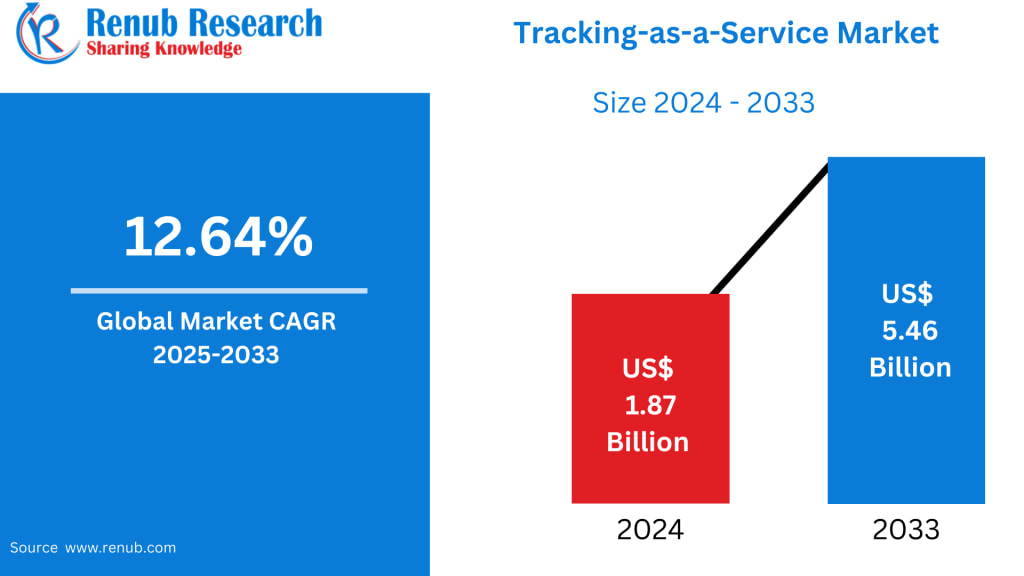
According to Renub Research, the Tracking-as-a-Service market is expected to grow substantially, expanding from US$ 1.87 billion in 2024 to US$ 5.46 billion by 2033, registering a strong Compound Annual Growth Rate (CAGR) of 12.64% during 2025–2033. This growth trajectory reflects the rising demand for real-time tracking solutions, rapid technological advancements, and the growing importance of effective asset management across industries.
As global supply chains become more complex and customer expectations continue to rise, Tracking-as-a-Service is emerging as a strategic enabler of operational efficiency and data-driven decision-making.
Tracking-as-a-Service Market Outlook
Tracking-as-a-Service is a cloud-based solution that enables enterprises to track physical assets, inventory, and vehicles in real time using technologies such as GPS, IoT sensors, RFID, and advanced analytics. These services can be accessed through web platforms or mobile applications, offering seamless monitoring anytime and anywhere.
Unlike traditional tracking systems that require significant upfront investment and in-house IT resources, TaaS follows a subscription-based model. This approach reduces capital expenditure while allowing organizations to scale services according to evolving needs. Businesses across logistics, retail, manufacturing, healthcare, and e-commerce increasingly rely on TaaS to enhance accountability, minimize losses, optimize routes, and improve customer service.
With real-time insights into asset location and condition, companies can make faster and more informed decisions, reduce operational downtime, and achieve measurable cost savings. As digital transformation accelerates globally, TaaS is becoming an essential component of modern enterprise infrastructure.
Key Growth Drivers in the Tracking-as-a-Service Market
Increasing Demand for Real-Time Visibility and Supply Chain Efficiency
One of the strongest growth drivers for the TaaS market is the rising need for end-to-end supply chain visibility. Businesses are under growing pressure to ensure timely deliveries, reduce theft and damage, and improve service reliability. Real-time tracking provides continuous insights into shipment location, movement patterns, and delivery status.
This demand is particularly high in sectors such as logistics, healthcare, and e-commerce, where delays or disruptions can directly impact customer satisfaction and revenue. TaaS platforms enable predictive insights, proactive issue resolution, and faster decision-making—making them indispensable in today’s just-in-time business environment.
Proliferation of IoT Devices and Sensor Technologies
The widespread adoption of IoT-enabled sensors, GPS devices, and RFID tags has created a robust ecosystem for tracking solutions. Modern TaaS platforms go beyond simple location tracking to provide data on temperature, humidity, vibration, and shock exposure.
This capability is critical for industries such as pharmaceuticals, food and beverage, and electronics, where maintaining environmental conditions during transport is essential for quality assurance. As IoT devices become more affordable and scalable, TaaS solutions are becoming increasingly accessible to organizations of all sizes.
Rapid Growth of E-Commerce and Last-Mile Delivery
The global surge in e-commerce has dramatically increased the complexity of logistics and last-mile delivery operations. Consumers now expect real-time order updates, flexible delivery options, and faster fulfillment.
Tracking-as-a-Service enables live shipment tracking, automated alerts, and estimated delivery times, significantly enhancing customer experience. For online retailers and logistics providers, TaaS is no longer optional—it is a competitive necessity. Integration of AI-driven route optimization further reduces delivery costs and improves efficiency, driving large-scale adoption.
Challenges and Barriers in the Tracking-as-a-Service Market
High Implementation and Integration Costs
Despite its benefits, the adoption of TaaS can be challenging for some organizations, particularly small and medium-sized enterprises. Initial costs associated with tracking hardware, system integration, and workforce training can be significant.
Integration with legacy IT systems further adds to complexity and deployment timelines. Although cloud-based solutions reduce capital expenditure, total cost of ownership remains a concern for cost-sensitive businesses.
Data Privacy and Security Concerns
TaaS platforms rely heavily on continuous data collection and transmission, raising concerns around data privacy, cybersecurity, and regulatory compliance. Sensitive information such as shipment routes, asset locations, and customer data must be protected against cyber threats.
Organizations must invest in strong encryption, secure access controls, and compliance frameworks, increasing operational costs. These concerns can slow adoption, particularly in highly regulated industries such as healthcare, defense, and government services.
Tracking-as-a-Service Market by Segment
Tracking-as-a-Service Software Market
Software platforms form the backbone of the TaaS ecosystem. These platforms integrate data from IoT devices, GPS trackers, and enterprise systems into unified dashboards that enable real-time monitoring and analytics.
Advanced solutions increasingly incorporate artificial intelligence and predictive analytics, allowing businesses to anticipate delays, detect anomalies, and optimize operations. Mobile-friendly interfaces and third-party software compatibility are further strengthening the role of TaaS software across industries.
Cloud-Based Tracking-as-a-Service Market
Cloud-based deployments are gaining strong traction due to their scalability, flexibility, and cost efficiency. Compared to on-premises solutions, cloud platforms eliminate infrastructure overhead and enable global access to real-time data.
Cloud-based TaaS is especially attractive to SMEs, as it offers pay-as-you-go pricing and rapid deployment. As organizations continue migrating to cloud environments, this segment is expected to dominate the market throughout the forecast period.
Electronics and IT Assets Tracking-as-a-Service Market
With growing reliance on digital infrastructure, tracking electronics and IT assets has become a priority for businesses. TaaS solutions help organizations monitor laptops, servers, and high-value equipment, reducing risks of theft, loss, and downtime.
Advanced platforms also support asset lifecycle management, maintenance scheduling, and compliance reporting. The rise of remote and hybrid work models further accelerates demand for IT asset tracking solutions.
Tracking-as-a-Service Market by Enterprise Size
Large Enterprises
Large enterprises represent a major share of TaaS adoption due to their complex supply chains, global operations, and extensive asset bases. These organizations invest heavily in advanced tracking solutions integrated with logistics, warehousing, and IT management systems.
Many large enterprises are also leveraging AI-driven analytics and blockchain-based traceability within their TaaS platforms to enhance transparency and resilience.
Tracking-as-a-Service Market by End Use
E-Commerce
The e-commerce sector is one of the fastest-growing adopters of TaaS. Real-time tracking, route optimization, and reverse logistics management are critical for ensuring timely deliveries and customer satisfaction.
As online retail continues to expand globally, Tracking-as-a-Service is becoming a mission-critical tool for operational excellence and brand loyalty.
Regional Market Insights
United States
The United States Tracking-as-a-Service market benefits from a mature logistics ecosystem, high e-commerce penetration, and widespread IoT adoption. Retail, healthcare, and manufacturing sectors are increasingly deploying TaaS solutions to improve visibility and meet regulatory requirements.
Germany
Germany’s strong manufacturing and automotive base is driving steady adoption of TaaS solutions. Emphasis on precision, reliability, and Industry 4.0 integration makes tracking services a vital component of digital transformation initiatives in the country.
India
India is emerging as one of the fastest-growing TaaS markets due to rapid expansion in e-commerce, logistics, and manufacturing. Cloud-based, subscription-driven solutions are particularly attractive to price-sensitive SMEs.
Government-led digital logistics initiatives and rising urban delivery demand are further accelerating adoption across the country.
United Arab Emirates (UAE)
The UAE is positioning itself as a regional logistics and trade hub, supported by strong investments in smart infrastructure. Adoption of TaaS is growing across aviation, oil and gas, retail, and e-commerce sectors, aligned with the country’s smart city vision.
Market Segmentation
By Component
Software
Services
By Type
Cloud-based
On-premises
By Asset Type
Electronics and IT Assets
In-Transit Equipment
Manufacturing Assets
Others
By Enterprise Size
Large Enterprises
Small and Medium-Sized Enterprises
By End Use
Retail
Manufacturing
E-commerce
Transportation and Logistics
Healthcare
Others
By Region
North America
Europe
Asia Pacific
Latin America
Middle East & Africa
Competitive Landscape
The Tracking-as-a-Service market features a mix of global technology providers and specialized tracking solution vendors. Companies are evaluated across five key viewpoints: overview, key personnel, recent developments, SWOT analysis, and revenue performance.
Key Players Include:
Blackline Safety Corp.
Geotab Inc.
Sortly Inc.
Trimble Transport & Logistics
Honeywell International Inc.
Mojix
Motorola Solutions, Inc.
Samsara
Finale Inventory
Final Thoughts
The global Tracking-as-a-Service market is entering a high-growth phase as organizations increasingly prioritize real-time visibility, operational efficiency, and digital resilience. With a projected market expansion from US$ 1.87 billion in 2024 to US$ 5.46 billion by 2033, TaaS is set to become a foundational technology across modern supply chains.
As IoT adoption accelerates, cloud infrastructure matures, and e-commerce continues its rapid ascent, Tracking-as-a-Service will play a central role in shaping the future of asset management. Businesses that embrace these solutions early will be better positioned to compete in an increasingly data-driven global economy.
About the Creator
Marthan Sir
Educator with 30+ years of teaching experience | Passionate about sharing knowledge, life lessons & insights | Writing to inspire, inform, and empower readers.
Keep reading
More stories from Marthan Sir and writers in The Swamp and other communities.
Switzerland Used Car Market Size & Forecast 2025–2033
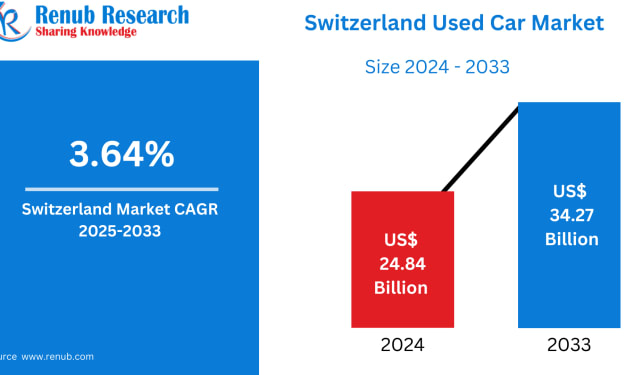
Switzerland Used Car Market Overview The Switzerland Used Car Market is undergoing steady and resilient expansion, reflecting changing consumer priorities, economic pragmatism, and evolving mobility trends. According to Renub Research, the market is expected to grow from US$ 24.84 billion in 2024 to US$ 34.27 billion by 2033, registering a Compound Annual Growth Rate (CAGR) of 3.64% between 2025 and 2033.
By Marthan Sir4 days ago in The Swamp
The Biggest Travel Trends of 2026: Insider Insights and Hot Destinations Everyone’s Talking About
The travel industry is evolving faster than ever. After years of recovery from the pandemic, travelers are embracing new experiences, destinations, and ways to explore the world. According to 14 leading voices in travel—from hotel executives and tour operators to trend analysts and travel influencers—2026 promises to be a year of innovation, adventure, and conscious exploration. Here’s a deep dive into the trends and destinations everyone is talking about. 1. Sustainable and Eco-Conscious Travel Takes Center Stage Sustainability has shifted from a niche concern to a central factor in travel planning. Many travelers now actively seek eco-friendly accommodations, regenerative tourism experiences, and trips that minimize carbon footprints. Experts predict that carbon-neutral flights, eco-lodges, and community-based tourism initiatives will grow dramatically in 2026. Destinations like Costa Rica, Iceland, and New Zealand are expected to remain favorites for travelers prioritizing sustainability. Even urban destinations like Copenhagen and Vancouver are making waves with green infrastructure, bike-friendly streets, and eco-conscious hotel developments. 2. Experiential Travel Outshines Traditional Sightseeing The new generation of travelers craves authentic, hands-on experiences rather than simple sightseeing. Cooking classes, artisan workshops, cultural immersion tours, and volunteer trips are on the rise. “Travelers want to live like locals, not just see the sights,” says one trend analyst. Destinations that facilitate deep cultural experiences, like Kyoto, Marrakech, and Lisbon, are expected to top itineraries in 2026. 3. AI and Smart Travel Technology Revolutionize Planning Artificial intelligence is no longer just a buzzword—it’s shaping how people plan and experience travel. AI-powered itinerary planning, personalized hotel recommendations, and smart translation apps are becoming mainstream. “Travelers will expect hyper-personalized experiences that adapt in real-time to their preferences,” predicts a travel tech CEO. Cities like Singapore and Tokyo, which are already tech-forward, will benefit from this shift. 4. Micro-Travel and Weekend Escapes Surge Short trips are gaining popularity as work-life balance takes center stage. Travelers are prioritizing frequent mini-getaways over long vacations, often exploring regions within driving distance or quick flights. In Europe, cities like Barcelona, Amsterdam, and Budapest are emerging as perfect weekend escapes. In the U.S., destinations like Sedona, Charleston, and Asheville are attracting travelers looking for immersive yet manageable trips. 5. Remote Work and “Workcations” Become Permanent The trend of blending work with travel is expected to expand in 2026. Hotels and resorts are offering co-working spaces, high-speed connectivity, and long-stay packages to cater to “workcationers.” Destinations like Bali, Lisbon, and Mexico City are emerging as hotspots for digital nomads and remote workers seeking lifestyle flexibility without sacrificing productivity. 6. Off-the-Beaten-Path Destinations Gain Traction Mainstream destinations are no longer enough for travelers seeking unique experiences. Hidden gems and emerging travel hotspots are rising in popularity. Eastern Europe, Central America, and Southeast Asia feature prominently on this list. Think Albania, Panama, and Laos—places offering rich culture, affordability, and fewer crowds. 7. Luxury Travel Redefined Luxury travel is no longer just about opulence. Modern luxury emphasizes privacy, exclusivity, and unique experiences. Boutique resorts, private island stays, and curated adventure packages are seeing unprecedented demand. For example, the Maldives, Fiji, and Patagonia are attracting travelers seeking once-in-a-lifetime experiences combined with comfort and style. 8. Health and Wellness Travel Booms Wellness travel is set to grow in 2026 as travelers focus on mental, physical, and emotional well-being. Yoga retreats, spa resorts, and mindfulness-focused trips are gaining momentum, particularly among Millennials and Gen Z travelers. Destinations like Bali, Costa Rica, and Sedona are becoming wellness hubs, offering experiences that rejuvenate the mind and body while connecting travelers to nature. 9. Culinary Tourism Takes Flight Food continues to be a powerful driver of travel decisions. Culinary tourism—exploring destinations through local cuisine, cooking classes, and food festivals—is booming. Cities like Lyon, Bangkok, and Mexico City are attracting travelers hungry for authentic flavors and immersive dining experiences. Street food tours, wine tastings, and farm-to-table experiences are on the rise. 10. Adventure Travel Becomes More Diverse Adventure travel is evolving to include low-impact and culturally respectful experiences. Beyond traditional hiking or skiing, travelers are exploring eco-adventures, volcano tours, and wildlife conservation trips. Destinations such as Patagonia, Iceland, and Costa Rica continue to dominate for nature lovers, while Morocco and Jordan appeal to those seeking desert adventures. 11. Personalized Travel Through Data Big data and analytics are transforming travel, allowing companies to predict preferences and anticipate traveler needs. Personalized travel experiences—from private tours to customized hotel amenities—are expected to dominate 2026. Travelers will increasingly seek platforms that offer real-time recommendations, such as hidden local gems or tailored adventure routes, creating experiences that feel unique to each individual. 12. Sustainable Aviation and Eco-Friendly Transport Sustainable aviation is also on the rise, as travelers become more conscious of their carbon footprint. Electric planes, hybrid aircraft, and expanded rail networks are shaping travel decisions. Countries investing in green transportation like Sweden and Japan are likely to attract eco-minded travelers. 13. Cultural Festivals and Local Experiences Take Priority Rather than generic sightseeing, travelers increasingly prioritize events, music festivals, and local cultural experiences. These activities offer opportunities to connect deeply with communities. In 2026, festivals in destinations like Edinburgh, Rio de Janeiro, and Jaipur are expected to draw international travelers eager to experience local culture authentically. 14. The Rise of Slow Travel Finally, slow travel is gaining traction. Travelers are choosing longer stays in fewer destinations, seeking deeper connections and meaningful experiences over quantity. Destinations that encourage immersive, relaxed experiences—such as Tuscany, Kyoto, and Provence—are becoming go-to choices for travelers seeking quality over quantity. Hot Destinations Everyone’s Talking About in 2026 Across these trends, certain destinations consistently stood out: Bali, Indonesia – Wellness, workcation, adventure. Lisbon, Portugal – Culture, remote work, micro-trips. Costa Rica – Eco-tourism, adventure, sustainability. Kyoto, Japan – Cultural immersion, slow travel. Patagonia, Argentina/Chile – Adventure, luxury escapes, wellness retreats. Mexico City, Mexico – Culinary tourism, workcation, urban adventure. Iceland – Eco-tourism, adventure, short escapes. Conclusion: Travel in 2026 Is About Choice and Conscience 2026 promises to be a year where travelers prioritize authenticity, sustainability, and personal experiences. Technology, wellness, and eco-conscious choices will shape not only where people go, but how they experience the journey. Whether you’re seeking adventure, culinary delights, or immersive cultural experiences, the year ahead offers a wealth of opportunities—and a growing awareness that travel is about more than destinations; it’s about connection, purpose, and impact.
By Muhammad Hassan4 days ago in The Swamp
Bruce Lee and The God of War: Kuan Ti
It starts with love.. The Power to the God Of War and Wealth Walk into a Chinese restaurant (even in Oklahoma, USA), a Chinese police station, a kung fu martial arts studio or even a Chinese temple and you often see a red faced warrior holding a heavy quan-do (spear like weapon).
By WILD WAYNE : The Dragon King4 days ago in Chapters



Comments
There are no comments for this story
Be the first to respond and start the conversation.