
Tomato Farming in India: A Guide to Successful Cultivation
Explore the tomato farming and its methods.
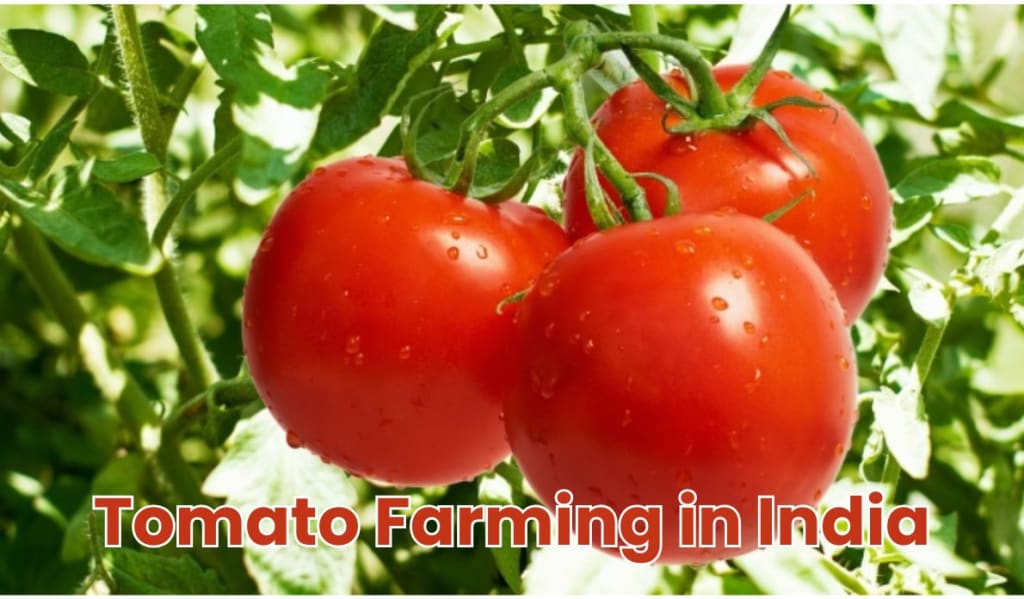
Tomato farming is a promising business in the agricultural sector because of the high demand in the market. India comes in second when it comes to producing tomatoes; it is primarily a summer crop but can be fertilised throughout the year. The demand for tomatoes is very high, and used to make various ingredients like ketchup and juices. The invention of the tractor has made a huge impact on the farming industry, as it lowers labour costs, saves you a lot of time, and increases productivity.
In this guide, we are going to cover all the useful details related to tomato farming, including the different types, appropriate climate, states with major production and the plantation process.
Different Types of Tomatoes
You will find varieties of tomatoes in the Indian market. As they are grown in multiple regions of the country under different climatic conditions. Read the below information to learn about the various types of tomatoes:
- Pusa Early Dwarf
- Pusa Ruby
- Cheery Tomato
- Hybrid Tomato
- Tirupati-9
- Kesar
- Roma
States with Most Tomatoes Production
There are several states in India that have a high contribution to tomato production. Go through the given points to get details on the states with the most tomato production:
Andhra Pradesh is a major producer of tomatoes in various districts, including Kurnool, Chittoor, and Visakhapatnam.
- Madhya Pradesh - Chhindwara, Jhabua and Shivpuri are the key regions.
- Karnataka - Bangalore, Tumkur and Chikballapur are famous for high cultivation.
- Maharashtra - Nasik has made the most contributions in this state.
- West Bengal - Nadia and Murshidabad are notable for tomato cultivation.
Steps of Tomato Farming:
In this section, we are going to cover all the essential processes of tomato farming in india. These steps help in growing healthy tomatoes. So make sure you read them carefully.
Suitable Climate and Soil Conditions for Tomato cultivation
The perfect temperature for tomato farming is considered to be between 20°C to 30°C. Although you can cultivate it in any climate, excessive amounts of heat and cold can harm the plant. If the temperature is above 40°C, then the plant will burn, and small fruits will fall. When the temperature goes below 15°C, it will affect the tomato’s red colour.
To grow a healthy tomato plant, you would require well-drained soil. The ideal pH level is between 6 to 6.9. To prepare the proper soil and achieve good yield, you would have to add organic fertiliser and compost. You can also make use of tractors like swaraj tractor for ploughing the soil and levelling the field.
Plantation of Tomato Crop
Planting tomatoes can be done in fields, greenhouses, and net houses. Here are the important steps of its plantation process.
Land and seed selection - You need to make sure that the chosen land does not have a history of bacterial soil issues. Furthermore, pick a high-quality seed as you will find different varieties, such as open-pollinated and hybrid.
Plantation in the nursery - Seeds are first planted in the nursery for about 6 to 8 weeks. You need to make sure that the seedings have made a powerful root system before transplanting them in the main field.
Transplanting on the field - Although tomatoes can be planted at any time of the year, September to December is considered the best time. Dig big holes and put the seedlings deeper than they were in the nursery.
Irrigation
Tomatoes require complete moisture and continuous watering. There are multiple ways of irrigation that you can use, like drip irrigation, which directs the water to the roots and prevents wastage. Another method is sprinkler irrigation, which is best for large-scale production. If they do not receive the correct amount of water, the tomatoes become small in size.
Harvest Time
It takes around 60 to 80 days for tomatoes to harvest after plantation. If you want to get the best quality of the tomato, you need to harvest it at the right time. When the tomatoes have turned completely red, it is the best time to harvest. For the processing part, you need to harvest them at the “Breaker stage” when they are soft and developing the colour. To collect the harvested tomatoes, you can use a tractor attached to a trailer.
Post Harvest Stage
After that comes the post-harvest stage when tomatoes have to be stored in a cool place away from direct sunlight. Use cold storage to extend shelf life, especially if you plan to transport or sell them later. During this stage, handling must be gentle to avoid bruising or damaging the fruits. Proper post-harvest care is critical for maintaining the quality of tomatoes, especially for processing into products like ketchup or juice. One of the best tractor choices for transportation is the Eicher tractors, as they can carry heavy loads with ease.
Conclusion
The cultivation of tomatoes in India is important for the agricultural sector and the economy. You need to pick the right type and maintain the correct growth condition to make the plant healthy. However, you will also face some difficulties, such as fluctuations in price, post-harvest management, and pest control. To get a high profit, the farmer needs to make sure that the post-harvest is done correctly.
About the Creator
Keep reading
More stories from Yatin Bhardwaj and writers in The Swamp and other communities.
Maximizing Yield: Smart Techniques for Coriander Farming
Coriander, also known as dhaniya in India, is a popular herb used in almost every Indian kitchen. Farmers grow this herb for its green leaves and dried seeds, which are used in cooking and have various health benefits. To gain a high profit from its cultivation, you need to use modern farming techniques.
By Yatin Bhardwaj8 months ago in The Swamp




Comments
There are no comments for this story
Be the first to respond and start the conversation.