
The World is Watching: UN Court Begins Historic Hearings on Myanmar's Rohingya Crackdown
At the International Court of Justice, a landmark legal case seeks accountability for the violent 2017 military campaign that forced over 700,000 people to flee.

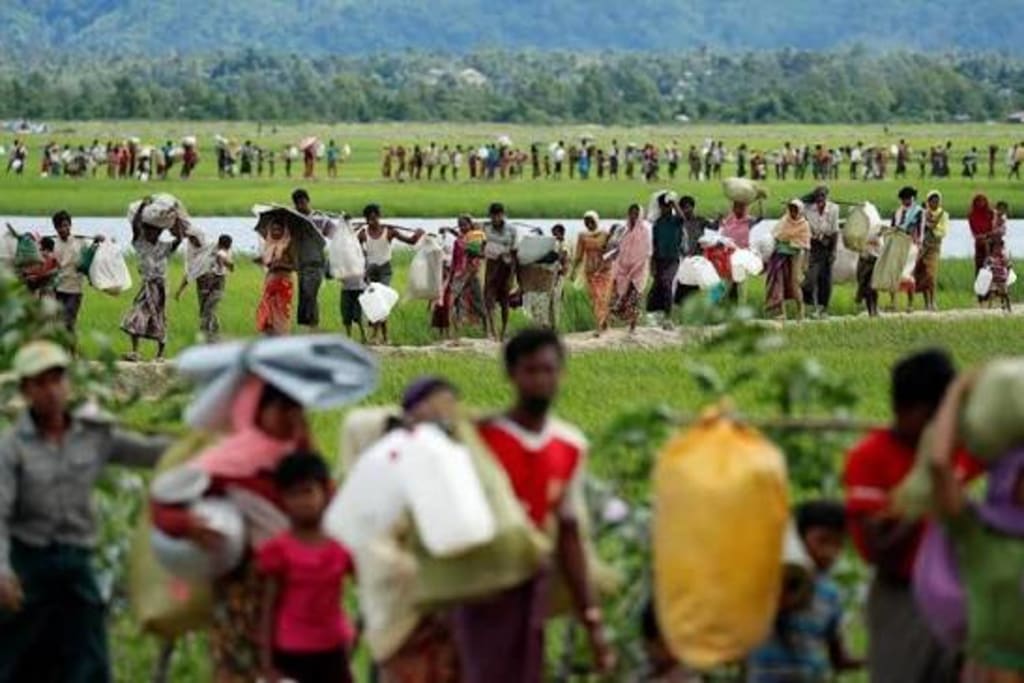
The Hague Becomes a Stage for Justice
This week, the world’s highest court turns its attention to a crisis that has been called a textbook example of ethnic cleansing. The International Court of Justice (ICJ) in The Hague begins public hearings on a case alleging that Myanmar committed genocide against its Rohingya Muslim minority.
The case, brought by the small West African nation of The Gambia, represents one of the most significant international legal challenges of the decade. It is not a criminal trial of individuals, but a hearing to determine whether the state of Myanmar violated the 1948 Genocide Convention.
The Allegations: A Systematic Campaign of Violence
The hearings focus on events in 2017, when Myanmar's military, known as the Tatmadaw, launched a brutal crackdown in Rakhine State following attacks by a Rohingya insurgent group. The military operation led to the mass exodus of over 730,000 Rohingya to neighboring Bangladesh.
Survivors and United Nations investigators have consistently reported widespread atrocities: whole villages burned to the ground, extrajudicial killings, mass rape, and the systematic targeting of civilians. A UN fact-finding mission concluded that the actions bore "the hallmarks of genocide" and called for senior generals to be investigated and prosecuted.
Why The Gambia is Bringing the Case
A unique aspect of this proceeding is the country leading it. The Gambia, a nation with a majority Muslim population, filed the lawsuit in November 2019 with the backing of the 57-member Organization of Islamic Cooperation.
Its legal argument is based on the principle that the Genocide Convention imposes a duty on all signatory states, not just to refrain from genocide, but to prevent and punish it wherever it occurs. The Gambia's justice minister has stated that by taking action, his country is "standing up for the human rights of the Rohingya and showing that even the smallest nations can stand up against injustice."
Myanmar's Defense and the Role of Aung San Suu Kyi
In a move that drew global attention, Myanmar's civilian leader, Aung San Suu Kyi, announced she would personally lead her country's legal team at the ICJ. This decision shocked and disappointed many former supporters who once saw her as a human rights icon.
Myanmar's position is expected to be one of denial. The government has long claimed its operations were a legitimate response to terrorist threats and has consistently denied allegations of systematic atrocities. It is likely to argue that while military excesses may have occurred, there was no "intent to destroy" the Rohingya group, a key component of the legal definition of genocide.
What the Hearings Will and Will Not Do
This week's proceedings are preliminary hearings focused on The Gambia's request for "provisional measures" – essentially, a court order for Myanmar to immediately cease any ongoing acts of genocide and prevent the destruction of evidence. A ruling on these emergency measures could come within weeks.
The full case to determine whether genocide actually occurred will likely take years. The ICJ's judgments are legally binding, but the court has no means of enforcement. Its power lies in its moral and legal authority. A finding against Myanmar would be a massive blow to the country's international standing and could lead to further sanctions.
The View from the Refugee Camps
For the nearly one million Rohingya refugees living in sprawling, cramped camps in Cox's Bazar, Bangladesh, the hearings offer a fragile sense of hope. Many survivors have given testimony to investigators, hoping it will be used in this or other legal venues.
Community leaders have expressed that they see the case as a crucial step toward recognition of their suffering and a guarantee of safety for any potential return to Myanmar. However, hope is tempered by deep skepticism about Myanmar's willingness to change and the slow pace of international justice.
A Broader Context of Persecution
The 2017 crackdown was the most violent chapter in a long history of discrimination against the Rohingya. Denied citizenship under Myanmar's 1982 law, they are effectively stateless. For decades, they have faced restrictions on movement, access to healthcare and education, and limits on family size.
This systemic persecution created the conditions that made the extreme violence of 2017 possible, argue human rights groups. The ICJ case will examine whether this pattern of state policy meets the high legal bar for genocide.
Parallel Paths to Accountability
The ICJ case is not the only legal action underway. The International Criminal Court (ICC) has authorized an investigation into crimes against humanity committed against the Rohingya. Unlike the ICJ, which settles disputes between states, the ICC prosecutes individuals.
In Argentina, a separate universal jurisdiction case has also been filed by Rohingya groups. These multiple tracks highlight the global effort to find a legal avenue for accountability where domestic justice in Myanmar is seen as impossible.
The Stakes for International Law
Legal scholars are watching this case closely. It tests the relevance and strength of the Genocide Convention in the 21st century. A strong, unambiguous ruling could reinforce the principle of "never again" and set a precedent for holding states accountable for atrocities against their own people.
A weak finding, or a failure by Myanmar to comply with court orders, could be seen as a setback for the international human rights system. The case also underscores the growing role of smaller nations in using international law to confront human rights abuses globally.
A Long Road Ahead
As the lawyers present their arguments in the tranquil courtrooms of The Hague, the reality on the ground remains bleak. The Rohingya in Bangladesh face an uncertain future with no safe return in sight. Myanmar continues to face allegations of ongoing human rights abuses in various ethnic regions.
The ICJ hearings are a critical beginning, not an end. They mark the moment the Rohingya's plea for justice moved from reports and survivor accounts to a formal, world-stage legal proceeding. The world will now watch to see if the law can deliver a measure of accountability for one of this century's gravest humanitarian crises.
About the Creator
Saad
I’m Saad. I’m a passionate writer who loves exploring trending news topics, sharing insights, and keeping readers updated on what’s happening around the world.
‘Make America Go Away’: Red Caps Become a Symbol of Defiance in Greenland Standoff
In the icy landscapes of Greenland, far from Washington and global power centers, a quiet but symbolic form of resistance has emerged. Red caps emblazoned with the words “Make America Go Away” have begun appearing at protests and public gatherings, turning into an unexpected emblem of defiance during a growing political standoff involving Greenland, Denmark, and the United States.
By Muhammad Hassanabout 16 hours ago in The Swamp
Japan and the Philippines Sign New Defense Pact Amid Rising China Tensions
Japan and the Philippines have taken a significant step toward strengthening security cooperation by signing a new defense pact, a move widely seen as a response to growing Chinese assertiveness in the Asia-Pacific region. The agreement signals a deepening alignment between two key U.S. allies and reflects a broader shift in regional defense dynamics as nations seek to safeguard sovereignty, sea lanes, and stability. As tensions rise in the South China Sea and surrounding waters, this pact underscores how middle powers are increasingly working together to counterbalance Beijing’s expanding influence. Why This Defense Pact Matters Now The timing of the agreement is critical. In recent years, China has intensified its military activities across the Western Pacific, including frequent patrols, maritime confrontations, and expansive territorial claims. For both Japan and the Philippines, these developments have raised serious concerns about national security and freedom of navigation. Japan faces growing pressure in the East China Sea, particularly around the disputed Senkaku Islands, while the Philippines has repeatedly accused China of aggressive behavior near contested reefs and shoals in the South China Sea. These shared challenges have created strong incentives for closer military and strategic coordination. The new defense pact formalizes that cooperation, sending a clear message that Tokyo and Manila are prepared to act collectively in defense of regional order. What the Agreement Includes Although not a full military alliance, the defense pact significantly expands bilateral cooperation. Key elements include: Enhanced joint military exercises, allowing both forces to train together more frequently and realistically. Improved intelligence sharing, particularly on maritime security and regional threats. Easier access for troops and equipment, enabling smoother cooperation during exercises, humanitarian missions, or security operations. Defense capacity building, with Japan providing training and technical support to strengthen Philippine forces. This framework is designed to increase interoperability and readiness without committing either country to automatic military action. Japan’s Evolving Security Role Japan’s participation reflects a broader evolution in its defense policy. Traditionally constrained by its post-World War II pacifist constitution, Japan has gradually expanded its security role in response to changing regional threats. In recent years, Tokyo has increased defense spending, strengthened ties with regional partners, and taken a more proactive stance on security cooperation. The pact with the Philippines fits squarely within this strategy, positioning Japan as a key stabilizing force in Southeast Asia. For Japan, working closely with the Philippines also helps protect critical sea lanes through which much of its trade and energy supplies pass. The Philippines’ Strategic Calculus For the Philippines, the agreement represents an effort to diversify security partnerships beyond its long-standing alliance with the United States. While Washington remains central to Manila’s defense strategy, closer ties with Japan provide additional diplomatic leverage and military support. The Philippines has faced repeated maritime standoffs with China, including incidents involving coast guard vessels and fishing boats. By strengthening cooperation with Japan, Manila aims to deter coercive behavior and reinforce its claims under international law. This pact also reflects a broader recalibration in Philippine foreign policy, emphasizing multilateral cooperation and regional solidarity. China’s Reaction and Regional Implications Unsurprisingly, the agreement has drawn criticism from Beijing. Chinese officials have warned against what they describe as “bloc politics” and external interference in regional affairs. From China’s perspective, deeper Japan-Philippines cooperation — especially when aligned with U.S. strategy — threatens its influence and strategic freedom. However, supporters of the pact argue that it is defensive in nature and aimed at preserving stability rather than provoking confrontation. They emphasize that the agreement upholds international law, particularly the principles governing freedom of navigation and territorial sovereignty. Across Southeast Asia, the deal is being closely watched as a potential model for future security partnerships. The Broader Regional Context The Japan-Philippines defense pact is part of a larger pattern unfolding across the Indo-Pacific. Countries such as Australia, South Korea, and India are also strengthening ties through bilateral and multilateral agreements, reflecting shared concerns about regional security. These partnerships do not replace existing alliances but instead form a networked security architecture. Rather than relying on a single dominant power, countries are increasingly weaving together overlapping relationships to enhance resilience. In this sense, the pact represents a shift toward collective deterrence — where cooperation itself serves as a stabilizing force. What This Means for the Future The long-term impact of the agreement will depend on how it is implemented. Joint exercises, intelligence cooperation, and defense assistance will need to translate into tangible improvements in readiness and coordination. Politically, the pact reinforces the idea that regional security challenges require regional solutions. It also signals that countries directly affected by maritime disputes are unwilling to remain passive in the face of pressure. For China, the agreement complicates strategic calculations, as it faces a more unified and coordinated regional response. Conclusion: A Strategic Signal in Uncertain Times The new defense pact between Japan and the Philippines is more than a diplomatic formality. It is a strategic signal — one that reflects growing concern over China’s actions and a determination to uphold a rules-based regional order. By strengthening cooperation, Tokyo and Manila are asserting their shared commitment to security, sovereignty, and stability in the Asia-Pacific. While the agreement stops short of a formal alliance, its implications are clear: regional powers are increasingly willing to stand together as the balance of power continues to shift. In an era of uncertainty, this partnership may prove to be a cornerstone of future regional security.
By Muhammad Hassan6 days ago in The Swamp



Comments
There are no comments for this story
Be the first to respond and start the conversation.