
The Rif Movement: Morocco’s Struggle for Justice and Dignity
How a local tragedy turned into a nationwide call for social and economic reforms.

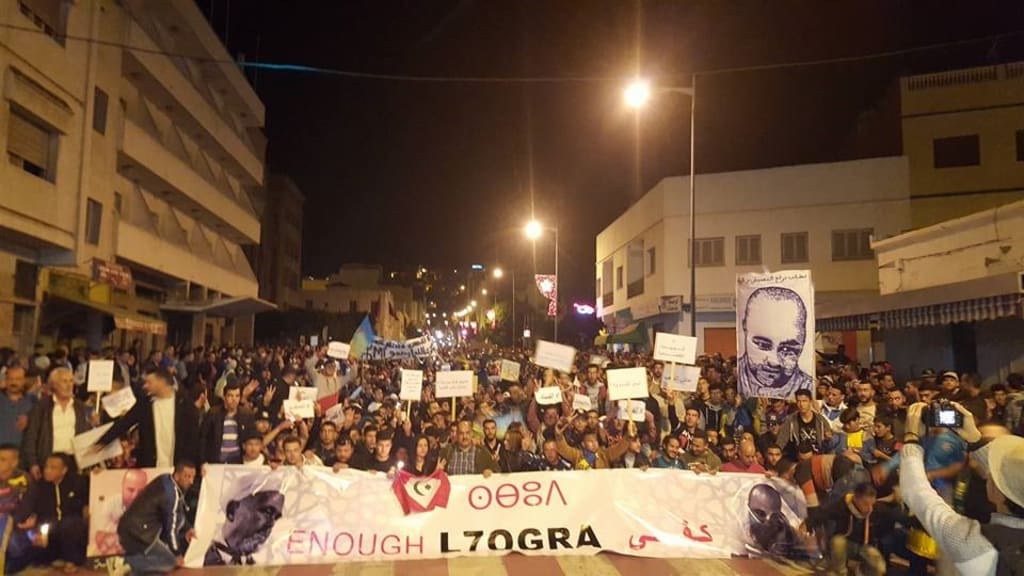
In the heart of northern Morocco lies the Rif region — a land marked by beauty, history, and a long-standing struggle for justice. What began as a tragic death of a humble fish vendor, Mohcine Fikri, quickly escalated into one of the most powerful social movements in recent Moroccan history. This article uncovers the roots, developments, and sociopolitical impacts of the Rif Movement, revealing a story of resilience, repression, and the relentless fight for dignity.
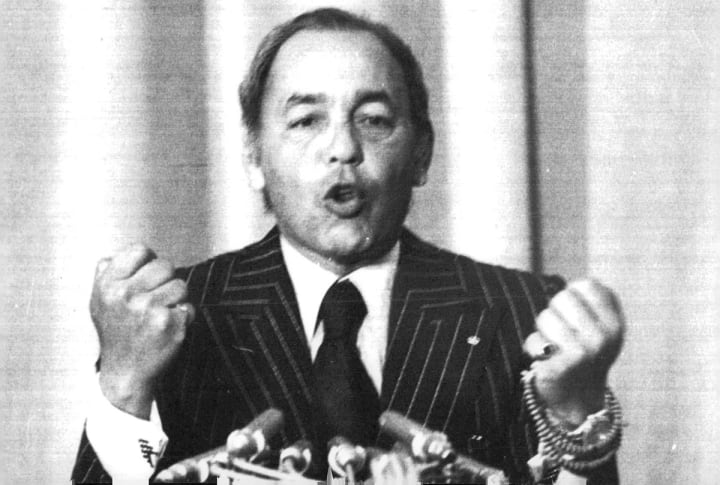
Historical Background: The Rif and Moroccan Authority: No observer of political and social situations can ignore the tense relationship between the Rif region and the Moroccan government. For a long time, the Rif has been considered a rebellious zone posing a significant threat to the stability of the Moroccan regime. This is evidenced by the conflicts the region has witnessed, notably the famous speech by the late King Hassan II in 1984, when he labeled the Rif youth as “oubacha” (thugs), in response to the turbulent political and social events in the region at the time. Officially addressed to those involved in destruction and looting, this statement was widely perceived as an insult to the inhabitants of the Rif and northern Morocco in general. It left a deep wound in the local collective memory, symbolizing the image the state projected of the Rif: a source of “rebellion” and confrontation with authority.
Despite this, after ascending to the throne in 2000, King Mohammed VI, as part of transitional justice and an attempt to change the conflict trajectory between the central government and the Rif region, created the Equity and Reconciliation Commission, which recognized serious human rights violations in Morocco, including in the Rif (notably in 1958-1959 and 1984). Additionally, in his 2001 Throne speech, the king called for ending the isolation of the Rif and connecting it to the rest of Morocco, highlighting development and attention to the region.
The Mohcine Fikri Incident: Spark of the Protests: However, despite these reconciliation attempts, the Moroccan government never formally recognized these facts. The tragic incident of young Mohcine Fikri ignited the first spark of a new phase in the ongoing conflict between the Rif and the authorities. On October 28, 2016, this poor street fish vendor died shockingly after falling into a garbage truck while trying to save his merchandise during a seizure by authorities (the fish called “Abou Saïf”). The phrase uttered by an official, “crush him,” quickly spread locally and internationally, adding fuel to the fire and causing widespread anger in the Rif and other Moroccan cities. Peaceful protests erupted in Al Hoceima and elsewhere, demanding an investigation and prosecution of those responsible, reacting directly to the event that turned Mohcine Fikri into a “bag of garbage” devoid of humanity.
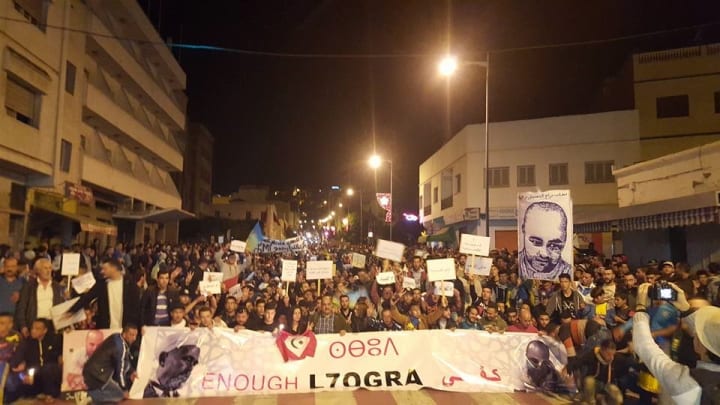
The Movement’s Development: From Isolated Protest to Social Movement Despite all this, the government did not respond to any demands, causing the protests to evolve from a movement sparked by a single event to a social movement. By late 2016 and early 2017, demonstrations no longer focused solely on Mohcine Fikri’s death; they became organized with economic and social goals. Protesters demanded economic development in the Rif, improved health services (including the construction of a cancer-specialized hospital), job creation for youth, and a fight against clientelism and corruption. Like any organized movement, leadership was necessary to channel and embody the uprising. Thus emerged the figure of young activist Nasser Zefzafi, heir to his predecessor Mohamed Ben Abdelkrim El Khattabi, known for his fiery speeches and constructive criticism of authorities.
The Rif Movement gained momentum in spring 2017, with near-daily peaceful protests in Rif cities, adhering to international legal standards. This led the Moroccan state to interpret the movement, whose main demand was social justice and economic development, as a separatist threat. Official media—the hidden face of power—were used to sow discord and accuse the movement of foreign manipulation or having goals that undermine national unity.
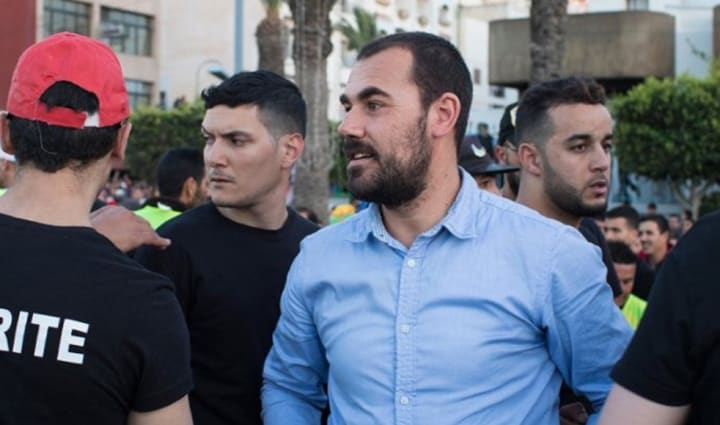
Crackdown and Arrests: After the movement drew wide international political attention, Moroccan authorities exploited Nasser Zefzafi’s confrontation with the imam of Al Hoceima mosque during Friday prayers. The imam criticized the protesters, asking not to politicize his religious role, which is limited to promoting moderation and impartiality. Authorities considered Zefzafi’s reaction as “obstruction of religious law” (Sharia), the basis of the king’s political legitimacy as Commander of the Faithful. Consequently, the police issued an arrest warrant. On May 29, 2017, Nasser Zefzafi and several activists were arrested, marking the start of a large crackdown targeting dozens of movement leaders. Zefzafi was sentenced to 20 years in prison. The verdict provoked popular and political outrage as well as international condemnation by human rights organizations, with no positive response from Moroccan authorities. This reveals the bitterness and resentment of the Moroccan state toward the region’s inhabitants. One may legitimately question whether the charges against Zefzafi were justified: did he deserve such a severe sentence for allegedly obstructing Sharia, or was this a pretext to punish anyone daring to criticize governance methods in Morocco?
Sociological Analysis of the Movement: Thus, the Rif Movement began with a tragedy (Mohcine Fikri’s death) and evolved into a broad protest movement with social and economic demands. Tensions between protesters and authorities escalated, culminating in Zefzafi’s arrest after the mosque incident.
From a sociological perspective, the Rif Movement can be understood as a form of collective action born from the convergence of structural marginalization, collective consciousness, and historical memory. The Rif is not only a geographical territory but a social and cultural space with specificities within Morocco. Historically, it has been associated in official discourse with “rebellion” and “non-submission,” creating a relationship marked by mistrust and a deficit of mutual confidence between the central state and its inhabitants.
This movement cannot be seen only as a reaction to Mohcine Fikri’s case but as the historical accumulation of economic and social exclusion policies, the absence of integrated development, and the persistence of symbolic violence (per Bourdieu) exercised by the state through official discourse and media, portraying the protests as threats to national unity instead of legitimate expressions of demands.
The Political Opportunity Structure theory also helps explain how protesters leveraged the relative opening of the public space after 2011 and social networks development, allowing them to bypass media blockades and build a protest identity based on local solidarity and historic belonging to the Rif, inspired by figures such as Mohamed Ben Abdelkrim El Khattabi.
However, the authorities’ management of the movement reflects what sociologist Charles Tilly calls a logic of repression rather than integration. The state chose to close dialogue channels and use the judiciary and media to frame the protest as a security threat, perpetuating conflict rather than resolving it.
Collective memory plays a central role, as the events of 1958-1959 and 1984 remain deeply ingrained in the Rif’s popular consciousness, serving as a reference for interpreting state behavior. This explains why Zefzafi’s mosque incident transcended its religious dimension and was locally perceived as a direct symbolic affront to a power seen as heir to a conflictual history.
Conclusion: The Rif Movement in northern Morocco emerged from a tragic incident—the death of fish vendor Mohcine Fikri—and evolved into a widespread social protest demanding economic development, justice, and dignity. Rooted in a long history of marginalization and tense relations between the Rif region and the Moroccan state, the movement reflects deep structural inequalities and collective memory of past injustices. Despite initial peaceful protests, the government responded with repression, including the arrest of movement leaders like Nasser Zefzafi. Sociologically, the movement illustrates how exclusion and symbolic violence fuel collective action, while the state’s security-driven response exacerbates conflict rather than resolves underlying issues. The Rif Movement serves as a clear example of how social grievances can escalate into political crises when dialogue and trust between society and the state break down.
About the Creator
Youssef Khabchi
Political & Human Rights Writer | Exploring global and North African issues with an analytical lens | Advocating for freedom, justice, and equality through powerful storytelling.
Keep reading
More stories from Youssef Khabchi and writers in The Swamp and other communities.
The Amazigh Question:
The Amazigh people, also known as the Berbers, are the Indigenous inhabitants of North Africa, with a history stretching back thousands of years. Despite their deep roots in the region, their political recognition has long been a contested issue. From Morocco to Algeria, Tunisia, Libya, and beyond, Amazigh communities have struggled to gain cultural and political rights within modern nation-states shaped by Arabization policies and centralized governments.
By Youssef Khabchi5 months ago in The Swamp
Iran’s Khamenei Blames Violent Protests on Trump
Iran is once again at the center of international attention after Supreme Leader Ayatollah Ali Khamenei blamed violent protests on former U.S. President Donald Trump, accusing Washington of fueling unrest inside the country. The comments come amid widespread demonstrations, a heavy security crackdown, and rising international concern over human rights and regional stability.
By Aarif Lashariabout 9 hours ago in The Swamp



Comments
There are no comments for this story
Be the first to respond and start the conversation.