
The photos that have kept former Prince Andrew in the public eye
Iconic images tied to controversy continue to shape the legacy of the Duke of York despite his withdrawal from public life

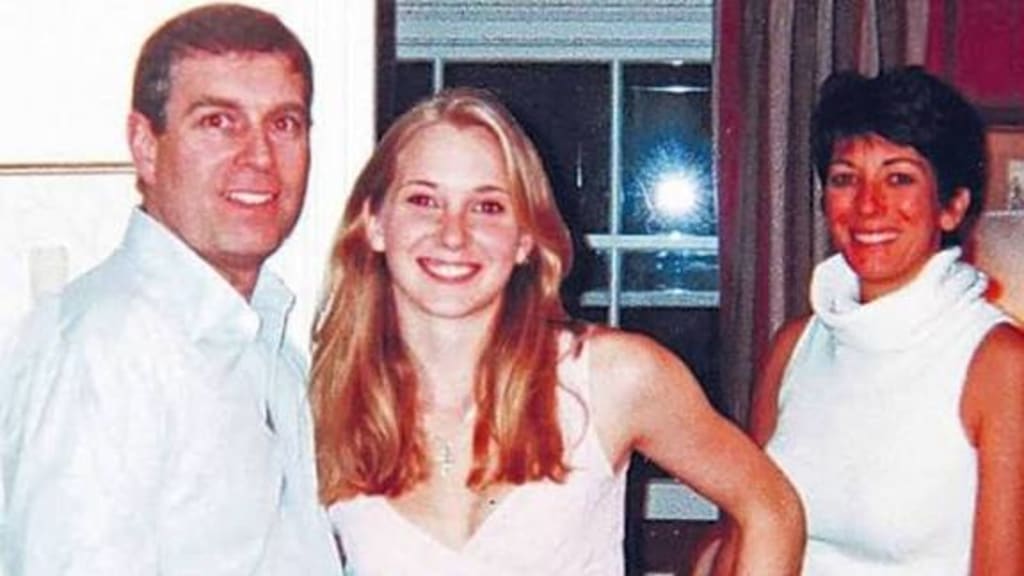
For more than a decade, a small number of photographs have played an outsized role in shaping public perceptions of Prince Andrew, the former senior royal whose reputation has been defined less by official duties and more by images that refuse to fade from public memory. These photographs, repeatedly reproduced in newspapers, documentaries, and court filings, have become enduring symbols of controversy surrounding the Duke of York and his place within the British monarchy.
The most widely circulated image shows Prince Andrew smiling with his arm around a young woman later identified as Virginia Giuffre, inside a London townhouse belonging to the late financier Jeffrey Epstein’s associate. The photograph, taken in 2001, has been central to allegations that later led to a civil lawsuit in the United States. Though Prince Andrew has consistently denied wrongdoing, the image has come to represent the broader questions surrounding his judgment and associations.
An Image That Defined a Crisis
When the photograph resurfaced during renewed scrutiny of Epstein’s network, it quickly became a focal point of global media attention. Legal analysts noted that while a single image cannot determine guilt or innocence, it carried powerful symbolic weight. The picture appeared repeatedly in court documents and news coverage, reinforcing public narratives that placed Prince Andrew close to individuals accused of serious crimes.
The Duke’s 2019 televised interview, intended to address the controversy, only intensified attention on the photograph. Viewers watched as he attempted to explain the circumstances under which the image was taken, offering accounts that were widely criticized for lacking clarity and empathy. Rather than dispelling doubts, the interview amplified the photograph’s impact and kept it firmly in the public consciousness.
The Role of Visual Evidence
In an era of digital media, photographs have a unique ability to shape opinion more powerfully than statements or legal arguments. For Prince Andrew, these images became shorthand for controversy, repeated across social platforms and news outlets whenever his name appeared.
Another set of images showing the Duke attending social gatherings with Epstein further fueled criticism. Though such photographs did not prove any criminal behavior, they raised uncomfortable questions about proximity to individuals later exposed as serial abusers. Critics argued that the repeated publication of these photos demonstrated a failure of judgment unbefitting a senior royal.
Supporters, however, maintain that the images have been stripped of context and used to construct a narrative that ignores the presumption of innocence. They point out that social photographs are common in elite circles and that no criminal charges were ever brought against Prince Andrew.
Impact on the Monarchy
The persistence of these images has had consequences not only for Prince Andrew but also for the wider British royal family. Palace officials moved swiftly in recent years to distance the institution from the controversy. The Duke was stripped of his military titles and royal patronages, and he withdrew from public duties.
Royal historians say the power of the photographs lies in their simplicity. “Images are easier to remember than legal nuance,” one analyst observed. “For many members of the public, those photos became the entire story.”
The monarchy’s efforts to project stability and continuity were complicated by the continued circulation of these visuals. Each reappearance reignited debate over accountability, privilege, and the limits of royal protection.
A Legal Resolution, but Not a Visual One
The civil lawsuit brought by Giuffre was settled in 2022 without any admission of liability by Prince Andrew. While the legal case ended, the images did not disappear. They remain embedded in documentaries, archives, and online discussions, ensuring that the controversy continues to define how he is remembered.
Media experts say this reflects a broader truth about modern scandal: resolution in court does not always translate into resolution in the public imagination. Once an image becomes iconic, it often outlives the facts that surround it.
Looking Ahead
Today, Prince Andrew lives largely outside the public spotlight, making rare appearances and avoiding formal royal duties. Yet the photographs that once dominated headlines continue to resurface whenever discussions of royal accountability arise.
They stand as a reminder of how visual moments can eclipse decades of service and reshape public identity. For Prince Andrew, these images have become inseparable from his legacy — not as a royal figure of influence, but as a symbol of how association and appearance can transform a life of privilege into one defined by controversy.
About the Creator
Fiaz Ahmed
I am Fiaz Ahmed. I am a passionate writer. I love covering trending topics and breaking news. With a sharp eye for what’s happening around the world, and crafts timely and engaging stories that keep readers informed and updated.
Keep reading
More stories from Fiaz Ahmed and writers in The Swamp and other communities.
Government Considers Removing Prince Andrew from Royal Line of Succession
The UK government is reportedly exploring the possibility of removing Prince Andrew from the line of succession to the British throne. The move comes amid sustained scrutiny over his legal issues and public controversies, raising questions about the monarchy’s public image, accountability, and the potential implications for royal protocol. Background Prince Andrew, the Duke of York, has been embroiled in multiple controversies that have undermined his public standing. While he stepped back from official royal duties in recent years, his position in the line of succession has remained unchanged. The government review indicates that officials are examining whether legislative or procedural measures could formally alter his status in the royal hierarchy. Historically, removing a royal from the succession is rare and legally complex. The Succession to the Crown Act 2013 sets out rules governing succession, including conditions related to marriage, religion, and other statutory requirements. While no recent precedent exists for removal due to conduct, historical examples show that heirs have been bypassed or excluded for political, religious, or personal reasons. Government Deliberations Sources within Whitehall suggest that officials are considering multiple pathways, including voluntary renunciation, formal legislative amendments, or a hybrid approach combining procedural and symbolic measures. Legal advisors have reportedly been engaged to assess the feasibility, risks, and constitutional ramifications of such an action. A senior government adviser told confidential sources: “The matter is highly sensitive. We are considering all legal avenues while being mindful of public perception, parliamentary requirements, and the broader stability of the monarchy.” Public Opinion and Political Pressure Public sentiment appears to favor some form of action. Surveys indicate that a majority of citizens believe royals implicated in serious legal or ethical controversies should not retain their place in the line of succession. Advocacy groups and media commentators have argued that failing to act could erode public trust in the monarchy and its relevance in modern Britain. Members of Parliament from multiple parties have reportedly raised questions regarding Prince Andrew’s status, emphasizing accountability, transparency, and ethical governance. Some lawmakers suggest that formal removal could demonstrate that the monarchy adheres to contemporary standards of responsibility. Legal and Constitutional Challenges Legal experts caution that removing a royal from succession is complicated. Any formal change would require parliamentary approval and possibly coordination with other Commonwealth realms that recognize the British monarch as head of state. Challenges include ensuring compliance with existing statutes, addressing succession rights of other family members, and avoiding potential legal disputes. Even if successfully implemented, such a move could set a precedent for scrutiny of other royals’ conduct, raising questions about how personal behavior intersects with hereditary rights. Potential Outcomes Officials are reportedly considering a range of outcomes, from voluntary abdication of succession rights by Prince Andrew to formal legislative action. Timing and communication of any decision are expected to be carefully managed to minimize disruption to the royal household and public confidence. Observers suggest that the decision could influence the monarchy’s public image significantly, either reinforcing standards of accountability or exposing institutional vulnerabilities. The government is likely to weigh both symbolic and practical effects before taking action. Looking Ahead As deliberations continue, attention is focused on legal feasibility, constitutional precedent, and public perception. For the monarchy, the outcome could redefine expectations of responsibility and conduct for members of the royal family, highlighting tensions between tradition, public accountability, and modern governance standards.
By Fiaz Ahmed a day ago in The Swamp
A Gathering of Evil Bosses
“I’m the queen of chin jutting while I smooth my hair, attacking, insulting, and deflecting to protect my appointer.” “Oh, please, Blondi, my hair is curled, highlighted, and longer than yours. I feature television commercials telling immigrants that we will give them a free plane ride home, and if they voluntarily turn themselves in, they will be allowed to legally apply for re-entry. It runs everywhere, and I look good in it! You can’t compete because of your blond hair. Mine is nicer, and my lips are prettier than yours.”
By Andrea Corwin 4 days ago in The Swamp




Comments
There are no comments for this story
Be the first to respond and start the conversation.