
The Passport: Your Gateway to the World and Identity Beyond Borders
How a small booklet defines freedom, security, and global mobility in the 21st century
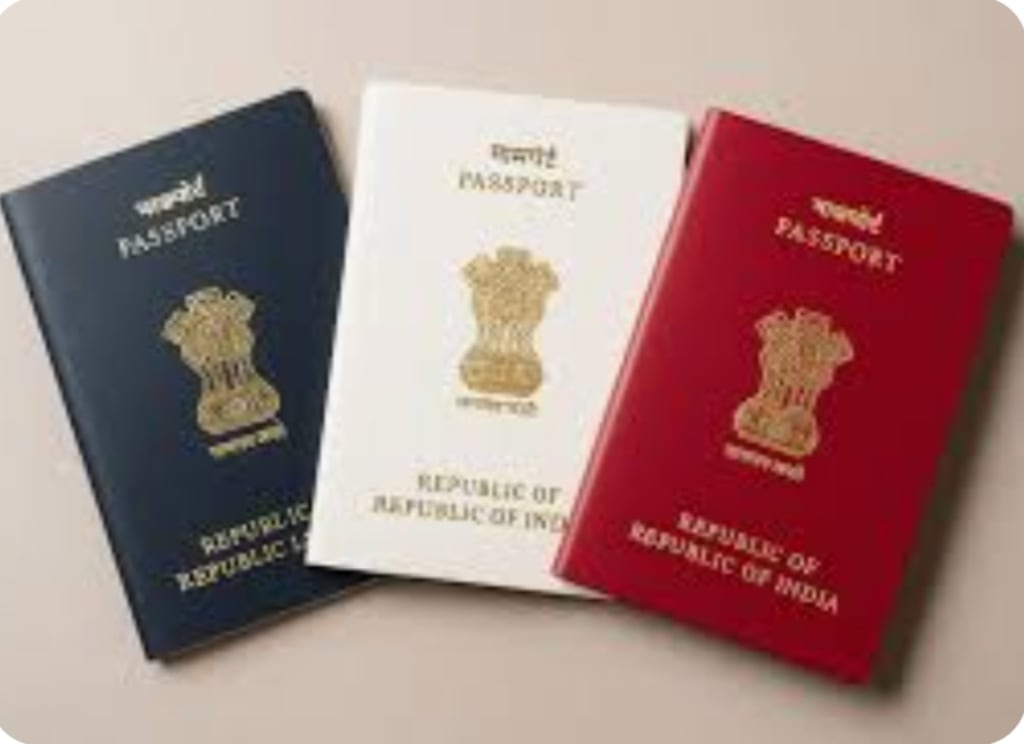
a world that feels simultaneously smaller and more connected than ever, one small document holds immense power: the passport. Often overlooked as a mere bureaucratic necessity, a passport is more than paper, ink, and official stamps—it is a symbol of identity, a ticket to opportunity, and a reflection of global mobility and geopolitical realities. From its humble origins to its modern role in international travel, the passport tells a story of human movement, ambition, and the ongoing quest for freedom.
The history of the passport is far older than many might expect. The earliest references to travel documents date back to ancient civilizations, including the Persian Empire, where letters from rulers allowed safe passage through territories. The word “passport” itself originates from the French term passeport, meaning “to pass through a port or gate,” highlighting its original purpose: to grant permission to cross borders safely. In medieval Europe, these documents evolved to regulate movement between kingdoms and city-states, serving as both protection and control.
In modern times, the passport has become a standard requirement for international travel, symbolizing not only the holder’s citizenship but also the trust of the issuing government. Unlike national ID cards or driver’s licenses, which primarily serve domestic purposes, a passport is a globally recognized affirmation of identity. It connects an individual to their country while granting access to the broader world—a delicate balance between personal freedom and national sovereignty.
Beyond identity, the passport represents opportunity. It allows people to explore cultures, pursue education, conduct business, and reconnect with family across borders. For students, it opens the doors to study abroad programs; for professionals, it enables international collaborations and careers; for adventurers, it becomes a key to discovering places they have only imagined. In this sense, the passport is not merely a document—it is a vessel of possibility.
However, passports also reflect inequality. The power of a passport often depends on the country of issuance. Citizens of countries with strong diplomatic ties enjoy visa-free access to many nations, while others face restrictions, lengthy applications, and political scrutiny. The disparity in passport strength underscores global inequalities and highlights the complex intersection of mobility, privilege, and politics. In some cases, passports can even become tools of oppression or protection, determining who can escape conflict or economic hardship.
Technological advances have transformed the passport from a simple booklet into a sophisticated instrument of security and identification. Modern passports incorporate biometric data, digital chips, and anti-forgery features, making international travel safer but also raising questions about privacy and surveillance. These innovations reflect the growing tension between freedom and regulation: as mobility increases, so does the need for secure verification in an interconnected world.
Culturally, the passport carries personal and emotional significance. For many, it is a tangible record of life experiences. Each stamp and visa tells a story of adventure, challenge, or personal growth. Travelers often treat old passports as keepsakes, documenting journeys that span continents, languages, and encounters. The passport becomes a scrapbook of identity in motion—a living archive of human curiosity and resilience.
The COVID-19 pandemic further highlighted the central role of passports, introducing new concepts such as vaccine passports and travel restrictions. These developments reinforced the idea that a passport is more than a travel document—it is a reflection of global health policies, international cooperation, and societal trust. In an era of pandemics and geopolitical tension, the passport continues to evolve, balancing individual freedom with collective responsibility.
Ultimately, the passport is more than bureaucracy—it is a testament to human mobility and connection. It represents our desire to explore, understand, and participate in a world that is both vast and interconnected. It is a symbol of identity, a tool of security, and a gateway to experiences that shape who we are. In the hands of a traveler, a passport is both a key and a mirror, opening doors while reflecting the complex realities of citizenship, privilege, and global interdependence.
In a rapidly changing world, the passport remains a vital instrument—small in size but monumental in significance. It is a reminder that borders, while politically and legally defined, cannot contain the human spirit’s urge to move, discover, and connect. Every journey begins with this unassuming booklet, proving that freedom, identity, and possibility often arrive in the smallest of packages.
About the Creator
Keep reading
More stories from Ayesha Lashari and writers in The Swamp and other communities.
Vince Zampella: The Architect Behind Modern Shooter Games
In an industry often dominated by flashy announcements and celebrity designers, Vince Zampella has built his legacy differently. He is not known for grandstanding or chasing the spotlight, yet his influence on modern video games is impossible to ignore. As a co-founder of Infinity Ward and later Respawn Entertainment, Zampella has helped define what first-person shooters feel like, play like, and aspire to be.
By Ayesha Lashari3 months ago in The Swamp
The Forsyth House Fire
Since 1851, Forsyth House has stood on the corner of Union Street and Gordon Street in the heart of Glasgow. Its iconic, or was... because on Sunday 8th of March, 2026, a fire broke out in a small, seemingly un-named shop in the building and tore all that history down. As I write, the rubble is still unsettled and the street is still blocked off. Central Station is quiet on the upper level, and around 30 small businesses have quite literally gone up in smoke.
By S. A. Crawford3 days ago in The Swamp
My First Time Skiing and I Got Lost, Alone, in the French Alps
Looking back, I can trace some of my life’s biggest adventures to a simple action from my sister. She’d introduced me to Tommy (a very long time ago), a colleague of hers, who had overshared his penchant for Italian-looking women, and I ticked that box.
By Chantal Christie Weiss3 days ago in Humans


Comments
There are no comments for this story
Be the first to respond and start the conversation.