
The Most Important Election Of Our Lifetimes
Or Is It?

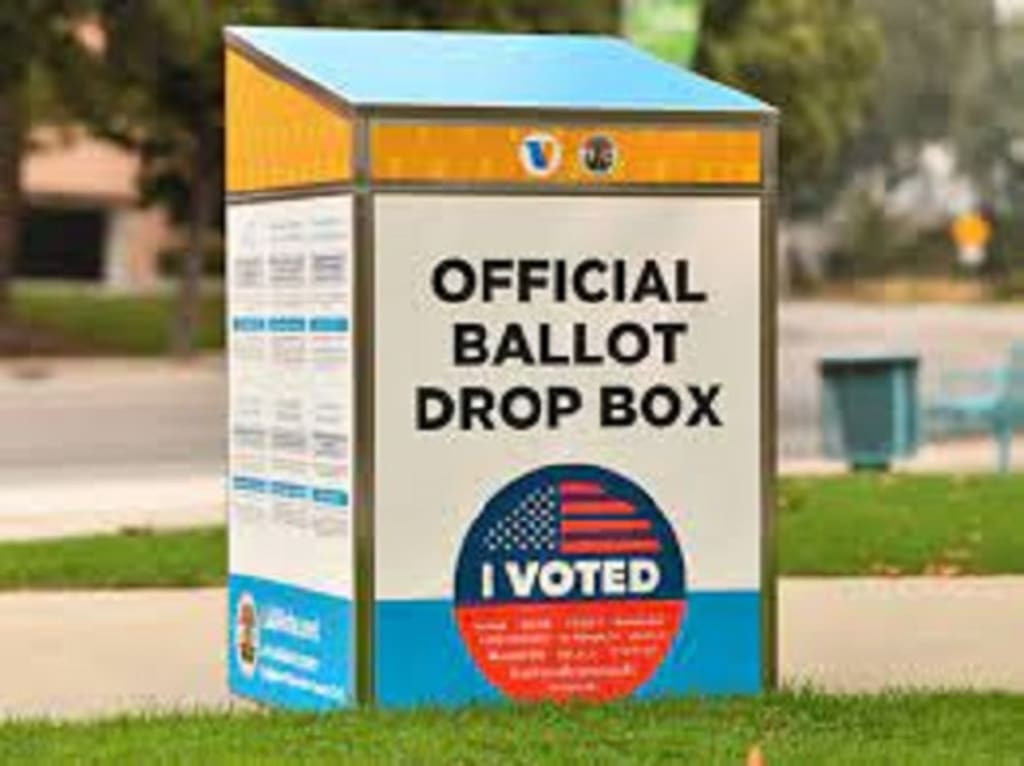
“This is the most important election of our lifetimes.”
Let’s not kid ourselves. I’ve heard that so many times in my lifetime that I’m starting to think I’m immortal. Or maybe politicians are trying out a heightened sense of impending doom to get me to go vote for them.
Control of Congress, or at least one chamber. The White House. State Assemblies. Governorships. This statewide proposition or initiative, or that one. If our candidate or our party does not prevail in the next election, all will be lost. Our entire way of life is at stake. Just like last time.
Sometimes the party gets what they want. Sometimes the candidate who must win at all costs does. Sometimes they lose. Either way, things tend to stay the same. As the next election cycle gears up, we start to hear the same drums beating; that this time, this election, will be the change that we all want and the Republic desperately needs. Candidates ask us if we’re tired of things the way they are. They talk about inequity, corruption, high taxes, low spending power, race, the environment, foreign policy, and how truly bad the Other Side truly is. They want to know if we’re better off than we were four years ago and assume the answer is no. They insist that their party’s unquestioned majority, with them safely in the White House, is the only way to make real change happen. None of them ask if the country is better off than it was forty years ago. Since many of them have been in government service that long, it’s a question they have to dodge. They want us to believe that the mask they wear is a statesman’s but their campaigns are all status quo masquerading as revolution.
Let’s stop having the conversations politicians want us to have. Let’s not get all frothy about abortion, guns, healthcare and immigrants as if they were issues that just cropped up yesterday. Harry Truman was pitching national healthcare seventy years ago. Ronald Reagan was talking immigration reform in his first primary debates in 1980. Gun rights were settled before a shot was fired two hundred and forty years back, and only the Supreme Court can do anything about abortion.
Yet we keep running to the polls as if this time, it will matter.
One of the two hundred and fifty seven reasons the Roman Empire fell was that the Senate went up for sale to the highest bidder. After that, Imperial policy became all about money. Sound familiar? Congress spends half its time getting checks from donors and political parties. It is no wonder that domestic policy centers around increasing tax cuts and corporate welfare and chopping benefits for the poor and aged and infirm and whether American companies are making enough profit. It is no surprise that foreign policy becomes about mineral rights and trade deals and tariffs and deploying our military wherever defense contractors can make a buck.
The elephant in the room isn’t the current president, or whoever gets to use the White House bathroom next time around. It’s the fact that people with money can buy the laws they want. The voters only get involved when elections come around, like a pinch hitter called up from the bench, but we’re all voting to keep our guns or give up our healthcare instead of taking a hard look at the real issues. The twenty-two trillion dollar national debt isn’t a big deal so long as open carry laws or the environment is on the line. Twenty-two combat veterans committing suicide every day gets a blind eye while we gaze at the border, or the sky.
Let’s have this conversation: if you, Candidate Over There, do not favor a Constitutional amendment term limiting members of Congress to twelve years in office, renounce your candidacy and get off the stage. If you don’t support a Constitutional amendment barring all money in elections except a capped individual contribution, go home. If you’re a current member of Congress and you want to impress me, introduce those bills before the next debate or the next election. Because without these things we’ll keep getting the same government we’ve had since Richard Nixon flew home in disgrace.
The only statesmen we have left are the ones who aren’t running for office. Retired Senators and Congressmen who are not seeking another term in office suddenly drop their hyperpartisanship and sound reasonable and interested in unity for the sake of the citizens. Let us not gnash our teeth about the ancient hanger-on in the Senate who singlehandedly decides what bills move forward for a vote and which ones die in a drawer. Let’s make sure no member of Congress with the power of decades in office can ever slouch his way toward Washington again. Take money and seniority out of Congress, and what would they have to do other than legislate in the interest of the nation? The parties, no longer able to decide who gets what advertisements in which battleground states, can merely come up with a policy agenda and convince their members to play along. Only now the members have to care about what their constituents think—all of them, not just the wealthy and connected.
And whatever would lobbyists DO all day?
Cashing a check is easy; serving the country is hard. We owe a debt to Washington, Hamilton, Jefferson, Madison and everyone who’s ever sacrificed for the ideals we learned about in middle school. We’ll never get there as long as the government is for sale. If you’re fired up to make this election the one you stand outside all day in the rain for, make it count.
That’s the conversation I want to have. That’s the conversation the ancient Romans would love to have with us, if only they could.
The industry of modern politics influences the issues and the way people think about the issues. Politicians only ask questions they already know the answer to. They love nothing more than to frame elections in simple terms that are favorable to them. In our history it has always been about being for something or against it—independence from Britain, an alliance with France, Manifest Destiny, slavery, imperialism. In the 1940’s it was about being for a war; in the 1960’s it was about being against one. In 1992 it was the economy, stupid, and in 2008 it was about change. Candidates talk about the prosperity they’re going to give you, not the one you’re going to earn. They talk about the security they are going to bestow on you, not the one you and your neighbors provide. They talk about dismantling the system that has nurtured them their whole lives with the same gleeful malice of a rebellious teenager fantasizing about burning his own house down.
It will never happen.
They tell us that the system of government we have now--where our representatives can change their vote for the flip of a coin or endorse a position their constituents disagree with because the party tells them to—is the same one imagined in a hot room in Philadelphia by Madison and Hamilton and Franklin.
This is nowhere close to true.
We should demand and expect that candidates for office have the debates we want them to have. There should be no friendly moderator posing softball questions they sent over weeks before. We want to know what they will do to end skyrocketing national debt and the institutional bribery that sustains it. We want to know their solution to healthcare or whether they believe foreign policy should be pragmatic or idealistic or a combination of both.
The same way we are only given two candidates to choose from, we are also given a small selection of issues to care about. The parties and the candidates tell us, “This election is about ____” and we dive in and debate what they tell us to.
Here’s an idea: we tell the candidates what the election is about. Make them come to the issues we want instead of us always going to the ones they know they can win on. If we said, “this election is about term limits for Congress” or “this election is about eliminating unlimited campaign contributions” and they knew that we would vote them out over it, regardless of party, we’d have a very different race, and very different candidates.
There was a time where Social Security was the “third rail” of politics: touch it and you die. Any politician who planned to cut Social Security benefits was going to lose his office, even if he was a thirty-year Democrat in a blue state. Candidates should no longer be able to count on partisan support no matter what. We need to have issue-based elections instead of party-based elections. We need to have a lot more “third-rail” issues, because the nation does.
The hyperpartisan tribalism and disunity that is rampant in the country only makes life easier for the partisan career politician. Forty percent of the country votes Democrat and forty percent votes Republican. If you’re running for office in a competitive district or state, you’re only after eleven percent of the electorate. As partisanship increases, that remaining twenty percent who could vote either way dwindles. When forty nine percent votes Democrat and forty nine percent votes Republican, you’re working to get two percent. You can take the rest for granted.
We need to do better. We can no longer guarantee our vote based on the letter next to the candidate’s name. No Republican in a Republican district is going to do much for the Republicans in his district—he gets their votes without trying, so why bother? The same is true for a Democrat in a Democratic district. If you hand over your vote that easily, it is meaningless. If issues mattered more than party, our elections would be about the issues.
Each election is a monumental choice for us, but it’s never the one they tell us about. The real choice is ultimately about the Republic—whether it will remain intact, whether we are capable of governing ourselves according to our founding principles, and whether we have a vision for the nation that extends beyond any elected term of office or any one officeholder.
About the Creator
Stacey Roberts
Stacey Roberts is an author and history nerd who delights in the stories we never learned about in school. He is the author of the Trailer Trash With a Girl's Name series of books and the creator of the History's Trainwrecks podcast.
Keep reading
More stories from Stacey Roberts and writers in The Swamp and other communities.
Public Servant, Private Slave
I’m sold. A sitting member of Congress would be a good thing to own. I could get them to sponsor bills I wanted, vote on ones I agree with, and give me tours of the Capitol so that I might be awed by Federal splendor. They could get one of my children into West Point or Annapolis, but those are just the minor perks. The big deal is the lawmaking.
By Stacey Roberts5 years ago in The Swamp



Comments
There are no comments for this story
Be the first to respond and start the conversation.