
The Mansion Tax Debate: Fair Share or Financial Burden?
How a Proposed Luxury Property Tax Could Change the Housing Landscape

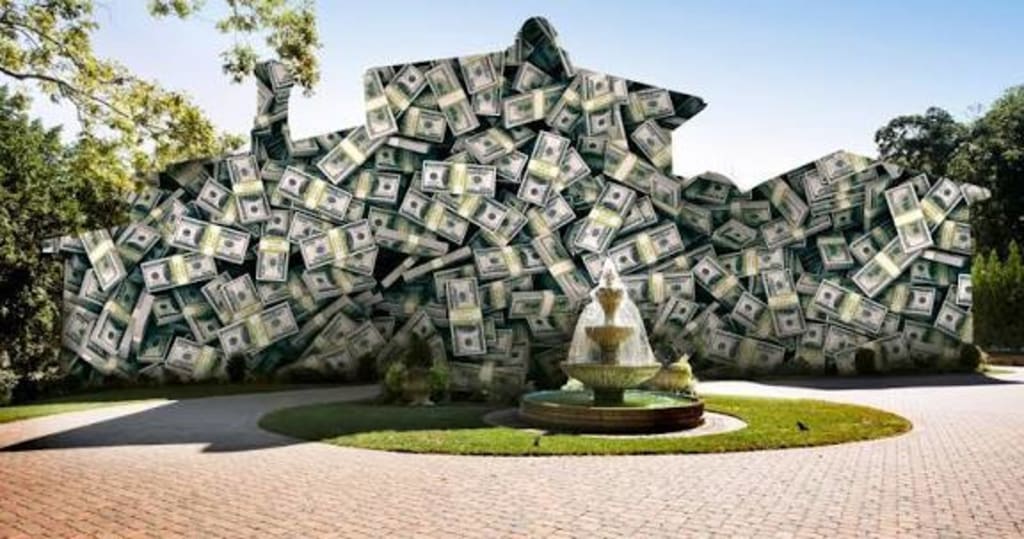
In recent years, few financial ideas have stirred as much discussion as the mansion tax. Supporters say it’s a fair way to ensure the wealthy contribute more to public spending, while critics argue it punishes success and distorts the housing market. As debates continue in countries like the United Kingdom and the United States, one question remains central: is the mansion tax a tool for fairness or a recipe for controversy?
---
What Is a Mansion Tax?
A mansion tax is a proposed or existing tax applied to properties that exceed a certain value threshold — typically luxury homes or “mansions.” The exact definition of what qualifies as a “mansion” depends on each country’s economic conditions and housing prices.
In the United Kingdom, for example, the term gained popularity when politicians suggested taxing properties worth over £2 million. In the United States, similar ideas have surfaced in high-value real estate markets such as California, New York, and Florida, where homes can easily exceed that threshold.
The principle seems simple: homeowners with expensive properties pay a higher annual tax. But in practice, the idea raises complex issues about fairness, geography, and economics.
---
Why Was the Mansion Tax Proposed?
The mansion tax emerged from a growing concern about wealth inequality. In many developed countries, property values — especially in urban centers — have risen dramatically over the last few decades. Meanwhile, wages for most workers have not kept pace.
This has led to a situation where a small group of property owners holds a significant portion of national wealth. Governments facing pressure to fund public services — such as healthcare, education, and infrastructure — see the mansion tax as a way to generate revenue from those who can most afford it.
Advocates argue that the ultra-wealthy often benefit the most from government stability and infrastructure, so it’s fair that they contribute proportionally more to the system that supports their success.
---
The Case in Favor
Supporters of the mansion tax see it as a tool of fairness and redistribution. They believe the wealthy should pay more to help reduce inequality and provide essential services for society as a whole.
Economists also point out that taxing high-value properties doesn’t discourage work or investment in the same way that income or business taxes might. Real estate is a fixed asset — it can’t easily be hidden or moved offshore, which makes it a more reliable source of tax revenue.
Furthermore, the mansion tax could help cool overheated property markets, especially in global cities like London or New York, where foreign investors sometimes buy luxury homes purely for profit rather than to live in them. This drives up prices and makes housing less affordable for locals.
---
The Case Against
On the other hand, critics argue that the mansion tax is often misleading and unfair. For one, the term “mansion” doesn’t always reflect reality. In cities where property prices are sky-high, an average-sized family home can easily cross the threshold for a so-called mansion tax, even if the owners aren’t especially wealthy.
For example, a retired couple who bought their London home decades ago might now find its value has soared above £2 million — not because they became richer, but because the market changed. Yet they could still face a steep annual tax bill they can’t afford on a fixed income.
Opponents also worry that a mansion tax might discourage investment in property and construction, potentially slowing economic growth. Developers and buyers could be deterred from investing in new housing, worsening shortages in some areas.
---
How Different Countries Handle It
Some countries have already introduced versions of the mansion tax — with mixed results.
United States: Cities like Los Angeles and New York have introduced local taxes on high-value property sales, with proceeds funding housing and social programs.
United Kingdom: The government currently applies higher stamp duties on expensive homes, which act as a form of mansion tax paid during purchase.
France and Canada: Similar property-based taxes target luxury homes or second residences, though enforcement and revenue collection remain challenging.
These examples show that the mansion tax can work in practice — but its success depends on how it’s designed and implemented.
---
The Broader Question: What Is Fair?
At its core, the mansion tax debate isn’t just about money — it’s about values. What does fairness mean in a society where wealth is unevenly distributed? Should someone who owns a multi-million-dollar home contribute more, even if their income hasn’t increased?
The answer often depends on personal philosophy. Some believe taxes should only reflect income, not property. Others argue that wealth itself — especially when built on valuable assets — should be taxed to balance social opportunity.
What’s certain is that the mansion tax touches on deep questions about privilege, fairness, and responsibility. Whether you’re for or against it, the discussion forces societies to confront how they share both wealth and burden.
---
Conclusion: A Tax for the Future?
As housing prices continue to rise and governments search for new sources of revenue, the mansion tax will likely remain a hot topic. Supporters see it as a step toward economic justice; opponents view it as an overreach into personal wealth.
The real challenge lies in finding a balance — creating tax systems that fund public needs without punishing those who worked hard for what they have.
For now, the mansion tax remains more than just a financial proposal — it’s a reflection of how societies view equality, ownership, and fairness in an age of growing divides.
---
About the Creator
Fiaz Ahmed
I am Fiaz Ahmed. I am a passionate writer. I love covering trending topics and breaking news. With a sharp eye for what’s happening around the world, and crafts timely and engaging stories that keep readers informed and updated.
Keep reading
More stories from Fiaz Ahmed and writers in The Swamp and other communities.
Lucy Powell and the Future of Labour: A New Chapter in Party Leadership
The Labour Party in the United Kingdom has long been a symbol of social justice, equality, and progress. Yet, like any political movement, it continues to evolve with new voices and new visions. One of those voices making waves today is Lucy Powell, the Member of Parliament for Manchester Central. With growing support across the party, her name has recently become the center of discussion surrounding the Labour deputy leadership.
By Fiaz Ahmed 5 months ago in The Swamp
The Forsyth House Fire
Since 1851, Forsyth House has stood on the corner of Union Street and Gordon Street in the heart of Glasgow. Its iconic, or was... because on Sunday 8th of March, 2026, a fire broke out in a small, seemingly un-named shop in the building and tore all that history down. As I write, the rubble is still unsettled and the street is still blocked off. Central Station is quiet on the upper level, and around 30 small businesses have quite literally gone up in smoke.
By S. A. Crawford2 days ago in The Swamp




Comments
There are no comments for this story
Be the first to respond and start the conversation.